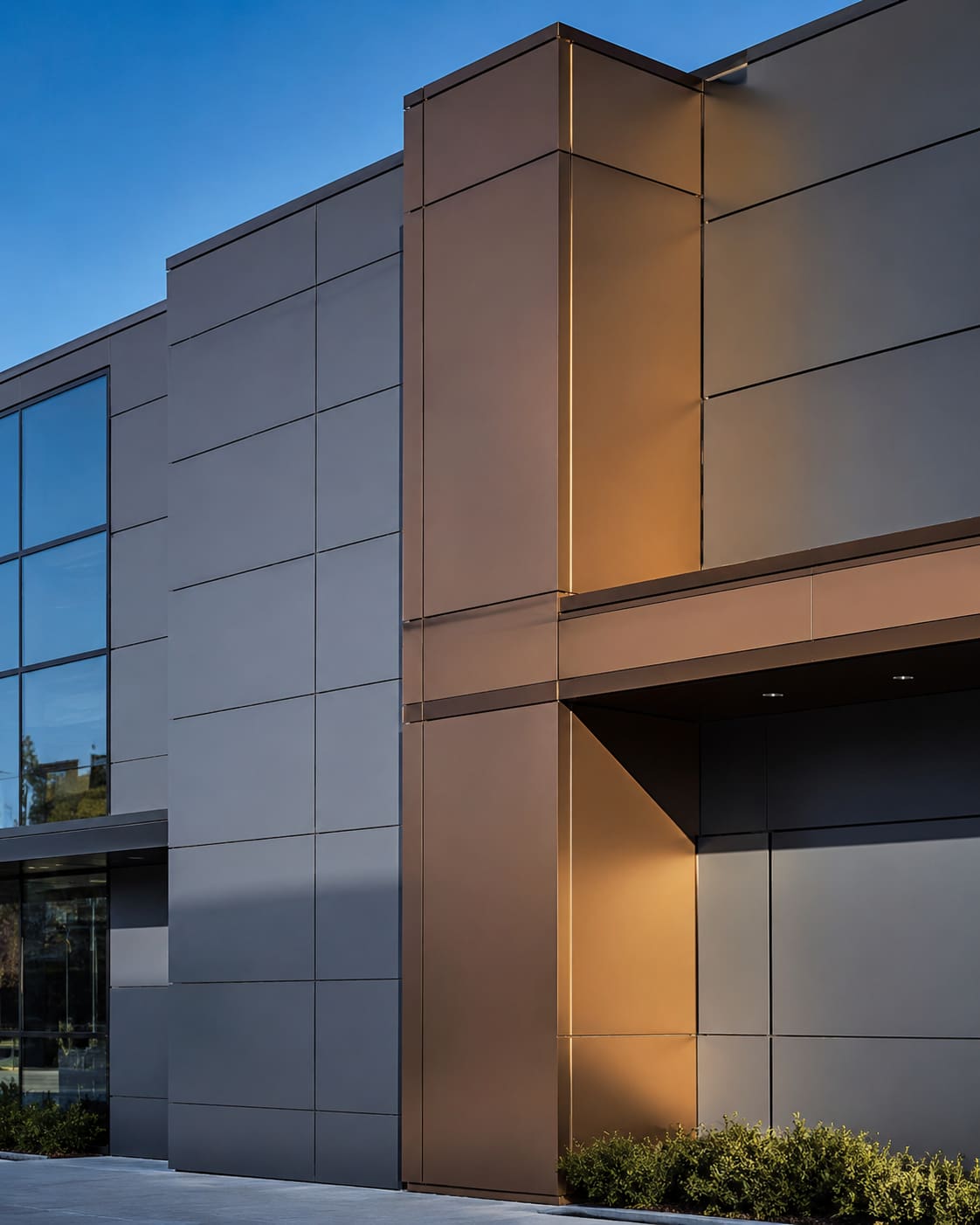
ACP cladding cost per sq ft in Hyderabad is typically ₹180–450 installed in 2026, covering the panel, aluminium sub-frame, fabrication and fitting. Standard PE-core panels sit at the lower end (roughly ₹180–280 per sq ft), while fire-retardant FR/A2 mineral-core panels - required on taller and high-occupancy buildings - run about ₹300–450 per sq ft. Bare ACP sheet alone is cheaper (around ₹75–160 per sq ft), but the installed rate is what actually matters when you budget an elevation.
ACP (Aluminium Composite Panel) is the workhorse of modern commercial facades across Hyderabad, Secunderabad and the wider Telangana and Andhra Pradesh belt. It is a sandwich of two thin aluminium skins bonded to a polyethylene or mineral core, giving you a crisp, flat, weatherproof surface in almost any colour or texture. It is lightweight, fast to install and far more forgiving on irregular RCC surfaces than stone or tile - which is exactly why you see it on showrooms, offices, hospitals and apartment elevations everywhere from Banjara Hills to Gachibowli.
This guide breaks down the real numbers: the per-sq-ft rate, what is included, how standard and FR grades differ, brand and finish premiums, the mistakes that inflate cost or shorten lifespan, and how to read a quotation so you know you are comparing like with like.
ACP cladding cost per sq ft in Hyderabad (2026)
The headline number most people want is the installed rate. In Hyderabad in 2026, expect ₹180–450 per sq ft for a properly fixed ACP elevation - panel, aluminium sub-frame, fabrication and installation included. The single biggest driver of where you land in that range is panel grade.
- Standard PE-core ACP (3mm/4mm): ₹180–280 per sq ft installed - signage, soffits, low-rise and interior feature walls.
- Fire-retardant FR / A2 mineral-core ACP: ₹300–450 per sq ft installed - high-rise, hospitals, malls, and public-occupancy buildings where codes apply.
- Premium finishes (mirror, timber, marble, brushed metal, spectra/chameleon): add ₹40–120 per sq ft on top.
For planning, a professional ACP cladding installation on a 1,500 sq ft shopfront in standard grade lands around ₹3–4.2 lakh, while the same area in FR grade with a premium finish can cross ₹7 lakh. Larger multi-floor elevations of 6,000–10,000 sq ft commonly run ₹15–25 lakh. If you want a firm figure for your exact building, it is quicker to get a free quote with your measurements than to work from averages.
What the per-sq-ft price actually includes
A finished ACP rate is not just the sheet. When you compare quotations, make sure each line item below is accounted for - a suspiciously low number usually means one of them has been thinned out or left out entirely.
- The panels: brand, core type (PE vs FR/A2), thickness (usually 3mm or 4mm), aluminium skin thickness (0.21mm–0.50mm) and coating (PVDF vs PE/nature).
- The aluminium sub-frame: the grid of angles and tubes fixed to the wall that the panels hang on. Typically ₹60–120 per sq ft on its own.
- Fabrication: routing (V-grooving), bending, cutting and forming panels into cassettes or tray panels with returns.
- Fixings and sealant: SS/GI screws, rivets, cleats, and weatherproof structural silicone at the joints.
- Installation and finishing: scaffolding, labour, alignment, and cleanup.
The aluminium framework is where corners get cut most often. A thin, under-braced frame lowers the headline rate but leads to oil-canning (visible waviness), rattling in wind and, at worst, panels working loose. On a coastal-influenced, monsoon-heavy climate like coastal Andhra Pradesh, a robust frame and correct sealing matter even more.
Standard PE vs fire-retardant FR ACP - which do you need?
Standard PE-core ACP has a polyethylene core and is perfectly fine for signage, soffits, boundary gates, low-rise shopfronts and interior features. Fire-retardant FR (and the higher A2) grade replaces most of that core with a mineral-filled, non-combustible material that resists fire spread.
For tall buildings, hospitals, schools, malls, hotels and other high-occupancy structures, FR/A2 is the safe and increasingly mandatory choice under fire and building codes. The price gap is real - roughly ₹120–170 per sq ft more - but it buys genuine safety and compliance, and it is not a place to economise on a public building.
- Choose standard PE if: single/double-storey retail, signage, soffits, interior walls, tight budget.
- Choose FR/A2 if: G+3 and above, any public occupancy, government or institutional work, or where your architect/fire NOC specifies it.
Always confirm the exact grade in writing. Some vendors quote 'FR' loosely - ask for the brand, core type and a fire-rating certificate. If ACP does not suit the fire brief at all, a high-pressure laminate (HPL) cladding facade is a durable alternative worth pricing alongside it.
Brands, thickness and finishes that move the price
Brand and specification account for most of the spread within each grade. Reputable panel brands available in the Hyderabad market include Alstrong, Aludecor, Eurobond, Viva, Timex and Alucobond, among others. Genuine branded FR panels with a real 25-micron PVDF coating cost more than local or unbranded stock - and they hold colour for far longer.
- Thickness: 3mm panels are lighter and cheaper; 4mm is stiffer, flatter and preferred for large facade panels.
- Aluminium skin: budget sheets use 0.18–0.21mm skins; quality facade sheets use 0.30–0.50mm, which resist denting and oil-canning.
- Coating: PVDF (Kynar/Lumiflon-based) resists UV fade for 15–20+ years; cheaper PE/nature coatings fade and chalk in Hyderabad's harsh summer sun within a few years.
- Finish: solid colours are cheapest; metallic and spectra cost a little more; and mirror, timber, marble and brushed-metal finishes carry the highest premium.
A common trap is a quote for '4mm ACP' that quietly uses a 0.21mm skin over 3.5mm of core to look thick while being flimsy. Ask for the skin gauge and total aluminium content, not just the nominal thickness.
Pros and cons of ACP cladding
ACP earns its popularity, but it is not the right answer for every wall. Weigh it against alternatives like HPL, glass and stone before committing.
- Pros: lightweight, fast to install, flat and crisp, huge colour/finish range, weatherproof, hides uneven RCC, easy to clean, and cost-effective per sq ft.
- Pros: excellent for branding and signage integration; panels can be cut, curved and grooved for sharp architectural lines.
- Cons: standard PE-core is combustible - grade selection matters for safety.
- Cons: poor-quality panels fade, chalk or delaminate; cheap frames cause oil-canning and rattle.
- Cons: joints and sealant need periodic inspection; a botched install can trap water behind panels.
For a building where you want the glazed, frameless glass look instead of solid panels, look at structural glazing or spider glazing options - and for sculpted, multi-layer facades, a purpose-built 3D elevation design combines ACP with louvres and profiles for depth.
How to choose the right ACP for your project
Start with the building, not the panel. The fire brief, height, occupancy and exposure decide the grade; budget and aesthetics decide brand and finish within that grade.
- Step 1: Confirm the required grade (PE vs FR/A2) with your architect or fire consultant.
- Step 2: Fix a coating standard - insist on PVDF for any external, sun-facing elevation in Telangana or Andhra Pradesh.
- Step 3: Specify the sub-frame - aluminium sections, gauge and spacing - in the quote, not just the panel.
- Step 4: Ask for a sample and the brand's warranty certificate (many offer 10–15 years on PVDF coating).
- Step 5: See finished work in person. Browsing our recent projects or any contractor's completed elevations tells you more than a brochure about real-world flatness and joint quality.
It also helps to see the full menu of facade systems before deciding - comparing ACP against glazing and cladding options across our services often reveals a better fit or a smarter mix of materials for different parts of the same building.
Installation process and timeline
A clean ACP job follows a predictable sequence, and knowing it helps you spot a contractor who is rushing.
- Survey and measurement: the wall is checked for level, and a panel layout drawing is prepared.
- Sub-frame fabrication and fixing: aluminium angles and tubes are anchored to the RCC/masonry to create a true, plumb grid.
- Panel fabrication: sheets are cut, V-grooved and bent into cassettes with returns for a shadow-line joint.
- Installation: panels are fixed to the frame, aligned, and gaps set uniformly (typically 10–15mm).
- Sealing and finishing: joints are backed with rod and sealed with structural-grade silicone, then the protective film is peeled and the surface cleaned.
Timeline depends on area and access. A small shopfront (1,000–2,000 sq ft) is usually 5–10 working days; a full multi-storey elevation of 8,000–10,000 sq ft can take 4–8 weeks including scaffolding. Monsoon in Hyderabad can stall the sealing stage, so plan external work around the weather.
Common mistakes that inflate cost or shorten life
Most ACP problems trace back to a handful of avoidable decisions - usually made to save a little money up front.
- Buying on headline rate alone: a ₹160/sq ft quote almost always hides a thin frame, thin skin or a PE coating that fails fast.
- Skipping PVDF on a sun-facing elevation: nature-coated panels chalk and fade within a few Hyderabad summers.
- Under-designed sub-frame: too few sections or thin gauge causes oil-canning and wind rattle.
- Wrong grade for the building: using PE-core on a high-rise or public building is a safety and compliance risk.
- Poor sealing and no drainage detail: water gets behind panels, staining the wall and corroding fixings.
- No warranty documentation: without brand and coating certificates you have no recourse if panels fail early.
Spending 10–15% more on grade, coating and frame typically adds a decade to the elevation's usable life - a far better return than shaving the per-sq-ft rate.
ACP cladding for Hyderabad, Telangana and Andhra Pradesh
Local climate should shape your specification. Hyderabad's intense summer UV, dust and sharp monsoon downpours are hard on cheap coatings and weak seals, while coastal Andhra Pradesh adds salt-laden humidity that punishes low-grade aluminium and fixings. PVDF-coated panels on a properly braced, well-sealed aluminium frame are the sensible default across the region.
As a Hyderabad-based glass and aluminium specialist, Hakimi Aluminium and Glass fabricates and installs ACP elevations across Hyderabad, Secunderabad and throughout Telangana and Andhra Pradesh - from single showroom fronts in the city to full commercial facades. Because we buy branded panels and fabricate the sub-frame in-house, we can quote transparently line by line so you know exactly what your per-sq-ft rate covers. When you are ready with dimensions and a grade preference, get a free quote and we will turn around an itemised estimate for your elevation.