Curtain wall cost per sq ft in India typically runs from about Rs 750 to Rs 2,200 for standard aluminium and glass systems, rising to Rs 2,500 to Rs 4,000+ per sq ft for high-performance double-glazed facades. It is a range rather than a single number because a curtain wall is an engineered system of aluminium mullions, glass, gaskets, brackets and structural sealant, not an off-the-shelf product. Once you understand what drives that range, you can budget accurately and spot quotes that look cheap on paper but quietly cut corners on wind-load safety, waterproofing and glass grade.
At Hakimi Aluminium and Glass, we design, fabricate and install curtain wall glazing and structural glazing facades across Hyderabad, Secunderabad and the wider Telangana and Andhra Pradesh region. The rates below reflect real project conditions here, including local labour costs, transport, GST, and the intense summer heat loads that turn glass selection into a genuine financial decision rather than a cosmetic one.
This guide breaks down indicative 2026 rates by system type, explains the levers that move your quote up or down, compares stick versus unitised construction, walks through a worked Hyderabad example, and flags the common mistakes that inflate budgets or compromise safety. If you would rather skip straight to numbers for your building, get a free quote and our team will prepare an itemised estimate from your drawings.
What a Curtain Wall Actually Is (and Why It Is Priced Per Sq Ft)
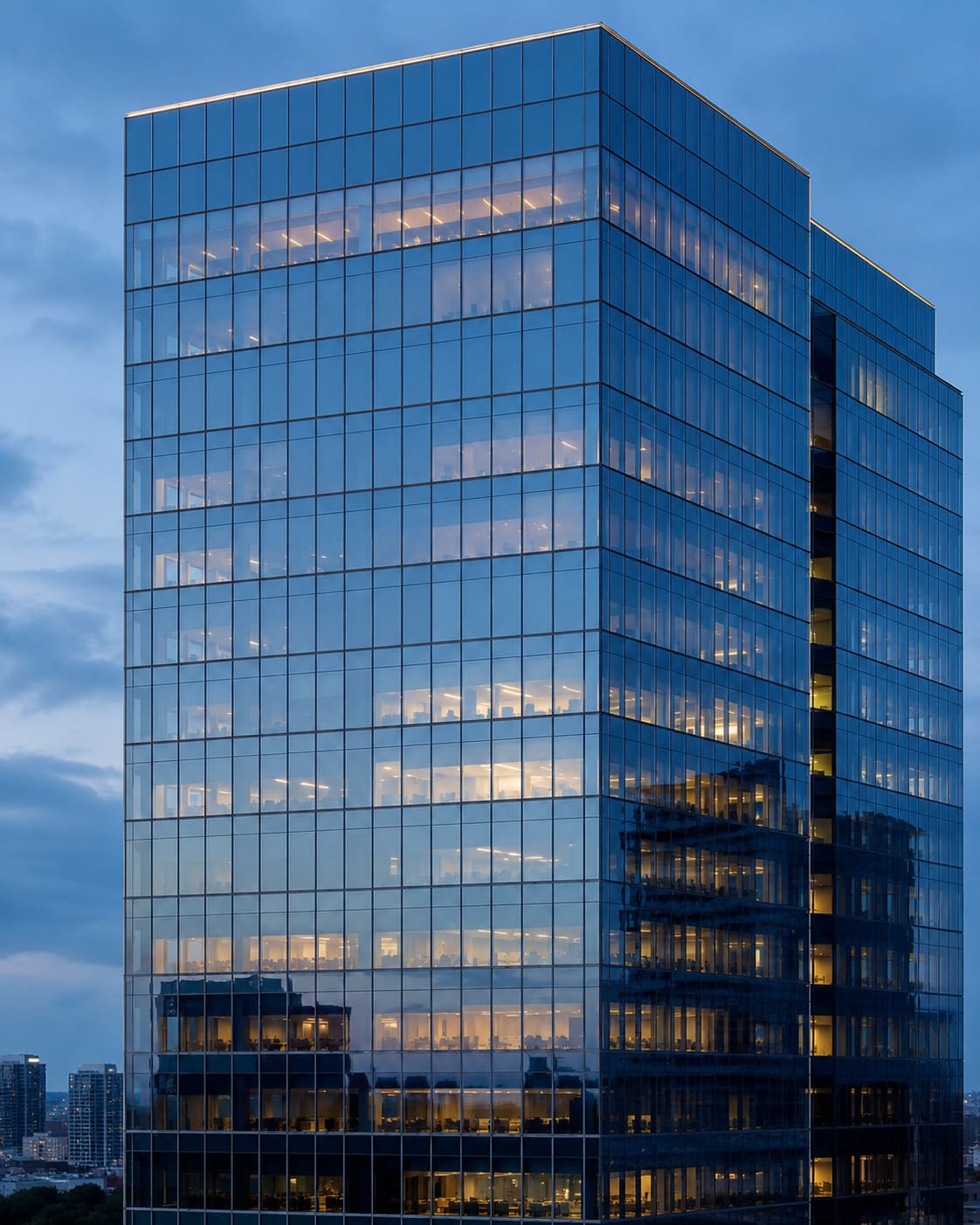
A curtain wall is a non-load-bearing external envelope hung off a building's structural frame. It carries only its own weight plus wind and seismic loads, transferring them back to the floor slabs through anchors, while keeping water, air and heat out. Because it is an assembly of aluminium framing, glass infill panels, gaskets, thermal breaks and structural sealant rather than a single item, the industry prices it per square foot of finished facade area, folding materials, fabrication, fixings and installation into one rate.
That per-sq-ft convention makes budgeting easy at concept stage but hides a lot of detail. The same Rs 1,600 per sq ft can buy a robust unitised facade with low-E glass or a thin stick system with under-specified anchors, depending on who prepared the number. This is why understanding the cost drivers, and insisting on a line-item breakdown, matters far more than chasing the lowest headline figure. You can see how finished facades come together across different building types in our recent projects.
Curtain Wall Cost Per Sq Ft: Indicative 2026 Ranges
As a working guide for 2026, here are indicative supply-and-install rates for aluminium and glass curtain wall systems in the Hyderabad and Secunderabad market. These are per square foot of finished facade and assume standard floor heights and reasonable site access.
- Semi-unitised / stick curtain wall: Rs 750 to Rs 1,200 per sq ft
- Unitised curtain wall (factory-assembled panels): Rs 1,200 to Rs 2,200 per sq ft
- Spider / point-fixed structural glazing: Rs 1,400 to Rs 2,800 per sq ft
- High-performance facades (double-glazed, fritted or ventilated): Rs 2,500 to Rs 4,000+ per sq ft
Entry-level projects with single glazing and basic mill-finish sections sit at the lower end. Premium towers using high-grade double-glazed units (DGUs), thermally broken profiles and concealed drainage push toward the top. If your project uses point-fixed glass, the make and grade of the spider fittings alone can shift the rate by Rs 150 to Rs 400 per sq ft.
Remember these are supply-and-install figures and exclude GST. A turnkey package that bundles access equipment, scaffolding, structural back-up framing and a written performance warranty will read higher than a bare facade rate, so always confirm exactly what sits inside the number before you compare two quotes side by side. Our structural glazing scope is quoted as itemised line items for precisely this reason.
What Actually Drives the Curtain Wall Price
Two facades of identical size can differ by 40 percent in cost. The main levers are:
- Glass specification: single glazing is cheapest; DGUs with low-E coating, laminated safety glass and heat-soaked toughened panes each add cost but reduce cooling loads in the Telangana climate.
- Aluminium system: standard mill-finish sections are economical; powder-coated or anodised, thermally broken profiles from branded systems cost more but perform far better against heat and corrosion.
- Stick vs unitised: unitised panels raise material cost but slash on-site time and improve quality on tall buildings.
- Building height and wind zone: taller facades in Hyderabad's higher wind-load conditions need heavier mullions, stronger anchors and thicker glass.
- Complexity: curves, sloped or overhead glazing, sharp corner details and integrated louvres all add fabrication and labour hours.
- Hardware and fittings: spider clamps, patch fittings, floor springs at entrance zones and locking systems add up quickly on a large facade.
Because glass and aluminium together make up roughly 55 to 70 percent of the finished rate, small specification changes there move the total more than any other single factor. It is worth finalising the glass and system schedule before you commit to a budget.
Glass Specification: The Biggest Cost Variable
Glass is where most of the money and most of the performance live. In the Hyderabad and Andhra Pradesh climate, where summer surface temperatures on west-facing facades are punishing, the right glass repays its cost through lower air-conditioning loads over the building's life.
- Single toughened glass (8mm to 12mm): the most economical option, suited to shopfronts and low-rise facades.
- Laminated safety glass: adds impact resistance and post-breakage safety, and is often mandated for overhead, sloped or point-fixed glazing.
- Double-glazed units (DGUs) with low-E coating: two panes with an insulated cavity that dramatically cut solar heat gain, typically adding Rs 300 to Rs 700 per sq ft over single glazing.
- Heat-soaked toughened glass: reduces the rare risk of spontaneous nickel-sulphide breakage in tall facades and carries a modest premium.
- High-performance / fritted or ceramic-coated glass: used for solar shading and aesthetics on premium towers, at the top of the range.
For point-fixed and frameless designs the glass is drilled and held by bolts, so fittings must be matched precisely to pane thickness and edge distance. This is a common area where cheap quotes skimp, so always confirm the make and grade of both the glass and the structural fittings. Our structural glazing specifications always name the exact glass build-up.
Stick vs Unitised: Where Your Money Goes
Stick (or semi-unitised) systems are assembled piece by piece on site. They carry lower material cost and suit low-to-mid-rise buildings, showrooms and institutional projects, but they demand more scaffolding time, more skilled site labour and tighter weather-window management.
Unitised systems are built as complete storey-height panels in a controlled factory, then craned into place and interlocked. The per-sq-ft rate is higher, but you gain faster installation, factory-grade quality control and superior weather sealing, which is why most high-rise commercial towers in Hyderabad's IT corridor now specify them.
- Choose stick for: showrooms, schools, hospitals and buildings up to roughly 4 to 6 floors where budget is tight and site access is easy.
- Choose unitised for: high-rise towers, projects on tight urban plots with limited scaffolding room, and buildings where a fast, weather-tight envelope is critical to the construction programme.
For a mid-size corporate building with around 10,000 sq ft of facade, expect a total curtain wall budget roughly between Rs 1.1 crore and Rs 2.2 crore depending on the specification you lock in. Explore our services to see how we scope both approaches for Telangana and Andhra Pradesh projects.
Aluminium Systems and Hardware That Affect the Rate
The aluminium framing and its fittings are the backbone of any curtain wall, and their quality shows up directly in both the price and the lifespan of the facade.
- Profiles and finish: thermally broken, powder-coated or anodised sections resist Hyderabad's heat and coastal-influenced humidity far better than plain mill finish, and they hold colour for years without chalking.
- System depth and gauge: taller and windier facades need deeper mullions and thicker wall sections, which raises the aluminium weight and therefore the rate per sq ft.
- Structural sealant and gaskets: for a curtain wall glazing facade, the grade of silicone structural sealant and the drainage design determine whether the envelope stays watertight through a decade of monsoons.
- Entrance integration and hardware: where the facade meets glass doors, quality floor springs, patch fittings and locking hardware determine daily usability and are a genuine line in the budget.
As authorised dealers for branded aluminium systems and fittings, we can package the facade with matched, warrantied components rather than loose hardware of unknown grade. That single decision protects both performance and resale-grade appearance across the life of the building.
A Worked Cost Example for a Hyderabad Project
To make the numbers concrete, consider a typical 8-storey corporate building in the Financial District with about 12,000 sq ft of curtain wall facade.
- Value option (stick system, single toughened glass at Rs 1,000 per sq ft): roughly Rs 1.2 crore.
- Base case (unitised, DGU low-E glass at Rs 1,600 per sq ft): roughly Rs 1.92 crore.
- Premium option (unitised, fritted DGU with ventilated details at Rs 2,900 per sq ft): roughly Rs 3.48 crore.
The Rs 2.28 crore gap between the value and premium options comes almost entirely from glass grade, thermal breaks and detailing complexity, not from the facade area itself. That is why locking your specification early is the most important budgeting decision you make on a facade package.
These figures exclude GST, structural steel back-up framing where required, and any special access equipment such as suspended cradles or mast climbers. Ask for a line-item breakdown so you can see exactly where each rupee goes and where value engineering is safe versus where it is not.
Common Mistakes That Inflate Cost or Compromise Safety
Most facade budget problems trace back to a handful of avoidable errors, and knowing them puts you in a stronger position when quotes land on your desk.
- Comparing rates that include different scopes: one quote may bundle scaffolding and warranty while another strips them out, making the cheaper-looking number the more expensive choice.
- Under-specifying glass to hit a price: single glazing on a west-facing Hyderabad facade saves upfront but raises air-conditioning running costs for decades.
- Skipping wind-load and structural sizing: undersized mullions and weak anchors are the corners most often cut in suspiciously low quotes.
- Ignoring drainage and thermal breaks: facades without drained-and-ventilated joints leak, and non-thermally-broken frames sweat and waste energy.
- Choosing hardware on price alone: cheap floor springs, patch fittings and spider clamps fail early and are expensive to replace once the facade is sealed.
- Leaving no allowance for maintenance access: cleaning and resealing a tall facade needs designed access, and retrofitting it later is costly.
Avoiding these traps rarely means spending more overall; it usually means spending correctly, so the facade performs and lasts. If you want a second opinion on a quote you have already received, get a free quote and we will benchmark it against current Hyderabad rates.
Getting an Accurate Curtain Wall Quote in Hyderabad
A reliable quote depends on shop drawings, a glass and system schedule, and ideally a wind-load and structural sizing check. Be wary of numbers that fall far below the ranges above, because they usually skip essentials like proper anchoring, structural sealant grade or drained-and-ventilated joints, all of which are invisible until the first monsoon.
- Ask for the exact glass make, thickness, coating and cavity for DGUs.
- Confirm the aluminium system brand and whether it is thermally broken.
- Check that installation, structural sealing, edge sealing and a written performance warranty are included.
- Confirm the make and grade of spider fittings, patch fittings and floor springs used at entrances and fins.
- Clarify whether access equipment, GST and back-up steel are inside or outside the rate.
Our team provides on-site measurement and a detailed, itemised estimate across Hyderabad, Secunderabad, Telangana and Andhra Pradesh, so you compare like for like rather than headline rates. When you are ready, get a free quote and we will turn your drawings into a transparent, buildable number backed by the same curtain wall glazing team that installs it.