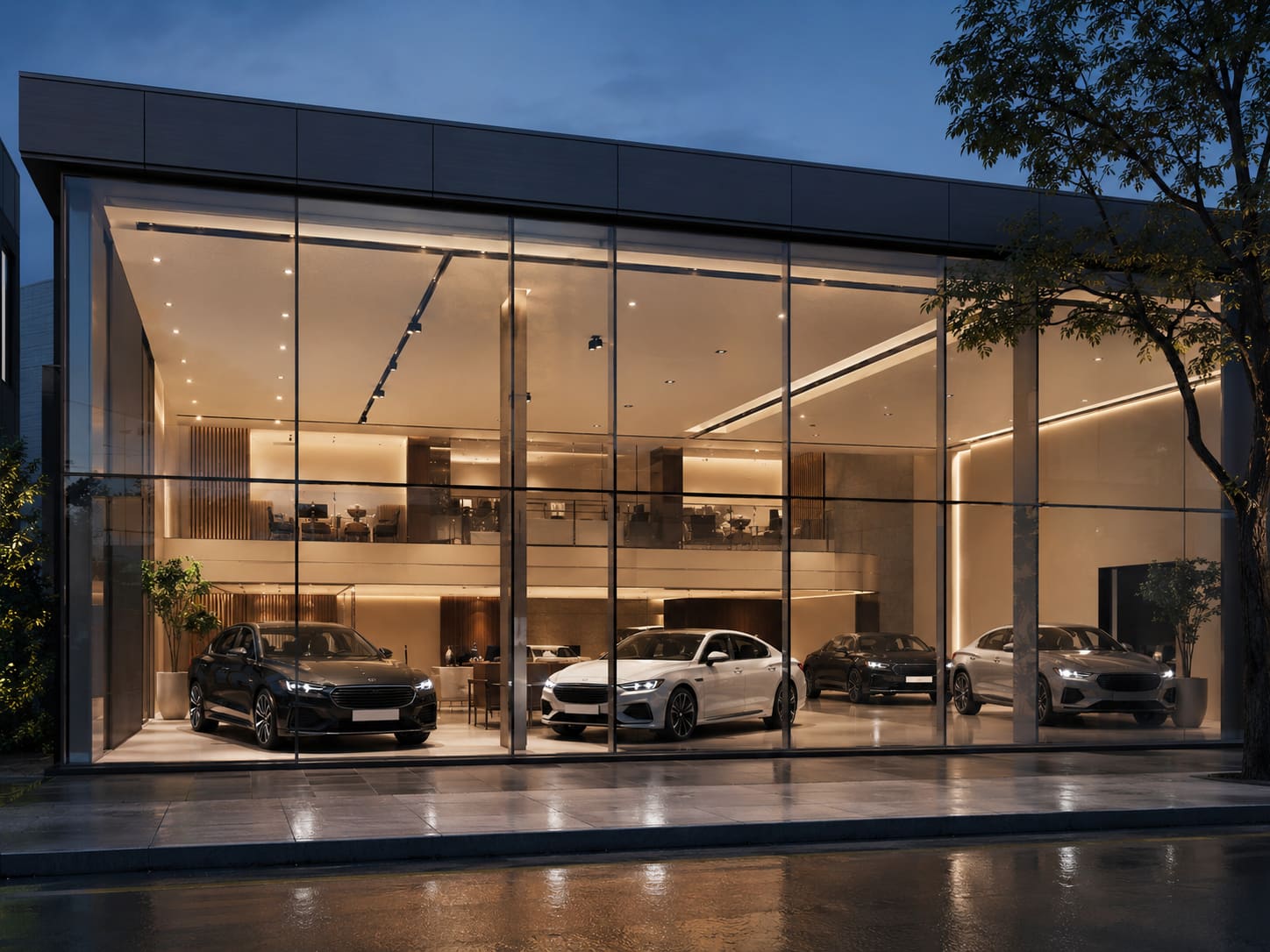
Front elevation glass cost in Hyderabad typically ranges from Rs 350 to Rs 1,800 per square foot of finished facade, fully installed. Basic single-glazed toughened panels start near Rs 350 to Rs 550 per sq ft, spider and structural glazing runs Rs 650 to Rs 1,100 per sq ft, and premium double-glazed (DGU) or unitised curtain-wall systems reach Rs 1,200 to Rs 1,800 per sq ft. For a typical residential G+1 elevation of 300 to 500 sq ft in localities like Kukatpally, Kondapur or Uppal, most homeowners spend Rs 1.5 lakh to Rs 6 lakh once glass, aluminium, hardware and installation are added.
That range is wide because "front elevation glass" covers everything from a simple toughened balcony screen on an independent house to a full aluminium-and-glass glass facade on a commercial tower in HITEC City or the Financial District. Hyderabad's climate shapes the number too: 40-degree-plus Telangana summers push buyers toward heat-reflective and DGU glass, while the south-west monsoon and near-constant construction dust make quality sealing, drainage and easy-clean coatings worth the extra spend rather than an optional upgrade.
This guide breaks down real 2026 rates across Hyderabad and Secunderabad by glass type, framing system, height, hardware and locality, so you can budget accurately before you get a free quote. We also show exactly where the money goes, how the choice of fittings affects lifespan, the mistakes that cause monsoon leaks, and where you can shave 10 to 20 percent off the total without compromising safety or looks. You can see finished examples of this work in our recent projects.
Front elevation glass rates by type in Hyderabad (2026)
Front elevation glass cost in Hyderabad is quoted per square foot of finished facade, and the biggest driver is the glass type, thickness and the glazing system holding it in place. Below are realistic installed ranges across Hyderabad, Secunderabad and the wider Telangana market for 2026.
- Plain or tinted toughened glass (8-12 mm): Rs 350 to Rs 550 per sq ft - common for balcony fronts, parapets and small independent-house elevations.
- Heat-reflective / solar-control toughened glass: Rs 500 to Rs 800 per sq ft - popular for west and south-facing elevations to cut Hyderabad's summer heat gain.
- Spider / bolted (frameless) glazing: Rs 650 to Rs 1,100 per sq ft - the clean, minimal-frame look seen on Gachibowli and Madhapur showrooms and office lobbies.
- Double-glazed unit (DGU) glass: Rs 900 to Rs 1,400 per sq ft - best for air-conditioned offices and premium villas in Jubilee Hills, Kokapet or Financial District.
- Unitised / semi-unitised curtain wall (glass + ACP): Rs 1,200 to Rs 1,800 per sq ft - used on high-rises and corporate blocks in the IT corridor.
These rates typically include the aluminium framing or structural fittings, the glass, sealant and standard ground-floor installation, but exclude scaffolding or cradle access on tall buildings and exclude GST. A tailored front elevation glazing specification will land you somewhere inside these bands depending on the exact glass, coating and system you pick.
What the per-sq-ft rate actually covers
A front elevation glass quote is never just the price of the glass. Roughly 40 to 55 percent of the rate is the glass panel and its coating, while the balance is aluminium, hardware, sealant, labour and margin. Knowing this split helps you judge whether a Secunderabad quote is genuinely competitive or dangerously underpriced.
- Glass and coating: the toughened, laminated or DGU panel itself, plus any solar-control, tint or low-E coating.
- Aluminium framing or structural sub-frame: sections, mullions, transoms and back framing that carry dead load and wind load.
- Fixing hardware: patch fittings, spider brackets, routels, clamps and stainless bolts that hold frameless glass safely in place.
- Sealant and gaskets: structural silicone and weather sealant that keep out driving monsoon rain and allow the glass to move with heat.
- Fabrication and installation labour, plus scaffolding, transport, hoisting and site handling.
A rate sitting far below the ranges above usually signals thinner glass, non-toughened (unsafe) panels, or cheap unbranded fittings that corrode and fail within a couple of monsoons. Always compare like-for-like on glass grade, thickness and fitting brand rather than on the headline total alone.
How hardware and fittings change price and lifespan
In frameless, spider and structural elevations the fittings are as important as the glass itself, and they can swing the cost by Rs 100 to Rs 400 per sq ft. The fittings carry the entire glass load, so their grade decides whether your facade survives a decade of Telangana heat cycling and dust or starts sagging and rattling within two summers.
- Spider and bolted fittings: 2-way and 4-way spiders and routels for point-fixed facades. Stainless 316 grade is worth the premium anywhere with coastal-influenced Andhra Pradesh or Telangana air, because 304 grade pits and stains faster.
- Patch fittings: top and bottom patches for frameless toughened elevations and glazed entrances built into the facade.
- Architectural clamps and standoffs: connectors that deliver a clean, minimal-frame look on showroom and lobby fronts.
- Structural silicone and gaskets: the invisible components that transfer wind load and keep water out; skimping here is the single most common cause of leaks.
Branded fittings cost roughly 15 to 30 percent more than unbranded imports, but they hold torque, resist corrosion and keep the glass safely fixed for 10 to 15 years. On a full facade that hardware premium is a small share of the total cost for a very large share of the safety and longevity, which is why it is rarely the right place to economise.
The six factors that drive your final cost
Your final front elevation glass cost depends on six variables beyond the headline per-sq-ft rate. Understanding them lets you compare quotes fairly across fabricators in Secunderabad, Hyderabad and the suburbs.
- Glass thickness and safety grade: 12 mm toughened costs more than 8 mm, and laminated safety glass adds roughly Rs 80 to Rs 200 per sq ft but resists shattering and improves security.
- Coating and performance: solar-control, low-E and DGU glass cost more up front but cut cooling bills sharply in Hyderabad's heat.
- Framing system: standard aluminium sections are cheaper than spider fittings or full structural silicone glazing.
- Height and access: elevations above the second floor need scaffolding or cradles, typically adding 8 to 15 percent to the job.
- Design complexity: curves, cut-outs, corner joints, feature lighting and non-standard panels all raise fabrication cost.
- Brand of glass and aluminium: Saint-Gobain, AIS or Guardian glass and Jindal or branded aluminium sections cost 10 to 25 percent more than local equivalents, but come with consistent quality and warranty.
Sample front elevation budgets for the twin cities
To make the numbers concrete, here are four realistic budgets based on jobs commonly done across Hyderabad and Secunderabad. Areas are measured on the finished facade, not the floor area, which is why elevation quotes can surprise first-time buyers.
- Small home elevation (250 sq ft, tinted toughened, Kukatpally or Uppal): roughly Rs 1 lakh to Rs 1.4 lakh.
- Mid villa elevation (450 sq ft, heat-reflective glass with spider glazing, Kondapur or Nizampet): roughly Rs 3 lakh to Rs 4.5 lakh.
- Commercial shopfront (600 sq ft, DGU glass with ACP frame, Banjara Hills or Madhapur): roughly Rs 7 lakh to Rs 10 lakh.
- Full G+3 unitised curtain wall (2,500 sq ft facade, premium DGU, Financial District): roughly Rs 35 lakh to Rs 45 lakh once hardware and cradle access are included.
Always insist on a written measurement sheet with the per-sq-ft rate so you can verify the total, and confirm in writing whether GST (18 percent on glazing work) and access equipment are included or extra. Browsing our services alongside these budgets helps you match the right system to your building type before you commit.
Best glass choices for Hyderabad and Telangana weather
Hyderabad's climate - 40-degree-plus summers, a heavy south-west monsoon and constant construction dust from ORR and metro corridors - should drive your glass and coating choice as much as budget does. Matching glass to orientation is where a well-planned glass facade specification earns back its cost.
- West and south-facing elevations: use heat-reflective or DGU glass to block solar heat gain. This is where towers in Kokapet, Gachibowli and the Financial District spend the most, and where it pays off fastest.
- East and shaded elevations: single heat-reflective glazing is usually enough, saving Rs 300 to Rs 500 per sq ft versus DGU without meaningfully raising the cooling load.
- Coastal-influenced sites toward Andhra Pradesh: specify stainless 316 fittings and marine-grade sealant so corrosion does not take hold.
- Dust-heavy corridors near ORR and metro construction: choose easy-clean or self-cleaning coated glass to cut long-term maintenance and window-cleaning bills.
- Monsoon protection: insist on proper weep holes, drainage channels and structural silicone. Poor sealing and missing drainage are the number-one cause of front elevation leaks in the twin cities, and they are far cheaper to prevent than to fix.
Process and timeline for a front elevation job
Knowing the sequence helps you plan payments and avoid surprises. A typical residential front elevation glass job in Hyderabad runs about 5 to 12 working days from final site measurement to handover, while larger structural or DGU curtain walls take 3 to 6 weeks depending on fabrication load and site access.
- Site survey and measurement: exact facade dimensions, orientation and access are recorded; this is when the real quote firms up.
- Design and approval: glass type, coating, framing and fitting brands are locked in writing, ideally with a wind-load check for structural systems.
- Advance and material procurement: glass is cut and toughened to size (toughened glass cannot be cut afterwards), and aluminium and hardware are ordered.
- Framing and installation: the sub-frame goes up, panels are set, spider or patch fittings are torqued, and structural silicone is applied.
- Sealing, cleaning and handover: weep holes, gaskets and weather sealant are finished, the facade is cleaned, and you should receive toughening certificates and warranty documents.
Doing the job in Hyderabad's dry season, roughly November to May, avoids monsoon delays and lets sealant cure properly, which is why many twin-city buyers book elevation work for the cooler months.
Common mistakes to avoid (and how to save 10 to 20 percent)
You can reduce front elevation glass cost in Hyderabad by 10 to 20 percent with smarter specification rather than cheaper glass. Cutting corners on toughening, fittings or sealant almost always backfires as leaks during monsoon and heat cracks in summer, so save on scope, not on safety.
- Use heat-reflective single glazing instead of DGU on shaded or east-facing elevations where the cooling load is lower.
- Standardise panel sizes to cut glass wastage and fabrication charges.
- Combine glass with ACP or louvers on non-view areas to reduce the expensive glass area without hurting the look.
- Schedule the work in the dry season to avoid monsoon rework and slow curing.
- Do not accept non-toughened glass on an elevation to save money; it is a genuine safety hazard and often violates good practice.
- Take three itemised quotes from established twin-city fabricators and compare like-for-like glass grades, thickness and fitting brands, not just the bottom-line totals.
The costliest mistakes are structural, not cosmetic: unbranded fittings that corrode, missing drainage, and glazing that was eyeballed rather than engineered for wind load. Fixing any of these after installation usually costs more than doing it right the first time.
How to choose a front elevation contractor in Hyderabad
The right contractor matters as much as the right glass, because structural glazing failures are dangerous and expensive to remedy. Look past the lowest quote and check the fundamentals before you sign anything.
- Ask to see completed elevations in Hyderabad or Secunderabad of a similar size and system to yours, and speak to a past client if you can.
- Confirm the glass brand, thickness, toughening certificate and fitting brand in writing on the quotation itself.
- Check that structural and spider glazing is engineered for local wind load, not simply eyeballed on site.
- Verify GST registration and a clear written warranty on both the glass and the installation.
- Prefer a specialist who both fabricates the facade and supplies the branded hardware, so accountability is never split between two vendors.
Hakimi Aluminium and Glass handles design, glass, aluminium and branded fittings under one roof across Hyderabad, Secunderabad and the wider Telangana and Andhra Pradesh region. Send your measurements or drawings and get a free quote with an itemised, per-sq-ft estimate you can actually compare.