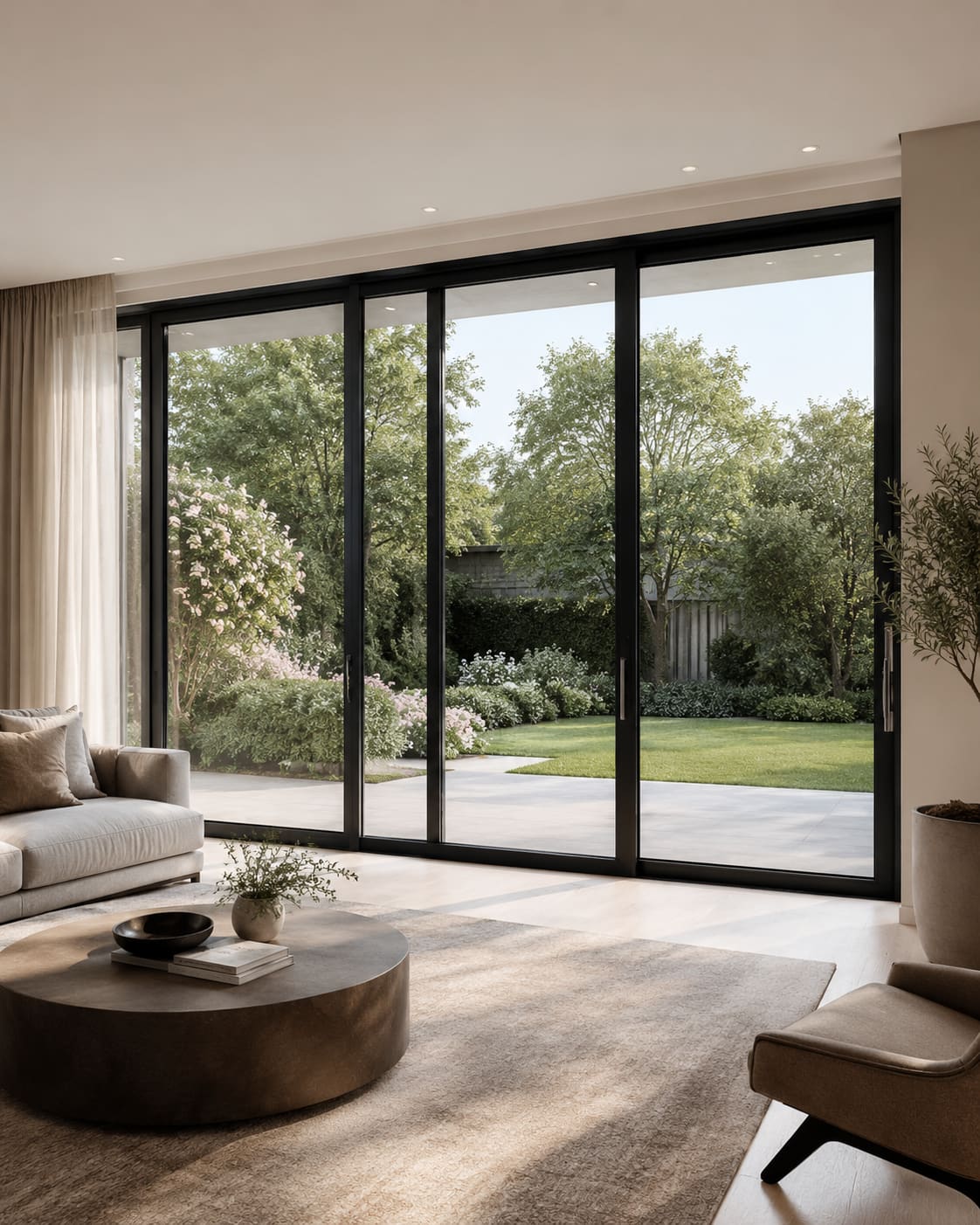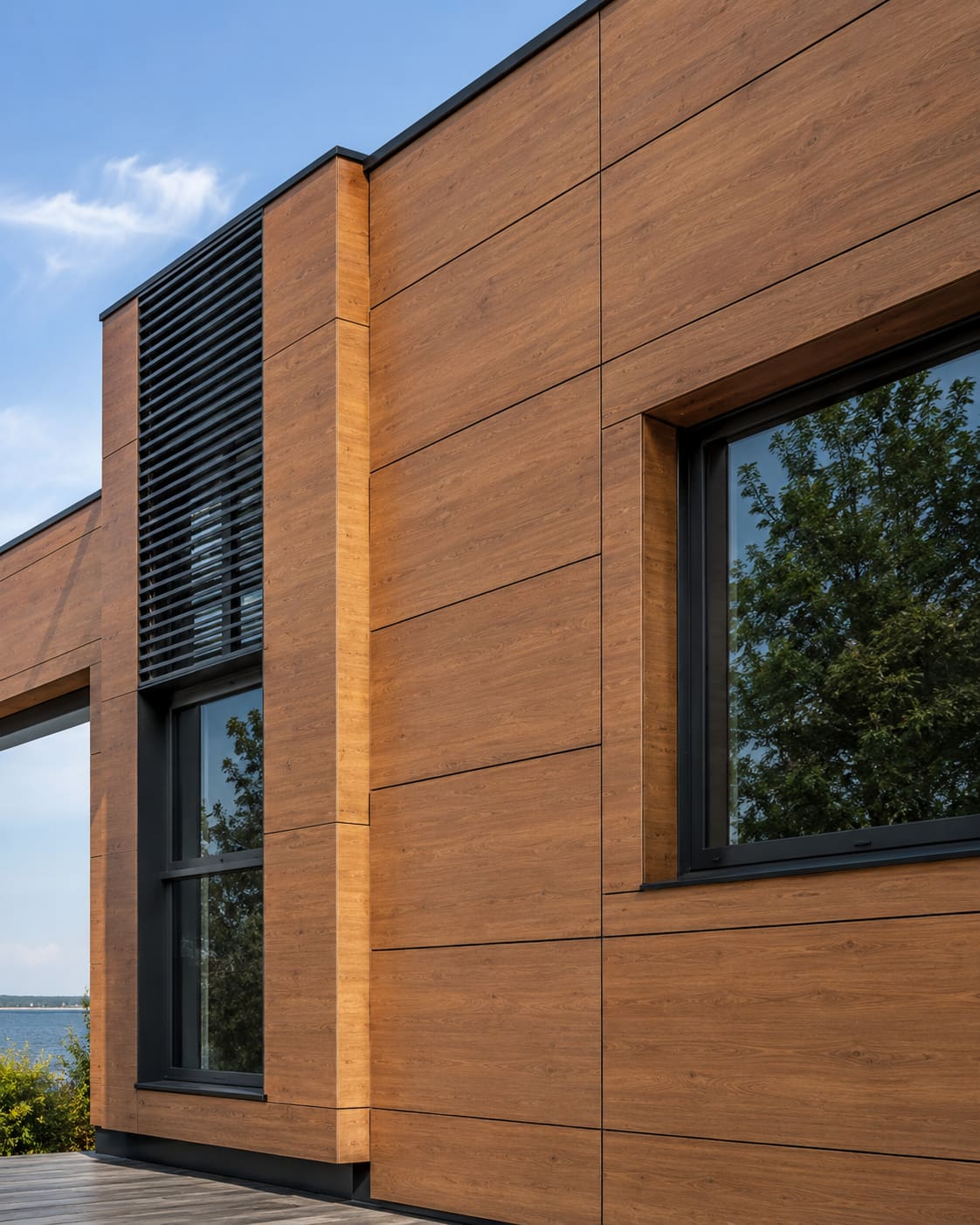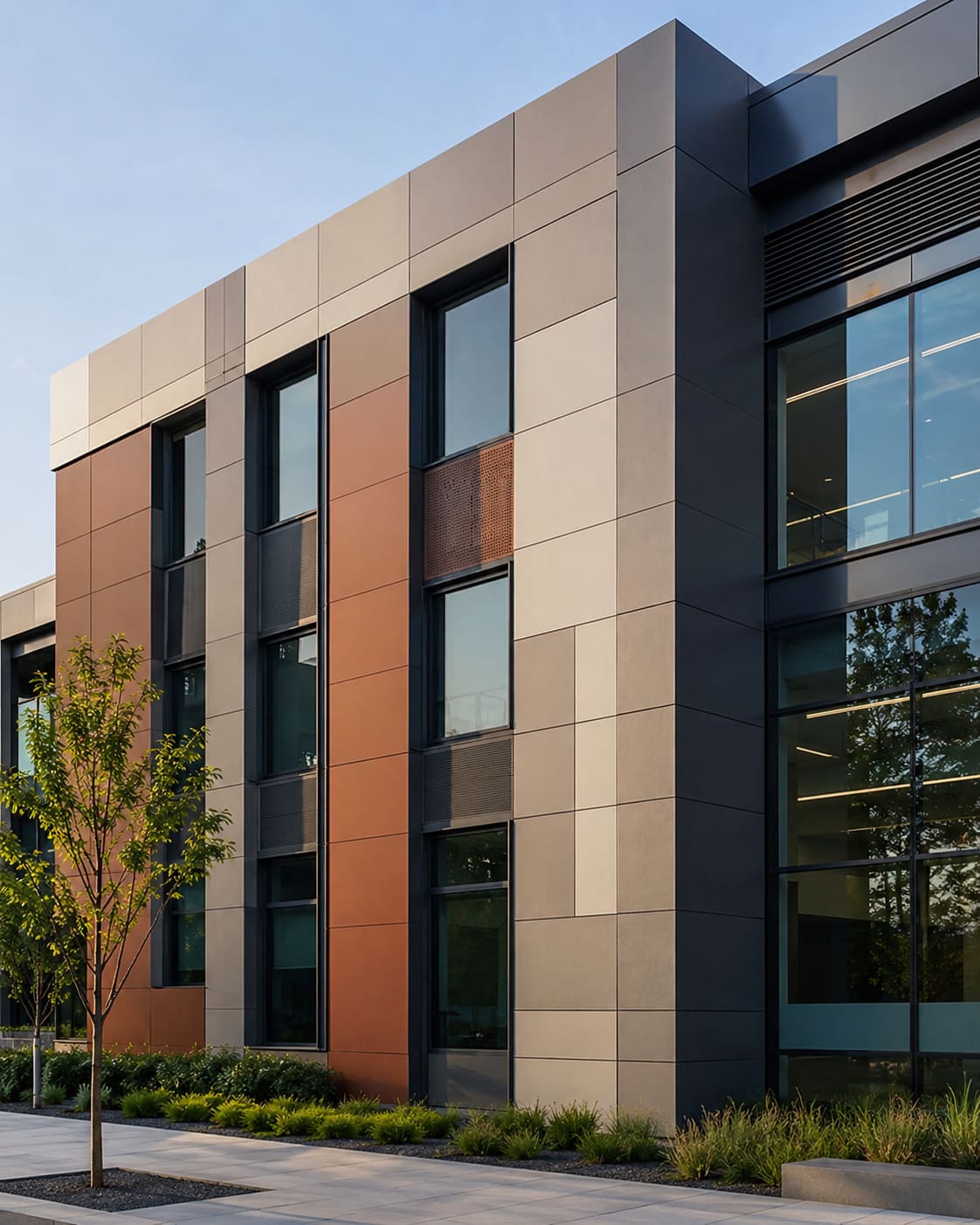
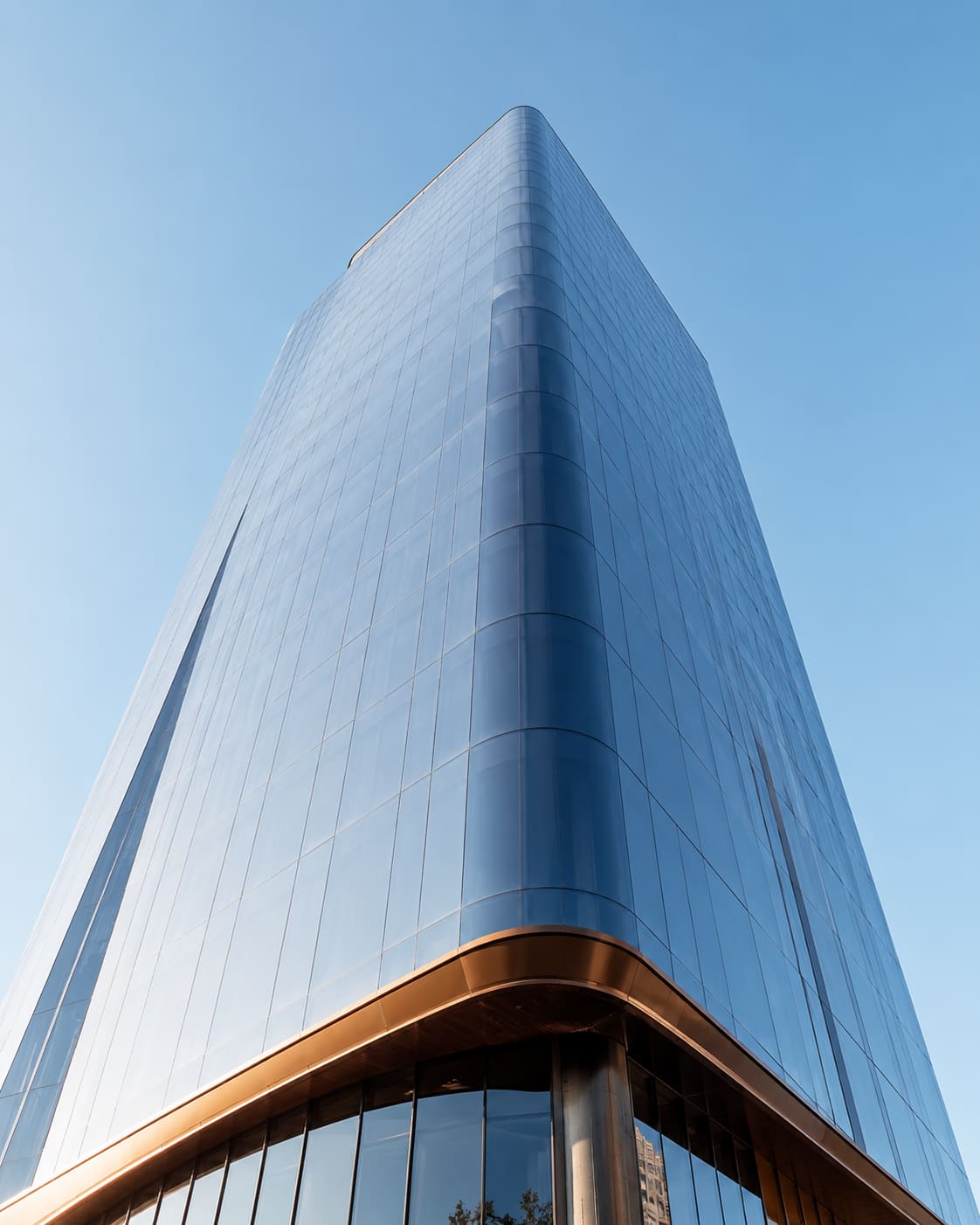
A glass facade in Hyderabad typically costs between Rs 350 and Rs 1,600 per square foot in 2026, with the exact figure set almost entirely by the glazing system you choose. Budget frameless and spider shopfront work starts around Rs 350-600 per sqft, standard structural glazing runs Rs 550-950 per sqft, and premium unitised curtain wall glazing with double-glazed high-performance glass reaches Rs 1,100-1,600 per sqft. These are supply-and-installation rates common across Hyderabad, Secunderabad and the wider Telangana and Andhra Pradesh market, measured on the outer glazed area of the elevation.
The right number for your building depends on glass specification, the aluminium system, building height and where the site sits within the twin cities. A retail shopfront in Kukatpally is priced very differently from a 15-storey IT tower curtain wall in the Financial District, and a hospital elevation in Secunderabad differs again from a car showroom on the Vijayawada highway. Per-sqft rates are a genuine planning tool, but they are only a starting estimate until an engineer measures your actual drawings and wind zone.
Below we break down every common system, what pushes the rate up or down in the local market, three worked budgets, the realistic installation timeline and the hidden costs the cheapest quotations conveniently omit. If you already have elevation drawings, you can skip ahead and get a free quote; if you are still comparing systems, understanding the per-sqft logic here will save you lakhs and stop you paying tower-grade rates for a two-storey showroom.
Glass Facade Cost Per Sq Ft in Hyderabad by System
Facade pricing in Hyderabad is set mainly by the glazing system, so match the system to your building type before you compare a single quote. Ordering costs by system also explains why two quotes for the same elevation can look thousands of rupees apart per sqft: they are usually pricing different engineering, not the same job at different margins. Here are the realistic 2026 supply-and-fix ranges across the twin cities, before GST.
- Frameless and spider glazing: Rs 350-600 per sqft. Shopfronts, showrooms and ground-floor retail in areas like Kukatpally, Ameerpet and Dilsukhnagar. These lean on stainless spider fittings and toughened glass rather than a full aluminium frame.
- Standard structural (silicone) glazing: Rs 550-950 per sqft. The workhorse choice for offices in Madhapur, Kondapur and Kokapet, with glass bonded to an aluminium sub-frame for a flush, frameless external look.
- Semi-unitised curtain wall: Rs 900-1,250 per sqft. Mid-rise commercial buildings where some assembly happens on site and some in the workshop, balancing cost against speed.
- Unitised curtain wall with DGU: Rs 1,100-1,600 per sqft. Grade-A IT towers in HITEC City, Gachibowli and the Financial District, factory-assembled into panels for speed, weathertightness and quality control.
- ACP plus glazing combination facade: Rs 450-800 per sqft. A cost-effective mixed cladding used widely along Secunderabad, Begumpet and Panjagutta commercial streets, blending solid aluminium composite panels with vision glass.
As a rule, the taller and more air-conditioned the building, the further right you move on this scale. You can see how these systems look on completed elevations in our recent projects before you lock a specification.
Structural Glazing vs Curtain Wall: Which System Fits
Structural glazing and curtain walls are not interchangeable. They solve different problems, and choosing wrongly is the fastest way to either overspend or dangerously under-engineer a facade. This is the plain-language difference our Hyderabad clients ask about most.
- Structural glazing bonds glass to an aluminium framework with high-strength structural silicone, giving a smooth, frameless exterior. It is ideal for low-to-mid-rise offices, showrooms and clinics up to roughly 8-10 floors, and it is the default for Madhapur and Kondapur commercial builds.
- Curtain wall glazing is a self-supporting outer skin hung off the building's floor slabs, engineered to carry wind pressure and its own dead load while keeping water and air out. Unitised versions arrive as pre-built, pre-tested panels, which is why Financial District towers prefer them: faster erection, tighter quality and far fewer site leaks.
- Cost gap: expect to pay 30-70% more per sqft for a unitised curtain wall than for standard structural glazing. In return you gain speed, tested weather performance and a warranty package that lenders and Grade-A tenants expect.
For anything above about 10 floors in Gachibowli or HITEC City, a curtain wall is usually non-negotiable for wind and fire compliance. For a boutique showroom or a G+3 clinic, structural glazing delivers the same clean look for a fraction of the outlay. Browse the full spread of systems on our services page to see what fits your elevation.
What Drives the Price Up or Down in the Twin Cities
The single biggest cost lever is the glass specification, followed by the aluminium system and building height. These are the factors we quote on locally, listed roughly in order of impact on the per-sqft rate.
- Glass type: single-glazed reflective glass is cheapest, while double-glazed low-E units cut Hyderabad's summer heat gain by 40-50% and add roughly Rs 200-400 per sqft. Laminated and heat-strengthened safety glass add further cost but are mandatory for overhead glazing, railings and many high-traffic entrances.
- Aluminium system: local extrusions are economical, while imported systems such as Schueco, Reynaers and Technal add 25-40% for better thermal breaks, gaskets and independently tested performance.
- Building height: anything above the 15m mark needs engineered wind-load design to IS 875 for Hyderabad's monsoon gusts, plus scaffolding or suspended access, raising rates 10-20%.
- Facade area and repetition: large, uniform elevations in Kokapet and the Financial District cost less per sqft than small, cut-up shopfronts, because panels repeat and glass wastage drops sharply.
- Site access and floor level: tight lanes in old Secunderabad, Charminar or the older parts of Banjara Hills increase material handling and labour, while open plots along the Outer Ring Road are cheaper and quicker to erect.
- Hardware grade: the floor springs, patch fittings and door hardware you specify from brands like Taiton, Enox and Ozone move the entrance and openable portions of the budget noticeably, even though they sit outside the glass rate.
Sample Budgets for Hyderabad Facade Projects
Worked numbers make the per-sqft rates concrete. Here are three realistic 2026 scenarios across the twin cities, all supply-and-installation before 18% GST.
- Mid-rise office in Madhapur, 5,000 sqft glazed elevation, standard structural glazing at Rs 850 per sqft: 5,000 x 850 = Rs 42.5 lakh. Upgrade to double-glazed low-E at +Rs 300 per sqft and you add Rs 15 lakh, but claw much of it back on air-conditioning over Hyderabad's long summers.
- Retail showroom in Kukatpally, 1,200 sqft frameless spider glazing at Rs 500 per sqft: 1,200 x 500 = Rs 6 lakh, plus a floor-spring glass entrance and patch fittings on top of the base glass rate.
- Grade-A IT tower in the Financial District, 20,000 sqft unitised curtain wall with DGU at Rs 1,350 per sqft: 20,000 x 1,350 = Rs 2.7 crore, before backing steel, BMU, mock-ups and access equipment.
Add 18% GST on top of each figure, and budget a further 25-40% on the aluminium portion if you specify an imported system. Treat every one of these as a planning starting point only: a site-measured, itemised quotation is the sole number you should ever sign a contract against.
The Facade Installation Process and Timeline
A glass facade is a sequenced construction package, not an off-the-shelf product, so knowing the stages helps you plan cash flow and avoid site clashes with the main civil contractor. For a typical mid-rise Hyderabad building the process runs roughly 8-14 weeks; unitised curtain wall towers run longer because of factory panel lead times.
- Survey and design (1-2 weeks): site measurement, wind-zone assessment to IS 875, glass and aluminium selection, and shop-drawing approval.
- Procurement and fabrication (2-5 weeks): glass processing (toughening, DGU assembly, low-E coating) and aluminium cutting or panel assembly, either on site or in the workshop.
- Installation (3-6 weeks): fixing brackets and framework to the slab edges, glazing the panels, sealing joints with structural and weather silicone, and fitting openable sections.
- Testing and handover (1 week): water-spray and air-leakage checks, snagging, cleaning and final sign-off.
Unitised curtain walls front-load the schedule into factory assembly, which lengthens lead time but compresses noisy, weather-exposed site work. That trade-off is exactly why fast-track IT builds in HITEC City and the Financial District favour them despite the higher rate.
Frameless, Spider and Shopfront Glazing for Retail
For ground-floor retail and showrooms, frameless and spider glazing gives a premium, uninterrupted glass look at the lowest per-sqft cost, typically Rs 350-600. It is the go-to for showrooms along Banjara Hills, Jubilee Hills, Ameerpet and the busy commercial stretches of Secunderabad and Dilsukhnagar.
- Spider glazing uses stainless-steel fittings bolted to a minimal support structure, so the glass appears to float with almost no visible frame and maximum transparency for product display.
- Frameless shopfronts pair toughened glass with slim patch fittings and a robust floor spring, so the entrance door swings smoothly through years of heavy footfall.
- Because these systems are ground-level, they skip the wind-load and suspended-access premiums that push tower facades higher, which is precisely why they stay so cost-effective.
The catch: frameless glazing is not engineered for tall buildings. Above two or three floors you need a structural glazing or curtain wall system to handle wind and safety, so do not let a low shopfront rate set your expectations for an office tower.
Common Mistakes That Blow the Facade Budget
Most facade cost overruns in Hyderabad trace back to a handful of avoidable decisions made before the first panel is ever ordered. Watch for these.
- Comparing quotes on headline rate alone: one quote may include backing steel, sealant and GST while another does not, so the cheaper-looking rate often becomes the dearer project.
- Under-specifying glass: choosing single-glazed reflective glass to save Rs 300 per sqft, then paying it back many times over in air-conditioning across a west-facing Gachibowli elevation.
- Ignoring wind and fire compliance: skipping IS 875 wind design or inter-floor fire-stops on a high-rise stalls the occupancy certificate and invites costly rework.
- Splitting procurement: buying glass, aluminium and door hardware from three unrelated vendors, which causes mismatched profiles, finger-pointing and site delays when something does not fit.
- Treating a phone rate as a contract: agreeing a number before anyone has measured the elevation, then absorbing every variation as an extra once work begins.
The fix for all five is the same: a single accountable contractor, a measured itemised quote, and a specification signed off before fabrication starts.
How to Compare Facade Quotes and Get an Accurate Rate
The most accurate way to price a facade in Hyderabad is a site-measured quotation on your actual elevation drawings, wind zone and glass specification, never a rate quoted over the phone. To compare vendors fairly, normalise every quote to the same basis first.
- Confirm each rate is supply-and-installation, and whether 18% GST is included or extra.
- Check the glass make and spec (Saint-Gobain, AIS, Guardian), thickness, and whether it is single or double glazed with a low-E coating.
- Verify the aluminium system, gasket quality and whether backing steel is in scope or billed separately at Rs 90-150 per kg.
- Ask for the wind-load design basis (IS 875) and inter-floor fire-stop details for anything above 15m.
- Match warranty terms: a genuine curtain wall should carry a weatherproofing warranty, not merely a glass warranty.
Once every quote shares the same basis, the cheapest headline rate is frequently not the cheapest project. As a facade contractor and authorised hardware dealer serving Hyderabad, Secunderabad and the wider Telangana and Andhra Pradesh region, we handle glass, aluminium and entrance hardware under one roof. To get a like-for-like measured figure for your building, get a free quote with your drawings and we will return an itemised rate.