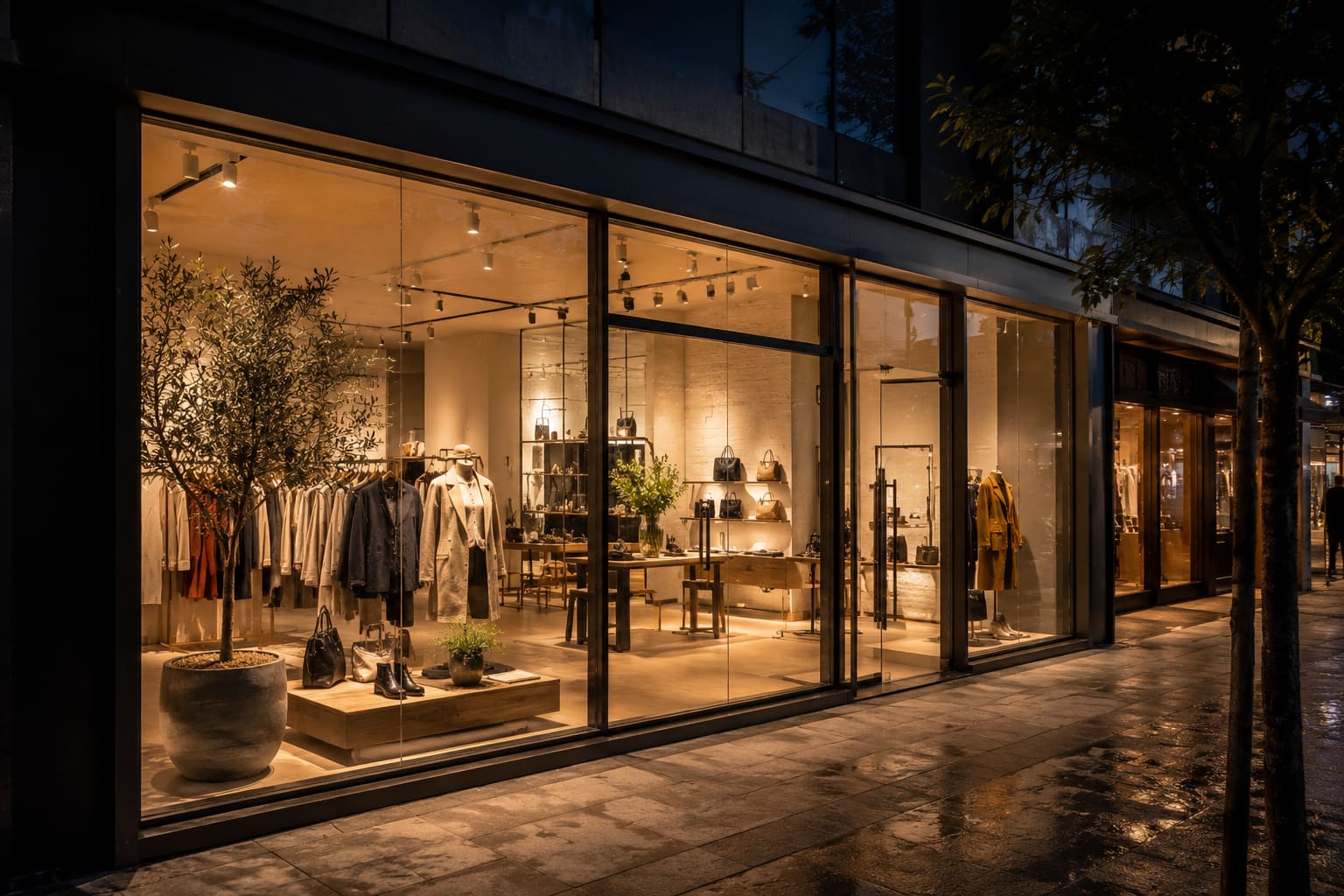
A glass shopfront in Hyderabad typically costs between INR 350 and INR 1,600 per sq ft supplied and installed, with most standard retail storefronts landing in the INR 550 to INR 900 range once glass, framing, hardware and fitting are included. It is usually the single most visible line in a retail fit-out budget - and the one that decides whether a passer-by stops and walks in. A well-designed glass shopfront in toughened glass does far more than enclose your shop: it advertises your brand 24 hours a day, floods the interior with daylight, and signals that you are a serious, permanent business on the street.
The reason quoted prices swing so widely is that a basic framed unit and a frameless, spider-glazed showroom facade are almost different products. That four-times gap is not random - it maps directly to glass thickness, the framing system, and the quality of hardware such as patch fittings, floor springs and locks. Cheap fittings sag within a year; branded ones from Taiton, Enox or Ozone keep a door swinging true for a decade. Understanding which of these you are actually paying for is the difference between a confident decision and an expensive guess.
This guide breaks down exactly what you pay for, gives realistic 2026 indicative rates for Hyderabad, Secunderabad and across Telangana and Andhra Pradesh, and shows where the money goes so you can compare quotes line by line. If you would rather skip straight to numbers for your own space, you can get a free quote after a quick site visit, or browse our recent projects to see finished storefronts first.
What Does a Glass Shopfront Cost in Hyderabad?
As a working rule, budget between INR 350 and INR 1,600 per sq ft for a glass shopfront in Hyderabad, with most standard retail storefronts landing in the INR 550 to INR 900 range once glass, framing, hardware and installation are included. The figure that lands in your quote depends far more on the system you choose than on your postcode - a boutique in Kukatpally and one in Jubilee Hills pay similar material rates but can end up lakhs apart on design.
Here are typical indicative rates by shopfront type, supplied and installed, as of 2026:
- Framed aluminium shopfront (10-12mm glass in section): INR 350 to INR 600 per sq ft
- Toughened glass shopfront with patch-fitting doors: INR 600 to INR 950 per sq ft
- Frameless / spider (bolted) glazed facade: INR 1,100 to INR 1,600 per sq ft
- Automatic sliding glass entrance (add-on): INR 1.4 to INR 2.8 lakh per door set
To translate those rates into real projects: a small 200 sq ft neighbourhood shopfront in a framed system may cost INR 80,000 to INR 1.2 lakh, while a 400 sq ft frameless showroom facade in a Banjara Hills or Gachibowli retail block can run INR 4.5 to INR 6.5 lakh. A single-door toughened storefront for a 10x12 ft clinic or boutique in Secunderabad usually settles around INR 1.1 to INR 1.6 lakh.
These figures assume ground-floor access and a clean, clear opening. Upper floors, heritage frontages in the Old City, or a large front elevation glazing scheme change the maths considerably, which is exactly why the breakdown in the sections below matters before you sign anything.
Glass Type and Thickness: The Biggest Cost Lever
Glass is usually 25 to 40 percent of the total shopfront cost, so the specification you pick here moves the price more than almost any other single choice. Retail storefronts must use toughened (tempered) safety glass by code, but within that category there is a real and meaningful range that a good quote will spell out.
- 10mm toughened clear: the standard, most economical choice for typical shopfront spans and fixed panels.
- 12mm toughened: needed for taller or wider frameless spans and for door leaves - adds roughly 15 to 25 percent over 10mm.
- Low-iron (extra-clear) glass: removes the faint green tint for true colour rendering in jewellery and fashion retail - adds 20 to 35 percent.
- Double-glazed (DGU) units: cut heat and street noise, valuable on west-facing frontages in Hyderabad's brutal summer - can nearly double the glass line.
- Laminated or lami-toughened: extra security and post-breakage retention for banks, pharmacies and high-value stores - a further premium.
For most retailers, 10mm or 12mm toughened clear hits the sweet spot of cost, clarity and strength. If your frontage bakes in afternoon sun - common on many east-west streets across the twin cities - spending on a DGU or a solar-control coating usually pays back through a lower air-conditioning load over just a few seasons, so treat it as an operating-cost decision, not only a capital one.
Framed vs Frameless: Which Is Worth It?
Framed aluminium shopfronts are the practical choice for most kirana stores, clinics, offices and mid-market retail. They are affordable, fast to install, and easy to maintain - a sensible pick when steady footfall matters more than a luxury look. The aluminium section hides edge imperfections, tolerates a slightly out-of-square opening, and readily accepts sliding leaves for entrances and service windows.
Frameless and spider-glazed facades suit showrooms, jewellery stores, banks and premium brands where the glass itself is the statement. The near-invisible joints create an uninterrupted view of your interior and merchandise, which for high-value retail in areas like Jubilee Hills or Kondapur often pays for itself in walk-in conversions. These systems rely on precision structural fittings and thicker 12mm glass, and frequently tie into a larger front elevation glazing design - which is exactly why they cost two to three times more per sq ft.
A middle path many Hyderabad retailers choose is toughened glass with slim patch fittings - it delivers roughly an 80 percent frameless appearance at about 60 percent of a full spider-glazed price. Quality patch fittings at the top and bottom of each glass leaf carry the load while keeping the visible hardware minimal, giving a clean look without the premium engineering bill.
The honest rule: if your brand lives or dies on kerb appeal, frameless is worth the spend. If you are chasing durability and value, framed or patch-fitted toughened glass is the smarter money. You can see the range of both in our recent projects before deciding which side of that line your store belongs on.
Hardware Costs: Why the Fittings Decide Longevity
Hardware is where cheap shopfronts fail first, and it is the easiest place for a low quote to quietly cut corners. A frameless glass door swings hundreds of times a day; the fittings holding it absorb every one of those cycles. As a hardware dealer for Taiton, Enox and Ozone, we see the difference clearly - branded hardware costs 10 to 20 percent more up front and routinely lasts three to five times longer than unbranded imports.
The items that matter most on a retail storefront:
- Floor springs: control the door's close speed and hold it aligned. A branded floor spring is the single most important fitting on a swing entrance - a failed one drops the whole door out of true.
- Patch fittings and patch locks: top and bottom patches plus a patch lock keep a frameless door secure and square without a surrounding frame.
- Handles and pulls: long D-pulls and push-pull sets are both functional and a key part of the storefront's first impression at eye level.
- Glass-to-glass connectors and clamps: for fixed panels and returns, quality connectors prevent visible movement and rattle over time.
Indicative hardware spend on a single frameless glass entrance runs INR 12,000 to INR 35,000 depending on brand and finish. Skimping here is the most common regret we hear from shop owners who replaced a sagging door within twelve months - the door leaf survives, but the cheap spring and patch lock do not. If you want to compare the full range of fittings and finishes we work with, that is worth reviewing across our services before you finalise a spec.
What Drives the Price Up or Down
Two shops of the same floor area can differ by lakhs. Beyond glass and hardware, these are the factors that move your quote the most, and the ones worth interrogating in any comparison:
- Framing system: a simple aluminium section is cheapest; frameless glazing and spider fittings demand thicker glass and precision hardware, raising cost sharply.
- Span and height: double-height or extra-wide storefronts need structural mullions and heavier glass, increasing both material and labour.
- Doors and openings: every additional swing door, sliding leaf or automatic entrance adds hardware, fabrication and alignment cost.
- Site conditions: upper floors, tight access lanes in the Old City, or removal of an existing rolling shutter all add to installation charges.
- Finishes and extras: signage backing, LED strip channels, branded film, and a non-standard powder-coat colour on aluminium are small individually but add up across a full frontage.
- GST and transport: 18 percent GST and delivery of large toughened panels are real costs - make sure they are stated on the quote, not buried or omitted.
When you strip a quote back to these variables, most confusing price differences resolve themselves. A cheaper number almost always means thinner glass, an unbranded floor spring, or GST left off - rarely a genuinely better deal on identical work.
Process and Timeline: From Survey to Open Shutter
A glass shopfront is a made-to-measure product, so the timeline is driven by fabrication, not just fitting. From a confirmed order, most standard retail storefronts in Hyderabad are ready to trade within about two to three weeks. Here is how that time is usually spent:
- Site survey and measurement (Day 1): exact opening sizes, structural backing and access are recorded - this is what turns an indicative rate into a firm price.
- Design sign-off and advance (Days 1-2): glass, hardware brand, finish and door positions are locked, and an advance is paid to release the order.
- Fabrication (7 to 12 working days): glass is cut to size, edges polished, holes drilled for fittings, and then heat-treated to toughen it - critically, toughened glass cannot be cut or drilled after tempering, so measurements must be right the first time.
- Installation (2 to 4 days): framing or spider fittings are set, panels are lifted and glazed, doors are hung and floor springs adjusted, and silicone joints are finished.
- Handover and snagging: door swing, lock alignment and seals are checked before you open.
Larger frameless facades, automatic entrances or multi-storey front elevation glazing naturally add time for fabrication and precise alignment. Building this schedule into your fit-out plan matters - a delayed shopfront holds up signage, flooring and your launch date, so it should be one of the first trades you book, not the last.
Common Mistakes to Avoid When Buying a Shopfront
Most shopfront regrets trace back to a handful of avoidable decisions made at quoting stage. Watch for these:
- Chasing the lowest lump sum: a single headline number usually hides thinner glass or unbranded hardware. Insist on a per sq ft rate with the specification written out.
- Accepting unnamed hardware: 'good quality fittings' means nothing. Get the brand and model in writing - Taiton, Enox or Ozone - so you can compare like for like.
- Skipping the toughening check: ask to see the permanent BIS / IS 2553 stamp etched in a corner. Ordinary annealed glass in a storefront is both illegal and dangerous.
- Ignoring sun orientation: a west-facing frontage without solar-control or DGU glass turns your shop into an oven and inflates the electricity bill for years.
- Forgetting the extras: old shutter removal, scaffolding, debris disposal and GST are real line items. Confirm whether they are included before you compare quotes.
- No written warranty: reputable installers back hardware and workmanship for at least a year. A verbal promise is not a warranty.
Avoiding these six is the cheapest quality upgrade available on the whole project - it costs nothing but attention at the quoting table, and it is where a careful buyer separates a durable storefront from one that needs rework inside a year.
Regional Price Notes: Hyderabad, Secunderabad and Beyond
Rates are broadly consistent across the twin cities, but a few local realities shift the final number. In prime retail corridors such as Banjara Hills, Jubilee Hills, Gachibowli and the Financial District, expect quotes at the upper end because landlords and brands demand frameless, premium finishes and faster turnaround.
- Secunderabad and older commercial belts (General Bazaar, Paradise, Sardar Patel Road): mixed framed and patch-fitted work dominates, keeping average rates moderate.
- Old City frontages: heritage facades and narrow lane access add labour and handling time, nudging installation charges upward.
- Suburban corridors (Kukatpally, Miyapur, LB Nagar, Uppal): steady mid-market demand keeps framed and patch-fitted storefronts competitively priced.
- Tier-2 Telangana and Andhra Pradesh towns (Warangal, Karimnagar, Nizamabad, Vijayawada, Guntur, Visakhapatnam): material rates are similar, but transporting large toughened panels safely can add a few percent.
Across all of these, the per sq ft ranges in this guide hold as a reliable planning baseline. A firm price still needs a measured survey, because opening sizes, structural backing and access decide the real labour content - and those vary street by street far more than the material rate does.
Getting an Accurate Quote and Avoiding Surprises
Insist on a per sq ft rate that clearly states glass thickness, brand of hardware, and whether GST, transport and installation are included - vague lump-sum quotes hide the biggest cost swings. A good quote reads like a specification, not a single number, and lets you compare two installers fairly.
- Confirm the glass is genuinely toughened by asking for the permanent BIS / IS 2553 stamp - retail storefronts must use safety glass, no exceptions.
- Pin down hardware brands and models by name so you are comparing identical fittings, not a brand against a nameless import.
- Check whether old shutter removal, scaffolding and debris disposal are inside the quote or billed extra.
- Ask about lead time: toughened glass is cut then heat-treated, so allow 7 to 12 working days after final measurement, plus 2 to 4 days on site.
- Get the warranty in writing, typically one year on hardware and workmanship at minimum.
For Hyderabad, Secunderabad and surrounding Telangana and Andhra Pradesh projects, a proper site visit and measurement is the only route to a firm price - the rates above are indicative and vary with 2026 material costs. When you are ready, get a free quote and we will survey the opening, specify the glass and hardware, and hand you a fixed figure with no surprises.