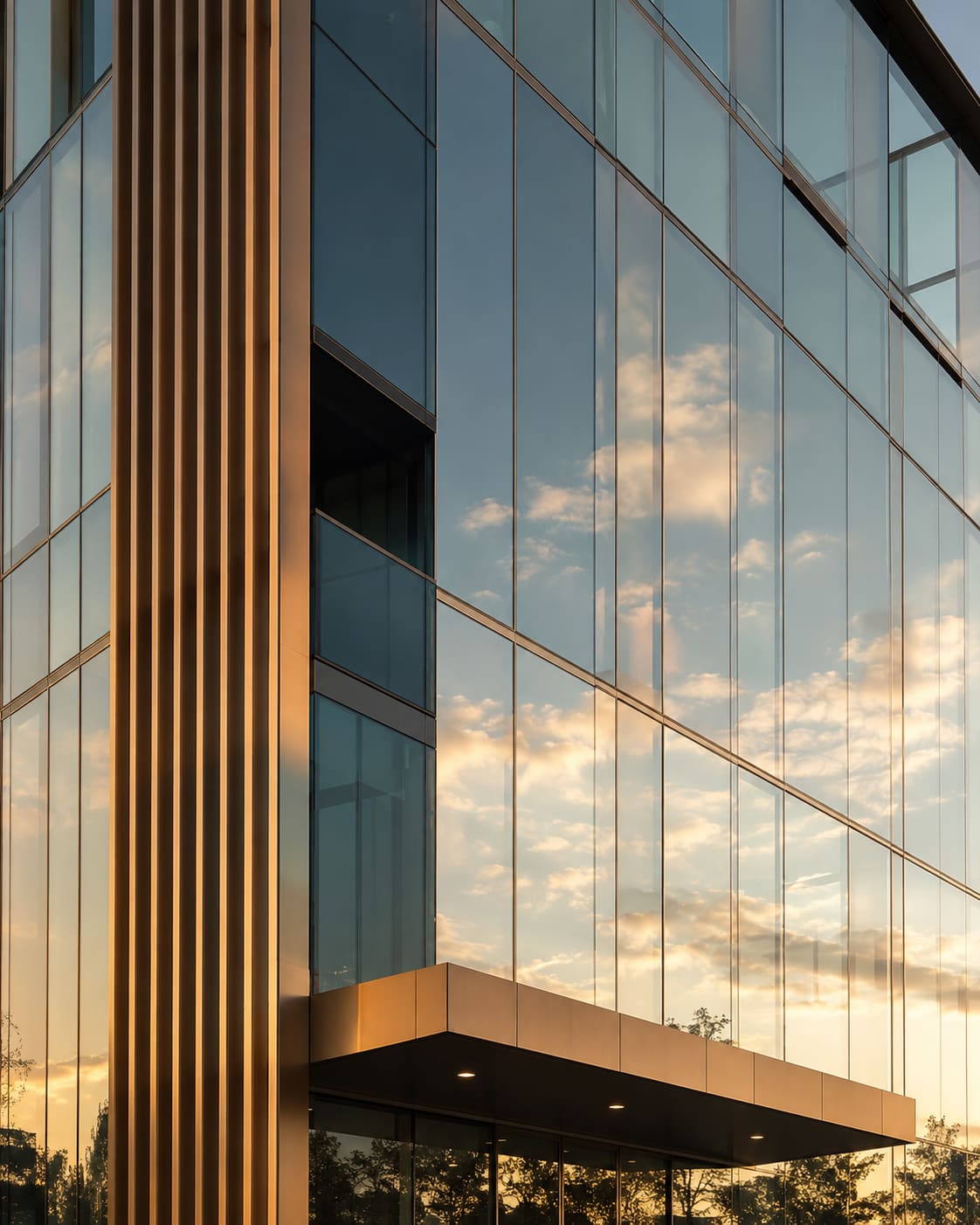
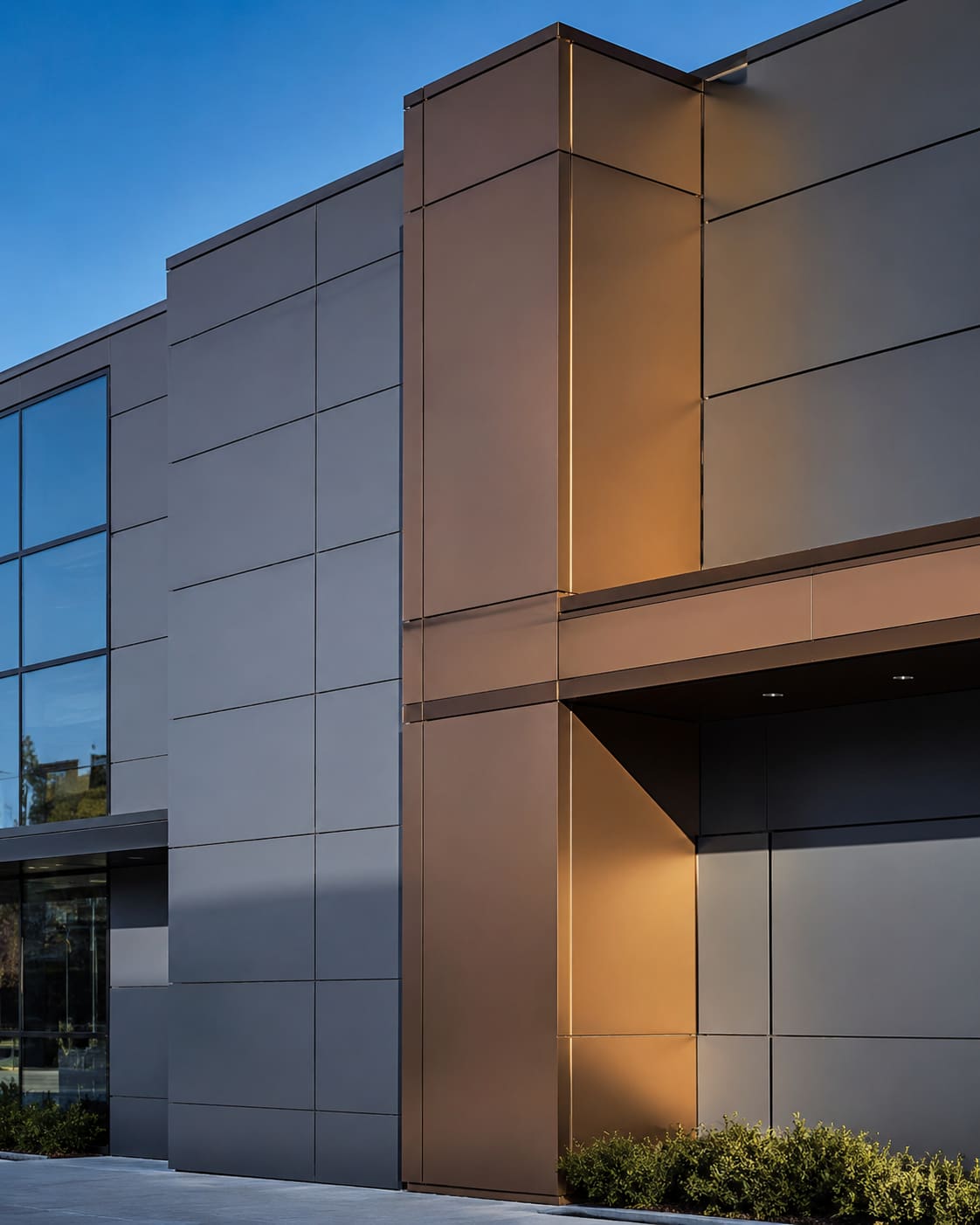
ACP cladding in Secunderabad typically costs between Rs 190 and Rs 550 per square foot fully installed, with the final rate driven by panel grade (economy versus fire-retardant), coating (PVDF versus PE), and facade complexity. For a standard commercial elevation in areas like Secunderabad, Marredpally, or Trimulgherry, most twin-city projects land around Rs 230 to Rs 320 per sq ft using a genuine 4mm PVDF panel on a properly detailed aluminium sub-frame.
Aluminium Composite Panel (ACP) is the most popular facade cladding across Hyderabad and Secunderabad because it handles our climate exceptionally well. Reflective PVDF coatings shrug off the harsh summer sun, the sealed sandwich construction resists monsoon water ingress, and smooth surfaces wash clean of the dust that coats every building near the twin cities' busy arterial roads. Whether you are refacing a shopfront in General Bazaar or wrapping a new IT block in Gachibowli, our ACP cladding service is engineered for Telangana weather from the sub-frame up.
This guide gives you honest 2026 local rates, the exact specification to demand for our heat and monsoon, the correct installation sequence, the mistakes that ruin cheap facades, and how to hire a fitter who will still answer the phone in year three. If you already know your scope, you can get a free quote and skip straight to a measured estimate; otherwise, read on and you will negotiate from a position of knowledge.
What is ACP cladding, and why it dominates twin-city facades
ACP, or Aluminium Composite Panel, is a lightweight sandwich sheet: two thin aluminium skins bonded to a solid core, usually 3mm or 4mm thick overall. That core is either a low-density polyethylene (PE) plastic, or, in the safer grades, a mineral-filled fire-retardant compound. The outer face carries the coloured coating you actually see, while the inner skin and core give the panel its stiffness. The result is a material that is far lighter than stone or solid metal, yet rigid enough to span a facade with clean, flat surfaces.
That combination is exactly why ACP dominates elevations across Hyderabad, Secunderabad and the wider Telangana and Andhra Pradesh market. It goes up fast, hides an old or uneven wall behind a crisp new skin, comes in hundreds of colours and finishes, and costs a fraction of a glass or stone facade. For retail frontages, showrooms, clinics, office blocks and IT campuses on a schedule, nothing else offers the same speed-to-finish ratio.
ACP is a rainscreen, not a waterproofing layer on its own. The panels shed the bulk of the rain, while a ventilated cavity and correctly sealed joints behind them do the real weatherproofing. Understanding that distinction is the single most useful thing an owner can know before signing a contract, because it is precisely the part cheap installers skip. You can see how a properly detailed envelope should look across our recent projects before you commit.
What ACP cladding costs in Secunderabad (2026 rates)
Expect to pay Rs 190 to Rs 550 per square foot installed in the twin cities, with panel grade being the single biggest cost lever. Here are the realistic supply-and-fix ranges we see across Secunderabad and Hyderabad projects in 2026:
- Economy PE-coated 3mm ACP: Rs 190 to Rs 230 per sq ft, suitable for signage and low-rise interiors only, never for full weather-facing elevations.
- Standard PVDF 4mm ACP (Alstone, Aludecor, Eurobond): Rs 230 to Rs 330 per sq ft, the workhorse for shops and offices in Kukatpally, Ameerpet, Begumpet and Secunderabad.
- Fire-Retardant (FR / A2) grade panels: Rs 360 to Rs 550 per sq ft, frequently mandatory for high-rises in HITEC City, Gachibowli and the Financial District.
These rates include the aluminium sub-structure, fasteners, structural silicone and labour. Add 8 to 15 percent for tall scaffolding or rope-access work above the third floor, and a further 5 to 10 percent for heavily grooved facades with many corners, returns and curved features. Specialist finishes such as timber-look, marble-look, mirror or brushed-metal panels can also add Rs 40 to Rs 120 per sq ft over a plain solid colour.
A useful rule of thumb for budgeting: a 1,000 sq ft standard PVDF elevation in Secunderabad will land near Rs 2.8 to 3.3 lakh, while the same area in FR grade for a tower in Madhapur can reach Rs 4.5 to 5.5 lakh. For an accurate figure, get a free quote with your elevation drawings so we can price the actual panel area and access difficulty rather than a broad per-foot average.
Choosing the right ACP panel for Hyderabad's climate
For the twin cities, specify a 4mm ACP with a genuine PVDF (Kynar 500) coating and a minimum 0.25mm aluminium skin per face; this combination survives our 42-degree summers and heavy monsoon without fading or oil-canning. PE (polyester) coatings are cheaper but chalk and dull within 3 to 4 years under Hyderabad's punishing UV load, so keep them strictly for interiors or short-life signage.
- Coating: PVDF for anything sun-facing; it holds colour for 12 to 15 years in our climate. FEVE is a premium step up for landmark buildings.
- Thickness: a 4mm panel with a 0.30mm skin for flat, rigid elevations that resist wind pressure at height and avoid visible waviness.
- Fire grade: FR or A2 non-combustible mineral core for buildings above 15m, or any commercial tower in the IT corridor where the fire NOC demands it.
- Colour: lighter greys, champagnes and metallics reflect heat and hide the fine dust that blows off dry arterial roads far better than dark shades.
ACP is not your only option. Where a client wants greater fire safety, scratch resistance or a natural stone and timber look, we often propose HPL cladding as an alternative or an accent band alongside ACP. It is worth comparing both before you commit an entire elevation to one material, and we are happy to bring physical samples of each to your site so you can judge the colour under Hyderabad daylight rather than a showroom bulb.
PVDF vs PE vs FR: a quick comparison
The three-way choice between PE, PVDF and FR grades decides both your budget and how the building will look in ten years. Here is how they stack up for Secunderabad and Hyderabad conditions:
- PE (Polyester): cheapest at Rs 190 to Rs 230 per sq ft, but fades and chalks in 3 to 4 years. Verdict: interiors and temporary signage only.
- PVDF (Kynar 500): the mainstream choice at Rs 230 to Rs 330 per sq ft, holding colour 12 to 15 years. Verdict: the default for almost every exterior in the twin cities.
- FR / A2 (Fire-Retardant): Rs 360 to Rs 550 per sq ft with a non-combustible core. Verdict: compulsory for high-rises and strongly advised for hospitals, malls and IT campuses.
The dangerous grey area is the market's habit of selling PE-cored panels labelled as PVDF. Because the surface looks identical on install day, the difference only shows up years later when the cheap panel chalks or the plastic core softens in a fire. Always insist on the manufacturer's coating certificate and batch details on your invoice, a point we return to in the hiring section below. If a quote is dramatically cheaper than every other, this substitution is the most likely reason.
How ACP installation works, step by step
A proper ACP job in Secunderabad follows a fixed sequence that takes 2 to 4 weeks for a typical shopfront or small office elevation. Insist your contractor does not skip the framing and expansion-gap stages, because these are exactly what prevent the buckling and leaks common on rushed jobs.
- Survey and measure the facade, then produce a panel-layout and shop drawing for your approval and sign-off.
- Fix aluminium sections (angles and tube) to the wall as a level, plumbed sub-frame with a ventilation cavity behind the panels.
- Cut and groove panels in the workshop for clean, sharp folds at corners, returns and window reveals.
- Mount panels with structural fasteners or a cassette system, maintaining 10 to 15mm expansion gaps between adjacent panels.
- Fill joints with weatherproof structural silicone, then peel the protective film and clean the elevation down.
The sub-frame and sealing are where corners get cut. A ventilated cavity lets the wall breathe and drains any wind-driven rain, while correct expansion gaps stop the aluminium from oil-canning as it heats and cools through a Hyderabad day. The same detailing discipline runs through everything on our services list, from glazing to louvres, which is why an experienced facade crew will detail ACP joints and silicone far better than a general labour gang hired by the day.
Common ACP cladding mistakes to avoid
Most ACP failures in the twin cities trace back to a handful of avoidable shortcuts rather than the panel itself. Watch for these before and during the job:
- Using a bare mild-steel sub-frame with no galvanising or aluminium; it rusts through within a few monsoons and streaks the panel face brown.
- Omitting the ventilation cavity so trapped moisture rots the wall behind and eventually bubbles the panel adhesion.
- Skipping or under-sizing expansion gaps, which causes the visible waviness (oil-canning) you see on so many cheaply clad shopfronts.
- Sealing joints with cheap acetic bathroom silicone instead of neutral-cure structural silicone, so joints crack, discolour and leak within a year or two.
- Accepting 3mm panels or sub-0.20mm skins on a weather-facing wall to shave the quote, then living with dents and flutter.
- Trusting a verbal PVDF promise with no coating certificate, and discovering a PE panel only when it fades.
Every one of these is invisible on handover day and expensive to fix later, because remedial work usually means stripping panels back to the frame. The cheapest way to avoid all of them is to specify the sub-frame material, skin thickness, coating grade and silicone type in writing before any money changes hands.
ACP vs HPL vs glass: choosing your facade material
ACP wins on cost, colour range and speed, but it is not automatically the right skin for every building in Telangana and Andhra Pradesh. Weigh it against the two other materials we fabricate before finalising:
- ACP: lightest and most affordable, huge colour palette, fast to install. Best for retail, offices and mixed elevations on a budget.
- HPL: tougher against scratches and impact with excellent inherent fire performance and natural stone or timber finishes; a strong pick for schools, hospitals and high-traffic frontages. See our HPL cladding options.
- Structural or unitised glass: maximum daylight and a premium corporate look for IT towers, though costlier and heavier on the structure.
Many of the best twin-city elevations combine all three, for example ACP spandrel bands between glazed floors with an HPL feature wall at the entrance. Mixing materials this way lets you spend the budget where it shows most and keeps the bulk of the elevation affordable, rather than committing every square foot to a single premium finish.
Hiring a reliable ACP contractor in the twin cities
Hire a local Secunderabad contractor who fabricates in-house, shows you completed elevations nearby, and gives a written warranty on both the panel and the workmanship. The market is full of low-price installers who fit PE panels sold as PVDF, so verification protects you far more than a cheap quote ever will.
- Ask to see 2 to 3 finished projects in Hyderabad or Secunderabad and personally inspect the joint lines, corners and returns.
- Demand the panel brand and coating on paper (a PVDF or FR certificate), not just a verbal promise on site.
- Confirm the sub-frame spec in writing; a hidden mild-steel-only frame will rust through the monsoon within a few seasons.
- Get a 5 to 10 year panel warranty plus at least 1 year on installation and sealing.
- Check for proper GST billing and a genuine local address so you can call them back for service in year three.
As a Hyderabad and Secunderabad facade specialist, Hakimi Aluminium and Glass covers survey, fabrication, installation and after-sales from one accountable team. You can review completed elevations among our recent projects, then get a free quote with your site details and we will measure, specify the right grade for your exposure, and give you an itemised estimate rather than a vague per-foot figure.
Maintenance and lifespan in Hyderabad conditions
A properly installed PVDF ACP facade lasts 15 to 20 years in Hyderabad and Secunderabad, and keeping it looking new needs very little effort. The reflective coating does most of the work; your job is simply to keep dust and pollution from baking on.
- Wash the elevation twice a year with plain water and a soft cloth or sponge, more often on dusty roadside frontages.
- Avoid abrasive pads, thinners and strong solvents, which can scar the PVDF surface and dull the finish.
- Re-check structural silicone joints around the 8 to 10 year mark and re-seal any that have hardened or lifted.
- Inspect fixings and the sub-frame cavity for corrosion after unusually heavy monsoon seasons.
Handled this way, an ACP elevation in Secunderabad will comfortably outlast its warranty and still look sharp when it is time to refresh the colours. Pair it with a facade partner who answers the phone and honours the warranty, and the whole envelope stays low-maintenance for its full service life, which is exactly the outcome the upfront specification work is meant to buy you.