Aluminium windows in Kurnool typically cost between Rs 350 and Rs 1,600 per square foot fully installed in 2026, with most homeowners spending Rs 600 to Rs 900 per square foot for a good mid-range sliding window. But choosing the right window here is about far more than picking a frame colour. Kurnool sits in the hot, dry Rayalaseema belt of Andhra Pradesh, where summer temperatures routinely cross 42 degrees Celsius, dust from the surrounding plains is relentless, and pre-monsoon winds can be fierce. The right aluminium window keeps that heat and dust out, cuts road noise, and lasts two decades without warping, rusting or rattling. The wrong one starts leaking and pitting within a couple of years.
At Hakimi Aluminium and Glass we fabricate and install aluminium windows across Hyderabad, Secunderabad, Telangana and the Rayalaseema districts of Andhra Pradesh, including Kurnool. Because we also stock and fit Taiton, Enox and Ozone hardware, every window we deliver is matched with rollers, locks and gaskets that survive local conditions, rather than the cheapest fittings a fabricator can source to win a quote. This guide walks you through the window styles that suit Kurnool homes, the glass and coatings that actually matter in this climate, the hardware that makes or breaks a window, realistic 2026 pricing in INR, and the exact questions to ask any fabricator before you sign.
Whether you are building a new home near NR Peta, retrofitting an apartment on Bellary Road, or upgrading a commercial front in the city centre, the same principles apply: specify the correct profile, insist on sturdy sections and quality hardware, and pair the frame with glass honestly suited to Kurnool's glare. Read the full guide, browse our recent projects for real installations, and then get a free quote when you are ready for measured pricing.
Why aluminium windows suit Kurnool's hot, dusty climate
Aluminium is the practical choice for Kurnool's hot, dry conditions. Unlike timber it will not warp in the heat or swell during the short monsoon, and unlike untreated steel it does not corrode. A powder-coated or anodised aluminium frame shrugs off UV and airborne dust, which is precisely what a Rayalaseema summer throws at it week after week. That is why aluminium and uPVC now dominate the window market across Andhra Pradesh and Telangana, while old steel and timber frames are steadily being replaced.
The advantages you feel day to day are concrete:
- Slim sightlines and large glass area, so rooms stay bright even with sun-control glass fitted
- Excellent structural strength, letting you span wide openings for cross-ventilation
- Low maintenance: a wipe-down is usually all a powder-coated frame needs, even after a dust storm
- Long service life, commonly 20 years or more when quality hardware is used
- Fully recyclable, which makes aluminium a genuinely sustainable long-term material
For the best thermal comfort, ask for a thermally broken profile or pair the frame with insulated double glazing. This makes a real difference against 40-degree-plus afternoons and lowers your air-conditioning load through the peak months of April, May and June. If your budget is tighter, our uPVC windows are an excellent alternative that insulate slightly better than plain aluminium while resisting heat and dust just as well. Many Kurnool households mix the two: aluminium for large living-room spans, uPVC for bedrooms where insulation and quiet matter most.
Window styles that work best in Kurnool homes
Two-track and three-track sliding windows are by far the most popular choice in Kurnool because they take up no swing space, seal well against dust and are simple to operate. Three-track systems let you run two glass panels plus a mosquito mesh, which is genuinely useful given the local insect load during and after the monsoon.
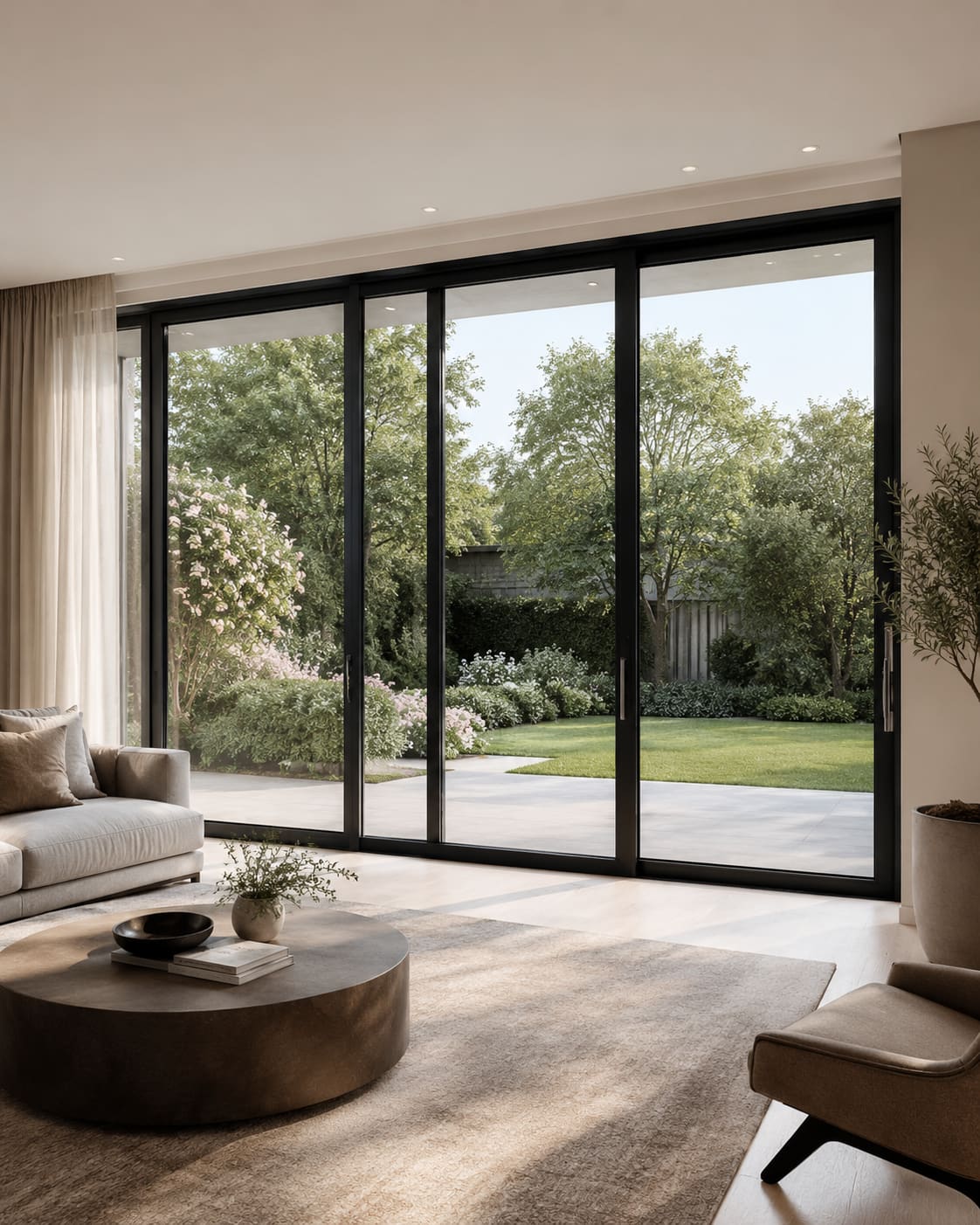
- Sliding windows: the everyday choice for bedrooms, living rooms and kitchens, gliding on stainless-steel rollers for years of smooth operation
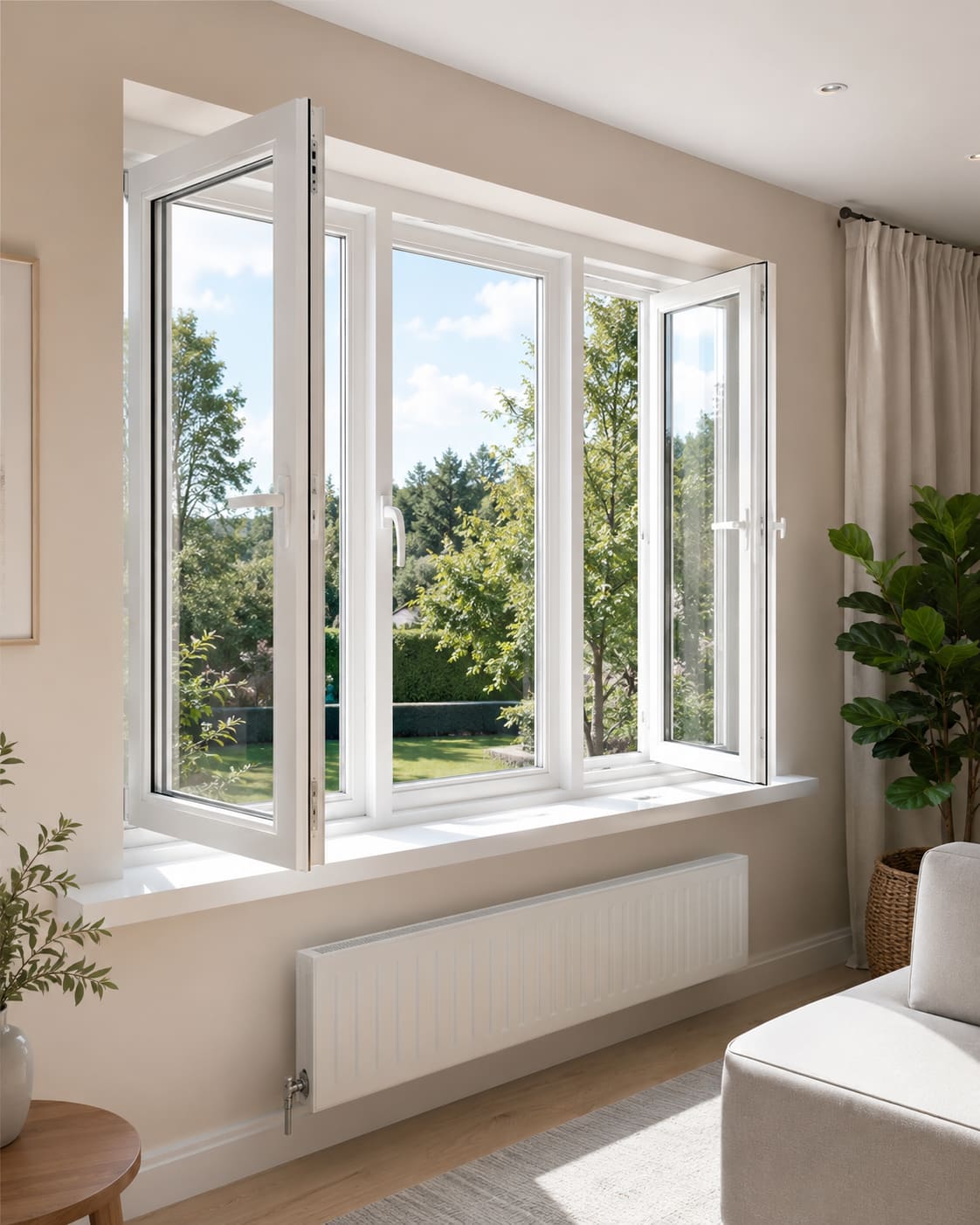
- Casement (side-hung) windows: the best sealing and ventilation, ideal for bathrooms and pooja rooms where you want a tight shut
- Openable and fixed combinations: pair a large fixed glass panel with a small openable vent to keep the view while controlling dust
- Sliding units with a dedicated mosquito-mesh track: strongly recommended for ground-floor and roadside homes
- Ventilators and top-hung units: for kitchens, stairwells and bathrooms that need constant airflow
For apartments near busy stretches like Bellary Road, the RTC bus stand or the vegetable market, a casement window with good gaskets will cut noise noticeably better than a basic slider. If you want the largest possible glass with minimal frame, ask about slim-profile sliding systems, some premium ranges offer sightlines under 25mm while still carrying heavy toughened glass. When you plan a whole house, think room by room rather than applying one style everywhere; it is the single biggest lever on both comfort and cost.
Glass and coatings to specify for Kurnool's glare
The glass matters as much as the frame in Kurnool's glare. For most homes we recommend 5mm tinted or reflective glass to cut heat and brightness, stepping up to double-glazed (DGU) units for bedrooms and west-facing rooms where the afternoon sun is punishing. Getting the glass right can lower indoor temperatures by several degrees and meaningfully reduce your air-conditioning bill through the summer.
- Frame finish: powder coating (widest colour range) or anodising (very hard-wearing); insist on a minimum 60-micron coating for UV and dust resistance
- Plain float glass: 4-5mm for the tightest budgets, used mainly where heat gain is not a concern
- Tinted or reflective glass: cuts solar heat and glare, the sensible default for most Kurnool rooms
- Toughened (tempered) glass: roughly 4-5 times stronger than ordinary float, essential near floor level, on large panels and for safety
- Double-glazed units (DGU): two panes with a sealed air or argon gap, for the best insulation and noise reduction in bedrooms
- Laminated glass: for security and extra sound control on ground-floor and street-facing openings
A common local mistake is buying a cheap frame with thin walls to save a few hundred rupees. Ask for the profile's section weight or wall thickness in mm; sturdier sections resist the pre-monsoon gusts and hold heavy glass securely for years. The same climate-first logic guides all of our aluminium fabrication work, whether it is a single bedroom window or a full apartment glazing package.
Hardware that makes or breaks an aluminium window
Hardware is where cheap windows quietly fail. Two frames can look identical on day one, but within two summers the difference between good and bad rollers, locks and gaskets becomes obvious, one window glides and seals, the other drags, rattles and lets a film of Rayalaseema dust settle on your floor every single day.
As a hardware dealer for Taiton, Enox and Ozone, we fit the components that actually determine how a window performs over its whole life:
- Stainless-steel rollers and tandem carriages, so heavy sashes keep gliding smoothly for years
- Multi-point locks that pull the sash tight against the gasket and improve security
- Robust handles with a corrosion-resistant finish for casement and openable units
- Quality EPDM gaskets and weather-pile that seal out dust, insects and rain-driven wind
- Friction stays, restrictors and child-safe fittings for upper floors
The rule of thumb we give every Kurnool customer is simple: never let a fabricator save Rs 200 on hardware to win a quote, because that small saving is exactly what fails first. Serviceable hardware is also why aluminium is such a smart long-term buy; replacement rollers and gaskets are inexpensive and easy to swap, so you can refresh the moving parts years later without replacing the whole window.
Indicative 2026 aluminium window prices in INR
Aluminium window pricing in Kurnool is usually quoted per square foot, fully installed. As a 2026 guide, expect roughly the following for supply-and-fit work across Kurnool and the wider Rayalaseema region:
- Basic sliding windows, plain glass, standard frame and hardware: around Rs 350 to Rs 550 per sq ft
- Mid-range sliding or casement, tinted or toughened glass, better hardware: about Rs 600 to Rs 900 per sq ft
- Premium thermally broken or double-glazed systems: roughly Rs 1,000 to Rs 1,600 per sq ft
As a real example, a standard 4ft x 4ft (16 sq ft) sliding window in the mid-range bracket works out to about Rs 9,600 to Rs 14,400 installed. A whole 2BHK home with 8 to 10 windows in the same bracket typically lands between Rs 90,000 and Rs 1,60,000 depending on sizes and glass. Prices vary with glass thickness, colour, mesh, hardware brand and site access, so always get a measured quote rather than relying on a phone estimate.
Because we run our own fabrication in Hyderabad and serve Kurnool directly, you avoid the mark-up of layered middlemen and receive genuine Taiton, Enox and Ozone hardware rather than unbranded look-alikes. When you are ready, get a free quote with your rough opening sizes and we will give you a transparent, itemised figure covering frame, glass, mesh and hardware separately.
Aluminium vs uPVC windows: which to choose
Both aluminium and uPVC are excellent for Kurnool, and the right pick depends on the room and your priorities. Aluminium gives you slimmer frames, larger glass and greater structural strength; uPVC gives you slightly better insulation and a lower price point on small-to-medium windows.
- Choose aluminium for: large living-room spans, sliding doors, commercial fronts, and anywhere you want maximum glass and a slim, modern look
- Choose uPVC windows for: bedrooms, west-facing rooms and any space where thermal insulation and quiet are the priority
- Both handle Kurnool's heat and dust well when specified with the right glass and gaskets
- Aluminium generally offers a longer structural life and easier repair; uPVC offers marginally better energy performance out of the box
In practice, many Kurnool homeowners use aluminium for the main hall and balcony sliders and uPVC for bedrooms, a sensible mix that balances looks, budget and comfort. If you are unsure, share your floor plan and we will recommend a room-by-room split. You can compare the full range on our services page before deciding.
How to choose a reliable window fabricator in Kurnool
Choosing the fabricator is as important as choosing the window. A good profile fitted badly will still leak, rattle and fail, so vet whoever you hire as carefully as you compare quotes. Ask direct questions and expect direct answers in writing.
- Ask for the profile brand, section wall thickness in mm and coating micron rating on paper
- Confirm which hardware brand is included, insist on named Taiton, Enox or Ozone components, not vague "standard fittings"
- Check that they do a measured site survey before quoting, not a per-square-foot guess over the phone
- Ask about the warranty on frame, glass and hardware, and exactly what it covers
- See at least one completed local installation, or verifiable photos, before paying any advance
Beware of quotes that look too cheap. The saving almost always comes from thinner sections, sub-60-micron coating or unbranded hardware, exactly the things that fail first in Kurnool's climate. A transparent fabricator will happily itemise frame, glass, mesh and hardware separately so you can see precisely where your money goes, and will show you our recent projects or similar references without hesitation.
Installation, maintenance and lifespan in Kurnool
A quality aluminium window in Kurnool should last 20 years or more, and maintenance is minimal, but only if it is installed correctly in the first place. Poor sealing at the reveal is the single most common cause of dust and water ingress, so proper fitting matters as much as the product itself.
- Installation: expect proper packing, level setting and a continuous silicone weather seal around the frame, plus a day or two of work for a typical home
- Cleaning: wipe frames and glass every few weeks during the dusty season; a mild soap solution is enough
- Tracks: vacuum or brush out the sliding track periodically so rollers keep gliding smoothly
- Hardware: a drop of lubricant on rollers and locks once or twice a year keeps everything moving
- Gaskets: check EPDM seals every couple of years and replace them if they harden or shrink
Look after the hardware and gaskets and the window essentially looks after itself. That serviceability, along with heat and dust resistance, is a big part of why aluminium remains the go-to choice across Hyderabad, Secunderabad and Kurnool. To plan your own project with confidence, note your rough opening sizes room by room and get a free quote so we can survey the site and recommend the right specification.