The best glass for shopfronts in Hyderabad is 10mm to 12mm toughened (tempered) glass, upgraded to solar-control or insulated double-glazed units (DGU) for west-facing and air-conditioned retail on Banjara Hills, Jubilee Hills and in HITEC City malls. Toughened glass is 4-5 times stronger than ordinary float glass, is mandatory for large frameless spans under IS 2553, and shatters into blunt granules instead of dangerous shards. If you want a shop that looks premium, stays cool and passes safety norms, 12mm toughened is where you start and everything else is a considered upgrade.
Choosing shopfront glass in Hyderabad is not only about looks. Our climate throws 40C-plus summers, a heavy south-west monsoon from June to September, and near-constant construction dust across Gachibowli, Kondapur and the Financial District at your glass. The right specification keeps the interior cool, cuts electricity bills, resists wind load and stays clear for years, which is why the glass type matters as much as the frame. A well-built glass shopfront pairs the correct glass with branded stainless hardware and a professionally sealed frame, and gets all three right the first time.
This guide covers the glass types that suit Telangana and Andhra Pradesh conditions, the thickness and safety standards you must specify, realistic INR pricing for Hyderabad and Secunderabad, the fittings that make a frameless shopfront work, and how to keep the glass crystal-clear through dust and monsoon. Whether you run a boutique in Himayatnagar, a jewellery showroom in Abids or an electronics store in Kokapet, use it to brief your contractor and get a free quote with confidence.
Which glass types suit Hyderabad shopfronts?
Toughened glass is the default for almost every Hyderabad shopfront because it meets safety norms and handles both heat and impact. The right upgrade depends on which way the shop faces, whether it is air-conditioned, and what you sell. These are the main options used across the twin cities, from busy Ameerpet high streets to premium Jubilee Hills flagships.
- Toughened (tempered) glass, 10-12mm: the workhorse for framed and frameless shopfronts in Kukatpally, Dilsukhnagar and Secunderabad markets. Strong, safe and cost-effective. Our toughened glass work covers spans, doors and fixed display panels.
- Toughened DGU (double glazed): two glass panes with a sealed air gap that cuts heat and street noise, ideal for AC showrooms in HITEC City and Kokapet where a cool, quiet interior sells the brand.
- Solar-control / reflective glass: a metallic coating that blocks 40-60% of solar heat, keeping west-facing shops on busy roads noticeably cooler without going dark inside.
- Laminated glass: a PVB interlayer holds the glass together if broken, adding security and near-total UV protection for jewellery, mobile and electronics stores.
- Low-E coated glass: reflects infrared heat while staying visually clear, best for high-end brand outlets in Banjara Hills that want a bright, true-colour display window.
For most Hyderabad retailers the sweet spot is 12mm plain toughened for the display area, upgraded to solar-control toughened on any elevation that catches the afternoon sun. Jewellers, electronics and mobile stores should step up to laminated toughened for the security and UV payoff, which also protects merchandise colours from fading.
What thickness and safety standard should you specify?
Specify 12mm toughened glass for any frameless shopfront span over 2.4 metres, and 8-10mm for smaller framed panels. Thickness is driven by panel size and wind load, not just budget, and getting it wrong shows up as visible flex, whistling in the wind, or outright failure during a storm.
- Up to 2.1m height, framed: 8-10mm toughened is sufficient and economical.
- 2.1m to 3m frameless spans: use 12mm toughened for stiffness and safety.
- Doors and large single panels: 12mm toughened, with polished edges and heat-soak testing to reduce spontaneous breakage.
- Tall facades in the Financial District and along the Outer Ring Road: engineer to wind load and consider laminated-toughened for panels above the ground floor.
Always insist on the IS 2553 mark and a manufacturer's toughening certificate; unbranded glass is common in local markets and fails faster in our heat. Heat-soak testing (per EN 14179 practice) drives out the nickel-sulphide inclusions that cause random summer breakage weeks or months after installation. On a large or tall shopfront it is cheap insurance, and reputable fabricators supplying our recent projects treat it as standard rather than an add-on.
How much does a glass shopfront cost in Hyderabad?
A glass shopfront in Hyderabad costs roughly INR 250 to INR 1,200 per square foot depending on glass type, thickness, hardware and whether the price is glass-only or full supply-and-fix. Use these twin-city ranges as a planning guide, then refine them against your exact span, height and finish.
- 10-12mm plain toughened glass: INR 250-400 per sq ft (glass only).
- Solar-control or reflective toughened: INR 450-750 per sq ft.
- Laminated toughened (security): INR 500-850 per sq ft.
- Toughened DGU / insulated units: INR 550-900 per sq ft.
- Frameless patch-fitting door: INR 18,000-35,000 per door with SS 304 hardware and floor spring.
- Full supply-and-fix frameless shopfront: typically INR 700-1,200 per sq ft including framing, fittings and installation.
As a worked example, a 12ft x 9ft (roughly 108 sq ft) frameless toughened shopfront in Secunderabad lands around INR 90,000 to INR 1,30,000 supply-and-fix, before premium coatings. Prices vary with location access, height and finish; a Financial District tower job carries more scaffolding and lifting cost than a ground-floor Kukatpally shop. Beware quotes that look cheap because they hide thin glass, local unbranded fittings or exclude the floor spring. For an itemised, transparent estimate, get a free quote with your dimensions and elevation.
Which fittings and hardware make a frameless shopfront work?
A frameless glass shopfront is only as good as the hardware holding it, so budget for branded fittings in SS 304 or SS 316 grade. Cheap fittings are the number-one reason a good-looking shopfront sags, rusts or jams within a monsoon or two, and replacing them later means dismantling the glass. This is where a specialist adds the most value over a low-bid local job.
- Patch fittings: top and bottom patches, corner locks and transom patches that hold frameless doors and fixed panels rigidly and cleanly.
- Floor springs and door closers: a quality floor spring gives a heavy glass door a smooth, self-closing action that survives thousands of daily open-and-shut cycles in a busy market.
- Door handles: pull handles, D-handles and push bars in matching stainless or matte-black finishes for a premium, coordinated look.
- Locks and access: patch locks, centre locks and glass dead-locks for jewellery, mobile and electronics stores that need serious security.
- Spider and structural fittings: spigots, standoffs and connectors that let tall glass panels hang with minimal framing, a look favoured by flagship stores in HITEC City.
Matching branded hardware to the right glass is the difference between a shopfront that ages gracefully and one that fails early. Insist on SS 304 as a minimum, and SS 316 for exposed or coastal-adjacent sites in Andhra Pradesh where salt and humidity are harsher on lower-grade steel.
Framed, frameless or structural glazing for your storefront?
Choose frameless toughened glass for a premium open look, framed aluminium glazing for budget and weather-tightness, and structural glazing for tall multi-storey facades. Each system suits a different Hyderabad retail context, and the choice affects both cost and the feel of your shopfront.
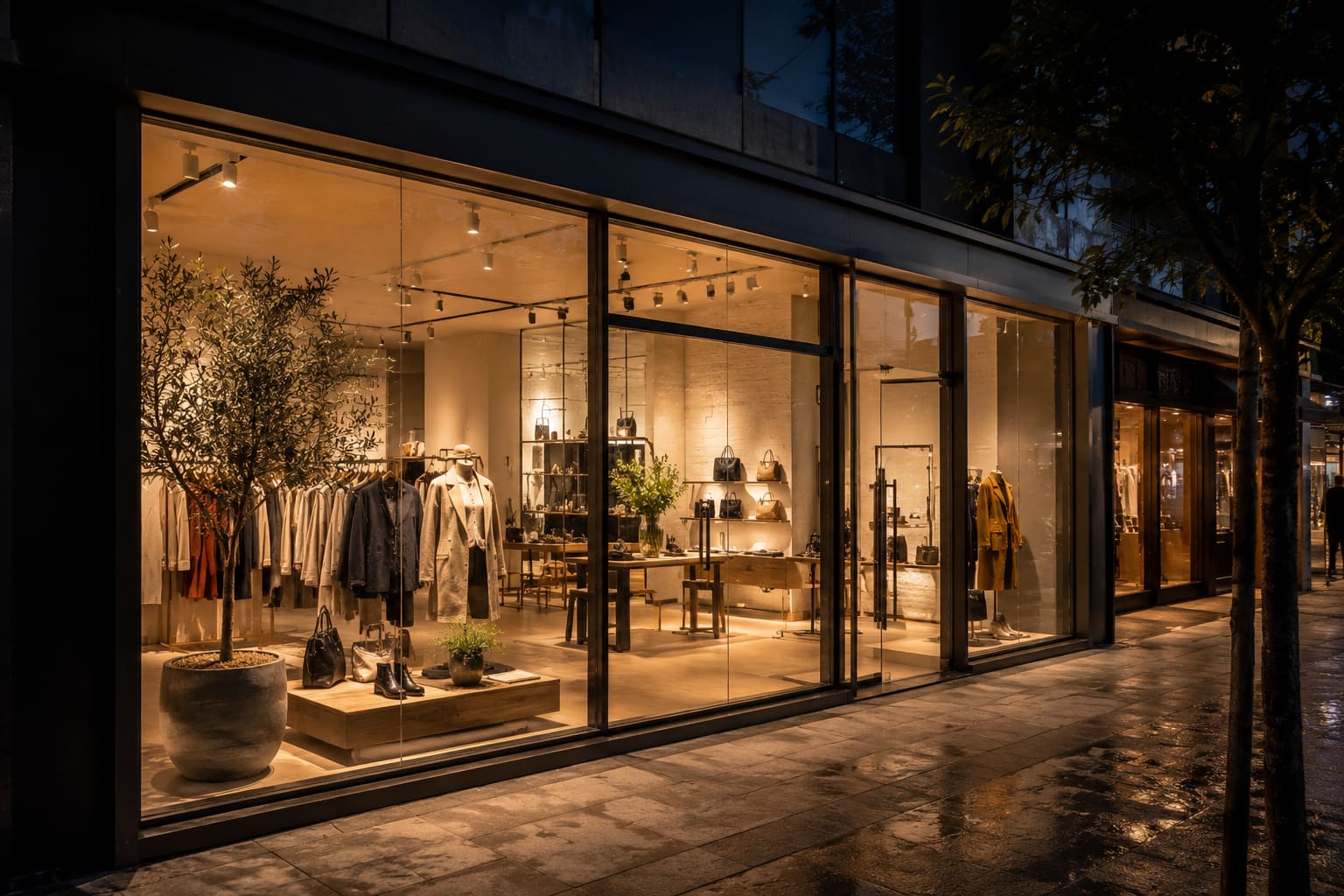
- Frameless: minimal metal, maximum display; best for fashion, eyewear and lifestyle brands in Banjara Hills and Jubilee Hills. Needs 12mm toughened and quality patch fittings.
- Framed aluminium: powder-coated sections hold the glass, so it is more forgiving on sealing and cheaper per sq ft, ideal for high-street shops in Ameerpet, Dilsukhnagar and Secunderabad.
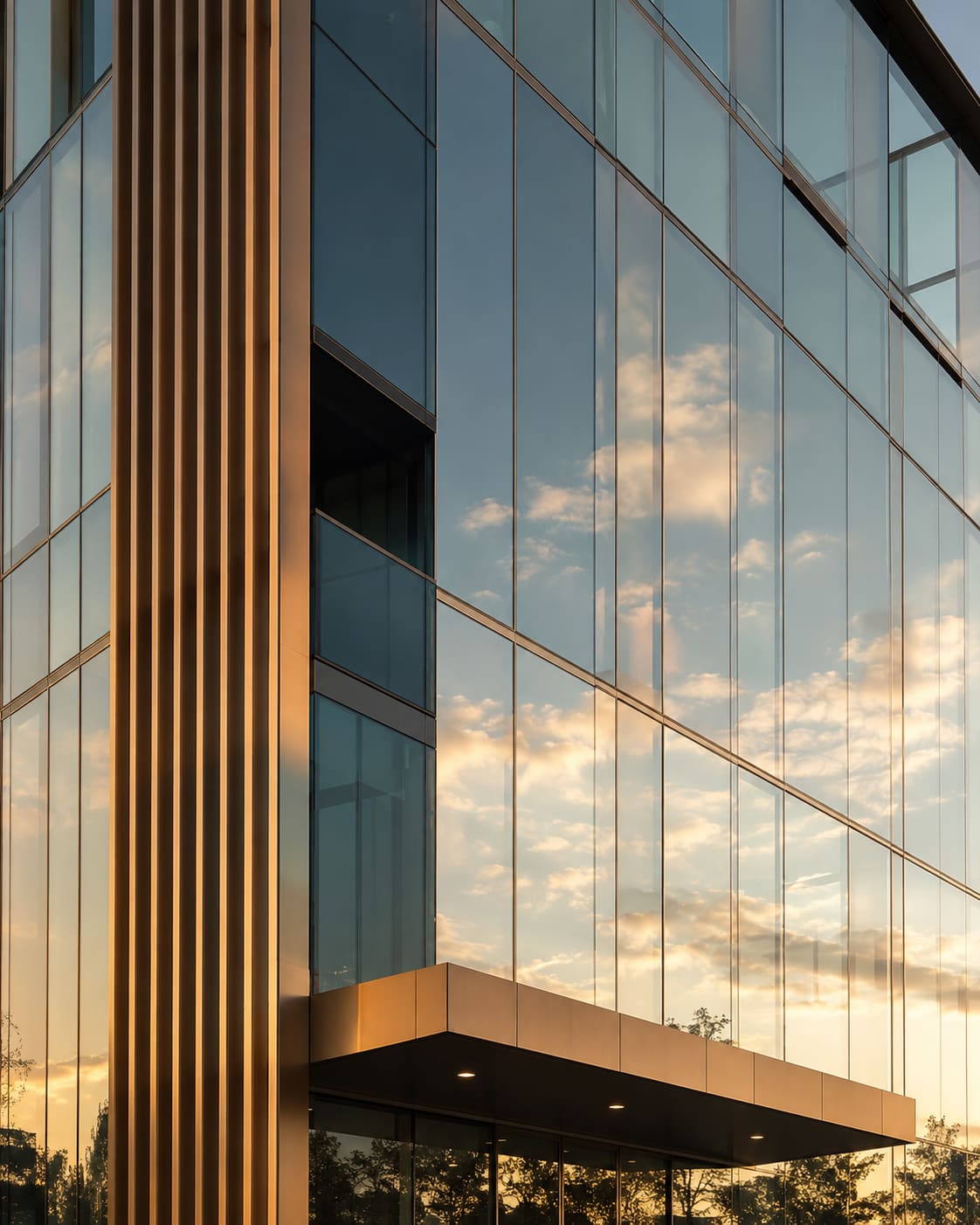
- Structural glazing: glass bonded to a concealed frame for a flush, all-glass tower elevation; the standard for showrooms and offices along the Outer Ring Road corridor and in the Financial District.
Frameless costs more up front but reads as premium and shows more merchandise, which matters for footfall-driven retail. Framed is the value pick for a fit-out on a tight budget or a landlord-restricted lease. If your shop sits on the ground floor of a multi-storey building, coordinate early with the building's facade system so your storefront ties in cleanly. Browse our services to see the full range of shopfront and facade options and match the system to your building.
The installation process and typical timeline
A typical Hyderabad shopfront runs from site survey to handover in about 7 to 15 working days, with the toughening stage being the main time driver because tempered glass cannot be cut or drilled after the furnace. Knowing the sequence helps you plan your fit-out and avoid costly re-work.
- Site survey and measurement (Day 1): exact opening sizes, floor levels and door swings are captured; every hole and cut-out is finalised now because toughened glass is fixed once tempered.
- Design sign-off and advance (Day 1-2): glass type, thickness, hardware finish and door layout are confirmed and the order is released to the fabricator.
- Fabrication and toughening (Day 3-9): glass is cut, edge-polished, drilled, then tempered and (for large jobs) heat-soaked; this stage cannot be rushed safely.
- Framing and preparation (parallel): aluminium sections or patch bases and the floor spring pocket are prepared on site.
- Installation (Day 1-2 on site): panels are lifted with suction cups, aligned, fitted and the door action is set.
- Sealing and finishing: structural silicone and gaskets are applied and left to cure before the shop is used.
Plan the glazing near the end of your interior fit-out so freshly toughened panels are not scratched by other trades, and never let a contractor promise same-day toughened glass, as that is a sign of pre-cut or unbranded stock.
How do you protect shopfront glass in Hyderabad's climate?
Protect Hyderabad shopfront glass from heat and dust by combining solar-control glazing, UV-rated sealants, stainless hardware and a simple cleaning routine. Local weather is the biggest long-term threat to appearance and lifespan, and small specification choices pay off for years.
- Use SS 304 or better stainless fittings; ordinary steel rusts during the monsoon and leaves brown streaks running down the glass.
- Choose structural silicone and EPDM gaskets rated for UV to stop leaks through the June-September rains.
- Pick reflective or Low-E glass on west and south faces to cut heat gain and AC load, which directly trims your monthly electricity bill.
- Clean with a soft squeegee and mild soap every 1-2 weeks to remove the construction dust common around Gachibowli, Kondapur and Kokapet.
- Apply an anti-static or hydrophobic coating so rain sheets off and dust does not bake onto the surface in the summer sun.
A twice-yearly check of the silicone joints and floor-spring alignment keeps small problems from becoming leaks or a dropped door. It is far cheaper to re-seal a joint than to replace a water-damaged panel or a rusted fitting mid-season.
Common mistakes to avoid when buying a shopfront
The most common shopfront mistakes in Hyderabad are under-speccing the glass thickness, buying unbranded fittings to save a few thousand rupees, and skipping the toughening certificate. Each one costs far more to fix later than it saved up front.
- Using 8mm glass on a large frameless span to cut cost, then living with visible flex, whistling and a real breakage risk.
- Fitting local unbranded patch fittings and floor springs that rust or seize within a monsoon, forcing a full re-fit.
- Skipping heat-soak testing on big panels, then facing random spontaneous breakage weeks after opening.
- Ordering glass before final measurements, which is fatal because toughened glass cannot be re-cut or re-drilled.
- Ignoring mall or complex fit-out rules on glass type and hardware finish, leading to rejected work and rework.
The cheapest quote is rarely the cheapest shopfront over five years. Ask for the glass brand, the toughening certificate, the hardware grade and a written warranty in the estimate, so you are comparing like with like across contractors.
Local compliance and wind-load tips for Telangana and AP
Hyderabad and Secunderabad shopfronts must use safety glass at street level and account for local wind load, especially on tall facades in the Financial District and along the Outer Ring Road. A few practical points keep you compliant and trouble-free from the start.
- Mall and complex bylaws across HITEC City, Gachibowli and Kokapet typically mandate toughened or laminated glass and specify hardware finishes; check tenant fit-out rules before ordering.
- Design frameless spans to IS 875 (Part 3) wind-load practice; taller elevations see higher gust pressure than sheltered inner-city streets in Abids or Koti.
- Insist on site-measured, factory-toughened panels, because toughened glass cannot be cut or drilled after tempering, so every hole and cut-out must be finalised before manufacture.
- Use experienced installers with proper glass-handling suction lifts; a 12mm panel of 100 sq ft weighs well over 250 kg and is dangerous to fit by hand.
- Keep the manufacturer's IS 2553 certificate and warranty documents, which matter for insurance and for landlord handover.
For shops in coastal Andhra Pradesh towns like Vijayawada or Visakhapatnam, step hardware up to SS 316 and favour laminated glass to handle salt-laden air and stronger seasonal winds. Getting these details right the first time avoids costly re-work, which is why most established retailers across the twin cities prefer a single specialist to handle glass, fittings and installation together.