The best windows for Hyderabad's summer heat are uPVC or thermal-break aluminium frames fitted with double-glazed low-E (low-emissivity) glass, because this combination blocks the most solar heat while sealing out the city's dust and monsoon rain. In the twin cities, where afternoon temperatures regularly cross 40C from April to June, this pairing can keep indoor rooms 4-7C cooler than ordinary single-glazed aluminium or wooden windows, directly cutting AC bills by an estimated 15-25% over a Hyderabad summer.
This guide is written specifically for homes and offices across Hyderabad and Secunderabad, from apartments in Gachibowli, HITEC City, Madhapur and Kondapur to independent houses in Banjara Hills, Jubilee Hills, Kukatpally, Kokapet and the Financial District. We explain which frames and glass actually perform in local Telangana and Andhra Pradesh conditions, give realistic INR pricing for the twin cities, and show how to match the right window to your flat's orientation and floor. As a glass, aluminium and facade specialist, Hakimi Aluminium and Glass installs both uPVC windows and thermal-break aluminium windows across the region.
Whether you are retrofitting a west-facing bedroom in Kokapet or specifying joinery for a new villa in Jubilee Hills, the choices below balance heat rejection, dust sealing and budget. You can see the kind of work this involves in our recent projects, and when you are ready, get a free quote for an on-site measurement anywhere across the twin cities.
Why Hyderabad's climate demands better windows
Hyderabad's summer combines intense dry heat, harsh direct sun and heavy dust, so the best windows for the city's summer heat must do three jobs at once: block solar heat, seal tightly against dust, and still drain monsoon rain. Ordinary single-glazed aluminium and old wooden windows fail on all three, which is why so many twin-city homes end up over-working their air conditioners from March through June.
The Deccan plateau climate is unusually demanding on joinery. Long, cloudless afternoons load west and south facades with radiant heat, then the monsoon swings the humidity and driving rain to the opposite extreme within weeks. A window has to survive both cycles, year after year, without warping, fading or leaking. The key local stress factors are:
- Heat: peak summer highs of 40-43C across Telangana and coastal Andhra Pradesh, with west and south-facing rooms in Gachibowli and Kokapet high-rises taking the worst afternoon sun.
- Dust: construction-heavy corridors like the Financial District, Kondapur, Narsingi and Kukatpally push fine cement and road dust through poorly sealed frames.
- Monsoon: June to September brings driving rain that leaks through low-quality sliding tracks and worn rubber gaskets.
- Noise: main-road flats along the ORR, HITEC City and inner Secunderabad benefit from the same sealed, double-glazed windows that cut heat.
Because these stresses arrive together, a window that only solves one of them is a false economy. The right specification is a system: frame, glass, gaskets and hardware working as one sealed unit. If you are upgrading larger openings too, the same sealed-system logic behind our thermal-break aluminium windows applies at facade scale.
Best window types ranked for summer performance
For Hyderabad summers, thermal-break aluminium with double glazing performs best overall, uPVC double glazing offers the best value, and plain single-glazed aluminium performs worst. Rank your choice by budget and room orientation rather than by looks alone.
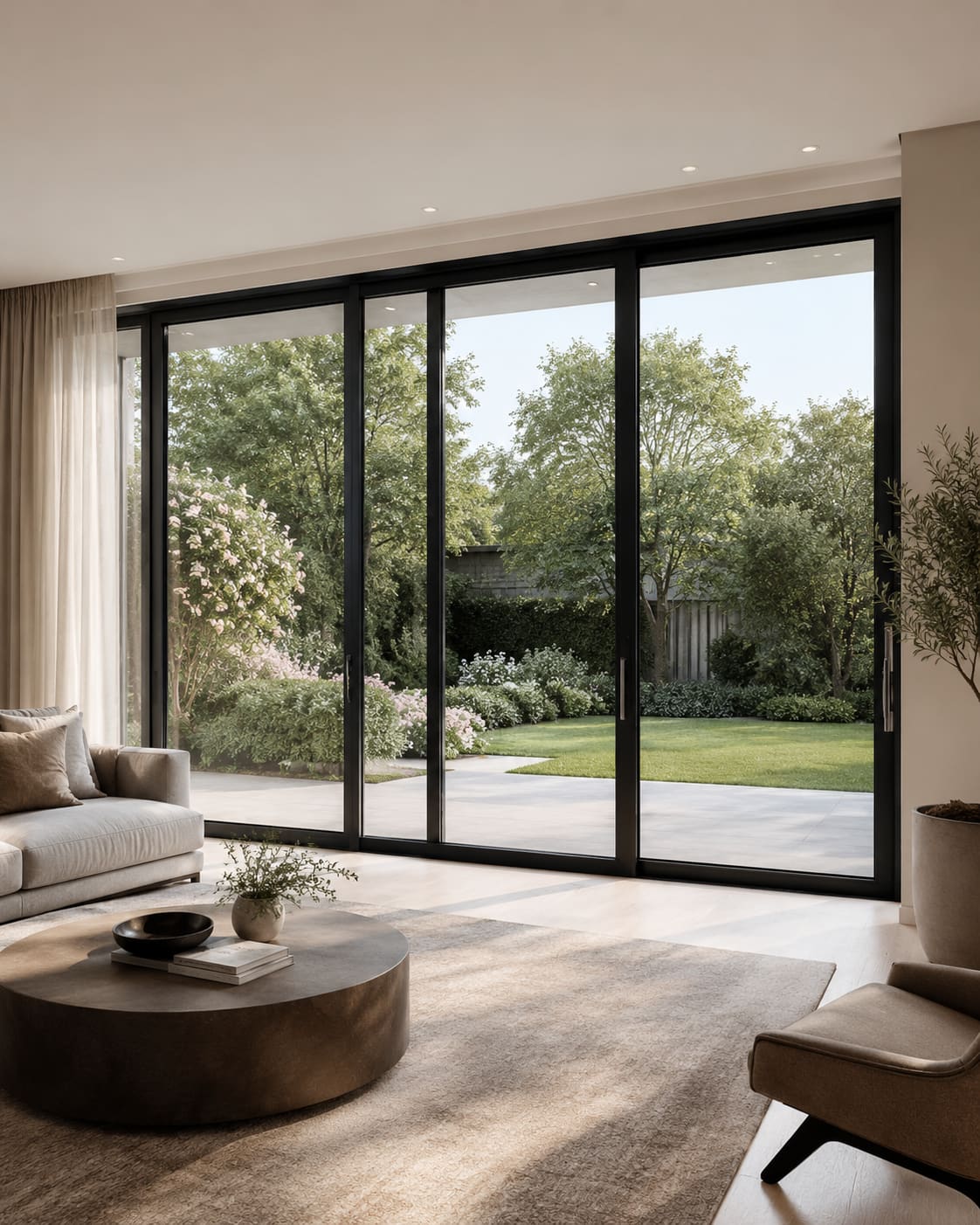
- Thermal-break aluminium + double-glazed low-E glass: best heat and noise control, with a non-conductive polyamide barrier inside the frame that stops the metal carrying outdoor heat inside. Strong, slim frames make this ideal for large high-rise openings in HITEC City and Financial District towers.
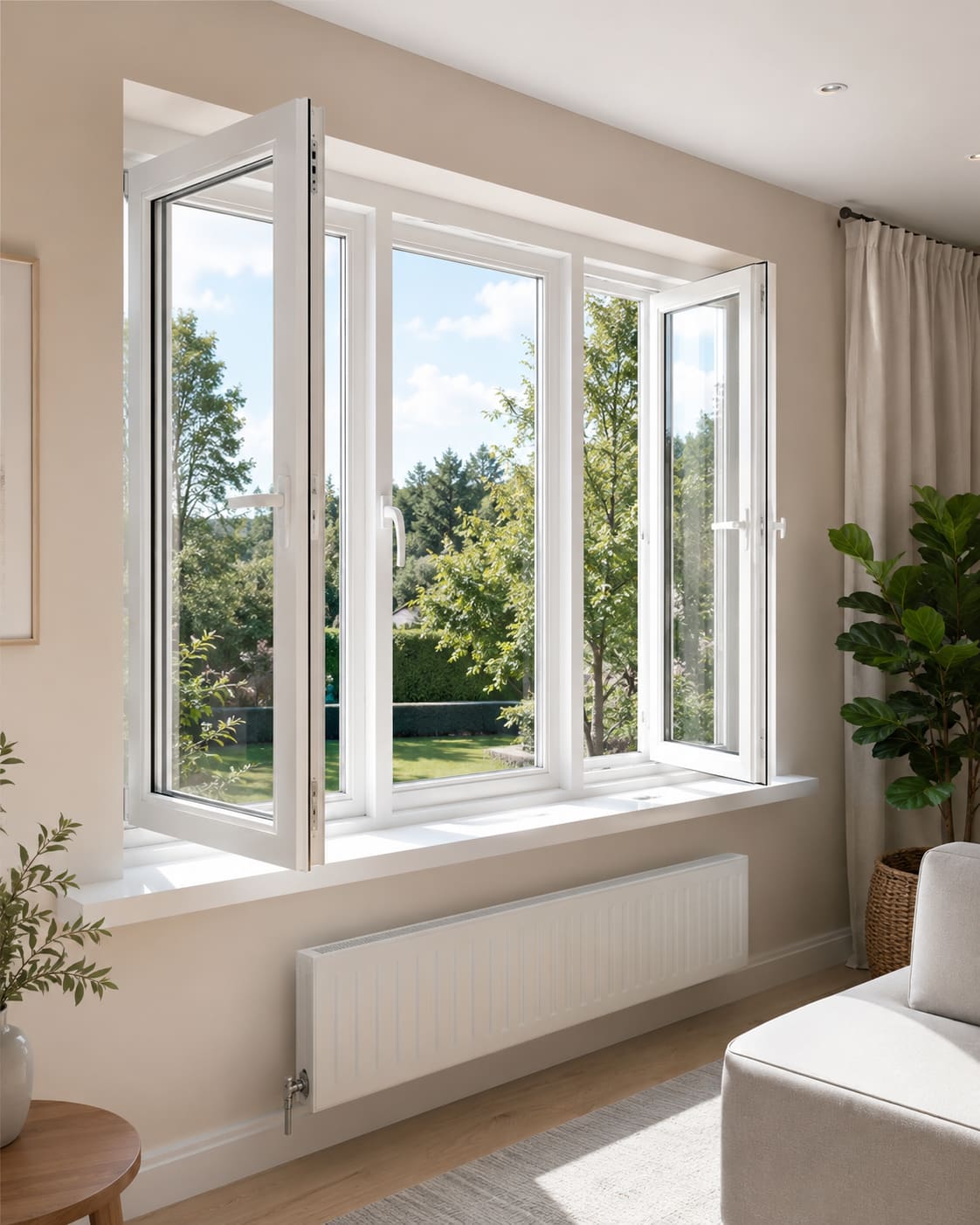
- uPVC + double-glazed glass: excellent heat and dust sealing at a lower cost, and naturally non-conductive, which is why it is the most popular choice for apartments in Kondapur, Madhapur and Kukatpally.
- uPVC + single-glazed glass: a budget option that still seals dust and rain well but offers less heat rejection; acceptable for shaded or north-facing rooms.
- Standard (non-thermal-break) aluminium + single-glazed glass: cheapest, but the bare metal frame conducts heat straight through and it is not recommended for any west-facing, summer-exposed room.
The single most common twin-city mistake is buying cheap plain aluminium for a west-facing living room to save a few thousand rupees, then paying it back many times over in electricity within two or three summers. Match the spend to the sun the room actually receives, not to the sticker price of the frame.
The glass matters as much as the frame
For blocking summer heat, the glass specification matters as much as the frame, and low-E double-glazed units are the single biggest upgrade you can make. The insulating air or argon gap and the reflective coating stop most solar heat before it enters the room, cutting the glass Solar Heat Gain Coefficient (SHGC) from around 0.82 on plain single glass to roughly 0.25-0.35 on a good solar-control unit.
- Double glazing (DGU): two glass panes with a sealed 12-16mm air or argon gap that slows heat transfer and sharply cuts outside noise.
- Low-E coating: a near-invisible metallic layer that reflects infrared heat while letting daylight through, ideal for bright but sun-hit Hyderabad rooms.
- Solar-control or tinted glass: reduces glare and heat on unshaded west and south facades in Banjara Hills and Jubilee Hills bungalows.
- Laminated glass: adds security and extra noise reduction for ground-floor and main-road homes in Secunderabad.
One practical tip for the twin cities: do not chase the darkest possible tint. A good low-E coating rejects heat while keeping the glass reasonably clear, so you still get natural light and do not end up running lights all day to compensate. For most Hyderabad living rooms, a clear or lightly tinted low-E DGU is the sweet spot between heat rejection and daylight. Our uPVC windows are supplied with these units matched to each room's exposure.
Realistic window pricing in the twin cities
In Hyderabad and Secunderabad, expect to pay roughly 450-1,700 rupees per square foot depending on frame and glass, with double-glazed thermal-break aluminium at the top of that range. Always price by the total window area, not by the number of windows.
- uPVC single-glazed: approx 450-700 per sq ft, suitable for internal or shaded windows.
- uPVC double-glazed: approx 700-1,100 per sq ft, the best value for summer heat control.
- Thermal-break aluminium double-glazed: approx 1,100-1,700 per sq ft for premium heat, noise and durability.
- Typical bedroom window (about 4x4 ft / 16 sq ft) in double-glazed uPVC lands around 11,000-18,000 rupees installed.
- A 3BHK flat in Kondapur or Miyapur re-windowed entirely in double-glazed uPVC typically runs 1.2-2.2 lakh depending on size and count.
- Prices vary with locality access, floor height and profile brand, so always get an on-site measurement before finalising.
Be cautious of quotes that fall well below these bands; they almost always cut corners on the wall thickness of the profile, gasket quality or glass thickness, all of which show up within a summer or two as flexing frames, dust ingress or fogged sealed units. It also helps to understand what drives the number: glass makes up the biggest share on a double-glazed window, hardware and reinforcement steel add a fixed cost per opening, and site access on higher floors adds labour. A transparent, itemised quote should break these out. You can get a free quote from us for exactly that kind of line-by-line measurement.
Frames, profiles and hardware that survive Telangana weather
Windows that survive Hyderabad's heat, dust and monsoon depend as much on the hardware and profile as on the glass, because seals and moving parts are what actually fail first. A premium frame let down by cheap rollers or gaskets will jam, leak and rattle within a year or two.
- Profiles: choose UV-stabilised uPVC or powder-coated/anodised aluminium profiles rated for tropical sun, since low-grade uPVC yellows and warps under Telangana's UV load. Look for adequate wall thickness and steel reinforcement inside uPVC sashes.
- Sliding gear: smooth, load-rated stainless or nylon rollers and hardwearing tracks keep large balcony and living-room sliders moving through dust and grit; twin or triple tracks also allow mesh shutters against mosquitoes.
- Handles and locks: corrosion-resistant handles and multi-point locking hold the sash tight against the frame so wind-driven monsoon rain cannot force its way in.
- Gaskets: EPDM rubber gaskets outlast cheap PVC seals in high heat and are the single most important part for keeping dust out.
As a dealer for Taiton, Enox and Ozone hardware ranges, we can supply matched, corrosion-resistant fittings for every opening, from balcony sliders in a Kondapur high-rise to heavy facade doors in a Financial District office. The difference between a window that lasts a decade and one that fails early is very often the hardware, not the visible frame. You can see finished installations in our recent projects.
How to choose the right window for your specific home
Choose your window by matching frame and glass to the room's sun exposure and your building type, since a west-facing Kokapet high-rise and a shaded Secunderabad ground floor have very different needs. Follow these steps.
- Step 1: Note each room's orientation; prioritise double-glazed low-E glass for west and south-facing rooms that bake in the afternoon.
- Step 2: For high-rise flats in Gachibowli, HITEC City or the Financial District, favour thermal-break aluminium for strength and slim sightlines on large openings.
- Step 3: For budget-conscious apartments in Kukatpally, Kondapur or Miyapur, uPVC double glazing gives the best cooling per rupee.
- Step 4: On main roads or near the ORR, add laminated glass to combine heat and noise control.
- Step 5: Insist on proper sealing, quality EPDM gaskets and correct sliding tracks so dust and monsoon water stay out.
- Step 6: Confirm the installer measures on site, squares the opening and seals the frame perimeter, because even the best window leaks if fitted into a poorly prepared reveal.
If you are unsure, browse our services, or send us photos and rough sizes and we will recommend a specification room by room, balancing heat performance against your overall budget.
Process and timeline: what to expect from order to fitting
A typical Hyderabad window project runs from first site visit to finished installation in about two to four weeks, most of which is fabrication lead time. Knowing the sequence helps you plan around it, especially if you are timing the work to beat the summer or the monsoon.
- Site measurement: a technician measures every opening on site, checks the wall condition and reveal, and notes orientation and floor access; rough phone measurements are never enough for a sealed fit.
- Quotation and selection: you confirm frame type, glass specification, colour and hardware, and receive an itemised quote by total area.
- Fabrication: frames are cut, welded or crimped, reinforced and glazed to your exact sizes, usually taking one to three weeks depending on glass availability and quantity.
- Installation: old frames are removed, the new units are set plumb and square, packed and anchored, and the perimeter is sealed against heat and water; a two-to-three bedroom flat is often fitted in one to two days.
- Handover and snagging: the team checks every sash for smooth operation, correct drainage and clean sealing before signing off.
The best window in the twin cities to schedule this work is late winter or early spring, before the April heat peaks, so your rooms are ready before the worst of the season. Plan the order a few weeks ahead so fabrication does not run into the hottest weeks.
Common mistakes to avoid
Most window disappointments in Hyderabad trace back to a handful of avoidable mistakes, and knowing them in advance protects your investment.
- Under-specifying west-facing rooms: fitting single glazing or plain aluminium where the afternoon sun is harshest, then blaming the AC for high bills.
- Chasing the lowest quote: sub-band prices usually mean thin profiles, no steel reinforcement, poor-grade gaskets or reused glass that fogs within a year.
- Ignoring the reveal: even a top-spec window leaks if it is packed badly or the wall perimeter is not sealed, which is the most common cause of monsoon leaks in twin-city flats.
- Over-tinting for heat: choosing very dark glass instead of a low-E coating, then losing so much daylight that lights run all day.
- Skipping mesh and drainage: forgetting mosquito shutters and blocked weep holes leads to insects and water backing up into the room.
- No maintenance plan: never cleaning tracks or checking gaskets, so sliders seize with grit and seals harden in the heat.
Avoiding these is mostly about choosing an installer who measures properly and specifies honestly rather than the cheapest bidder. If you would like a second opinion on an existing quote, get a free quote and we will tell you frankly where it is over- or under-specified.
Installation, maintenance and getting the most from your investment
Even the best windows for Hyderabad's summer heat only deliver their full benefit when installed correctly and maintained through the year, so treat fitting and upkeep as part of the purchase, not an afterthought.
- Installation: the frame must be plumb, square and packed, with the perimeter gap filled and sealed against both heat bridging and water ingress; a rushed fit is the most common cause of leaks in twin-city flats.
- Seasonal cleaning: wipe tracks and clear drain holes before and after the monsoon so silt does not block drainage and back up water into the room.
- Gasket checks: inspect EPDM seals yearly and replace any that have hardened, since a 200-rupee gasket protects a 15,000-rupee window.
- Hardware care: a light lubrication of rollers, hinges and locks each year keeps sliders smooth through Hyderabad's grit and dust.
- Shading help: pair the glass with external chhajjas, deep reveals or blinds on the worst west facades in Kokapet and Narsingi for even better summer performance.
Looked after this way, a good double-glazed uPVC or thermal-break aluminium window will comfortably serve 15-20 years in Telangana and Andhra Pradesh conditions while paying back part of its cost every summer in lower cooling bills.