A commercial building facade in Hyderabad typically costs between INR 1,200 and INR 3,500 per sq ft of facade area, with unitised curtain wall glazing sitting at the top of that range and ACP cladding at the lower end. The right choice for the twin cities balances Hyderabad's 40-44 degC summers, driving June-September monsoon rain and constant construction dust against your budget, floor count and the brand image you want, whether the building is an IT tower in HITEC City, a corporate office in Gachibowli or a retail block in Banjara Hills.
This guide breaks down every facade system used across Hyderabad and Secunderabad, gives realistic INR price ranges per square foot, and explains the climate, fire-safety and compliance factors that quietly decide whether a facade lasts 5 years or 25. It also covers the glass, aluminium and hardware behind the visible skin, a clear budgeting framework, the mistakes that cause monsoon leaks, and the exact questions that separate a dependable facade contractor from a tempting but risky low quote.
By the end you will know which system fits your building, what it should cost, what to specify for Telangana and Andhra Pradesh weather, and how to compare bids like-for-like. If you want a tailored figure for your plot, you can get a free quote with your facade area and floor count, or see finished elevations in our recent projects.
Which facade system suits your Hyderabad building?
The best facade system depends on building height, budget and the thermal performance you need, and in Hyderabad four systems cover almost every commercial project. Getting this decision right at concept stage saves the most money, because switching systems after the structural frame is finalised means reworking slab edges, embed plates and brackets, often adding weeks to the programme.
Here is how the main options compare across the twin cities, with indicative supply-and-install rates:
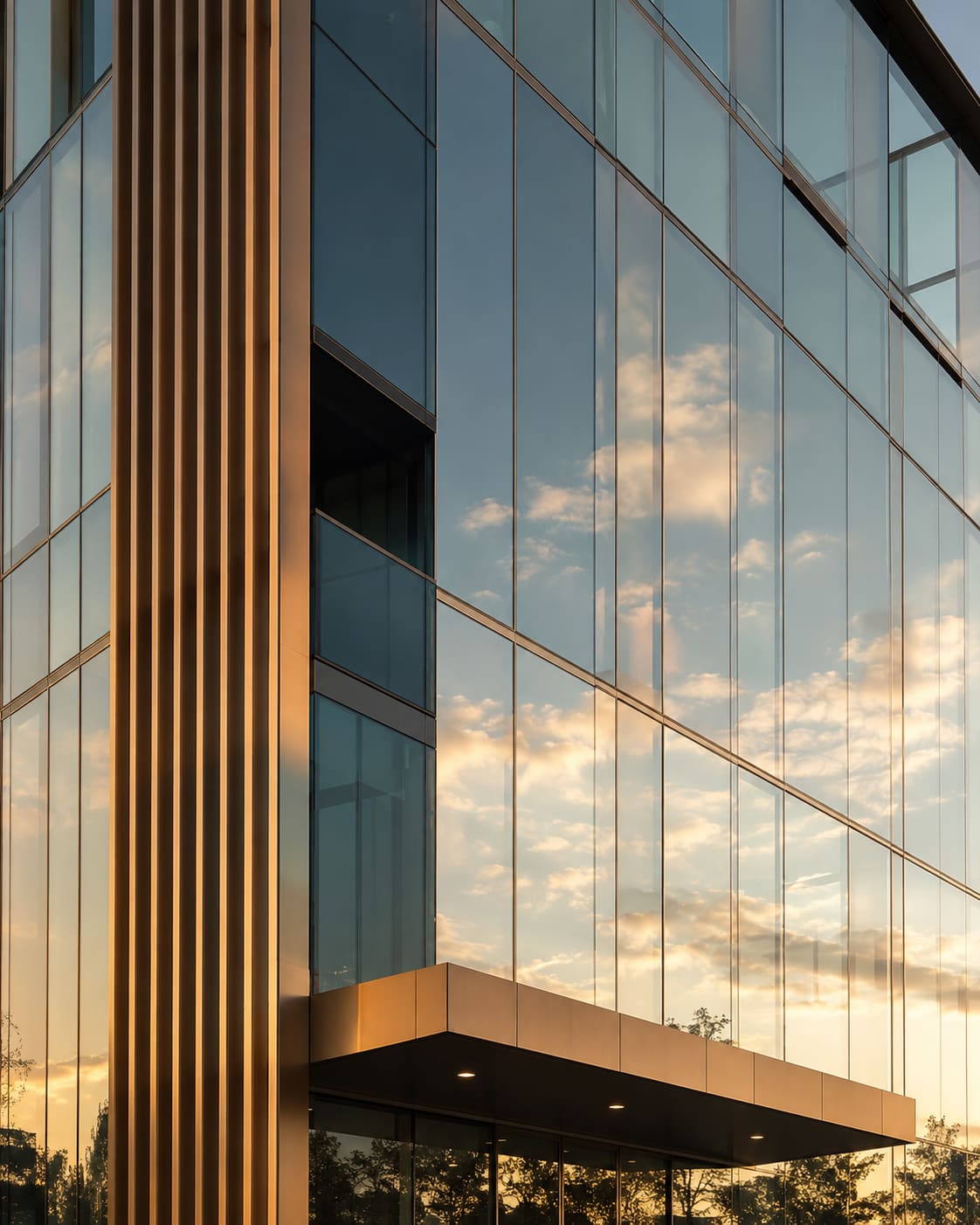
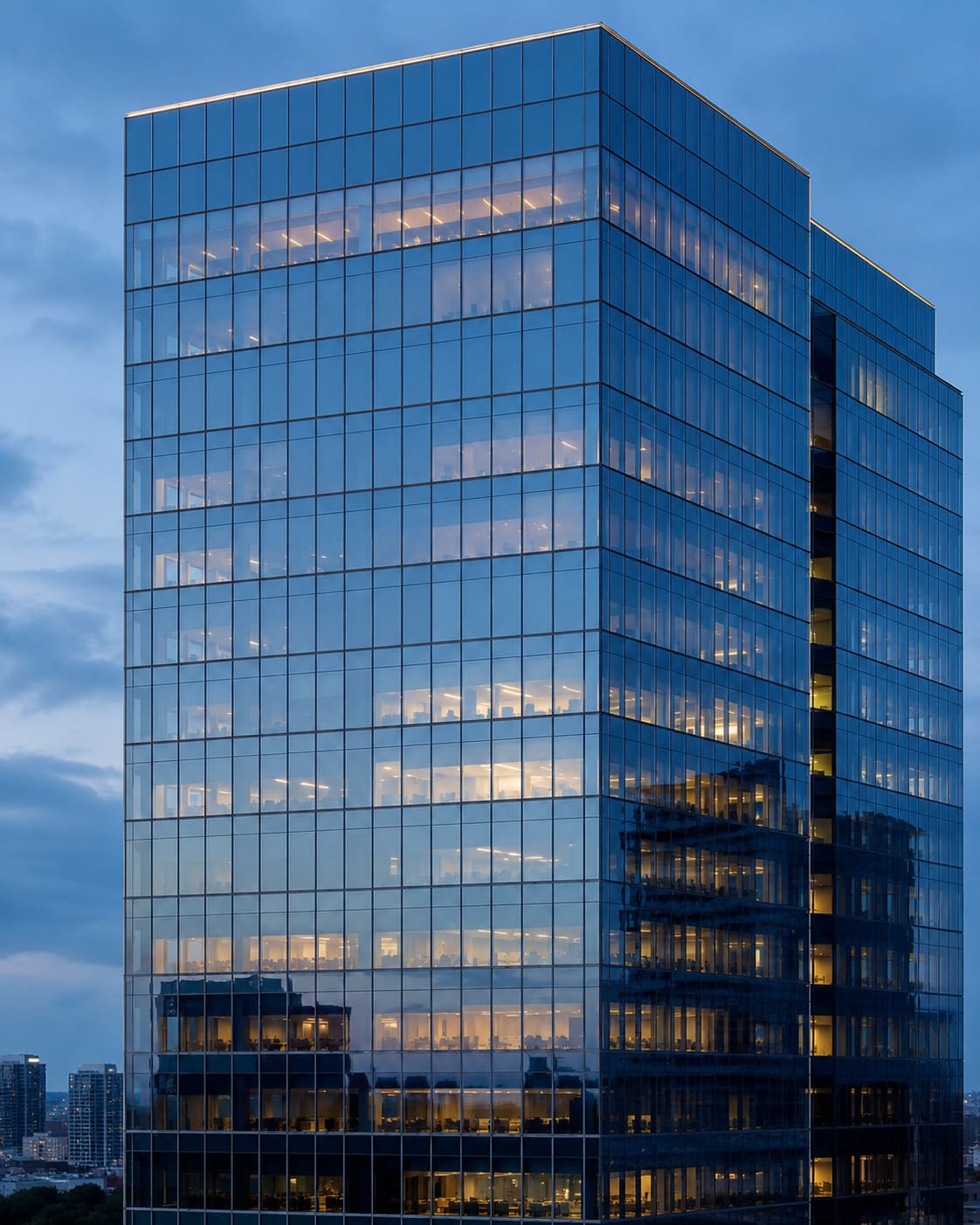
- Curtain wall glazing (INR 1,800-3,500/sq ft): Best for IT towers and premium offices in HITEC City, Gachibowli and the Financial District. Factory-assembled unitised systems speed up installation on tall buildings and give tighter weather performance; semi-unitised and stick-built systems suit mid-rise blocks on tighter budgets. See full curtain wall glazing configurations for your elevation.
- ACP cladding (INR 1,200-2,200/sq ft): The most common choice in Kukatpally, Kondapur, Uppal and Secunderabad for offices, showrooms and retail. Fire-retardant grade A2 panels are mandatory for any building above 15 metres. Quality ACP cladding combines PVDF-coated panels with concealed aluminium framing for a clean, joint-aligned finish that resists chalking and fading.
- Structural glazing (INR 1,600-2,800/sq ft): A frameless, all-glass look popular for showrooms and corporate lobbies in Banjara Hills and Jubilee Hills, held by structural silicone with spider or bolt fittings on double-height entrances.
- Aluminium louvres and fins (INR 900-1,800/sq ft): Sun-shading and ventilation for west and south facades, increasingly specified in Kokapet and Madhapur for energy savings and to break up long glazed runs visually.
For most commercial buildings the smart answer is a hybrid: curtain wall or structural glazing on the primary elevation, ACP on flanks and service cores, and louvres where solar gain is worst. This keeps the premium spend where it is visible and functional, and controls cost on the rest.
How Hyderabad's climate shapes facade choices
Hyderabad's climate demands facades that handle 40-44 degC summer heat, heavy monsoon rain from June to September and year-round construction dust, so material and glass selection matters more here than in cooler regions. Getting these four factors right cuts cooling bills, reduces cleaning cycles and prevents the leaks that damage interiors and reputations.
- Solar heat: Specify double-glazed units (DGU) with a low solar heat gain coefficient (SHGC of 0.25-0.35) and a low-E coating on east, west and south elevations. High-performance glass typically pays for itself within a few Telangana summers through reduced HVAC running cost, while still letting in usable daylight.
- Monsoon water: Insist on pressure-equalised drainage, EPDM gaskets and structural silicone rated for heavy rain. Weep holes, continuous flashing at slab edges and proper drainage paths are non-negotiable, especially on stick-built systems where site workmanship, not the factory, decides watertightness.
- Dust: Choose PVDF-coated ACP and glass with easy-clean coatings. Matte and mid-tone finishes hide the fine dust common near arterial roads far better than dark gloss, a real advantage along the Outer Ring Road and in fast-developing Narsingi and Kokapet.
- Wind: Design for the local basic wind speed of around 44 m/s per IS 875, particularly for high-rises in open Financial District and Kokapet plots where there is little surrounding shelter to reduce pressure on the glass and panels.
The same logic extends to coastal Andhra Pradesh projects, where salt-laden air pushes you toward marine-grade aluminium alloys and stainless-steel fasteners instead of standard mild-steel brackets that corrode within a few years.
Glass, aluminium and hardware that make a facade last
A facade is only as reliable as the glass, aluminium profiles and hardware behind the visible skin, and this is exactly where cheap quotes quietly cut corners. The panels get the attention, but the gaskets, brackets and fittings decide whether the wall stays weathertight and rattle-free through five monsoons.
- Glass: Toughened and heat-strengthened DGUs are standard for commercial glazing; laminated glass is used at ground level, on overhead glazing and in high-footfall zones for safety. Match glass thickness to pane size and wind load, not just to the lowest quote, because undersized glass flexes and eventually fails at the edges.
- Aluminium: Use branded, powder-coated (60-80 micron) or anodised aluminium profiles with the correct wall thickness. Thin, unbranded extrusions flex, whistle in wind and pull sealant joints apart over time, which is a leading cause of premature leaks in value-engineered facades.
- Structural fittings: Frameless glass, canopies and spider-glazed entrances rely on properly rated stainless spider fittings and routels sized for the actual glass weight and span, not a generic catalogue number.
- Entrance hardware: Commercial lobbies see thousands of door cycles a day, so specify heavy-duty floor springs, concealed door closers and robust handles from proven brands rated for high traffic.
As a glass, aluminium and hardware specialist and a dealer for Taiton, Enox and Ozone, we supply these components alongside the facade itself, so the glass, aluminium and fittings are engineered as a matched set rather than sourced piecemeal from vendors who never coordinate.
Facade cost and budgeting in the twin cities
Budget INR 1,200-3,500 per sq ft of facade area in Hyderabad, and remember the facade is usually 15-25 percent of a commercial building's construction cost. A typical 20,000 sq ft office facade in Gachibowli therefore runs roughly INR 2.4-5 crore depending on the system and glass specification. Fixing the budget bracket early prevents painful value-engineering compromises once the structure is already up.
Three broad tiers cover most projects:
- Entry level (INR 1,200-1,700/sq ft): ACP cladding with basic single or double glazing, ideal for retail, warehouse offices and mid-budget commercial blocks in Kukatpally, Uppal and Secunderabad.
- Mid range (INR 1,700-2,600/sq ft): Semi-unitised curtain wall or structural glazing with performance DGU, common for IT and corporate offices in Madhapur and Kondapur.
- Premium (INR 2,600-3,500/sq ft): Fully unitised curtain walls and structural glazing with high-performance low-E glass and premium hardware for landmark towers in HITEC City and the Financial District.
The single most useful budgeting habit is to demand itemised quotes that separate material, fabrication, installation and scaffolding, and to confirm whether 18% GST and a 10-year sealant warranty are included. A bid that lands 20 percent below everyone else is almost always hiding thinner aluminium, non-FR ACP, cheaper glass or excluded scaffolding, and the gap reappears as change orders later.
For a genuinely like-for-like comparison, give every bidder the same glass make, aluminium gauge and hardware brand to price. When you are ready, get a free quote and we will itemise each line so nothing is buried.
Fire safety and compliance under GHMC and NBC norms
Commercial facades in Hyderabad must comply with the National Building Code (NBC) and GHMC fire-safety rules, and ACP fire performance is the single biggest compliance issue after high-profile cladding fires across India. Cutting corners here risks occupation-certificate delays, fire NOC rejection and, most seriously, occupant safety.
- Use fire-retardant grade A2 (mineral-core) ACP on any building above 15 metres and keep valid test certificates on file for the fire NOC and municipal approvals.
- Avoid standard polyethylene (PE) core panels on tall towers; they are cheaper but spread flame rapidly up the cavity and are increasingly disallowed on high-rise commercial buildings.
- Maintain fire stops and cavity barriers at every floor slab so the gap behind the cladding cannot act as a chimney that carries fire between floors.
- Ensure the facade design does not obstruct refuge areas, fire-tender access or smoke-ventilation openings required under NBC.
A competent facade contractor treats fire and structural documentation as part of the package, coordinating with your architect, structural consultant and the fire department so approvals move in parallel with fabrication instead of stalling handover at the end.
Energy efficiency and green-building facades
The facade is the single biggest lever for energy efficiency in a Hyderabad office, because most of the cooling load enters through glazing and unshaded walls. With power tariffs rising and IGBC and GRIHA green ratings now expected on Grade-A stock, a well-tuned facade is a commercial decision, not just an aesthetic one.
- High-performance low-E DGUs cut solar gain while preserving daylight, which reduces both the size and the running cost of the HVAC system, often the largest single operating expense in an office.
- External shading with aluminium louvres and vertical fins on west and south faces trims peak cooling load meaningfully in the twin cities' harsh afternoon sun.
- Openable vents and integrated ventilation allow night-purge cooling during shoulder seasons like October and February, reducing chiller run hours.
- A tighter, better-sealed facade also improves acoustic comfort along busy corridors such as the ORR, Kukatpally and Secunderabad's main roads, which raises tenant satisfaction and rentability.
Green-rated facades cost a little more upfront but typically pay back through lower energy bills, better occupant comfort and higher rental value, which is exactly why they are becoming standard on new Grade-A offices in the Financial District, Kokapet and Nanakramguda.
Installation process, timeline and common mistakes
Facade installation on a typical Hyderabad office takes 8-16 weeks, and understanding the sequence helps you plan the wider construction programme around it. Unitised curtain walls arrive as factory-finished panels and install fastest; stick-built systems assemble piece-by-piece on site and are slower and more weather-dependent.
A typical sequence runs like this:
- Design and engineering (2-4 weeks): system selection, wind and structural calculations, shop drawings and glass ordering.
- Fabrication (3-6 weeks): profiles cut and assembled, glass processed and DGUs sealed, panels prepared, often overlapping with site preparation.
- Installation (4-10 weeks): brackets and embeds fixed, panels or frames hung, glazing set, sealant applied and cured, followed by cleaning and snagging.
The costliest mistakes are avoidable: skipping proper slab-edge waterproofing, applying sealant in the middle of the monsoon when it cannot cure, mixing incompatible sealants and gaskets, using non-FR ACP to save money, and undersizing aluminium for the wind load. Each of these surfaces two or three monsoons later as leaks, whistling or panel movement, long after the cheapest bidder has moved on.
Planning glazing and sealant work around the June-September monsoon is particularly important in Hyderabad, where continuous rain can delay scaffolding-based work and slow silicone curing on projects in Madhapur, Banjara Hills and along the ORR.
Choosing a facade contractor in Hyderabad and Secunderabad
Pick a Hyderabad facade contractor with local project references, in-house fabrication and proven aftercare, because facade failures usually appear two or three monsoons after handover, when the original installer has moved on. Ask to inspect completed buildings in your own locality before you sign anything.
- Verify they use branded aluminium systems and certified glass processors, and that any ACP is genuine FR-grade with valid test certificates.
- Confirm structural design is backed by engineering calculations and, for tall buildings, a facade-consultant sign-off rather than rules of thumb.
- Check they handle municipal and fire-safety compliance for commercial buildings under GHMC and NBC norms end to end.
- Prioritise contractors who offer a maintenance and cleaning contract, since dust and monsoon exposure make annual servicing essential across the twin cities.
- Ask how they source hardware; a firm that also deals in Taiton, Enox and Ozone fittings can match door hardware, closers and spider fittings to the facade rather than leaving critical components to a disconnected vendor.
As a glass, aluminium and facade specialist serving Hyderabad, Secunderabad and wider Telangana and Andhra Pradesh, we cover design, fabrication, installation and aftercare under one accountable contract, which is precisely what avoids the finger-pointing that plagues multi-vendor facades. Browse our services to see how the pieces fit together for your building.