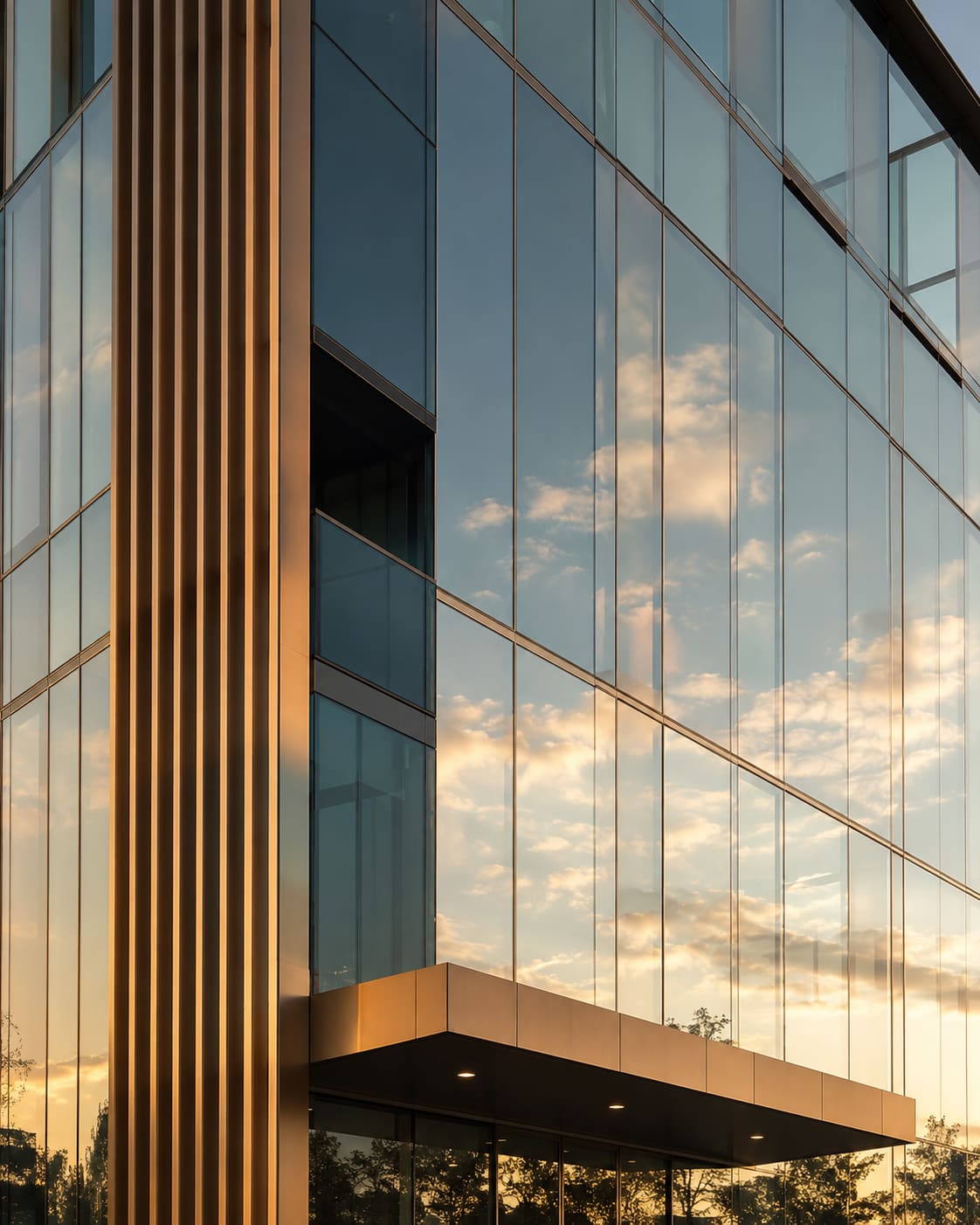
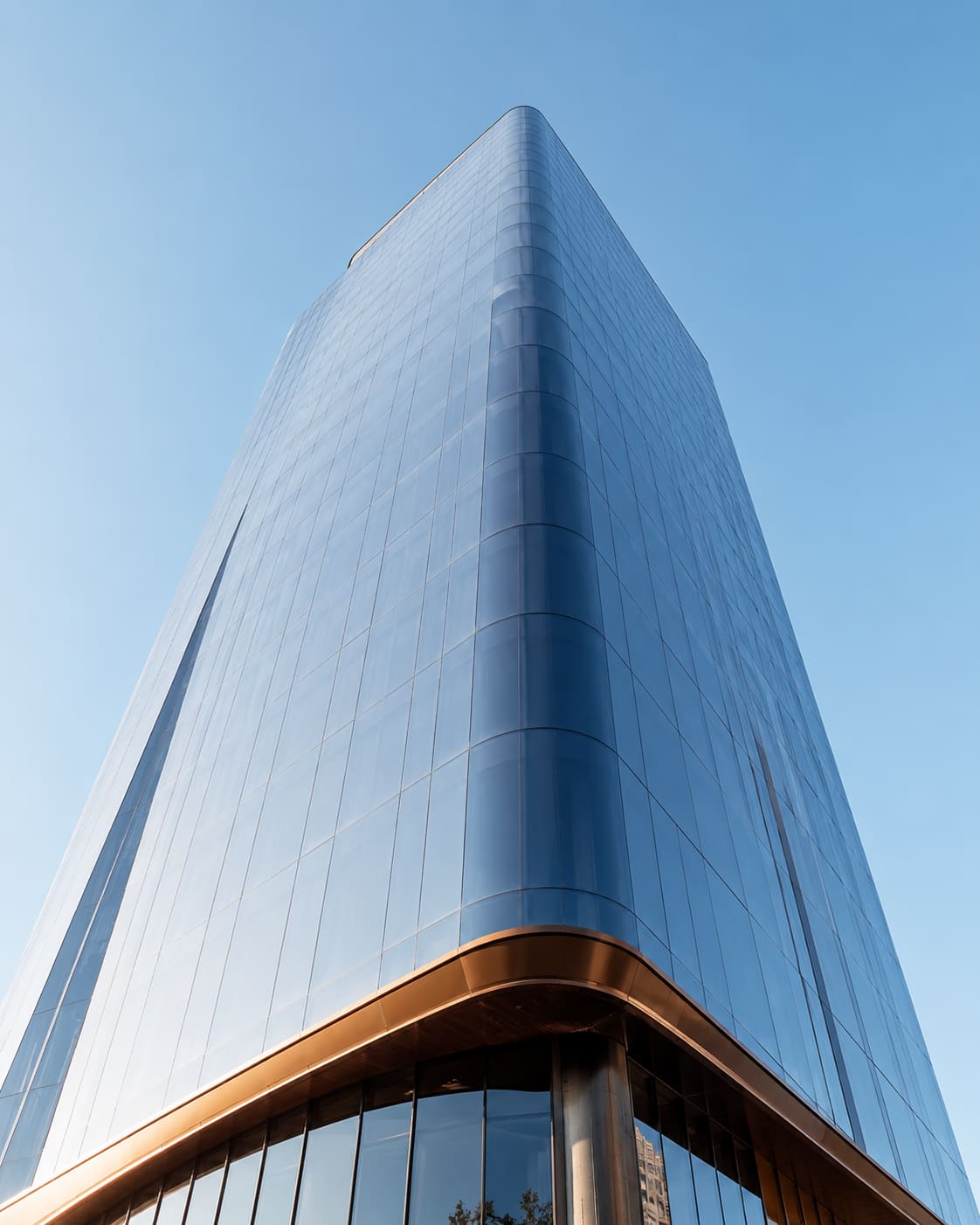
Facade work in Vijayawada typically costs between Rs 190 and Rs 1,600 per sq ft, with the most common choice, structural glazing, landing around Rs 550 to Rs 950 per sq ft installed. The exact figure depends on whether you choose ACP cladding, structural glazing, an aluminium curtain wall or spider glazing, and on the glass grade, aluminium gauge and building height behind that headline rate. The plain plaster-and-paint elevation has all but disappeared from serious commercial buildings, and a glass-and-aluminium skin is now the default language of a premium address in the city.
A well-engineered facade is far more than a face. It controls solar heat gain, keeps the Krishna-basin monsoon out, cuts long-term maintenance and directly lifts rental and resale value. Get the glass grade, aluminium section and sealant right and the elevation performs for twenty years; get them wrong and it leaks, rattles or fogs within the first two monsoons. That gap between a durable installation and a costly failure is almost always down to specification and workmanship, not luck or budget alone.
This guide breaks down the practical side of facade and glazing work in Vijayawada: which systems suit the local climate along Benz Circle, MG Road, Governorpet and the Vijayawada-Guntur corridor, realistic 2026 INR pricing, honest timelines, the glass and aluminium specs that matter, and what separates a professional structural glazing or ACP cladding job from a cheap one. It draws on facade projects executed across Hyderabad, Secunderabad, Telangana and coastal Andhra Pradesh. If you want a tailored figure for your elevation, you can get a free quote with your drawings.
What Does Facade Work Actually Involve?
Facade work is the design, fabrication and installation of a building's external skin, typically an engineered system of glass, aluminium and composite panels fixed to the RCC structure. In modern Vijayawada practice it is a complete envelope, not a decorative afterthought: it carries its own dead load and wind load, drains water away from the structure, insulates the interior against heat and noise, and provides the finished look of the elevation.
A professional facade job is a sequence of engineering steps rather than a single product. It begins with a site survey and shop drawings, moves through aluminium fabrication and glass processing, and ends with anchoring, glazing and structural sealing on site. Skip or rush any step and the weakness shows up as a leak, a rattle or a fogged glass unit within a season or two.
The main facade systems used across Andhra Pradesh and Telangana are structural glazing, ACP cladding, aluminium curtain wall and spider (point-fixed) glazing. Each solves a different problem, and most real elevations combine two or three. You can see how these systems are specified and detailed across our services before deciding which mix suits your building.
Which Facade System Suits Vijayawada's Climate?
Vijayawada is one of the hotter cities in Andhra Pradesh, with summer temperatures regularly crossing 42 degrees Celsius and high humidity rolling in off the Krishna river. Facade selection here is as much about thermal performance and water-tightness as it is about looks, so the system must be matched to the building's height, use and orientation, especially on west and south faces that take the harsh afternoon sun.
- Structural glazing: A frameless, all-glass look ideal for showrooms, offices and hotels. Double-glazed or high-performance solar-control glass keeps interiors cool and cuts air-conditioning load, which matters most on west and south elevations.
- ACP cladding: Aluminium composite panels are cost-effective, come in hundreds of finishes and suit signage-heavy retail and mixed-use buildings. They are also the fastest system to install and the easiest to repair panel by panel.
- Curtain wall (semi-unitised or unitised): Best for taller G+5 and above structures where wind load and water tightness are critical and a continuous, sealed skin is required.
- Spider glazing: A dramatic option for lobbies, showroom entrances and atriums where transparency matters more than insulation.
For most Vijayawada commercial projects a hybrid works best: structural glazing on the primary elevation for impact, with ACP cladding on the side and rear walls to control cost. Real examples of this blend are visible in our recent projects.
Indicative Facade & Glazing Costs in Vijayawada (2026 INR)
Pricing depends on glass grade, aluminium system, building height and site access. These are indicative supply-and-install ranges for 2026 across Vijayawada and the wider Andhra Pradesh and Telangana market:
- Structural glazing (DGU, high-performance glass): approximately Rs 550 to Rs 950 per sq ft.
- Semi-unitised structural glazing (single toughened glass): approximately Rs 380 to Rs 600 per sq ft.
- ACP cladding (4 mm, branded like Alstone, Aludecor or Eurobond): approximately Rs 190 to Rs 380 per sq ft.
- Aluminium curtain wall systems: approximately Rs 650 to Rs 1,200 per sq ft depending on unitisation.
- Spider or point-fixed glazing: approximately Rs 900 to Rs 1,600 per sq ft.
As a rule of thumb, a 3,000 sq ft glass facade for a commercial showroom typically lands between Rs 16 lakh and Rs 28 lakh fully installed. A larger G+4 office elevation of 8,000 to 10,000 sq ft mixing glazing and ACP can run Rs 45 lakh to Rs 80 lakh. Always insist on written specifications for glass thickness, aluminium gauge and sealant brand, because under-quoting almost always hides in thinner glass, lighter sections or unbranded silicone that fails within two monsoons.
Structural Glazing vs ACP Cladding vs Curtain Wall
Owners often ask which single system is 'best', but the honest answer is that each solves a different problem. A quick comparison helps you brief a contractor with confidence and read a quotation properly:
- Look: Structural glazing gives a seamless glass skin; curtain wall gives a gridded high-rise look; ACP gives solid colour, wood and metallic finishes with sharp shadow lines.
- Cost: ACP is the most economical, structural glazing sits in the middle, and unitised curtain wall is the premium end.
- Thermal performance: DGU structural glazing and curtain wall outperform single-skin ACP, though ventilated ACP with rockwool backing improves insulation.
- Speed: ACP and semi-unitised systems install fastest; fully unitised curtain wall needs factory assembly and precise cranage.
- Maintenance: ACP panels can be replaced individually; glazed units cost more to swap but need cleaning rather than repainting.
- Best fit: Showrooms and low-rise offices lean towards structural glazing; G+5 and taller towers towards curtain wall; retail podiums, parapets and signage bands towards ACP.
In practice most Vijayawada elevations blend all three. A showroom might carry structural glazing at eye level, an ACP parapet above, and a spider-glazed entrance canopy, tying visual impact and budget together in a single facade.
Glass Grades and Energy Performance
Choosing the right glass is where a Vijayawada facade earns its keep, both in comfort and in electricity bills. The wrong glass turns a glass box into a greenhouse and pushes the AC to run all day.
- Single toughened glass (8 to 12 mm): strong and safe, but offers limited heat control; suitable for shaded or north elevations.
- Reflective or solar-control glass: cuts glare and heat gain, ideal for west and south faces that take the afternoon sun.
- Double-glazed units (DGU): two glass panes with an air or argon gap, cutting solar heat gain by 40 to 60 percent and also reducing noise from busy roads like Eluru Road and Bandar Road.
- Low-E coated DGU: the premium choice, reflecting infra-red heat while letting daylight through, which trims air-conditioning running cost meaningfully over a year.
- Laminated glass: two panes bonded with a PVB interlayer for safety, security and acoustic control, often used at ground-floor showroom fronts.
For an air-conditioned showroom or office in Vijayawada's heat, high-performance DGU almost always pays back its premium through lower cooling load. Ask your contractor for the glass Solar Heat Gain Coefficient (SHGC) and U-value in writing, not just the brand name, so you can compare quotes on performance rather than colour.
Aluminium, Sealants and the Details That Last
A facade is only as reliable as the aluminium framing and the sealant hidden inside it. Cheap sections, thin gauges and unbranded silicone are the most common reasons a beautiful elevation starts to sag, rattle or leak within a couple of years, so these specs deserve as much attention as the glass.
- Aluminium gauge: Insist on a minimum 1.2 mm wall thickness from a known extruder such as Jindal, Hindalco or Bhoruka. Under-gauge sections flex under wind load and let joints open.
- Powder coating or anodising: A quality powder-coat or anodised finish resists Vijayawada's salty, humid air far better than cheap paint, which chalks and fades within a few summers.
- Structural silicone: Use documented structural and weather sealant from Dow or Wacker, applied in a clean, dry window so it cures fully. This bond literally holds the glass to the frame.
- Backer rods and thermal movement: A proper joint includes backer rods and a designed gap so the facade can expand and contract with the day-night temperature swing without cracking the seal.
- Stainless hardware: Spider fittings, brackets and floor springs should be 304 or 316 stainless steel for coastal humidity, not local unbranded stock that rusts and stains the glass.
Specifying the right gauge, coating and sealant adds only a small fraction to the overall facade cost but is decisive for how the elevation ages. This is exactly where a cut-price quote quietly saves money at your expense.
Timelines and What Affects Them
A typical 3,000 to 5,000 sq ft facade in Vijayawada takes about 4 to 7 weeks from final measurement to handover, assuming the RCC structure is ready, access is clear and payments are on schedule. Larger or taller elevations that need cranage and unitised panels can run 8 to 12 weeks.
Aluminium fabrication and glass procurement account for the bulk of the lead time, usually 2 to 3 weeks, since toughened and DGU glass is often processed in Hyderabad or Chennai plants and transported in. The sequence usually runs like this:
- Week 1: Site survey, final measurements and shop drawings.
- Weeks 2 to 3: Aluminium fabrication and glass toughening or DGU processing.
- Weeks 3 to 4: Framework erection, anchoring and bracket fixing on site.
- Weeks 5 to 6: Glass and ACP installation, then structural and weather sealing.
- Week 7: Cleaning, snagging and handover with warranty documents.
Monsoon months from June to September can extend schedules, because structural silicone needs a dry, dust-free window to cure properly. Plan the sealing and glazing phase around the weather rather than forcing it, and build a small buffer into your fit-out programme.
Common Facade Mistakes to Avoid
Most facade failures in Vijayawada trace back to a handful of avoidable decisions made at the quotation stage. Knowing them lets you catch a weak proposal before you sign it:
- Buying on rate alone: The lowest per-sq-ft price almost always means thinner glass, under-gauge aluminium or unbranded sealant. Compare specifications, not just totals.
- Ignoring orientation: Using plain single glass on a west face bakes the interior and spikes the AC bill. Match the glass grade to the sun path.
- Skipping shop drawings: Fabricating without approved drawings leads to misaligned joints, uneven shadow lines and site rework.
- No thermal movement provision: Sealing glass tight to the frame with no backer rod or gap guarantees cracked seals and leaks within a year.
- Unqualified sealing labour: Structural silicone applied in dust or damp, or by untrained hands, never reaches its rated bond strength.
- No written warranty: Without a documented 5 to 10 year workmanship warranty, you carry the full cost of any early failure yourself.
Avoiding these is far cheaper than fixing them. A leaking or fogged facade often costs more to rectify than it saved at award, because access, dismantling and re-sealing all have to be paid for again.
Hiring the Right Facade Contractor in Vijayawada
The difference between a facade that lasts 20 years and one that fails early is workmanship, not just material, so vet your contractor as carefully as your architect. Check these before you sign:
- Ask to see completed local projects across Vijayawada, Guntur, Hyderabad or Secunderabad, and inspect corners, joints and sealant lines up close.
- Confirm they use structural silicone and weather sealant from reputed brands such as Dow or Wacker, with a documented warranty.
- Verify aluminium is from a known extruder at a minimum 1.2 mm gauge, and that glass carries a toughening or DGU test certificate.
- Ensure the quote includes proper anchoring, backer rods and provision for thermal movement, not just glass and frame.
- Check that facade hardware such as spider fittings, floor springs and locks is branded and stainless-grade rather than local unbranded stock.
A serious contractor offers a site survey, an approved shop drawing and a written warranty of 5 to 10 years on workmanship and sealing. Hakimi Aluminium and Glass executes structural glazing, ACP cladding and curtain wall projects across Vijayawada, Guntur, Hyderabad, Secunderabad and the wider Telangana and Andhra Pradesh region. If you are weighing quotes, get a free quote with your elevation drawings and compare it line by line against the specification checklist above.