
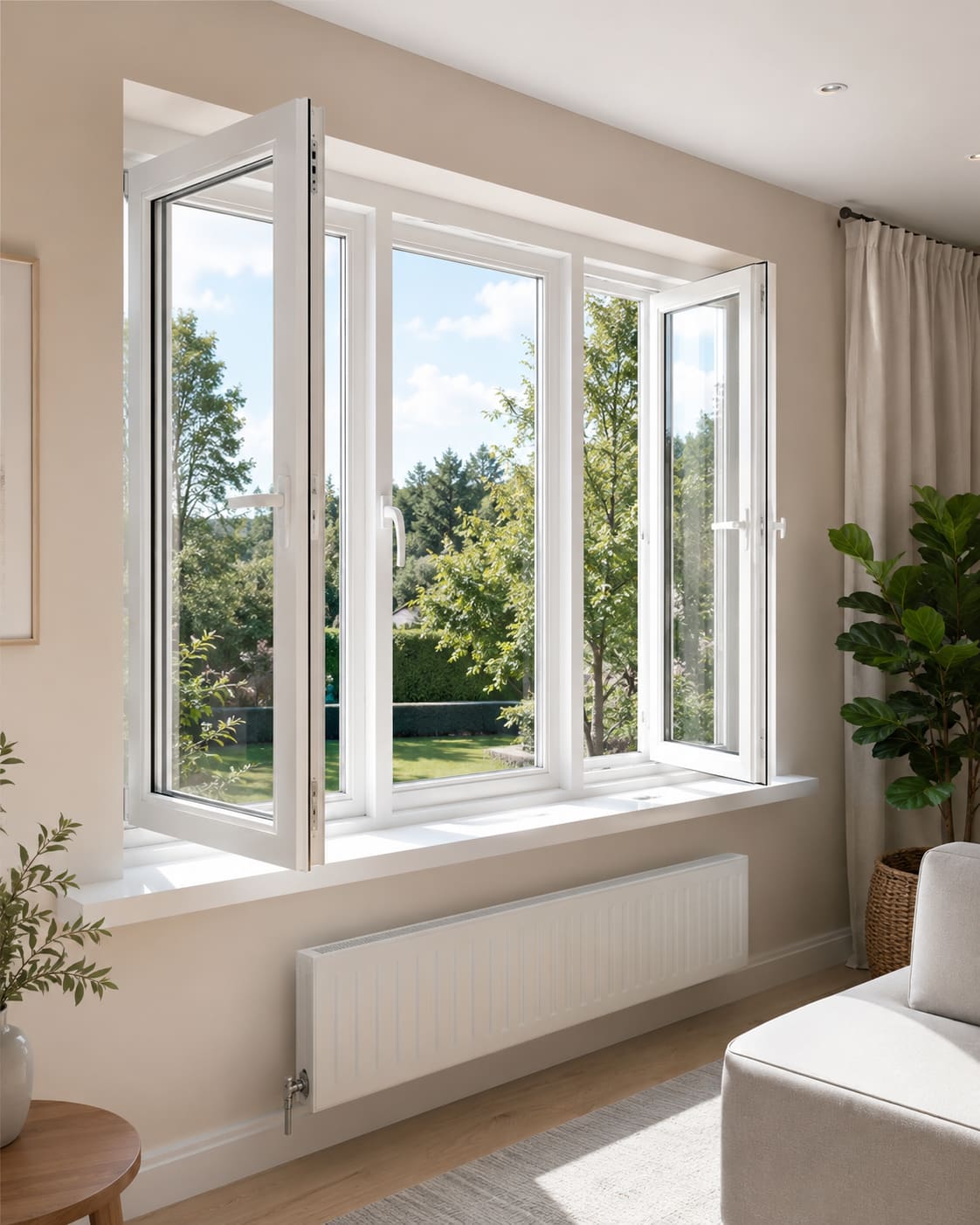
Windows leak because water finds a path through failed sealant, perished gaskets, blocked drainage (weep) holes or a poorly installed frame, almost never through the glass itself. If you have spotted a damp patch below your sill just as the Hyderabad monsoon sets in, you already know how quickly it goes from annoying to expensive. The good news is that most leaks trace back to a handful of predictable causes, and the diagnose-then-fix checklist below shows you exactly how to fix leaking windows before water damages your plaster, skirting and flooring.
Across Hyderabad, Secunderabad and much of Telangana and Andhra Pradesh, heavy wind-driven rain combined with ageing aluminium and timber frames is the perfect recipe for seepage. During peak monsoon, gusts routinely push rain sideways against south and west facing walls, and that is precisely when hidden weaknesses in a window reveal themselves. Whether you have uPVC windows, aluminium windows or old wooden frames, identifying the true source of the leak is the first and most important step to a lasting, cost-effective repair.
This guide walks through the real causes, a step-by-step fix, realistic repair and replacement costs in INR, and how to stop leaks returning season after season. If you would rather have it handled end to end, you can get a free quote for a site inspection anywhere in the twin cities, and we will pinpoint the leak before recommending the most affordable fix.
Why Windows Leak: The Real Causes of Water Seepage
Water almost never passes through the glass pane. It sneaks in through gaps, worn seals and poor drainage around the frame, then tracks along hidden channels before it finally drips where you can see it. Understanding which of these applies to your window is the difference between a fix that lasts and a patch that fails at the very next downpour. The most common culprits we see on service calls across Hyderabad and Secunderabad are:
- Failed or hardened silicone sealant between the frame and the wall, which cracks under UV and heat and then lets rain track inside along the joint.
- Perished rubber gaskets and weatherstripping on the opening sash, extremely common on aluminium and uPVC windows more than 8 to 10 years old.
- Blocked drainage (weep) holes in the bottom of the frame, so rainwater pools inside the track and overflows into the room instead of draining out.
- Worn rollers and misaligned tracks on sliding windows, which stop the sash pressing tightly against its seal so wind-driven rain is forced straight through.
- Poor original installation, where the frame was fitted without a proper outward slope, backer rod or a continuous external sealant bead.
- Cracked or shrinking wall plaster around the reveal, letting water bypass the window entirely and appear as if the window is at fault.
In practice, a single problem window often has two or three of these faults at once. That is why a careful diagnosis beats guesswork every time, and why simply smearing more silicone around the frame so often disappoints.
How to Diagnose Where the Leak Is Coming From
Before you buy a single tube of silicone, find the true entry point on a dry day. Water can travel a surprising distance along a frame or lintel before it drips, so the wet patch inside is rarely directly below the actual gap. A methodical test, done low to high, will isolate the leak to one zone in a few minutes.
- Run a garden hose gently over the outside of the window, starting at the bottom and working upward, while someone watches from inside and calls out the moment water appears.
- Test one area at a time: sill first, then the bottom corners, then the sides, then the head. Rushing straight to full pressure over the whole window tells you nothing.
- Note whether water shows at the frame-to-wall joint, which points to a sealant problem, or at the sash-to-frame line, which points to a gasket or drainage problem.
- Inspect the weep holes on the outer bottom edge of the frame and confirm they drain by pouring a little water into the track; if it sits there, the holes are blocked.
- Look up. A failed roof flashing, an overflowing gutter or a cracked lintel above the window can mimic a window leak entirely and will never be cured by resealing the window.
Mark the exact spot with masking tape once you find it. This one habit saves hours later and stops you resealing joints that were never the problem in the first place.
How to Fix a Leaking Window Step by Step
Once you know the entry point, most repairs follow the same logical sequence. Work on a dry day with at least 24 hours of dry weather forecast afterwards so the sealant can cure properly, because silicone applied onto damp masonry or just before rain will simply peel away.
- Clear the weep holes: poke out dirt and insect debris with a thin wire or a cable tie, then flush the track with water and confirm it drains freely to the outside.
- Rake out old, cracked silicone with a sharp knife, wipe the joint clean with a solvent such as isopropyl alcohol, let it dry, then reapply a quality neutral-cure weatherproof silicone in one continuous bead along the external frame-to-wall gap.
- Replace worn gaskets and weatherstripping on the sash. Matching EPDM gasket profiles are readily available for most uPVC and aluminium systems and press into the existing grooves.
- Service the moving parts: on sliders, worn rollers and loose handles stop the sash sealing evenly, and a sticking casement often traces back to a tired lock or espagnolette that no longer pulls the sash fully home.
- Re-plaster and waterproof any cracked reveal, then apply an external masonry sealer around the opening for extra protection through the monsoon.
Minor sealant and weep-hole issues are genuinely DIY friendly and cost little more than a tube of silicone and an afternoon. However, if the frame itself is warped, corroded or was badly installed, resealing is only a temporary patch, and a proper refit or replacement becomes the smarter long-term choice. When you are unsure, it is worth having a professional confirm the cause before you spend on the wrong fix. You can compare repair and upgrade options across our services if you are weighing up whether to mend or replace.
uPVC vs Aluminium: Which Leaks Less in Hyderabad?
Both systems can be watertight for years, but they fail differently and suit different budgets and buildings. Choosing the right one for a replacement is itself part of a permanent fix, because a well-specified new window removes the recurring leak instead of merely postponing it.
- uPVC windows use multi-chamber profiles with continuous EPDM gaskets and layered drainage channels. They do not corrode, they shrug off the salt-laden coastal air of Andhra Pradesh, and they are excellent all-round performers for homes and apartments. Explore our uPVC window solutions for sizes and glazing options.
- Aluminium windows offer slimmer sightlines and far greater strength for large openings and facades, and modern thermally broken systems seal beautifully. It is the older non-thermal aluminium frames, common in buildings from the 1990s and 2000s, that are most prone to gasket failure and condensation. See our aluminium window range for upgraded, better-sealed profiles.
- For very large glazed spans, corner windows or full facades, the sealing detail and drainage design matter even more, and the quality of the glazing hardware becomes central to weather performance.
As a rule of thumb, uPVC edges ahead on out-of-the-box weather sealing and low maintenance, while quality thermally broken aluminium wins on strength, span and slim looks. Either one comfortably outperforms a 15-year-old single-seal frame, and both are worth the upgrade if you are already paying for repeated repairs.
Repair and Replacement Costs in Hyderabad (Indicative INR)
Fixing a leak is almost always far cheaper than repairing the water damage it causes, so acting early pays for itself. A single ignored leak can peel plaster, rot skirting and stain flooring within one monsoon, turning a INR 1,000 job into a INR 20,000 one. Use the ranges below as a guide before you get a firm quote.
- Basic resealing and weep-hole cleaning: roughly INR 500 to INR 1,500 per window if done professionally.
- Full gasket and weatherstrip replacement: around INR 1,200 to INR 3,000 per window depending on size and system.
- Roller, handle and lock replacement on sliding or casement windows: about INR 800 to INR 2,500 per window depending on the hardware and brand.
- Removing and refitting a poorly installed frame: approximately INR 3,000 to INR 6,000 per window.
- Replacing an old leaky window with a new sealed uPVC or aluminium unit: typically INR 8,000 to INR 20,000+ per window based on size, glazing and hardware.
Prices vary across Hyderabad, Secunderabad and the wider Telangana and AP region with access, floor level and the number of windows involved. A quick site inspection gives you an accurate quote before any work begins, and combining several windows into one visit usually lowers the per-window rate. You can see the finish and standard of work on our recent projects before deciding.
The Role of Hardware, Gaskets and Sealants
A window is only as watertight as its weakest component, and the small parts matter far more than most homeowners realise. Upgrading tired hardware is often cheaper and faster than a full replacement while delivering most of the benefit, especially on a frame that is otherwise sound.
- Gaskets: EPDM rubber outlasts cheaper PVC gaskets in UV and heat, staying flexible for a decade rather than hardening and cracking within three or four years, which is why it is the standard on quality uPVC windows.
- Handles and locks: a handle that does not pull the sash fully closed leaves a hairline gap the rain will always find; a precision handle and a multi-point lock restore a tight, even seal along the whole edge.
- Rollers and tracks: smooth, correctly sized rollers keep a sliding sash aligned so its gasket compresses evenly across the full length instead of touching in only one or two spots.
- Sealant: use neutral-cure silicone outdoors, never cheap acetic-cure bathroom sealant, which shrinks, smells of vinegar as it cures and peels off masonry within a single season.
Matching replacement parts to your existing profile matters, because a gasket or roller that is close but not exact reintroduces the very gap you are trying to close. If you are not sure what fits your frame, send a photo when you get a free quote and we will identify the correct part.
Common Mistakes to Avoid When Fixing a Leak
Most failed repairs come down to a few avoidable errors rather than bad luck. Steering clear of these keeps your fix watertight for years instead of weeks.
- Sealing over the weep holes: homeowners often silicone the bottom of the frame shut, trapping water inside the track. Weep holes are meant to drain, not to be blocked.
- Applying silicone in humid or wet conditions, so it never bonds and lifts at the first heavy rain.
- Using acetic-cure or expired sealant on masonry, which shrinks and detaches within a season.
- Resealing the inside face of the window instead of the outside, which hides the symptom while water keeps entering behind it.
- Ignoring the wall, lintel and roof above the window when the real leak is coming from higher up and merely running down onto the frame.
- Repeatedly patching a warped or corroded frame that has physically distorted; past a certain point no sealant can bridge the gap and replacement is the only durable answer.
How to Prevent Future Window Leaks
Prevention is mostly about simple maintenance and choosing the right system for our climate. A ten-minute inspection before every monsoon prevents the large majority of the emergency call-outs we attend across the twin cities in July and August.
- Inspect your window seals before every monsoon and reapply silicone at the first sign of cracking, rather than waiting for the first damp patch.
- Keep weep holes clear year-round so water always has a guaranteed exit path.
- Choose multi-chamber uPVC or thermally efficient aluminium windows with EPDM gaskets, which handle Hyderabad's rain and heat far better than older single-seal frames.
- Lubricate rollers, hinges and locks once a year so the sash always closes fully and evenly against its seal.
- Make sure any new installation includes a continuous external sealant bead and a slight outward slope on the sill so water is shed away from the building.
A window that is correctly specified and installed should stay dry for a decade or more with only minor upkeep. If yours is past that point and leaking every season, replacement often works out cheaper over five years than repeated repairs and the water damage that comes with them.
When to Call a Professional
Some leaks are a weekend job; others are a warning sign of a bigger problem. Knowing the difference protects both your home and your wallet, and avoids money spent on fixes that were never going to hold.
- Call a professional if the frame is warped, corroded or swollen, because no amount of sealant will cure a distorted frame.
- Call if water appears above the window or along the ceiling line, which points to a lintel, flashing or wall issue rather than the window itself.
- Call if the same window has been resealed more than once and still leaks, because the true root cause clearly has not been addressed.
- Call if you are dealing with upper-floor, facade or large fixed picture windows where access, height and safety matter.
Our team covers Hyderabad, Secunderabad and the surrounding Telangana and Andhra Pradesh region, and we carry the sealants, gaskets and branded hardware to fix most leaks in a single visit. When you are ready, get a free quote and we will diagnose the leak before recommending the most cost-effective fix.