A glass railing in Jubilee Hills, Hyderabad typically costs between Rs 900 and Rs 2,500 per running foot installed, depending on the glass grade, the fitting type and whether you choose framed, semi-frameless or fully frameless designs. For a standard 12mm toughened frameless balcony railing in a Jubilee Hills villa, most homeowners in 2026 pay Rs 1,600 to Rs 2,200 per running foot including SS304 or SS316 hardware and installation. This guide breaks down exactly where that money goes and how to specify a railing that survives the twin-city climate.
Jubilee Hills is one of Hyderabad's most premium residential pockets, so railings here are chosen as much for aesthetics as for safety. Whether you are enclosing a duplex staircase, a first-floor balcony or an open terrace, the right specification depends on glass thickness, hardware grade and how well the fittings survive Hyderabad's construction dust and June-to-September monsoon. Our glass railing service covers framed, semi-frameless and fully frameless systems across Jubilee Hills, Banjara Hills, Film Nagar and the wider twin-city area.
Below you will find Hyderabad-specific pricing in real INR figures, the correct glass thickness for the local climate, the fittings that resist rust streaks after the rains, the installation steps a good fabricator should follow, and the mistakes that most often lead to a wobbly or spotted railing. It applies equally to Banjara Hills, Gachibowli, Kokapet, Secunderabad and the broader Telangana and Andhra Pradesh markets we serve. You can get a free quote at any point for an on-site measurement.
How much does a glass railing cost in Jubilee Hills and Hyderabad?
A glass railing in Jubilee Hills ranges from Rs 900 to Rs 2,500 per running foot installed, with the final rate driven by glass thickness, framing style and hardware grade. Prices in nearby Banjara Hills, Film Nagar and Road No. 45 are broadly similar, while Gachibowli, HITEC City and Kondapur high-rises often run slightly lower because builders order in volume and amortise the setup cost across many floors.
Here is how the per-foot rate breaks down by system type:
- Framed glass railing (10mm toughened, SS pipe frame): Rs 900 to Rs 1,300 per running foot.
- Semi-frameless with spigots or standoffs (12mm toughened): Rs 1,400 to Rs 1,900 per running foot.
- Fully frameless with base channel or SS316 spigots (12mm to 15mm): Rs 1,800 to Rs 2,500 per running foot.
- SS316 hardware upgrade over standard SS304 (recommended near open terraces): add Rs 150 to Rs 300 per running foot.
- Toughened wooden or SS top handrail: add Rs 250 to Rs 600 per running foot.
- Low-iron (extra-clear) glass over standard green float glass: add roughly 15 to 20 percent to the glass cost.
A typical 20-foot Jubilee Hills balcony in 12mm frameless glass therefore lands around Rs 36,000 to Rs 44,000 installed. A duplex staircase glass railing over two floors, at roughly 40 running feet, sits closer to Rs 70,000 to Rs 95,000 once landings and a handrail are included. Always confirm whether the quote includes 18 percent GST, transport and site measurement, because some twin-city fabricators quote glass-only rates and add hardware later, which can inflate the final bill by 20 to 30 percent.
Which glass thickness and grade suits Hyderabad's climate?
For Hyderabad and Secunderabad, use 12mm toughened glass for balconies and 10mm to 12mm for indoor staircases, stepping up to 13.52mm laminated-toughened for high-rise terraces in Gachibowli, Kokapet or the Financial District. Toughening is non-negotiable because Hyderabad summers push glass surface temperatures well past 60 degrees Celsius, and toughened glass resists that thermal stress while breaking into blunt granules rather than dangerous shards.
- Balcony and terrace railings: 12mm toughened, or 13.52mm laminated-toughened above the 3rd floor for wind load and fall safety.
- Indoor staircase railings: 10mm to 12mm toughened is ample for homes in Jubilee Hills and Banjara Hills.
- Pool and open-deck areas: 12mm toughened with SS316 fittings to resist chlorine and monsoon moisture.
- Commercial lobbies and showrooms: 12mm to 15mm toughened, often frameless for a floating look.
Insist on genuine toughened glass with a visible manufacturer stamp etched in one corner, and reject unmarked panels no matter how attractive the price. Because Hyderabad air carries heavy construction dust, low-iron (extra-clear) glass keeps the railing looking cleaner and truer in colour for longer than standard green-tinted float glass, which is worth the small premium in a premium home. Laminated glass adds a second layer of safety on high floors: even if it cracks, the interlayer holds the panel in place so nothing falls to the street below.
Framed vs frameless glass railings: what works best in the twin cities?
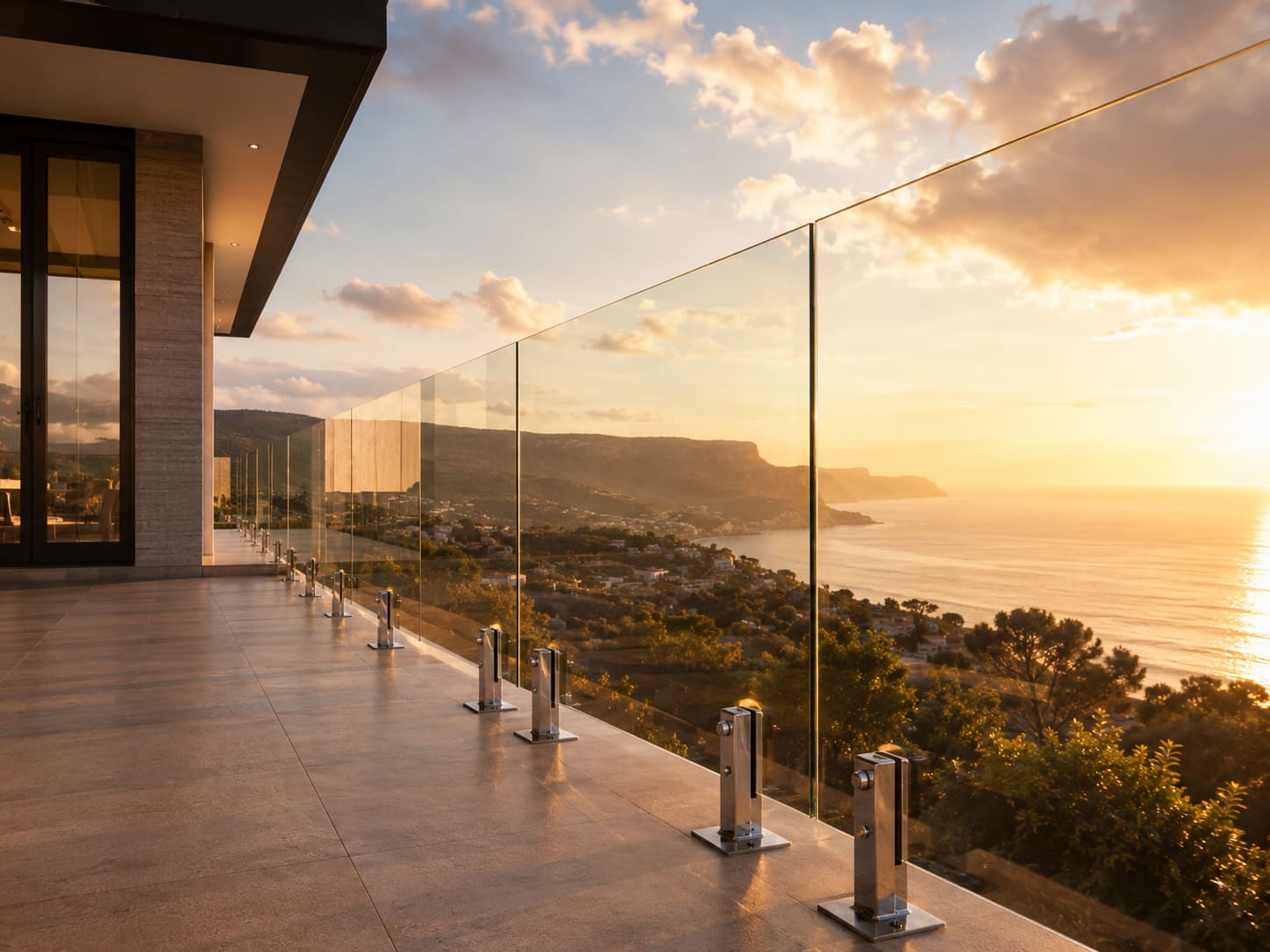
Frameless glass railings suit premium Jubilee Hills and Banjara Hills interiors where an unobstructed view matters, while framed or semi-frameless railings are more practical for windy high-rise balconies in HITEC City, Kukatpally and Kokapet. Frameless designs use base channels or SS spigots and give a clean, minimal look, but they demand a properly cured RCC or granite edge to anchor into, so the structure has to be right before the glass ever arrives.
- Choose frameless: villas, duplex staircases, low-rise balconies with a view, showrooms and villa lobbies.
- Choose semi-frameless (spigots or standoffs): mid and high-rise balconies needing both strength and openness.
- Choose framed (SS pipe with glass infill): rooftop terraces, commercial buildings and budget-conscious projects.
In dusty, monsoon-prone Hyderabad, SS316 spigots and standoffs are worth the small premium over SS304 for any outdoor railing, because they resist the rust streaks that appear on open terraces within a monsoon or two of using cheaper SS202 fittings. Frameless systems also read best when railings, glass doors and internal partitions are planned together, so the whole floor feels like one continuous, light-filled space. If you want to see how these systems look finished, browse our recent projects for real Hyderabad installations across both framed and frameless styles.
Which fittings and hardware last in Hyderabad conditions?
For glass railings in Hyderabad and Secunderabad, choose SS316-grade spigots, standoffs and clamps from established brands, because marine-grade stainless steel resists the pitting and rust streaks that ruin cheaper SS202 hardware within a season or two. As a hardware dealer for Taiton, Enox and Ozone, we stock fittings that hold up in twin-city humidity and dust, and we match the fixing type to how the railing is actually used.
- Base shoe or base channel: a continuous aluminium or SS channel that grips the glass along its full length, ideal for clean frameless balconies.
- Spigots: floor or side-mounted posts that hold the glass at intervals, strong and popular for open terraces.
- Standoffs and clamps: bolt-through or pinch-plate fixings for staircases and stepped landings.
- Handrail brackets: for an added top rail on stairs where code or comfort calls for a grab surface.
The hardware grade matters more than most homeowners expect. On an exposed Jubilee Hills terrace, the difference between SS304 and SS316 is the difference between a railing that stays bright for a decade and one that develops brown weep marks below every fixing after the first heavy monsoon. Spend the extra Rs 150 to Rs 300 per foot outdoors; indoors, SS304 is usually fine. If your project spans railings, facades and partitions, coordinating the fittings through a single supplier keeps the finish consistent across the whole home.
How is a glass railing installed, and how long does it take?
A frameless glass railing in a Jubilee Hills home is installed in five clear steps and usually takes 1 to 3 days on site for a standard balcony, plus a 4 to 7 day factory lead time to toughen, edge-polish and cut the glass. Because the glass cannot be cut or drilled after toughening, accurate site measurement is the single most important step in the whole process.
- Step 1: Site measurement and drawing approval, confirming heights (balcony railing height should be at least 1.0m to 1.1m).
- Step 2: Glass toughening, edge polishing and any cut-outs at the factory (4 to 7 days).
- Step 3: Fixing the base channel or spigots into the RCC or granite with chemical anchors, then allowing the anchors to cure.
- Step 4: Setting the glass panels, aligning gaps and locking them with gaskets or grub screws.
- Step 5: Sealing joints with weatherproof structural silicone and fitting the handrail if specified.
Ask your fabricator for a warranty covering hardware, typically 1 to 2 years, and confirm they will return for a post-monsoon alignment check, which genuinely matters in the twin cities where the first heavy rains test every fixing. You can see the full scope of what our teams handle, from railings to facades and structural glazing, across our services.
Glass railing design ideas for Jubilee Hills homes and villas
The most popular glass railing designs in Jubilee Hills and Banjara Hills combine ultra-clear frameless glass with slim SS316 or wooden handrails, letting light flow through double-height living rooms and villa staircases. Because plots here often feature landscaped terraces and skyline views, homeowners tend to prioritise uninterrupted sightlines over ornamental metalwork.
- Frameless base-channel balconies for a floating, borderless look over the garden or pool.
- Cantilevered staircase glass railings that pair 12mm glass with LED-lit timber handrails.
- Low-iron glass with a satin or acid-etched band at eye level for privacy on shared balconies.
- Coloured or fluted glass accents for powder rooms and internal Juliet balconies.
For open-plan homes, glass railings often continue into internal partitions and glass doors so the whole floor reads as one continuous, light-filled space. This is where planning railings, partitions and doors together pays off, both visually and on total project cost, because a single mobilisation and shared hardware reduce wastage. The trend across newer Kokapet and Financial District villas is toward taller, edge-to-edge glass with the fixings hidden entirely below the finished floor line.
Common mistakes to avoid when ordering a glass railing
The most costly glass railing mistakes in Hyderabad come down to weak anchoring, thin glass and cheap hardware, all of which show up only after the first monsoon when they are expensive to fix. Because toughened glass cannot be modified once made, an error caught late usually means re-toughening an entire panel.
- Under-specifying glass thickness: 10mm may pass indoors but is risky on an exposed high-rise balcony; use 12mm minimum outdoors.
- Anchoring into green or low-grade concrete: frameless railings need a properly cured RCC or granite edge, or the base channel will loosen.
- Choosing SS202 or unbranded fittings to save a few hundred rupees, then paying to replace rust-streaked hardware two years later.
- Skipping the manufacturer stamp check and accepting heat-strengthened or annealed glass sold as toughened.
- Ignoring gap and height codes, leaving balcony railings under 1.0m or leaving unsafe gaps at the base.
- Accepting a glass-only quote and being surprised by hardware, GST and transport charges at the end.
Avoiding these is mostly about working with a fabricator who measures carefully and specifies honestly. If you are comparing quotes, ask each vendor to itemise glass grade, hardware grade, height and whether GST is included, then compare like with like rather than headline per-foot numbers.
How to maintain a glass railing in dusty, monsoon-prone Hyderabad
To keep a glass railing looking new in Hyderabad, wipe it every 1 to 2 weeks with a soft microfibre cloth and a mild soap-water or glass-cleaner solution, and apply a hydrophobic nano coating at installation so rain sheets off. The twin-city combination of construction dust and hard water is the main enemy of a clear railing, and a little routine care prevents the permanent water spotting that is nearly impossible to remove later.
- Rinse terrace railings after heavy monsoon rain to stop mineral spots baking on in the sun.
- Avoid abrasive scrubbers and ammonia-heavy cleaners that dull edges and etch the glass over time.
- Inspect spigots and clamps once a year for early rust; SS316 rarely needs attention, SS304 sometimes does.
- Re-tighten grub screws and check silicone seals annually, especially just after the monsoon.
If a panel ever gets scratched or chipped, replace it rather than attempting to polish it, because toughened glass integrity should never be compromised. We keep replacement hardware from Taiton, Enox and Ozone in stock, so most repairs are quick once new glass is toughened, and a same-grade replacement panel keeps the railing visually seamless.
Why choose Hakimi Aluminium and Glass in Hyderabad and Secunderabad?
Hakimi Aluminium and Glass is a glass, aluminium and facade specialist and a hardware dealer for Taiton, Enox and Ozone, serving Jubilee Hills, Banjara Hills, Gachibowli, Secunderabad and the wider Telangana and Andhra Pradesh region. That combination means we can supply the glass, fabricate the railing and provide the exact fittings from a single point of contact, which keeps quality consistent and pricing transparent.
- Local teams who understand twin-city building edges, RCC quality and monsoon exposure.
- Genuine toughened and laminated glass with manufacturer stamps, not unmarked substitutes.
- In-house stock of SS316 spigots, standoffs and clamps for faster turnaround.
- Coordinated delivery when a project also needs facades, partitions or shower enclosures.
Whether you are fitting a single balcony in Jubilee Hills or railings across an entire villa or apartment tower, our glass railing team can measure, specify and install to code. You can get a free quote for an on-site measurement, or explore our services to see how railings fit alongside the rest of your glass and aluminium work.