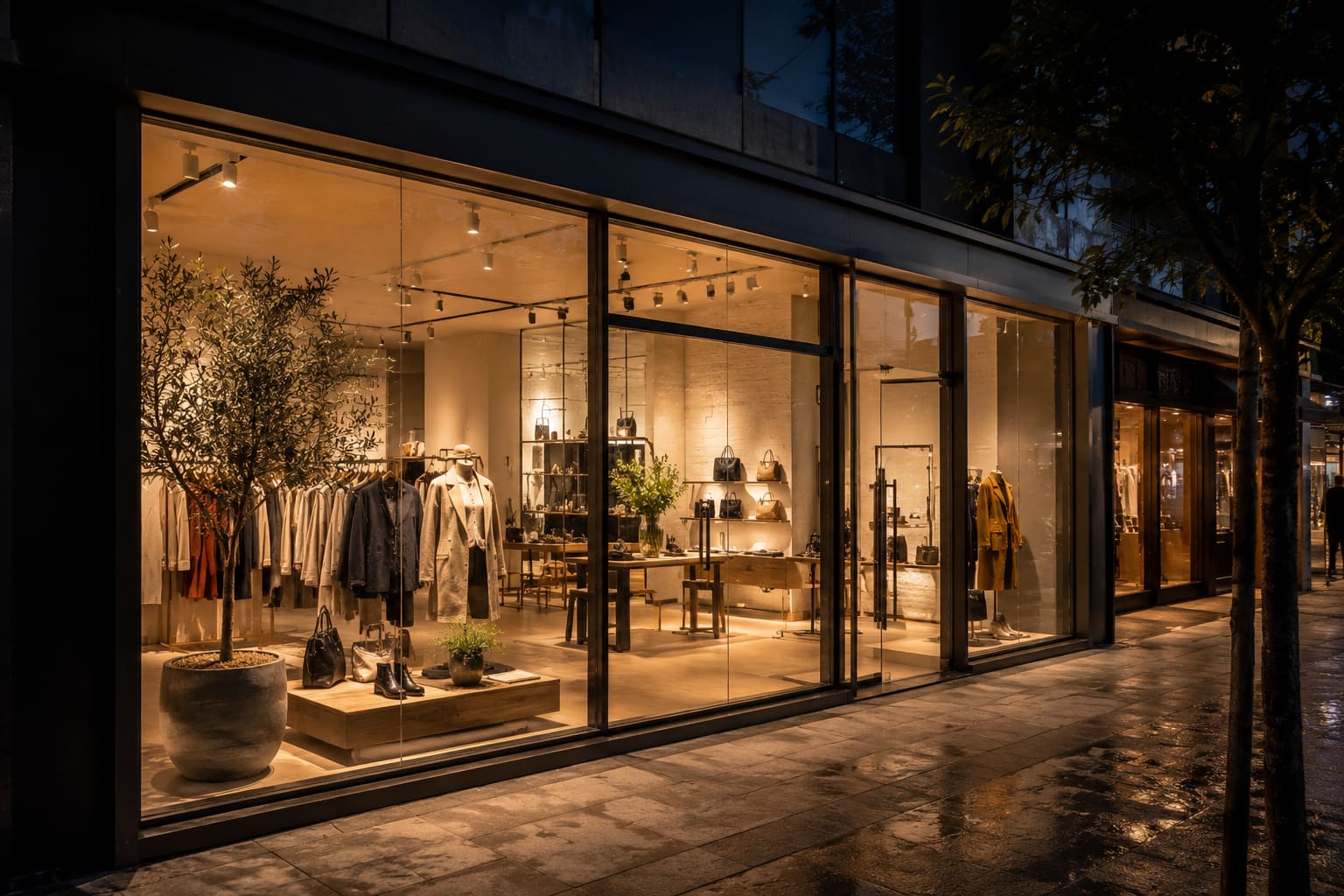
A glass shopfront in Abids or Koti typically costs Rs 450 to Rs 1,100 per square foot installed, depending on whether you choose a standard aluminium-framed toughened front, a frameless spider-glazed facade, or an automatic sliding entrance. For a typical 12-foot-wide retail unit in these older commercial pockets of Hyderabad, budget roughly Rs 90,000 to Rs 2,50,000 including toughened glass, aluminium sections, doors and installation. A well-built glass shopfront pays for itself by pulling in footfall and cutting your daytime lighting and cooling bills.
Abids and Koti are among Hyderabad's busiest legacy retail markets, with narrow frontages, dense footfall and ageing building facades. A modern shopfront transforms a tired storefront, floods the shop with daylight, and - critically for a market this crowded - turns your window into a 24-hour advertisement that keeps selling long after you pull the shutter. This guide covers the glass and framing that survive Telangana's 40-degree summers, monsoon lashing and constant road dust, alongside honest INR pricing, hardware that lasts, permit realities and the full fit-out timeline for Hyderabad and Secunderabad.
Whether you run a garment showroom on Sultan Bazaar, a mobile store in Koti or a jewellery unit off Abids Road, the same fundamentals apply: pick safety-rated glass, branded fittings, and a local installer who can service the shopfront for years after handover. Because we handle both the glazing and the Taiton, Enox and Ozone hardware that hold it together, this guide reflects what actually endures in the twin cities - not showroom theory.
What a glass shopfront costs in Abids & Koti (INR)
Expect Rs 450 to Rs 1,100 per square foot installed for a glass shopfront in the Abids-Koti belt, with the final rate driven by glass thickness, framing style and whether you add automatic doors. The glass and aluminium are only part of the bill - hardware, sealing and labour typically add 15-25% on top of the raw material cost. Here are the realistic twin-city ranges as of 2026:
- Aluminium-framed toughened front (10-12mm glass): Rs 450-Rs 650 per sq ft - the workhorse choice for garment, mobile and general retail shops.
- Frameless / spider-glazed facade (12mm toughened): Rs 850-Rs 1,100 per sq ft - premium, ideal for showrooms on the main Koti road and Abids Road frontages.
- Automatic sliding glass door unit: Rs 55,000-Rs 1,10,000 depending on sensor brand, door width and battery backup.
- Toughened glass swing door with patch fittings and a floor spring: Rs 18,000-Rs 35,000 per leaf, hardware included.
- Toughened glass shutter as an alternative to metal rolling shutters: add Rs 350-Rs 500 per sq ft.
A standard 12ft x 10ft frontage (120 sq ft) therefore lands around Rs 90,000 for a basic aluminium front and Rs 1,30,000-plus for frameless glazing before doors. Prices in Secunderabad, Sultan Bazaar and the wider Hyderabad market track within about 10% of these figures. Remember to add 18% GST, which is also your warranty proof. For a firm figure on your exact frontage, get a free quote with your width, height and preferred glass type.
Why a glass shopfront is worth it for a busy market
In a footfall-driven belt like Abids-Koti, a glass shopfront is one of the few upgrades that lifts both walk-ins and margins at the same time. Compared with a solid facade or a metal-shutter-only front, glass gives you measurable, repeatable returns:
- Visibility sells: an open glass frontage lets passers-by see your merchandise from the pavement, which is worth more than any hoarding on a crowded lane.
- Free daylight: large glazing cuts the need for daytime tube lights and reduces your electricity bill in a market where units trade 10-12 hours a day.
- Perceived value: a clean, frameless or slim-aluminium front instantly signals a premium, trustworthy shop - a real edge for jewellery, eyewear and fashion.
- Longevity: quality toughened glass and branded aluminium last 12-15 years with minimal upkeep, unlike painted or ACP fronts that fade and peel in Hyderabad's sun.
- Resale and rent value: a modern facade helps a commercial unit command higher rent and re-let faster, which matters across Telangana's tight retail corridors.
The trade-off is upfront cost and the need for periodic cleaning, but for most shops the visibility gain alone recovers the investment within a couple of seasons. You can see the difference a proper facade makes across our recent projects in and around the twin cities.
Best glass for Hyderabad's heat, monsoon and dust
For Hyderabad's climate, 10-12mm toughened glass with a heat-reflective or tinted coating is the practical choice, because it resists 40-degree-plus summer heat, cuts glare and hides road dust between cleans. The glass you pick decides both your comfort and your electricity bill for the next decade, so it is worth getting right. The main options for Abids and Koti shops:
- Toughened (tempered) glass: about 5x stronger than ordinary annealed glass and safety-shatters into small, blunt granules - effectively mandatory for busy footfall zones.
- Heat-reflective / solar-tinted glass: reduces indoor heat gain by roughly 25-40% and cuts AC load through the long Telangana summer, a genuine monthly saving on sun-facing Koti frontages.
- Laminated glass: two panes bonded with a PVB interlayer for extra security against break-ins - the smart pick for high-value jewellery and mobile shops because it holds together even when cracked.
- Double-glazed (DGU) units: worthwhile for fully air-conditioned showrooms in premium areas like Banjara Hills or Jubilee Hills, though less common in tight Abids units where wall depth is limited.
For monsoon-proofing, insist on structural silicone sealing and proper aluminium drainage channels so wind-driven rain does not seep behind the frame. This is where a properly engineered front elevation glazing system earns its keep - the weep holes and gaskets are as important as the glass itself, and the difference only shows up when the first heavy monsoon hits.
Framing systems: aluminium, frameless and spider glazing
Your framing choice sets the look, the strength and the cost band of the entire shopfront. In the Abids-Koti market, three systems cover almost every requirement, and picking the wrong one is the most expensive mistake owners make:
- Aluminium-framed systems: the most common and economical route, using branded aluminium profiles glazed with toughened panels. Fast to fabricate, easy to service, and forgiving on older, slightly out-of-square building openings common in heritage Abids buildings.
- Frameless (patch-fitting) glazing: minimal metal, maximum glass. It relies on stainless-steel patch fittings at the corners to hold the panels, giving a clean, premium display window prized by fashion and eyewear showrooms.
- Spider / structural glazing: large panes held by bolted spider fittings, creating a near-seamless facade. It costs the most but delivers the strongest visual impact on wide frontages and multi-storey elevations.
For most single-unit shops in Abids and Koti, an aluminium-framed front paired with a frameless glass entrance door is the sweet spot - affordable, robust, and quick to repair if a panel is ever damaged. Reserve full frameless or spider glazing for wide showrooms where the display window is doing the heavy selling.
Doors, floor springs and hardware that actually last
Hardware is the part of a shopfront used thousands of times a week, so it is where quality matters most - a cheap floor spring will fail long before the glass does. It is typically only 10-15% of the total shopfront cost but causes roughly 80% of after-sales complaints when it is skimped on. We deal in Taiton, Enox and Ozone, the brands that hold up in high-traffic twin-city retail. Plan for these components:
- Floor springs: buried under the entrance to control a heavy glass swing door smoothly and hold it open or self-close. Insist on units rated for continuous commercial use, not residential-grade closers.
- Door handles and pulls: from slim D-handles to full-height pulls, the right handle sets the tone the moment a customer touches your shop.
- Locks and access control: strong patch locks, dead locks and, increasingly, keypad or access systems for shops trading in high-value goods like gold or phones.
- Sliding and automatic gear: for wide or sensor-operated entrances, robust sliding systems keep large glass leaves gliding for years without sagging or jamming.
The rule from the field is simple: spend on hardware and you buy years of trouble-free trading; save on it and you will be calling a technician within months. Confirm every fitting is branded and carries a 1-2 year warranty before you accept a quote.
The fit-out process and timeline in the twin cities
A typical Abids or Koti shopfront installation takes 5 to 10 working days from site measurement to handover, with most of the glass toughening done off-site. On-site disruption is short - usually just 1 to 2 days - which matters when neighbouring shops are trading. The proven sequence:
- Day 1: Free site survey, exact measurement of the frontage, and a structural check of the lintel and sill.
- Days 2-3: Design finalisation, glass and aluminium selection, and a written, GST-inclusive quote.
- Days 4-7: Off-site toughening and cutting of glass, plus fabrication of aluminium sections and pre-fitting of hardware.
- Days 8-9: On-site installation - framing, glass fixing, door hardware and silicone sealing.
- Day 10: Cleaning, sensor testing for automatic doors, and handover with a written warranty document.
Because Abids and Koti roads are congested, most crews schedule glass delivery and installation for early morning or after peak trading hours to avoid blocking neighbouring shops. If your unit is on an upper floor or a narrow lane, factor in an extra half-day for manual glass handling, since large toughened panels cannot be cut or drilled on site once made.
Permits, hallmarks and staying legal in Hyderabad
You generally do not need a separate GHMC permit for a like-for-like glass shopfront replacement within the existing building line, but any change to the building line, projection or structure needs owner consent and may require municipal approval. Getting this right protects you from fines and forced removal. What to verify before you sign:
- Insist on IS 2553 / hallmarked toughened glass with a visible stamp in one corner of every panel - it is your proof the glass is genuinely tempered.
- Confirm the aluminium is a branded section (Jindal, Hindalco) rather than thin, unbranded extrusion that flexes and leaks.
- Keep the building line unchanged: projections over the footpath commonly attract GHMC objections in Abids, Koti and Sultan Bazaar.
- If you rent the unit, get written landlord consent - most commercial leases in the twin cities require it for facade changes.
- Check GST is charged and shown on the invoice; a compliant bill is also your warranty proof and useful for input-tax claims.
Telangana and Andhra Pradesh retail bylaws are broadly similar on this, but local GHMC circle rules vary, so a quick check with a shopfront specialist who works the area saves nasty surprises later.
Choosing a local installer and getting the best value
The right installer is one who has done comparable work in your exact market and can service the shopfront for years after handover. In a dense retail belt like Abids-Koti, proximity and responsiveness matter as much as headline price. Before you commit:
- Ask to see photos of recent shopfronts they have fitted in Abids, Koti, Sultan Bazaar, Secunderabad or the wider Hyderabad market.
- Get the warranty in writing - reputable twin-city installers offer 1-2 years on fabrication and hardware.
- Confirm they stock spares for your floor springs, patch fittings and locks, so a repair takes days, not weeks.
- Compare quotes on like-for-like specs: glass thickness, brand of aluminium and brand of hardware, not just the bottom-line number.
- Prefer a supplier who is both a glazier and a hardware dealer, so one point of contact covers the glass, the frame and the fittings.
The most common costly mistake is choosing the cheapest quote, only to find it used thinner glass, unbranded aluminium and residential-grade hardware that fails within a year. Because we handle both the glazing and the Taiton, Enox and Ozone hardware, you can plan the whole storefront in one place - explore our services for the facade work, then send us your measurements for a firm, GST-inclusive quote.