Hotel facade glazing in Hyderabad works best when it pairs a high-performance solar low-E double glazed unit (DGU) curtain wall for guest-room towers with frameless spider glazing for double-height lobbies and atriums. That combination photographs beautifully, keeps interiors cool through 40-plus degree summers, meets safety codes, and stays fault-free for years. For a hotel the facade is both the first impression and a standing statement about brand quality, so it deserves the same rigour you apply to the guest experience inside.
Getting the specification right in Telangana means balancing a striking guest-facing look with the hard realities of heat load, acoustic comfort, safety compliance and long-term maintenance across the region's hot, dusty, monsoon-humid climate. A facade that dazzles in a marketing render but cooks the top-floor suites, streaks with dust after one monsoon, or fails a fire-safety review is an expensive mistake dressed up as design.
This guide walks owners, architects and project managers through the glazing systems, glass make-ups, decorative mirror options, entrance hardware and realistic INR budgets that suit business hotels, resorts, banquet venues and boutique properties across Hyderabad, Secunderabad and Andhra Pradesh. Where it helps, we point to the exact systems and fittings we supply and install, and you can always get a free quote for a spec matched to your property.
Why hotel facade glazing needs a different spec
Hospitality glazing works harder than a typical office or retail facade. Guests expect quiet rooms despite arterial-road traffic, cool interiors despite blistering summers, and a lobby that looks premium at 8am and 8pm alike. Those expectations push most hotels away from plain single glazing and toward high-performance double glazed units with a solar low-E coating, plus better sealing, hardware and detailing throughout the envelope.
The core factors we weigh on every hotel project in Telangana and Andhra Pradesh:
- Solar heat gain: a good solar low-E DGU with an SHGC of roughly 0.25 to 0.35 cuts cooling load, easing chiller and air-handling sizing and lowering running costs for the building's whole life.
- Acoustics: guest-room facades along busy corridors such as the ORR, Banjara Hills or the airport road benefit from asymmetric DGUs or a laminated inner pane, targeting a restful 30 to 35 dB indoors.
- Safety: toughened or laminated safety glass is essential at entrances, balustrades, banquet halls and any low-level or overhead glazing, in line with IS 2553 safety-glazing practice.
- Maintenance: Hyderabad's dust rewards smooth, easily cleaned surfaces and genuinely accessible facades, so cleaning and access planning matter far more here than in cleaner climates.
Because these demands overlap, a hotel facade is really a single system decision - glass, frame, sealant and hardware chosen together rather than as separate line items. Browsing our services shows how we package these elements for hospitality clients so the pieces are compatible from day one.
Facade systems: curtain wall, spider and structural glazing
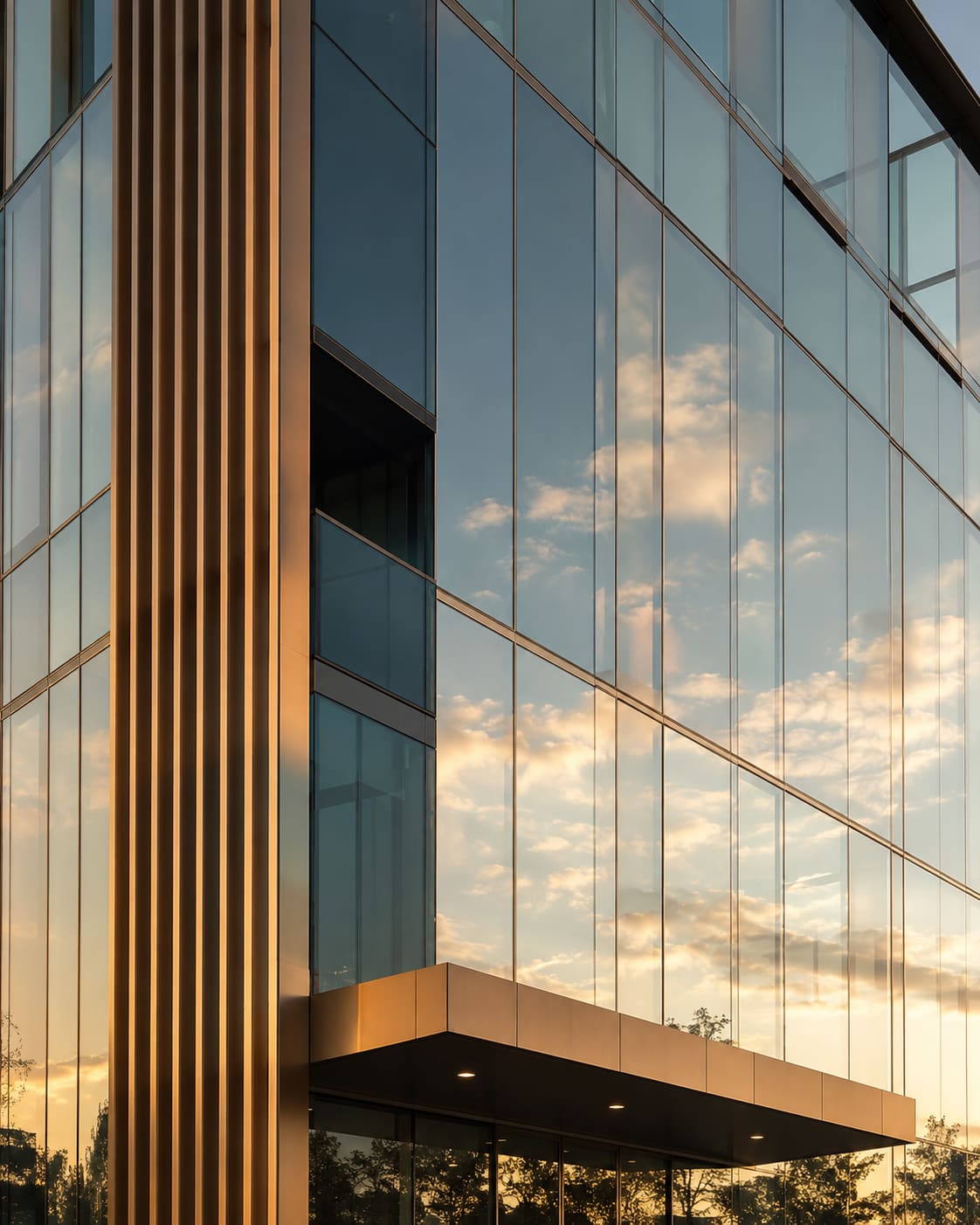
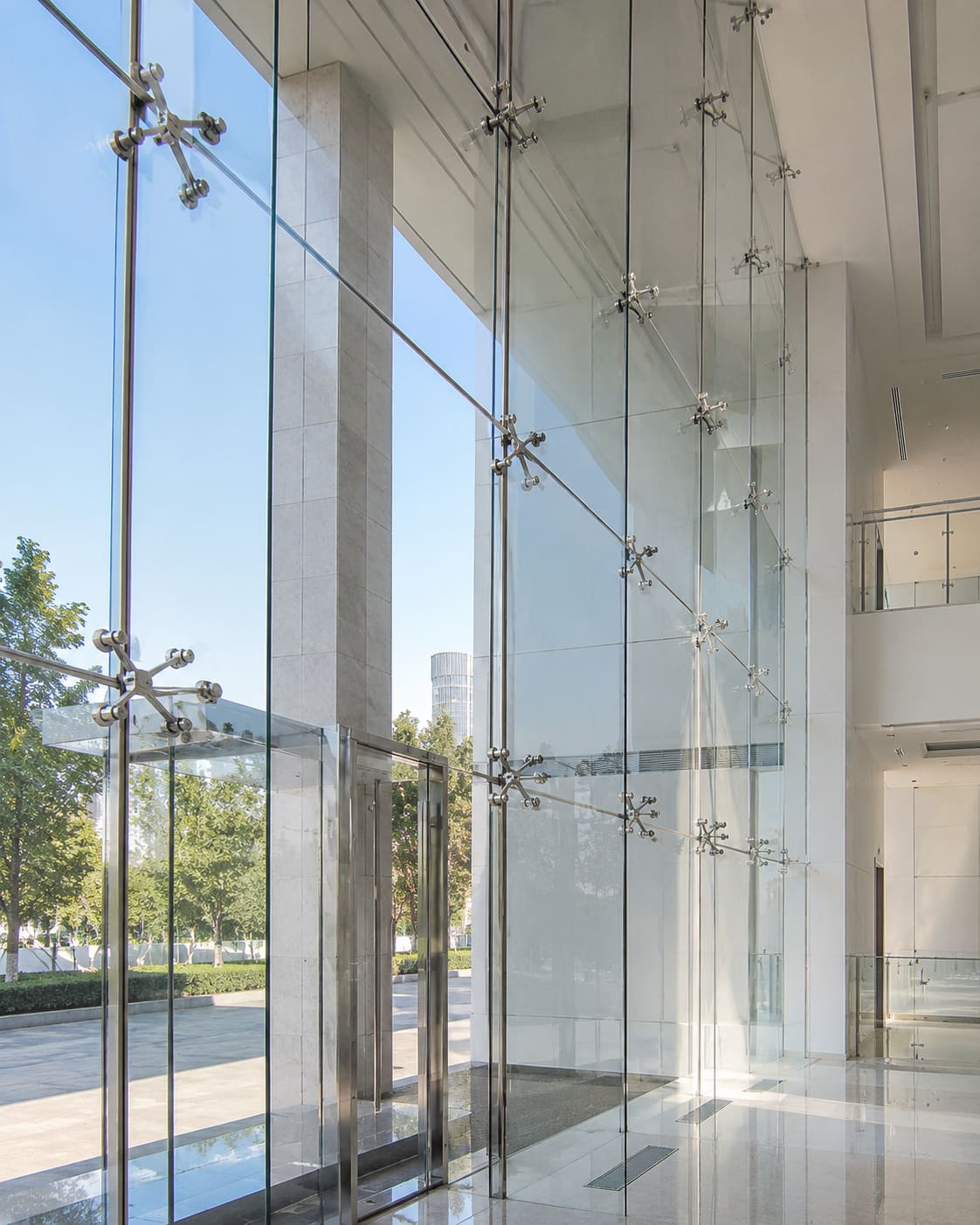
Most hotel exteriors use one of three approaches, and larger properties usually mix them. Unitised or semi-unitised curtain walls suit tower-style business hotels and give a clean, factory-sealed grid that erects quickly floor by floor. Frameless spider glazing - bolted, point-fixed glass on stainless-steel spider brackets - creates the transparent, minimal look prized for double-height lobbies, atriums and porte-cocheres. Structural silicone glazing delivers a flush, thin-line finish for boutique frontages where the glass should appear to float without visible framing.
Indicative supply-and-install ranges in the Hyderabad market for 2026, varying with glass make, coating, thickness and facade height:
- Structural / semi-unitised curtain wall with DGU: around INR 1,100 to 1,900 per sq ft.
- Spider glazing with toughened glass: around INR 1,400 to 2,400 per sq ft depending on fitting grade, glass thickness and bracket finish.
- ACP-and-glass composite facade bands: around INR 350 to 700 per sq ft for the ACP portions.
For a mid-size business hotel with roughly 8,000 sq ft of glazed facade, a DGU curtain wall commonly lands between INR 90 lakh and 1.4 crore before any decorative interior work. The spider system in particular is more than a look - it depends on precision stainless-steel spider brackets and structural fittings whose grade and finish decide both durability and the crispness of every sightline. You can see completed examples in our recent projects to gauge how each system reads at full scale.
A quick rule of thumb: choose unitised curtain wall for repetitive tower floors, spider glazing for the hero lobby or atrium, and structural silicone for feature bays where you want the frame to disappear entirely.
Choosing the right glass make-up for rooms and lobbies
The glass build-up is where comfort and energy bills are won or lost. Guest rooms and public spaces have different priorities, so specifying different units for each is normal and cost-smart rather than wasteful.
- Guest rooms: a 6mm solar low-E outer pane, a 12mm air or argon cavity, and a 6mm (or 6.38mm laminated) inner pane balances solar control, acoustics and safety. The laminated inner adds noise reduction and holds the glass in place if it ever breaks.
- Lobbies and atriums: low-iron (extra-clear) toughened glass keeps a frameless span colour-neutral, avoiding the green tint that standard float glass shows across large expanses.
- Banquet and all-day-dining glazing: laminated DGUs with a heavier acoustic PVB interlayer keep event noise in and road noise out, protecting parallel functions.
- West and south-west elevations: add a higher-performance coating or a light ceramic frit to tame Hyderabad's harsh afternoon sun on the worst-hit facades and reduce top-floor overheating.
Getting these choices wrong is expensive to reverse, because reglazing an occupied hotel is slow and disruptive. We model the SHGC, U-value and acoustic rating per elevation before anything is ordered, and can compare two or three make-ups against your HVAC capacity and budget targets so the numbers are settled on paper, not on site.
Mirrors and decorative glass for lobbies, rooms and banquets
Inside the property, mirrors do heavy lifting for perceived space and luxury. Full-height lobby mirrors, LED backlit mirrors in guest bathrooms, and antique or bronze-tinted mirror feature walls in banquet halls are the most-requested decorative items for Hyderabad hotels, and each has its own cost and detailing considerations.
Typical indicative pricing in the local market:
- Standard 5mm silver mirror, framed and fixed: around INR 120 to 250 per sq ft.
- LED backlit bathroom mirror with defogger and touch switch: around INR 6,000 to 18,000 per piece by size and features.
- Antique, bronze or smoked decorative mirror feature wall: around INR 350 to 900 per sq ft.
For guest bathrooms, always specify copper-free, moisture-resistant mirrors to prevent the black-edge corrosion that plagues cheaper mirrors in humid conditions - a particular risk for coastal AP properties near Visakhapatnam and Vijayawada. A backlit vanity mirror also lifts a standard bathroom to a boutique feel, which is why the LED backlit mirror is one of the highest-impact upgrades per rupee in a room refurbishment. Mirror feature walls read as genuinely hotel-grade only when their edges, joints and fixings are considered from the start rather than improvised on site.
Entrances, shopfronts and the hardware that carries the traffic
A hotel entrance is the single most-used piece of glass in the building, cycling thousands of times a day, so the hardware behind it matters as much as the glass itself. We work with Taiton, Enox and Ozone systems, which cover the full range of entrance and glass-door hardware rated to hotel duty cycles rather than light residential use.
- Toughened glass entrance doors on commercial floor springs and overhead closers give the frameless, reliably self-closing action guests expect at a premium lobby.
- Sleek door handles in matching finishes tie the entrance, restaurant and banquet doors into one consistent design language across the property.
- Frameless assemblies rely on precision patch fittings at the top, bottom and lock points to transfer load cleanly and keep the doors in alignment over years of constant use.
Choosing commercial-grade rather than residential-grade hardware here is the difference between a door that still feels crisp after three years and one that sags, drags and needs realignment every few months. Getting the fittings matched to your entrance size, glass weight and daily footfall is exactly the kind of detail worth confirming before you order, and we are happy to spec it against an existing property standard.
Spa, wellness and banquet: showers, partitions and sliding walls
Beyond the facade and lobby, a hotel is full of glass in its wellness, spa and event spaces, and each area has its own hardware and safety needs that a facade-only spec tends to overlook.
- Guest bathrooms and spa suites: frameless shower enclosures built on quality, corrosion-resistant fittings hold a clean five-star finish in constant humidity instead of pitting and staining within a year.
- Banquet and conference divisions: movable or operable glass partition systems let one hall flex into two or three rooms while retaining enough acoustic separation for simultaneous events.
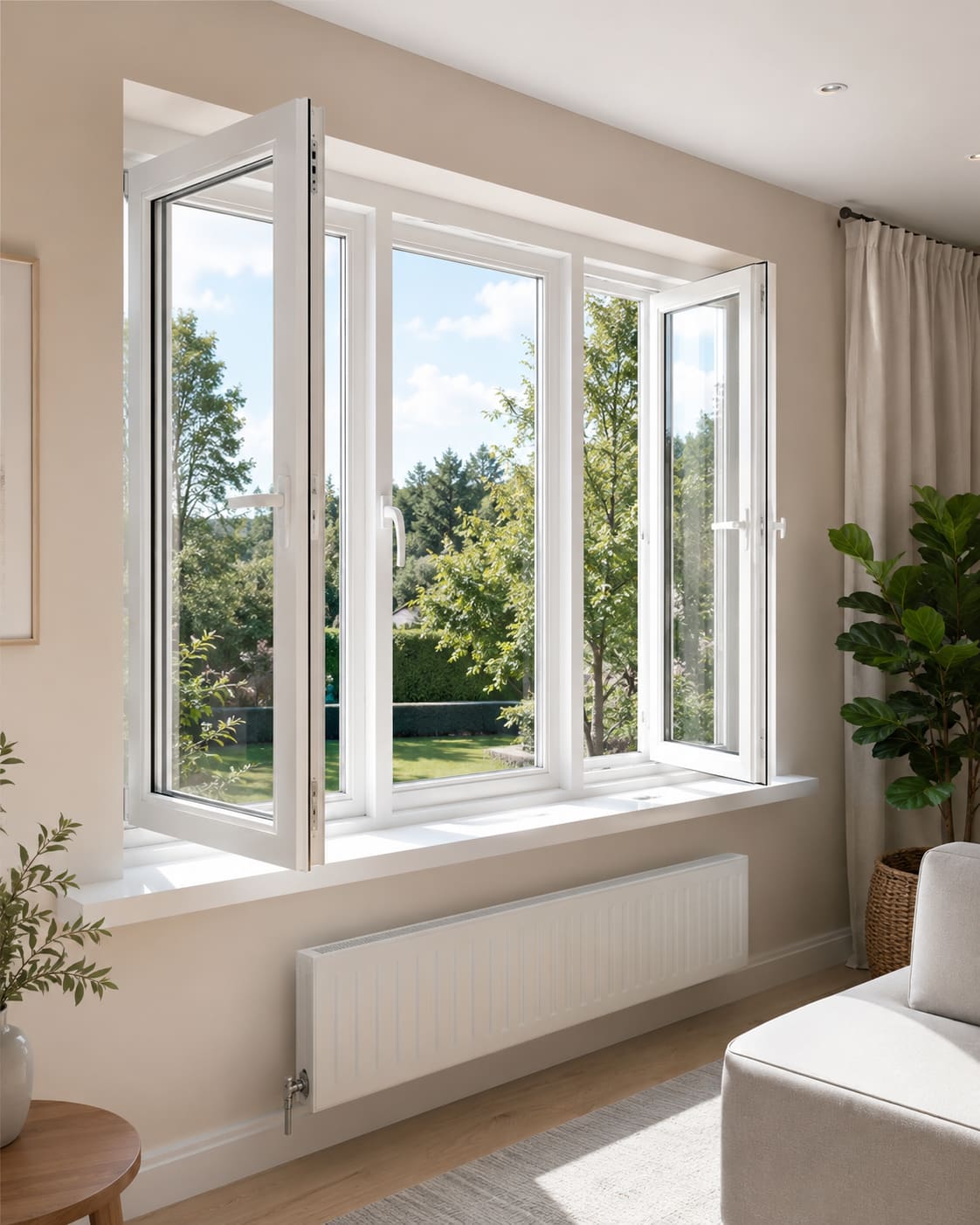
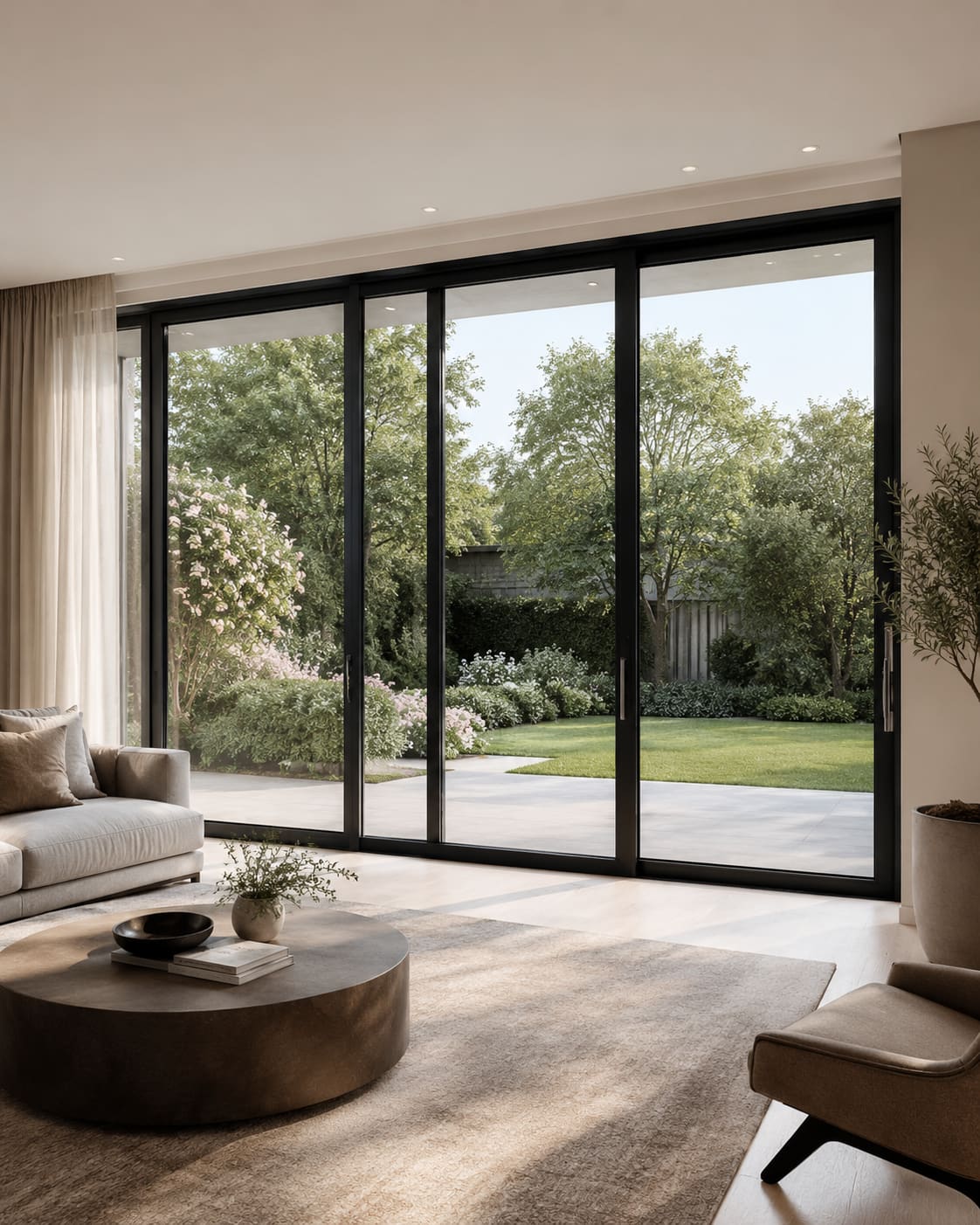
- Large openings to terraces, pool decks and all-day dining: robust sliding and folding glass systems allow wide, smooth-running walls that open interiors to Hyderabad's pleasant winter evenings.
The recurring lesson is to specify these as coordinated systems - glass, track, rollers, seals and handles from compatible ranges - rather than assembling mismatched parts on site. Coordinated systems are what prevent the rattles, leaks and drag that quietly erode a guest's sense of quality.
Local climate, compliance and long-term maintenance
Hyderabad and Secunderabad share a hot, dry summer, a dusty pre-monsoon and a humid monsoon, while coastal Andhra Pradesh adds salt-laden air. Each of these attacks glazing differently, and a hotel spec has to answer all three at once rather than optimising for one.
- Dust: choose easy-clean or self-cleaning coated glass, design in safe facade access such as BMU or anchor points, and budget for two to four professional facade cleans a year.
- Heat: heat-soak test all toughened glass per EN 14179 for point-fixed, overhead and structurally glazed panels to cut the risk of nickel-sulphide spontaneous breakage after handover.
- Wind and safety: design curtain walls and spider glazing to IS 875 (Part 3) wind loads, and use laminated glass over occupied entrances, walkways and canopies.
- Humidity and salt (coastal AP): specify marine-grade SS 316 fittings and copper-free mirrors so corrosion does not surface within the first monsoon.
Maintenance discipline is what protects the investment. A facade that is easy to reach, easy to clean and built from corrosion-appropriate hardware keeps its showroom finish for a decade rather than degrading over a couple of seasons - and it keeps the property compliant when insurers or auditors ask for evidence of safe glazing.
Common mistakes to avoid on hotel glazing projects
Most hotel glazing problems trace back to a handful of avoidable decisions made early, when saving a little looks harmless and only shows up as a cost after opening.
- Under-specifying acoustics on road-facing rooms, then fielding noise complaints that no curtain or mini-bar upgrade can fix.
- Using a single glass make-up everywhere to simplify procurement, which either overspends on quiet inner rooms or underperforms on the harsh west facade.
- Skipping heat-soak testing on point-fixed and overhead glass to shave cost, then facing spontaneous breakage over an occupied lobby.
- Buying residential-grade entrance hardware that cannot survive hotel footfall, leading to sagging doors within the first year.
- Ordering coated DGUs late and letting a 4 to 8 week lead time push back the opening date.
- Splitting glass, facade and hardware across unrelated vendors, so a leaking seal or a dragging door becomes a finger-pointing exercise between trades.
Each of these is cheap to prevent at the drawing stage and expensive to fix once guests are checking in, which is why the specification stage deserves genuine engineering attention rather than a quick like-for-like copy of another property.
Getting the project right: sequencing, budgeting and procurement
Order glass early. Coated DGUs and large toughened panels for spider glazing routinely carry 4 to 8 week lead times, so lock the facade spec before the structure tops out to avoid schedule slips that ripple straight into the opening date and lost room revenue.
- Coordinate the facade with HVAC and interiors so mullion positions, curtain pockets and mirror walls align with services, lighting and ductwork.
- Insist on heat-soak tested toughened glass for point-fixed and overhead applications to reduce the risk of spontaneous breakage after handover.
- For occupied refurbishments, plan phased facade work so operating floors stay sealed, quiet and revenue-generating throughout the works.
- Build a 5 to 8 percent contingency into the glazing budget for coating upgrades, breakage and site adjustments.
On the commercial side, keeping glass, facade and hardware procurement under one specialist reduces the finger-pointing between trades when a seal leaks or a door drags. As a single supplier of both the spider glazing and the Taiton, Enox and Ozone hardware behind it, we align the spec end to end for hotels across Hyderabad, Secunderabad and Andhra Pradesh - send your drawings and elevation areas and get a free quote for a fully costed proposal.