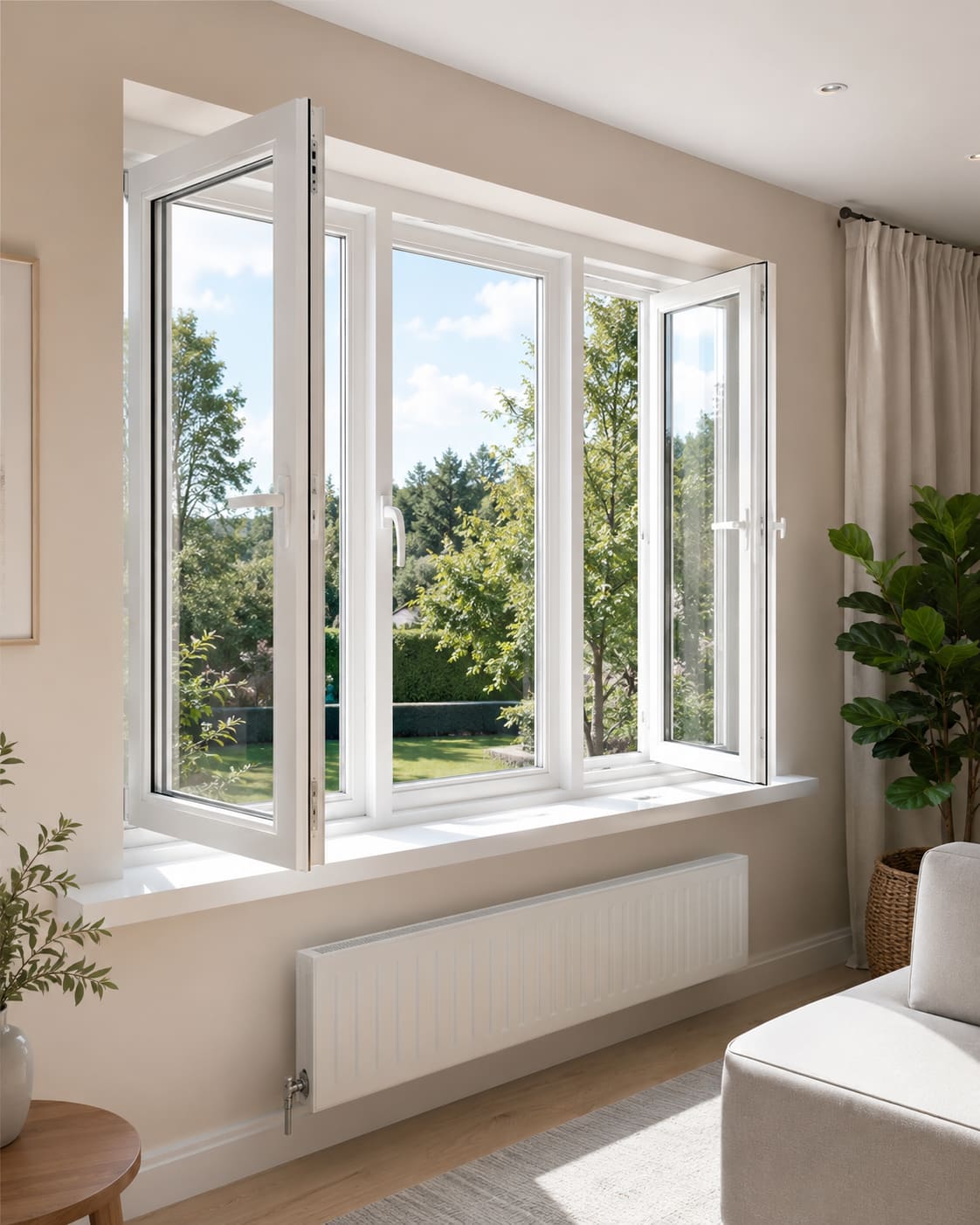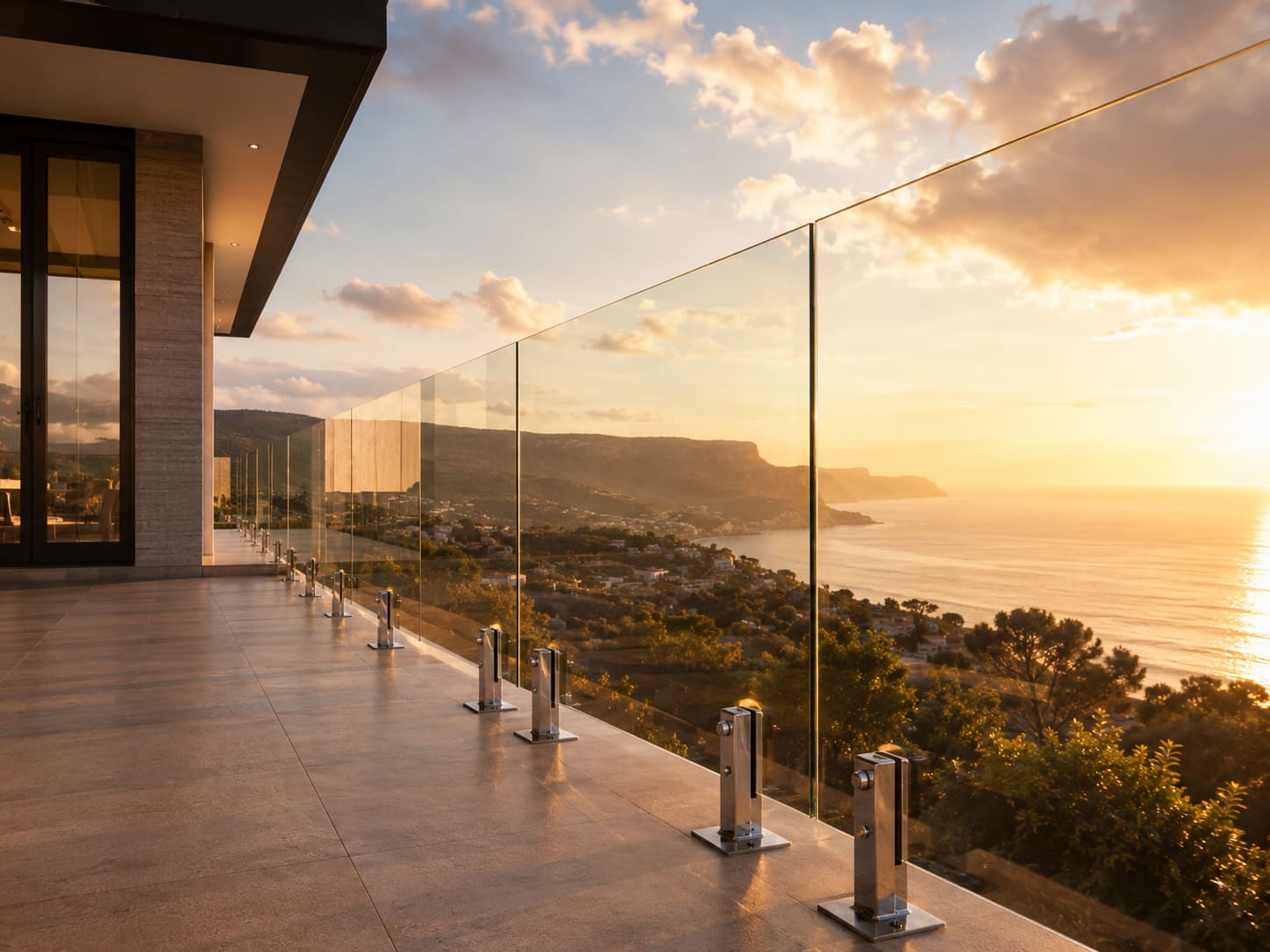
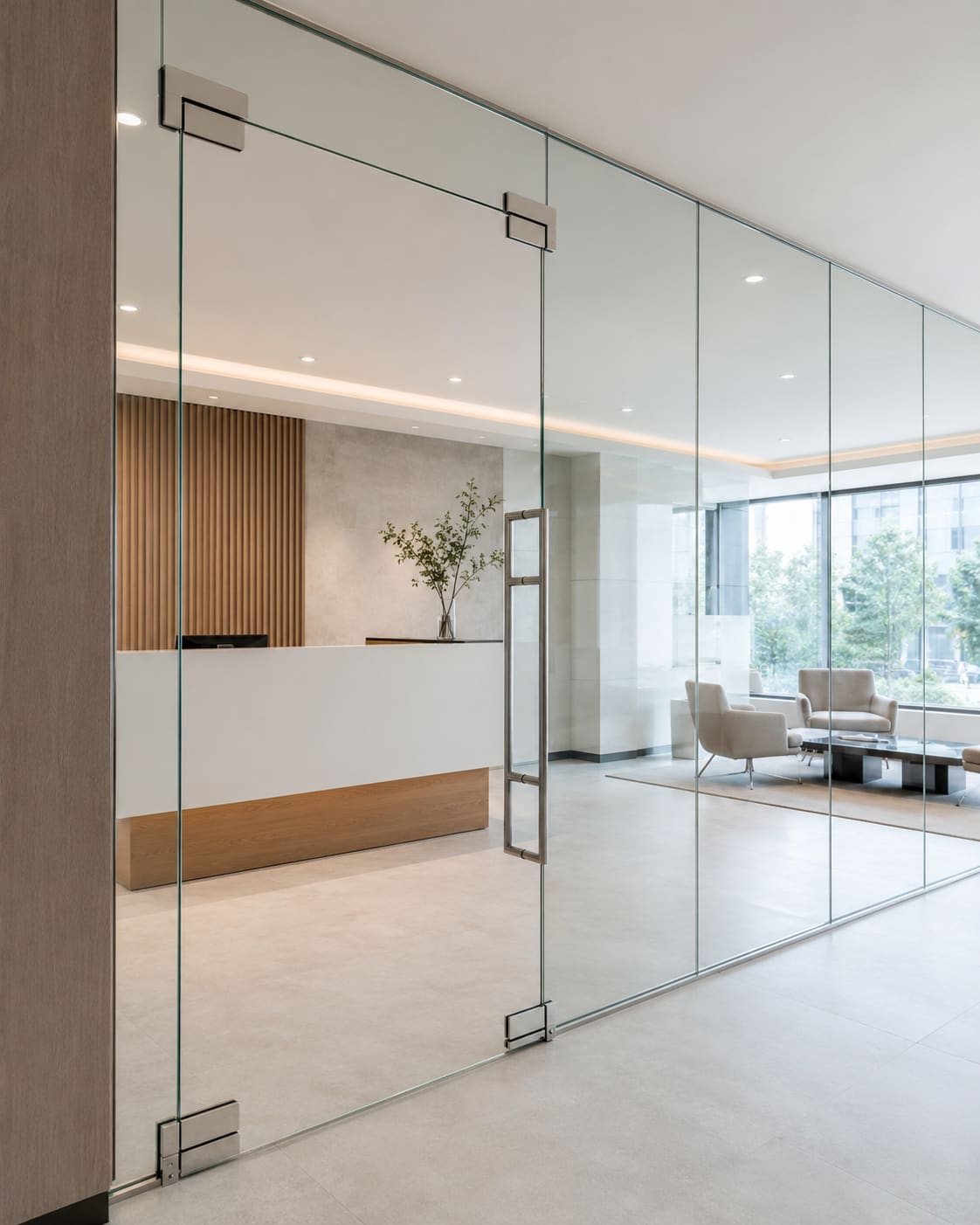
Laminated glass is made by permanently bonding two or more sheets of glass to a flexible plastic interlayer, usually polyvinyl butyral (PVB), under controlled heat and pressure so the assembly behaves as a single safety pane. The interlayer grips the glass fragments if the pane breaks, preventing sharp shards from falling and producing the material's characteristic 'spider-web' crack pattern instead of a full collapse. That one design principle is what separates ordinary glass from a genuine safety product used in facades, canopies, balustrades and overhead glazing.
The process combines high-quality float glass, a precisely measured interlayer film and an industrial autoclave running in a dust-free clean room. In India, laminated safety glass is classified under IS 2553 (Safety Glass) and is specified across facades, skylights, canopies and balustrades in the National Building Code of India (NBC) 2016. For Hyderabad and Secunderabad's mix of intense summer sun, monsoon storms and rising security concerns, lamination adds UV control, sound damping and post-breakage retention that toughened glass alone cannot deliver.
This guide walks through the raw materials, the step-by-step manufacturing sequence, the science of how the bond forms, the relevant Indian standards, realistic Hyderabad pricing and how to specify the right laminate the first time. If you already know your requirement, you can get a free quote and our team will size the glass and matching hardware for you. To see how these panes perform once installed, browse our recent projects across Telangana and Andhra Pradesh.
What Laminated Glass Actually Is
Laminated glass is a sandwich: two or more glass plies with one or more polymer interlayers fused between them into a single, monolithic-acting panel. Unlike toughened glass, which is a single sheet heat-treated to break into small granules, laminated glass is defined by its bonded interlayer, and that interlayer is the reason it holds together after impact.
The everyday example most people have seen is a car windscreen, which is laminated so it cracks but stays in the frame during a collision. The same logic protects buildings: a broken laminated skylight will not rain glass on the people below, and a struck laminated shopfront resists being pushed through. In architectural use, laminated glass is chosen wherever human safety, security or acoustics matter more than raw sheet strength.
Because it can be built from clear, tinted, reflective or heat-strengthened plies, laminated glass is highly configurable. Pair it with toughened plies and you get toughened-laminated glass, the workhorse of skylights and structural facades. If you are weighing laminated against other safety options for a specific opening, our services team can advise on the right build.
The Core Materials in Laminated Glass
Laminated glass is built from two ingredients: glass plies and a polymer interlayer that bonds them together. The choice of each determines the strength, clarity, sound rating, UV performance and cost of the finished pane.
- Glass plies: Clear, tinted, reflective or toughened float glass, typically 3 mm to 12 mm each, cut and edge-worked before lamination.
- PVB (polyvinyl butyral): The most common interlayer, supplied as 0.38 mm film; films are combined to 0.76 mm or 1.52 mm for higher strength, security and acoustic performance.
- EVA (ethylene-vinyl acetate): An alternative interlayer cured with heat and vacuum instead of an autoclave, favoured for decorative inserts, fabrics, rice paper and photovoltaic glass.
- SGP (SentryGlas ionoplast): A stiffer, stronger interlayer roughly 5 times stronger and 100 times stiffer than PVB, used for structural, overhead and cyclone-rated glazing.
- Acoustic PVB: A softer, multi-resin film tuned to damp sound, popular for facades facing busy Hyderabad roads and flight paths.
A standard 6.38 mm laminate is 3 mm glass + 0.38 mm PVB + 3 mm glass. Because laminated panes are frequently combined with toughened glass work to create toughened-laminated units, the input glass is often heat-strengthened first, producing a hybrid that pairs high impact strength with fragment retention, ideal for skylights, floors and overhead glazing.
Step-by-Step Laminated Glass Manufacturing Process
Laminated glass is produced in a controlled, dust-free clean room because even a single hair, fingerprint or dust speck trapped inside the sandwich becomes a permanent, visible defect. Cleanliness and humidity control are therefore non-negotiable at every stage.
- 1. Cutting and edge-working: Glass is cut to final size and the edges are ground, because laminated glass cannot be trimmed or drilled once bonded.
- 2. Washing and drying: Both panes are washed and dried to strip dust, oil and residue that would ruin adhesion.
- 3. Assembly: In a humidity-controlled clean room (about 20-25 percent relative humidity, 18-22 degrees C), the PVB film is laid between the glass sheets to form the sandwich.
- 4. Pre-pressing (de-airing): The stack is warmed to roughly 60-70 degrees C and passed through nip rollers or sealed in a vacuum bag to expel trapped air and form an initial tack bond.
- 5. Autoclaving: The pre-bonded units are cured in an autoclave at about 130-150 degrees C and 12-14 bar for 2-4 hours, making the milky interlayer optically clear and permanently fused.
- 6. Inspection and dispatch: Finished panes are checked for bubbles, delamination, inclusions and optical clarity before packing.
Only after passing inspection is the glass fabricated into windows, doors, canopies or facades. Because it cannot be modified on site, every cut-out, hole and notch must be finalised before lamination, which is why an accurate measurement is the single most important input. Typical lead times in the Hyderabad market run about 5-10 working days depending on size, thickness and whether toughening is involved.
How Heat and Pressure Create the Permanent Bond
The permanent bond forms because heat softens the PVB while pressure forces it into full molecular contact with the glass, expelling every trace of air. As the autoclave temperature climbs to around 140 degrees C, the milky-white PVB turns optically clear and chemically adheres to the glass surface.
The simultaneous 12-14 bar pressure eliminates microscopic voids and bubbles, so the interlayer and glass then act as one elastic unit. On cooling, this bond is irreversible, which is exactly why laminated glass cannot be separated without destroying it, and why it retains fragments on impact rather than releasing them.
This chemistry is also why edge quality matters so much over a building's life. If moisture repeatedly reaches a poorly sealed edge, the bond can weaken and cause cloudy 'delamination' creeping in from the perimeter. Correct framing, quality silicone sealing and proper drainage protect the interlayer for decades, the same detailing discipline we apply when installing a laminated glass canopy exposed to Telangana's monsoon.
Laminated vs Toughened Glass: A Clear Comparison
Laminated glass holds broken fragments together on an interlayer, while toughened glass shatters into small blunt granules; both are classed as safety glass under IS 2553, but they solve different problems and are frequently confused.
- Breakage behaviour: Laminated cracks but stays in the frame; toughened disintegrates completely into cubic pieces.
- Strength: Toughened is 4-5 times stronger than annealed glass; laminated strength depends on its plies and can itself be built from toughened glass.
- Security and UV: Laminated resists forced entry and blocks about 99 percent of UV; toughened offers neither of these benefits.
- Sound: Laminated dampens noise better, cutting an extra 3-5 dB versus monolithic glass of the same thickness, and acoustic PVB improves this further.
- Best use: Laminated for overhead glazing, canopies, facades and balustrades; toughened for doors, shower screens and hardware-fixed spandrels.
- The hybrid: Toughened-laminated glass combines both, delivering maximum impact strength plus fragment retention for skylights, floors and structural facades.
In short, a frameless shower screen or a swing door is usually toughened, whereas a glass roof, canopy or balcony railing calls for a laminated or toughened-laminated build. Getting this decision right at the design stage prevents expensive re-fabrication later.
Indian Standards, Codes and Performance
Laminated safety glass in India is governed by IS 2553 Part 1, with structural glazing wind loads assessed under IS 875 Part 3 and overall building compliance under NBC 2016. Specifying to these codes is essential for any commercial project in Hyderabad, Secunderabad or across the wider Telangana and Andhra Pradesh region.
- Overhead and sloped glazing: NBC 2016 and international best practice require laminated glass for skylights, canopies and atria so broken glass cannot fall on occupants.
- Facades and windows: Laminated units improve solar and acoustic performance, supporting Energy Conservation Building Code (ECBC) envelope targets on IT-park and commercial towers.
- UV protection: The PVB interlayer screens roughly 99 percent of ultraviolet light, reducing fading of furniture, flooring and merchandise, a real advantage under high solar exposure.
- Security and impact: Multi-layer laminates (1.52 mm PVB and above) resist burglary, cyclonic debris and blast loads.
- Lifespan: Quality laminated glass lasts 20-30 years or more when edges are correctly sealed to keep out moisture-driven delamination.
For any structural or overhead application, the glass specification and the framing must be engineered together; the pane is only as reliable as the frame, gaskets and drainage that hold it.
Cost, Thickness and How to Specify Laminated Glass
Laminated glass costs more than plain float glass but delivers safety, UV and acoustic value that single glazing cannot match. As an indicative guide for the Hyderabad market in 2026, expect roughly the following supplied rates, before hardware and installation.
- Basic 6.38 mm clear laminated: about INR 150-300 per sq ft.
- 8.38 mm to 11.52 mm clear or tinted laminated: about INR 300-500 per sq ft.
- Thick security laminates (from 11.52 mm) and toughened-laminated units: about INR 350-800 per sq ft.
- SGP and premium acoustic builds: typically INR 800 per sq ft and upward.
Prices vary with brand, tint, quantity, edgework and site access, so treat these as planning figures rather than a quotation. To specify correctly, work through five decisions:
- Match thickness to span and load: 6.38 mm for small windows, 8.38 mm to 11.52 mm for facades and larger panels, and stacked PVB for security or overhead spans.
- Match the interlayer to the goal: standard PVB for general safety, acoustic PVB for noise, thick PVB for security, SGP for structural spans.
- Confirm the glass build: clear, tinted or reflective, and whether the plies should be toughened first.
- Fix all cut-outs, holes and edge treatment up front, since laminated glass cannot be altered after bonding.
- Budget hardware separately: patch fittings, spider fittings, handles, closers and locks are priced per set.
Once these are settled, an on-site measurement locks the sizes and lets us issue a firm price. You can get a free quote with your opening sizes and intended use, and we will recommend the exact laminate and matching hardware.
Common Mistakes to Avoid
Most laminated glass problems trace back to a handful of avoidable errors made before the glass is even fabricated. Knowing them saves money and prevents callbacks.
- Ordering before final measurement: Because laminated panes are cut to size before lamination, an early or approximate measurement means a costly remake.
- Skipping edge sealing: Exposed or poorly drained edges let moisture creep in and cause cloudy delamination, the single most common long-term failure.
- Confusing laminated with toughened: Using toughened alone for an overhead canopy or balustrade misses the fragment-retention safety that codes intend.
- Under-speccing thickness: Choosing a thin laminate for a large facade panel invites deflection, stress and, eventually, breakage under wind load.
- Ignoring the interlayer type: Standard PVB will not deliver acoustic or structural performance; the interlayer must be chosen for the actual goal.
- Mismatched hardware: Fittings that are not rated for the panel weight or thickness can crack the glass or fail, so glass and hardware should be specified as a set.
Avoiding these six issues is largely about planning: measure late and accurately, seal the edges, and match the glass build, interlayer and hardware to the real-world job.
Laminated Glass Applications in Hyderabad and Telangana
Across Hyderabad, Secunderabad and the wider Telangana and Andhra Pradesh region, laminated glass is the default choice wherever safety, security or acoustics matter. These are the applications we install most often.
- Glass canopies and awnings: Overhead safety is mandatory, so a laminated glass canopy keeps any breakage suspended above the walkway rather than falling on people below.
- Facades and curtain walls: Laminated and toughened-laminated units resist wind load and manage solar heat gain on commercial and IT-park towers.
- Balustrades and railings: Fragment retention keeps a broken balustrade standing, a critical safety margin on staircases, balconies and mezzanines.
- Skylights and atria: Overhead glazing is required to be laminated so nothing falls on occupants underneath.
- Shopfronts and showrooms: Security laminates deter smash-and-grab entry while keeping the storefront fully transparent.
- Acoustic glazing: Homes and offices near busy roads or the airport corridor use acoustic-PVB laminates to cut traffic noise.
Hakimi Aluminium and Glass supplies and installs laminated safety glass, along with the aluminium framing and hardware to match, across Hyderabad, Secunderabad, Telangana and Andhra Pradesh. Tell us your opening sizes and intended use, and we will recommend the correct laminate and send a firm quotation.