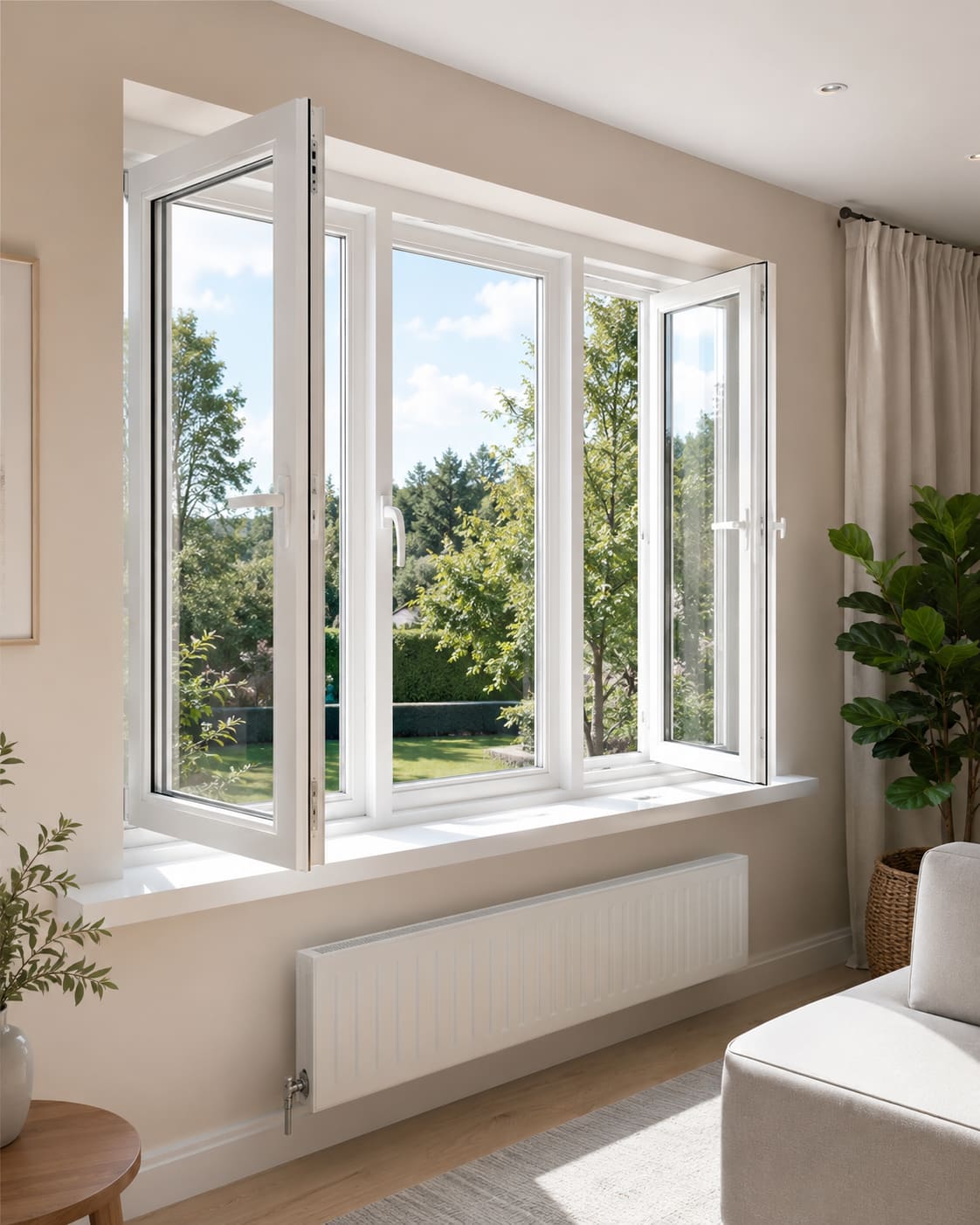
Yes - uPVC windows genuinely reduce noise, and they do it better than almost any other window upgrade you can make. A well-sealed uPVC frame fitted with a double-glazed acoustic unit typically cuts outside noise by 25–40 decibels, which is enough to turn constant traffic roar into a soft, distant hum. In practical terms, a bedroom facing a busy Hyderabad arterial road can go from around 70 dB of intrusive noise down to a calm 35–40 dB indoors, comparable to a quiet library.
The reason uPVC works so well is not magic - it is physics. Noise leaks into a room through two paths: straight through the glass, and through tiny gaps around a poorly sealed frame. uPVC tackles both. The multi-chamber plastic frame is a poor conductor of sound, the twin panes of a double-glazed uPVC window trap a dead-air layer that dampens vibration, and the multi-point locking system pulls the sash tight against continuous gaskets so there is nowhere for sound to sneak in.
This guide explains how much noise different specifications actually block, what glass and frame combinations to ask for, realistic INR pricing in Hyderabad and Secunderabad, and the installation mistakes that quietly wreck an otherwise excellent window. Whether you are near the Outer Ring Road, the Shamshabad airport flight path, a railway line in Secunderabad, or a construction-heavy corridor in Gachibowli or Kokapet, this will help you specify a window that actually delivers the silence you are paying for.
How much noise do uPVC windows actually cut?
Sound reduction is measured in decibels (dB), and the decibel scale is logarithmic - so a 10 dB reduction is perceived by the human ear as roughly halving the loudness. That is why the numbers matter more than they first appear. A plain single-glazed aluminium or wooden window with worn seals might block only 20–22 dB. A quality uPVC window with a proper double-glazed unit blocks 30–40 dB, and specialist acoustic configurations push past 42 dB.
Here is what that means in a real Hyderabad home:
- A single-glazed window on a road like the ORR service lane lets around 65–70 dB indoors during peak hours - loud enough to raise your voice.
- A standard double-glazed uPVC window drops the same room to about 40–45 dB - normal conversation level.
- An acoustic laminated uPVC unit takes it down to 32–38 dB - quiet enough to sleep through rush hour.
No window makes a room perfectly silent, and you should be wary of any dealer promising 100% soundproofing. Sound also travels through walls, ventilators, gaps under doors and AC sleeve openings. But because glazing is almost always the weakest link in an external wall, upgrading it delivers the largest, most noticeable improvement per rupee spent.
Why does uPVC block sound better than aluminium or wood?
The frame material itself contributes to acoustic performance, and this is where uPVC has a structural advantage. A uPVC profile is not solid plastic - it is a hollow section divided into multiple internal chambers (typically 3 to 5). Each sealed air chamber interrupts the path of a sound wave and dampens its energy, so vibration loses strength before it reaches the inside of the room.
Aluminium, by contrast, is a dense metal that transmits vibration efficiently unless it has a thermal-and-acoustic break built into the profile. A basic aluminium sliding window without a break can act almost like a drum skin for low-frequency noise. That said, a high-spec thermal-break aluminium window with acoustic glass closes much of the gap and is worth considering where you want slimmer sightlines or larger spans.
The second advantage is sealing. uPVC casement and tilt-and-turn windows use a multi-point locking mechanism that compresses the sash against continuous EPDM gaskets on every side. This creates an almost airtight closure. Traditional sliding windows - including many aluminium sliders - overlap loosely and leave a small air channel, which is an easy route for both noise and dust. If maximum quiet is the goal, a uPVC casement window or tilt-and-turn generally outperforms any slider.
What glass should you choose for soundproofing?
The frame gets you part of the way, but the glass specification is where most of the acoustic performance lives. This is the single most important decision, and the difference between a good and a poor choice can be 8–12 dB. Ask specifically for these features:
- Double glazing (DGU): two panes with a sealed air or argon gap. The dead-air layer stops one pane's vibration from directly driving the other. This is the baseline for any serious noise reduction.
- Asymmetric panes: use two different glass thicknesses, for example 6mm on the outside and 4mm inside. Panes of equal thickness resonate at the same frequency and let that pitch through; mismatched panes cancel each other's weak spots.
- Laminated acoustic glass: a pane made of two glass sheets bonded with a PVB or special acoustic interlayer. The soft interlayer absorbs vibration and is dramatically better at killing low-frequency rumble - exactly the diesel-bus, truck and train noise common on Hyderabad's main corridors.
- A wider air gap: a 12–16mm gap outperforms a narrow 6mm one for sound, though very wide gaps trade off some thermal benefit.
For a home near heavy traffic or a railway line, the strongest practical combination is a DGU with one laminated acoustic pane and asymmetric thicknesses. If your budget is tighter, even a simple 4mm–air–4mm DGU is a large jump over single glass. For apartments where the developer fitted basic single-glazed windows, retrofitting uPVC sliding windows with an acoustic DGU is one of the highest-impact upgrades you can make.
Which Hyderabad locations benefit most?
Noise is intensely local, and the right specification depends on what you are actually facing. Across Hyderabad and Secunderabad we see clear patterns:
- Flight-path zones near Shamshabad and RGIA approach corridors: aircraft noise is broadband and loud, so laminated acoustic DGUs are worth the premium.
- Railway-adjacent homes in Secunderabad, Kachiguda and Malkajgiri: low-frequency train rumble demands laminated glass rather than just an air gap.
- Arterial and ORR-facing flats in Gachibowli, Kokapet, Narsingi and the Financial District: continuous high-speed traffic responds very well to asymmetric double glazing.
- Construction-heavy growth areas like Kondapur, Madhapur and Hitec City: impact noise from ongoing builds is best handled with tight-sealing casement or tilt-turn uPVC.
- Market and junction-facing homes in older areas like Ameerpet, Dilsukhnagar and Mehdipatnam: mixed honking and crowd noise benefits from good seals as much as thick glass.
If you are unsure what your façade actually faces, our team can assess the exposure on site and match the glass build-up to it - get a free quote and we will measure the openings and recommend a spec rather than overselling you glass you don't need. You can also browse completed residential and commercial projects to see the window styles in real Hyderabad buildings.
Does installation quality change the result?
Enormously - and this is where many disappointing installations go wrong. You can buy the finest acoustic DGU on the market, but if it is fitted with gaps around the frame, unfilled cavities, or a sash that doesn't compress evenly against its gaskets, sound pours through the leaks and bypasses the glass entirely. Acoustics follow the weakest-link rule: a 1mm continuous gap around a window can cut its effective noise reduction by 5–10 dB.
A proper acoustic installation includes several things a rushed fitter often skips:
- The gap between the window frame and the wall opening is packed with backer rod and sealant or acoustic foam, not left hollow or stuffed with loose newspaper.
- Both the internal and external perimeter joints are sealed with a flexible, weatherproof sealant to block the flanking path.
- The sash is adjusted so the multi-point locks pull it tight and even against the gaskets all the way around.
- The glazing beads and gaskets that hold the DGU in the frame are intact and correctly seated.
Because Telangana's climate swings from 44°C summer heat to heavy monsoon, sealants and gaskets also have to survive expansion, UV and driving rain. Insist on EPDM gaskets and quality silicone rather than cheap alternatives that harden and crack within a year or two, reopening the very gaps you paid to close.
uPVC noise reduction: what it costs in Hyderabad
Pricing depends on the glass build-up, frame profile, hardware brand and window size, but these are realistic 2026 ranges for supply-and-fit in Hyderabad and Secunderabad:
- Standard single-glazed uPVC window: roughly ₹450–₹650 per sq ft - a modest acoustic improvement over old wooden or aluminium frames, mostly from better seals.
- Standard double-glazed (DGU) uPVC window: roughly ₹700–₹1,100 per sq ft - the mainstream choice for good all-round noise, heat and dust control.
- Acoustic laminated DGU with asymmetric panes and premium hardware: roughly ₹1,300–₹2,000+ per sq ft - the specification for flight-path, railway and heavy-traffic exposure.
As a rough guide, upgrading the windows of a typical 2BHK flat facing a busy road might run ₹90,000–₹1,80,000 depending on how many openings you treat and the glass you choose. It is usually smart to prioritise bedrooms and living rooms facing the noise source first, and leave quiet internal-facing rooms on a cheaper spec. If you are comparing materials, our guide to choosing between uPVC and aluminium doors and windows can help you decide where each makes sense in the same home.
What else do uPVC windows fix beyond noise?
One reason uPVC pays back well in Telangana is that the same features that block sound also solve the other problems Hyderabad homes struggle with. A window bought for quiet quietly earns its keep in three more ways.
- Heat: the sealed air gap and multi-chamber frame also slow heat transfer, so west-facing rooms stay cooler and air-conditioning runs less through the long summer. If cooling is a priority, ask about a DGU with a low-E or reflective coating.
- Dust: Hyderabad's dry season and construction dust are relentless. The tight gasket seal that stops noise also keeps fine dust from settling on every surface - a benefit residents notice within the first week.
- Monsoon leaks: driving monsoon rain finds every gap in a loose aluminium slider. A properly sealed uPVC casement stays watertight, and the material does not rust, rot or corrode like metal or wood.
uPVC frames are also low-maintenance - a wipe with a damp cloth is usually all they need, and quality profiles carry UV stabilisers so they don't yellow or become brittle in the sun. For balconies and larger openings you can extend the same acoustic and weather logic to uPVC sliding doors and French doors, keeping the whole façade consistent.
How to specify the right window: a quick checklist
Bring this checklist to any dealer so you can compare quotes on equal terms rather than on price alone:
- Ask for a double-glazed unit (DGU) as the minimum for noise, not single glass.
- Request asymmetric pane thicknesses (e.g. 6mm + 4mm) for better acoustic spread.
- Specify laminated acoustic glass for one pane if you face traffic, rail or aircraft noise.
- Choose casement or tilt-and-turn over sliders where you want the tightest seal.
- Confirm multi-point locking and continuous EPDM gaskets on all sides.
- Insist the wall gap is packed and both perimeters sealed during installation.
- Match the spec to the room: heavy glass on noise-facing rooms, lighter on quiet ones.
Once you know your exposure and priorities, the last step is a site measurement - profiles, glass and hardware all need to be sized to your actual openings. Our team fabricates and fits uPVC doors and windows across Hyderabad, Secunderabad and the wider Telangana and Andhra Pradesh region, and we are happy to spec a solution to your budget rather than a one-size-fits-all package. When you are ready, contact us for a free assessment and an itemised quote.