
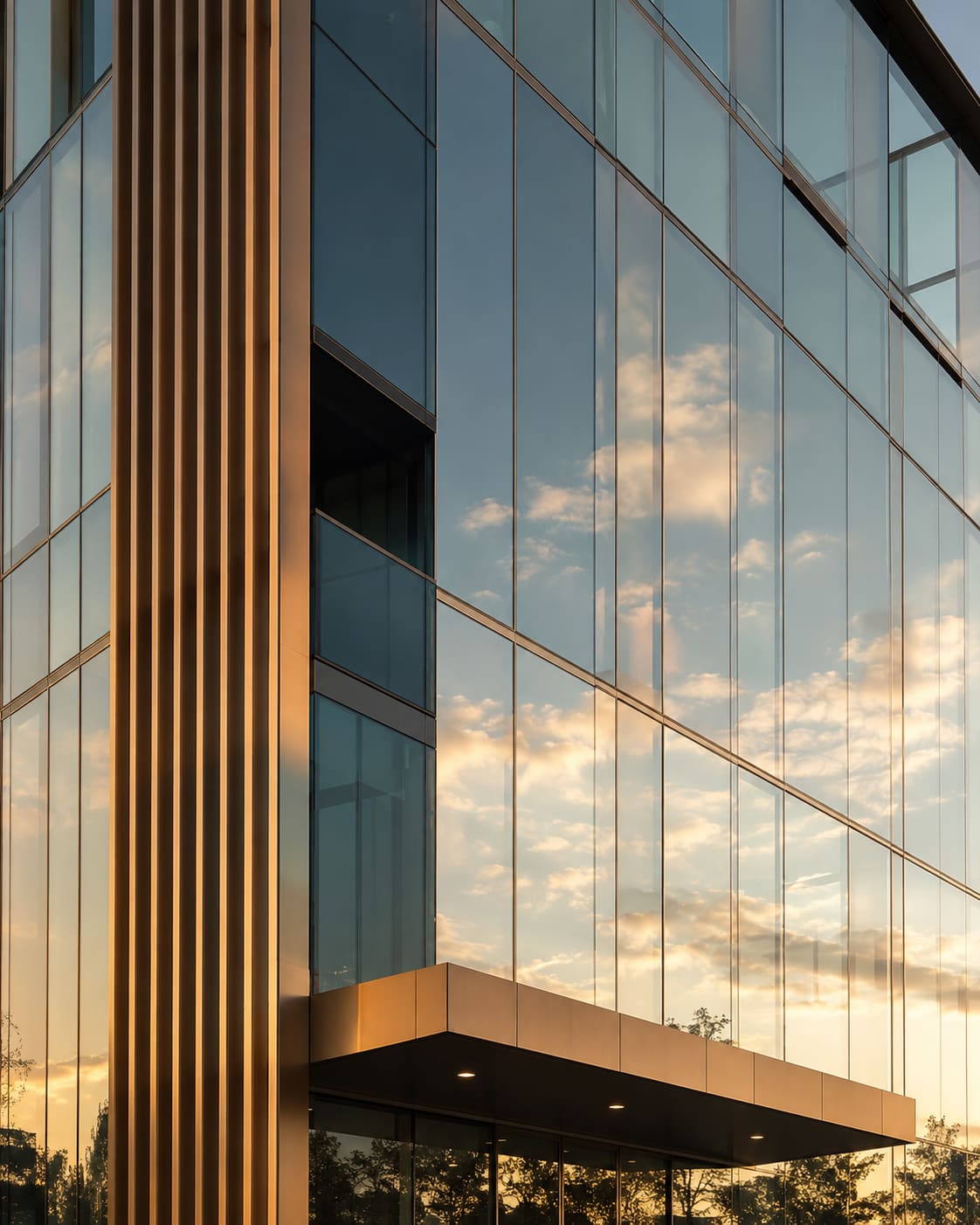
To clean a glass facade safely, rinse it with plain water first to float off grit, wash top-to-bottom one panel at a time with a pH-neutral cleaner and a soft applicator, then pull a squeegee in single smooth strokes and dry the frame edges with microfibre. That simple discipline is exactly how professionals keep a glass facade looking premium year after year, while the wrong method scratches glass, corrodes aluminium and can even void your glazing warranty.
A dirty or streaked facade dulls the entire elevation of a building, whether you own a commercial tower in HITEC City, a showroom on the Secunderabad main road or a villa in Jubilee Hills. In Hyderabad and across Telangana and Andhra Pradesh, facades face a specific cocktail of fine construction dust, hard-water mineral spotting, monsoon splash grime and seasonal pollen, so the cleaning approach matters as much as the effort you put in. Well-maintained glass also protects the value of professional glass facade work and complex structural glazing systems that routinely cost several lakhs to install.
This guide walks you through the safe, professional way to clean facade glass at both ground level and height, the tools and solutions to use, how often to clean across the seasons, the mistakes that quietly destroy glass, and what the whole thing realistically costs in INR. If you would rather hand the job to a trained, insured crew, you can get a free quote for an on-site survey.
Why Correct Glass Facade Cleaning Matters
A facade is not just a sheet of glass; it is a weather-sealed system of glass panels, EPDM gaskets, structural silicone joints and aluminium framing, and every cleaning session either preserves or degrades that system. The most expensive mistakes on Hyderabad buildings are usually not dirt at all, they are permanent damage caused by aggressive or careless cleaning.
- Micro-scratches from abrasive pads or trapped grit scatter light and give glass a permanent hazy look under direct sun.
- Acidic or ammonia-based cleaners break down structural silicone, the very material that holds a bonded structural glazing facade to the building.
- Hard-water minerals left to bake on turn into cloudy etching that a normal wash will never remove.
- Standing water trapped in glazing joints corrodes fasteners and can shorten the service life of the entire assembly.
The takeaway is simple. A gentle, correct routine done three to four times a year protects an asset that may have cost between INR 900 and INR 2,500 per sq ft to fabricate and install, so scheduled maintenance is a tiny fraction of the replacement cost. Clean glass also signals a well-run building to tenants, clients and visitors, which is a real commercial advantage on high-visibility elevations in Gachibowli, Banjara Hills and the Financial District.
Prepare the Right Tools and Cleaning Solution
Good facade cleaning is 80 percent preparation. Reaching for household scrubbers, newspaper or a random floor detergent is the fastest way to leave micro-scratches and chemical residue across an expensive facade. Assemble the right kit before you start.
- A soft microfibre cloth and a lambswool or T-bar applicator, never abrasive pads, scouring nylon or steel wool.
- A professional squeegee with a fresh, nick-free rubber blade, which is the key to a streak-free finish.
- A bucket of clean water plus a pH-neutral glass cleaner, or a few drops of mild dishwashing liquid diluted in water.
- Deionised or filtered water for the final rinse to prevent hard-water spotting, which is common in Telangana and coastal Andhra Pradesh.
- A flat plastic scraper for cement splatter, plus a soft brush for framing channels, gaskets and weep holes.
Avoid ammonia-heavy cleaners, acidic descalers, vinegar and anything gritty. These attack the sealant and the anodised or powder-coated aluminium frames far more aggressively than they touch the glass itself. Keep one dedicated cloth for the frames so metal oxides never transfer back onto the glass, and always test any new product on a small hidden corner first.
The Safe Step-by-Step Cleaning Method
Work top to bottom and one panel at a time, so dirty water never runs back over a section you have already finished. Consistency of technique is what separates a professional, invisible finish from a smeared, patchy one that has to be redone.
- Rinse first with plain water to float away loose dust and grit before you touch the surface with any pad.
- Wet the panel with your cleaning solution using the applicator, working gently in overlapping strokes to lift the film of dirt.
- Pull the squeegee in a single smooth stroke from top to bottom, wiping the blade clean with a dry cloth after every pass.
- Dry the edges, frame corners and gasket lines with microfibre so water never pools on the glazing joints.
- Finish with a light filtered-water mist on spot-prone areas to stop new mineral marks forming as the glass dries.
For stubborn cement splatter from nearby construction, soak the spot to soften it and lift it with the plastic scraper held flat, never a metal blade. Do all of this on a cool, overcast morning. Cleaning glass in direct Hyderabad afternoon sun dries the solution far too fast and locks in heavy streaks, which means twice the work for a worse result.
Cleaning at Height: Leave It to Trained Professionals
Ground-floor glass, shopfronts and internal partitions can be safely handled in-house with the method above. Anything above the first floor on a multi-storey facade is genuinely dangerous work and, under workplace safety norms, should only be handled by trained, insured crews with the correct access equipment.
Professional teams typically use one of three access methods depending on the building and its anchor infrastructure:
- Rope access, or industrial abseiling, for towers with certified anchor points, which is the most flexible option for tall or irregular glazing.
- Suspended cradles and building maintenance units for very large, uniform elevations on high-rise towers.
- Telescopic water-fed poles with pure-water systems for buildings up to four or five floors, leaving zero residue and no ladders.
These crews carry liability insurance and follow anchor-point, harness and rescue protocols that a building owner simply cannot replicate safely with in-house staff. On a bonded glass facade work or spider-fitting elevation, the height-cleaning visit is also the ideal moment to inspect the silicone, gaskets and structural fixings, because that is exactly where small failures begin long before they become visible. You can see the kind of facades our teams build and maintain in our recent projects.
Don't Forget the Frames, Gaskets and Hardware
A spotless pane inside a grimy, seized frame still looks neglected, and on most facades the hardware is what fails first, not the glass. Include the metalwork and moving parts in every single cleaning cycle rather than treating them as an afterthought.
- Wipe anodised and powder-coated aluminium with the same pH-neutral solution and a dedicated soft cloth, then dry it fully.
- Clear the weep holes and drainage channels of caked dust and pollen so monsoon water drains freely instead of backing up.
- Check and lightly lubricate the pivots, patch fittings and door closers on any glass doors within the facade line.
- Inspect structural bolts, spider fittings and silicone joints for hairline cracks, chalking or lifting while a crew is already on site.
Across Hyderabad we regularly see facades where the glass is fine but corroded gaskets or worn architectural hardware are the real problem. Cleaning day is the cheapest possible time to spot and replace a failing part before it damages the glass, jams a door or, in the worst case, loosens a panel. If an inspection turns up a fault, our structural glazing team can quote the repair alongside the routine wash.
Seasonal Care for Hyderabad and Secunderabad Weather
Telangana's climate throws three distinct challenges at a facade across the year, and tuning your routine to each one keeps the glass clear with less total effort and cost. A reactive, once-a-year blitz almost always costs more than a planned seasonal schedule.
- Summer, March to May: fine dust and pollen coat the glass fast, so rinse more often and always clean in the early morning to beat the harsh sun and flash-drying.
- Monsoon, June to September: rain leaves muddy splash lines and mineral streaks, so schedule a wash right after the heaviest weeks and keep every drainage channel clear.
- Winter, November to February: the calmest, driest season and the best window for a thorough deep clean plus a full hardware and sealant inspection across the whole elevation.
Buildings in Gachibowli, Madhapur, Kondapur and the older commercial belts of Secunderabad near active roadworks accumulate grime noticeably faster than quieter suburbs. A north or east-facing elevation typically stays cleaner than a west-facing one that catches the afternoon dust, glare and heat, so it is fine to clean the exposed faces more often than the sheltered ones.
Frequency and Indicative Cleaning Costs in Hyderabad
A glass facade in Hyderabad should be cleaned every 3 to 4 months as a baseline, and monthly for buildings on dusty arterial roads or next to active construction. Regular light cleaning is dramatically cheaper than restoring a facade after baked-on staining and etching have set in. Use these indicative Hyderabad and Telangana rates for budgeting.
- Ground-level and low-rise glass cleaning: roughly INR 8 to 15 per sq ft.
- High-rise rope-access or cradle cleaning: roughly INR 18 to 40 per sq ft depending on height and access difficulty.
- Hard-water stain and mineral-spot removal: roughly INR 25 to 60 per sq ft as a specialist treatment.
- Annual maintenance contracts typically reduce per-visit rates by 15 to 25 percent versus one-off calls.
As a rule of thumb, a mid-size commercial facade in Hyderabad or Secunderabad might spend between INR 30,000 and INR 1,50,000 per year on scheduled cleaning, depending on total glass area and how exposed it is. Prices always vary with building height, access equipment and glass area, so insist on a site survey rather than a phone quote. To get a firm number for your building, get a free quote and a crew will assess access and glass area on site.
Removing Hard-Water Stains and Cement Splatter
Hard-water spotting and construction splatter are the two problems that most often defeat a routine wash on Telangana facades, and both need a different, more careful approach. Never attack them with force, because scrubbing simply spreads micro-scratches across the panel.
- Fresh water spots: mist with deionised water, agitate with a soft cloth and squeegee dry before they can re-deposit.
- Set-in mineral stains: apply a dedicated pH-neutral mineral-deposit remover for the labelled dwell time only, then rinse thoroughly with clean water.
- Cement or grout splatter: soak the spot to soften it, then lift it with a flat plastic scraper held nearly parallel to the glass.
- Etched or permanently clouded glass: this is damage, not dirt, and usually needs professional polishing or panel replacement.
If the water in your area is very hard, a final rinse with filtered or deionised water on every visit is the single most effective preventive step. For heavy etching across an entire elevation, call a specialist rather than experimenting with strong acids, which corrode the aluminium and silicone while barely touching the etched glass. Explore our services if a facade needs restoration rather than routine cleaning.
Common Mistakes That Damage a Glass Facade
Most facade damage is self-inflicted and completely avoidable. Watch for these recurring errors, which we see repeatedly across Hyderabad, Secunderabad and Andhra Pradesh sites, and you will extend the life of the glazing far more than any premium product ever could.
- Cleaning in direct sunlight, which flash-dries the solution and locks streaks and residue into the glass.
- Using vinegar, ammonia or acidic bathroom cleaners that corrode silicone sealant and aluminium framing over time.
- Dry-dusting gritty glass instead of rinsing first, which grinds tiny abrasive scratches permanently into the surface.
- Ignoring the frames, gaskets and drainage channels until water starts leaking into the building interior.
- Sending untrained staff up ladders or ropes to reach upper floors without harnesses, anchors or insurance.
Avoiding this short list will do more for the longevity of your facade than any single tool or chemical. When you are unsure about a coating, a stubborn stain or a suspect joint, ask a specialist before experimenting on the glass, and lean on professional glass facade work for anything beyond a routine surface clean.