To get an accurate facade quote in Hyderabad, share your building's elevation drawings, exact facade area in square feet, floor count and site locality up front, then ask every contractor to price the identical specification - glass type, aluminium system, thickness and finish. In the twin cities of Hyderabad and Secunderabad, a like-for-like brief is the single biggest factor that turns a vague ballpark into a firm, comparable number that will not balloon during execution.
Facade pricing across Telangana varies widely because a tower in the Financial District faces completely different wind, access and glass-performance demands than a showroom in Kukatpally or a G+3 commercial block in Secunderabad. A quote is never just a rate per square foot - it is a bundle of engineering, materials, access equipment, sealing, hardware and warranty, and any of those line items can be quietly dropped to make one bid look cheaper than the rest.
This guide walks you through the exact details to provide, the realistic INR ranges you should expect for glass facade work and structural glazing in Hyderabad, how the specification drives durability and cost, and the red flags that separate a dependable quotation from one that will spiral. When your brief is ready, you can get a free quote built from this checklist and receive numbers you can actually trust.
What is a facade quote, and why do they differ so much?
A facade quote is a priced proposal to design, supply and install the external glazing or cladding envelope of a building, expressed as a rate per square foot plus engineering, access and warranty. Two quotes for the same building can differ by lakhs because a facade is a system, not a single product - the visible glass is only one of a dozen cost drivers sitting behind it.
The elements that move the number most are the facade system (framed glazing, structural glazing, unitised curtain wall, spider glazing or ACP cladding), the glass build-up (single versus double-glazed, plain, tinted or low-E coated), the aluminium sections (branded system versus generic extrusion), the concealed hardware, the access equipment needed to reach height, and the engineering behind wind and seismic loads. When any of these is left vague, the quote becomes a moving target.
That is why the discipline of a tight, identical brief matters more in facades than in almost any other trade. Get the brief right and competing quotes cluster into a band you can genuinely evaluate; leave it loose and you are comparing apples with a completely different building. Reviewing our services before you write the brief helps you frame the request in the terms an estimator actually needs.
The six details a Hyderabad facade contractor needs from you
An accurate facade quote in Hyderabad starts with you supplying six things, without which any number is guesswork. Give the estimator these before asking for a price:
- Architectural elevation and section drawings (PDF or DWG), or at minimum accurately measured facade dimensions
- Total facade area in square feet, plus the number of floors and the floor-to-floor height
- Site locality (for example Gachibowli, Madhapur, Kondapur, Kokapet or Secunderabad) so access, cranage and logistics can be judged
- The facade system you want: structural glazing, unitised curtain wall, spider glazing, ACP cladding or standard aluminium windows
- Glass and aluminium specification: glass thickness, DGU or single, tint or low-E coating, and whether you want a branded aluminium system
- Target timeline and whether the building is occupied, which affects night work, phasing and safety measures
Sharing your locality matters more than most owners expect. A high-rise in the Financial District or Kokapet needs engineered wind-load design and mast-climbers, while a low G+3 in Kukatpally can often be executed from scaffolding, which cuts access cost substantially. The more precisely you describe the building, the tighter and more honest the number you get back - and the less room there is for a contractor to add 'unforeseen' charges later. If you cannot supply drawings yet, provide clear photographs of each elevation with a measured reference dimension, and a preliminary quote can still be prepared with a site visit to confirm it before contract.
Realistic facade rates in the twin cities (INR per sq ft)
Facade rates in Hyderabad typically run from around Rs 350 to Rs 1,800+ per square foot depending on the system, with premium point-fixed glazing going higher still. Use these twin-city ranges as a sanity check when reading any quotation:
- ACP cladding: roughly Rs 350 to Rs 600 per sq ft, depending on branded versus local panels and fire rating
- Aluminium framed glazing / semi-unitised: about Rs 500 to Rs 900 per sq ft
- Structural glazing with DGU: around Rs 800 to Rs 1,400 per sq ft
- Unitised curtain wall for towers in Gachibowli or the Financial District: Rs 1,200 to Rs 1,800+ per sq ft
- Spider / point-fixed glazing for lobbies and atriums: Rs 1,500 per sq ft and above
These are indicative supply-and-install figures for Hyderabad and Secunderabad. Final rates shift with glass brand (Saint-Gobain, AIS, Guardian), the aluminium system (Jindal, Hindalco or an imported system), building height and site access. A quote that lands far below these bands usually signals thinner glass, non-system aluminium or excluded scope - not a genuine bargain.
To ground the numbers: on a 10,000 sq ft office facade the difference between single-glazed clear glass and quality low-E DGU is often Rs 30 to Rs 50 lakh, and the difference between generic extrusion and a branded aluminium system can add another Rs 10 to Rs 20 lakh. Those are not padding - they buy thermal performance, weathertightness and a facade that still looks and functions well a decade on. Seeing what those specifications deliver in the field on our recent projects makes the value of the higher band far more tangible than a rate card alone.
Why Hyderabad's climate should shape your specification
Hyderabad's climate should push you toward high-performance glass, robust sealing and proper drainage, because summer heat, monsoon rain and year-round dust all attack a facade. Factor these local conditions into the specification you ask contractors to price:
- Summer highs near 40 to 42 degrees make low-E double glazing (DGU) worth the premium for heat and glare control, cutting AC loads in HITEC City and Madhapur offices
- The June to September monsoon demands quality EPDM gaskets, structural silicone and pressure-equalised drainage so water does not track inside
- Airborne dust across the twin cities means smoother finishes and accessible glazing that can be cleaned; specify how the cladding will be maintained over its life
A quote that prices single-glazed clear glass just to hit a low headline number ignores Hyderabad's realities and costs far more in energy bills and callbacks later. Ask each contractor to state glass performance - SHGC (solar heat gain coefficient) and U-value - so you are comparing thermal comfort and running cost, not just the upfront rate. In Telangana's climate, a facade with SHGC below 0.30 will noticeably outperform cheaper clear glass on cooling load, and that gap compounds every summer the building stands. For an air-conditioned commercial block, the energy saved by proper structural glazing with a good DGU often pays back its premium within a few years.
Pros and cons of the main facade systems
Choosing the right system before you request quotes keeps every bid on the same footing. Each option trades cost against performance and appearance:
- ACP cladding: lowest cost and fast to install, good for accent bands and low-rise commercial; downside is it is cladding, not glazing, and low-grade panels carry fire risk, so insist on FR-grade panels
- Aluminium framed glazing: economical and proven, with visible grid lines; well suited to G+3 to G+7 offices and showrooms in Kondapur or Kukatpally
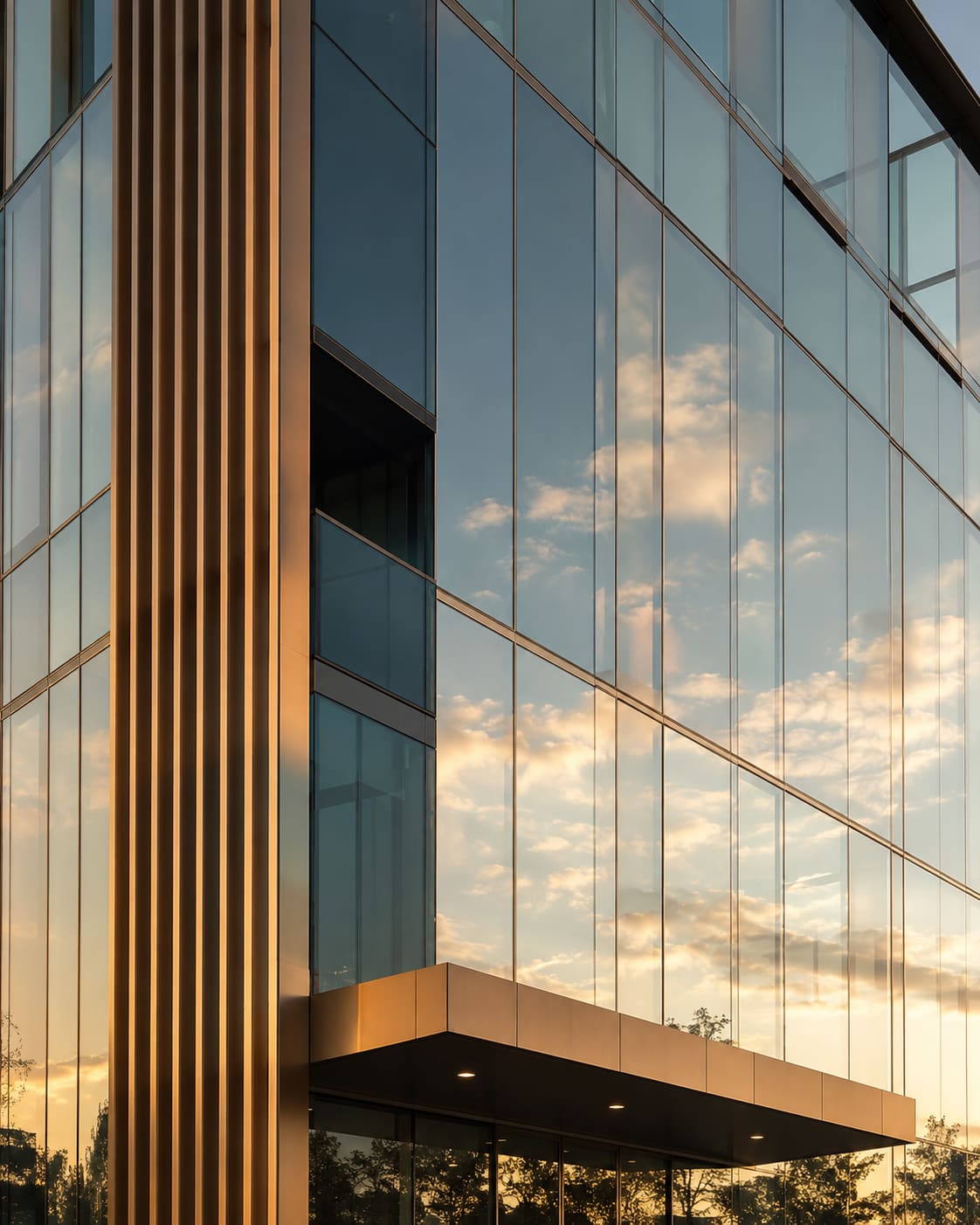
- Structural glazing: flush, frameless external look with silicone-bonded glass; premium appearance and excellent weather performance, at a higher rate and with a mandatory 10-year silicone warranty
- Unitised curtain wall: factory-assembled panels craned into place, ideal for high-rises where speed and quality control matter; highest cost but fastest on-site and most reliable at height
- Spider / point-fixed glazing: dramatic transparency for lobbies and atriums; most expensive per sq ft and hardware-critical
There is no single 'best' system - the right choice depends on building height, budget, the look you want and how the facade will be maintained. A specialist should be willing to explain why a given system suits your building rather than simply quoting whatever carries the fattest margin. If the recommendation shifts dramatically between contractors, that itself is a signal to dig into the reasoning.
How to compare quotes and spot red flags
Compare facade quotes on a per-square-foot basis for identical scope, and treat any bid that omits engineering or access as incomplete rather than cheap. Run every quotation through this checklist:
- Confirm the rate is inclusive of GST (18 percent on works contracts), or that it is noted separately, so totals are truly comparable
- Check that structural design, wind-load calculation and shop drawings are included for anything above G+3
- Verify scaffolding, mast-climbers or cranage are in scope, not billed as extras mid-project
- Look for named brands and thicknesses; 'premium glass' or 'good aluminium' with no spec is a red flag
- Confirm the grade and brand of concealed hardware - spider fittings, patch fittings, floor springs and locks - because this is the first thing cut in a lowball bid
- Ask about warranty - 10 years on structural silicone is standard - and the explicit guarantee against water leakage
- Insist on a payment schedule tied to milestones, not a large upfront demand
If two Hyderabad quotes differ by more than 20 to 25 percent, the cheaper one almost always excludes scope. Ask both contractors to itemise so you are comparing the same building, not two different specifications dressed up to look alike. A genuine specialist will welcome the itemisation request; a contractor planning to cut corners will resist it. The most expensive mistakes in facade work are almost never the visible ones - they are the hidden gaskets, the undersized brackets and the missing drainage that only announce themselves when the first heavy monsoon arrives.
Common mistakes that inflate a facade project
Most facade cost overruns in Hyderabad trace back to a handful of avoidable errors made before work even starts. Watch for these:
- Accepting a verbal or one-line quote: without a written scope, every clarification becomes a variation charge later
- Comparing on headline rate alone: a lower per-sq-ft figure with excluded access or engineering ends up costing more
- Skipping the site visit on a high-rise: access and wind exposure in Kokapet or the Financial District can swing cost by 15 to 20 percent
- Under-specifying glass to save money: single glazing on an air-conditioned facade shifts the cost from capital to permanent energy bills
- Ignoring lead times: coated or imported DGU can take four to six weeks to reach Telangana, so an unrealistically fast start usually means stock glass or poor planning
- Paying a large advance: a heavy upfront demand tied to no milestone is a warning sign about a contractor's cash position
Avoiding these is mostly about discipline in the brief and the paperwork. The owners who get burned are rarely the ones who paid too much attention to detail - they are the ones who signed a short quote quickly because it looked like a saving.
Timeline, payment terms and what a firm quote should contain
A firm facade quote in Hyderabad should read like a contract, not a text message - it must state scope, specification, rate, taxes, timeline and warranty on one document. Before you accept, confirm it contains:
- A clear scope statement listing every facade elevation, area and system included
- Named glass and aluminium brands with thickness, coating and finish
- Access method (scaffolding, mast-climber, cranage) and who pays for it
- A realistic programme - a mid-size structural glazing facade typically runs 8 to 16 weeks in the twin cities depending on height and glass lead time
- A milestone-linked payment plan, commonly an advance, a material-procurement stage, and balance against installation and handover
- Warranty terms in writing, covering structural silicone, hardware and leakage
Glass procurement is the usual bottleneck: imported or coated DGU can take four to six weeks to arrive in Telangana, so a quote that promises an unrealistically fast start is either using stock glass or has not planned properly. A dependable Hyderabad facade contractor will be transparent about lead times rather than promising the impossible to win the job. When the paperwork is this complete, the number you sign is genuinely close to the number you finally pay.
Getting your facade quote right the first time
The owners who get the most accurate facade quotes in Hyderabad are simply the ones who brief the best. Assemble your drawings, measure or confirm your facade area, decide your system and glass performance, and send the identical brief to two or three specialists - then compare on scope, not just the bottom line.
Do that, and the quotes come back within a tight band you can genuinely evaluate, the engineering and hardware are visible instead of hidden, and the number you sign is close to the number you finally pay. As a Hyderabad-based specialist in glass facade work serving the twin cities and beyond, we price against real, named specifications so there are no surprises during execution. When your brief is ready, get a free quote and we will cost it for your site in Hyderabad, Secunderabad or anywhere across Telangana and Andhra Pradesh.