
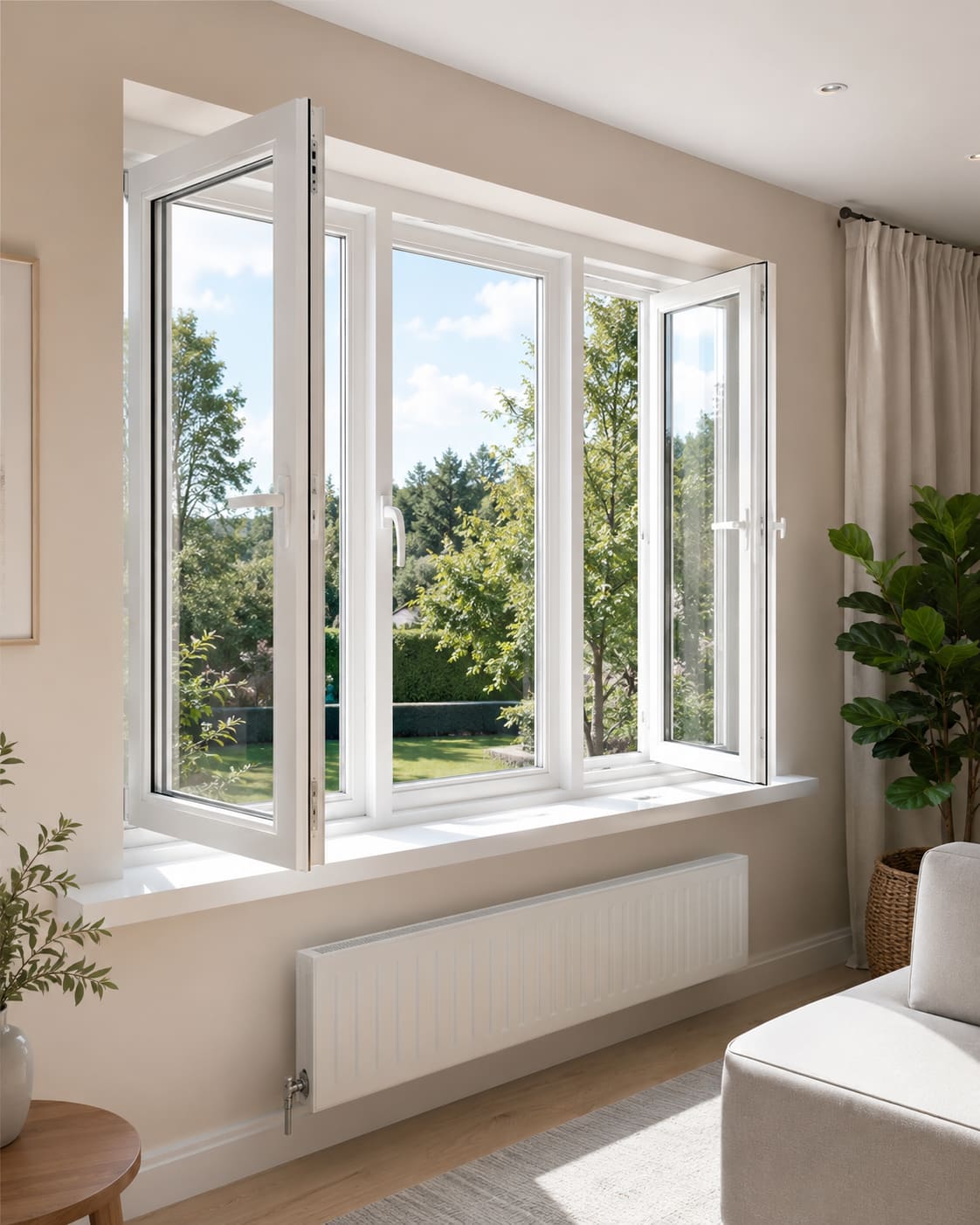
To stop monsoon leaks in Hyderabad, seal the window on three fronts: renew the perimeter joint between the frame and the wall with a quality neutral-cure weatherproof silicone, replace worn rubber gaskets or beading around the glass, and clear the drainage weep holes so rain can escape instead of pooling inside the frame. Most twin-city leaks trace back to cracked outdoor sealant and hardened gaskets that have baked through Hyderabad's 40-plus degree summers, then let the June-to-September rains push water straight through the gap.
This guide is written for homes and offices across Hyderabad and Secunderabad - from high-rises in Gachibowli, HITEC City and the Financial District to independent houses in Banjara Hills, Kukatpally and Kokapet. It covers how to find the real leak point, what you can safely fix yourself, realistic INR costs across the twin cities, and when a proper re-sealing or a switch to modern aluminium windows or uPVC windows is the smarter call before the next heavy spell.
The good news: nine out of ten monsoon window leaks are sealing problems, not glass or structural problems. That means they are fixable in a day or two, often for a few thousand rupees, if you attack the right joint. The trick is diagnosing the leak correctly before you spend on silicone that will not solve it.
Why do Hyderabad windows leak during the monsoon?
Hyderabad windows leak in the monsoon because the city's harsh dry heat destroys the seals long before the rain ever arrives, then the wind-driven downpours expose every weak point at once. The summer sun cracks silicone and turns rubber gaskets brittle, months of dust clog the drainage channels, and the first strong showers off the Bay of Bengal do the rest. It is a two-season problem: the damage is done in April and May, but you only see it in July.
The most common leak sources in the twin cities are:
- Perimeter gaps where the outdoor silicone between the frame and the wall plaster has cracked, shrunk or peeled away.
- Hardened or shrunken rubber gaskets around the glass, common on older aluminium and early-generation uPVC windows.
- Blocked weep (drainage) holes on the outer frame, so rainwater backs up inside the profile and spills over the inner sill.
- Poorly fitted sliding tracks in high-rise flats in Gachibowli and Kondapur, where horizontal rain is driven through the meeting rail.
- Wall hairline cracks above the window that channel water down onto the frame, often mistaken for a window fault when the frame is fine.
How do I find the exact leak point?
Find the exact leak point by wetting the window from outside in sections and watching where water first appears inside - this isolates whether the fault is the frame joint, the glass gasket, or the wall above. Do this on a dry day so you control the water instead of waiting for the next storm and guessing.
- Dry the sill and frame fully, then have someone spray a garden hose or pour water low along the bottom outer joint first.
- Work upward in stages - sill joint, then side joints, then the glass edges, then the wall above - pausing three to five minutes at each level.
- Mark where the first drip shows inside; the leak entry point is usually just above that spot, because water tracks downward before it drips.
- Check the weep holes on the outer bottom frame: poke them clear with a thin wire and watch whether trapped water drains out.
- Press the rubber gasket with your fingernail - if it is stiff, cracked, or has gaps at the corners, it is no longer keeping water out.
One caution specific to Hyderabad high-rises: on upper floors in HITEC City and the Financial District, a leak that appears at one window may actually enter through a facade or cladding joint a floor above and travel down inside the cavity. If the water pattern makes no sense for a single window, it may be a building-envelope issue better assessed alongside proper facade and structural glazing inspection rather than treated as a lone window fault.
DIY sealing steps that hold up in the twin cities
For minor leaks you can re-seal a window yourself in an afternoon using neutral-cure weatherproof silicone and fresh gasket, provided the frame itself is sound and undamaged. This works well for hairline perimeter cracks and small gasket gaps; structural, corroded or badly warped frames need a professional.
- Clean the joint first: scrape out all old, flaking silicone and wipe with a dry cloth or a little mineral spirit - new sealant will not bond over dust or loose material.
- Choose the right product: use a neutral-cure (not the vinegar-smelling acetoxy) exterior silicone that tolerates Hyderabad heat, around INR 250 to 450 per tube.
- Apply outdoors first: run a continuous bead along the frame-to-wall joint, tool it smooth with a wet finger, and let it cure a full 24 hours before any rain.
- Replace beading gaskets: press fresh EPDM rubber gasket into the channel where the old one has shrunk, paying special attention to the corners where gaps open up.
- Keep weep holes open: never seal the small drainage slots on the outer frame - they must stay clear to let water escape rather than trapping it inside.
Buy one extra tube more than you think you need and work top-down on vertical joints so gravity helps the bead sit in. If you find yourself sealing the same window every single year, that is a sign the frame or fitment has failed and no amount of silicone will fix it - that is the point to consider replacement.
uPVC vs aluminium: which resists monsoon leaks better?
For pure water resistance in a wind-driven monsoon, modern uPVC windows have a slight edge because they use continuous multi-chamber profiles, multi-point locking, and full-perimeter EPDM gaskets that clamp the sash tightly all the way around. But a well-engineered aluminium window with proper gasketing and drainage performs just as well - the material matters less than the fitment quality and the gaskets.
- uPVC strengths: excellent thermal and water sealing, no corrosion, low maintenance - a strong fit for rain-heavy elevations. Explore casement uPVC windows and uPVC sliding windows for different openings.
- Aluminium strengths: slim sightlines, high strength for large spans, and long life. Modern systems with thermal breaks and quality gaskets seal reliably - see aluminium casement windows and aluminium sliding windows.
- Casement (side-hinged) designs generally beat sliders on leak resistance because the sash compresses against a continuous gasket rather than sliding past a brush seal.
- For balconies and large openings that take direct rain, tilt-and-turn windows offer the tightest weather seal of the common styles.
The honest verdict for Hyderabad: a poorly fitted uPVC window will leak more than a well-fitted aluminium one. Prioritise the installer and the gasket system over the brochure material claim.
What does professional window sealing cost in Hyderabad?
Professional monsoon window sealing in Hyderabad typically costs between INR 800 and INR 2,500 per window, depending on the size, the frame material, and whether gaskets need replacing along with fresh silicone. A full re-seal of a 2 or 3 BHK flat usually lands between INR 6,000 and INR 18,000.
- Basic re-silicone of the perimeter joint: roughly INR 800 to 1,500 per window.
- Silicone plus full gasket and beading replacement: roughly INR 1,500 to 2,500 per window.
- Sliding track servicing and drainage clearing: often INR 500 to 1,200 per unit.
- Full window replacement, if frames are beyond repair: from around INR 550 to 900 per square foot in uPVC, more for premium aluminium systems.
- Prices vary by locality and access - external high-rise work in HITEC City, Madhapur or the Financial District can carry a height or scaffolding premium.
When you compare quotes, ask exactly what is included: joint prep, silicone grade, gasket brand, and drainage clearing. A cheap re-seal that skips joint cleaning or reuses dead gasket will fail by the next monsoon, so the cheapest per-window rate is rarely the cheapest over three years. You can get a free quote with a proper leak inspection before committing to anything.
Sliding windows: the twin cities' biggest leak culprit
Sliding windows leak more than any other style in Hyderabad because horizontal, wind-driven rain gets pushed through the interlock and the bottom track faster than the drainage can clear it. In high-rise flats in Gachibowli, Kokapet and Kondapur, exposed elevations take rain almost sideways during a strong spell, which overwhelms tracks that were fine in a ground-floor house.
- Keep the bottom track spotlessly clean - grit and leaf debris block the weep holes that are meant to drain the track.
- Check the brush-pile weather seals on the sash edges; once flattened, they let both water and dust straight through.
- Make sure the sash rollers are adjusted so the sash sits square and the interlock closes fully - a sagging sash leaves a gap at the meeting rail.
- For very exposed high-rise openings, consider upgrading to a slide-and-fold system or a casement design that seals by compression rather than by sliding.
If your slider leaks even after cleaning and new brush seals, the track profile itself may be too shallow for a monsoon-facing elevation, and re-sealing will only ever be a stopgap.
Preventive maintenance: a Hyderabad monsoon-prep checklist
The cheapest monsoon leak is the one you prevent in May, before the rain tests every seal at once. A thirty-minute pre-monsoon check per window, done once a year, catches the small failures while they are still small - and while the dry weather still lets silicone cure.
- Late April to mid-May: inspect every outdoor perimeter joint for cracks and every gasket for stiffness, and re-seal what looks tired.
- Clear all weep holes and sliding tracks of a full season's dust with a wire and a vacuum before the first shower.
- Do a hose test on any window that leaked last year, so you fix the cause rather than react during a storm.
- Re-caulk kitchen and bathroom windows, which see the most moisture and often get overlooked.
- Check the wall render above and beside each window for hairline cracks that funnel water onto the frame.
For an apartment community or a commercial building, it is worth scheduling this as an annual service across all units at once - the same crew, the same day, one mobilisation cost. You can see the kind of window and facade work we deliver across Hyderabad in our completed projects.
When should you stop sealing and replace the window?
Replace the window instead of re-sealing when the frame itself has failed - corrosion, rot, warping, or fittings that no longer close square - because at that point silicone is only papering over a structural problem that will keep leaking. Repeated annual re-sealing on the same window is the clearest signal that the frame, not the seal, is the real fault.
- The frame is corroded, pitted or bent, and the sash no longer closes flush against the gasket.
- You have re-sealed the same window two or three monsoons in a row and it keeps leaking.
- Glass units are fogged internally, indicating the sealed unit has failed and the frame is likely aged too.
- The window is single-glazed on a hot, rain-facing elevation, and you want thermal and acoustic gains alongside a proper seal.
- You are renovating anyway, in which case new aluminium windows or uPVC windows fitted correctly the first time will outlast years of patch-sealing.
Replacement costs more upfront but ends the annual leak cycle, cuts your cooling load through Hyderabad's brutal summers, and adds resale value. If you are unsure which way the maths falls for your home, a quick on-site assessment settles it - reach out to book an inspection and we will tell you honestly whether a re-seal will hold.