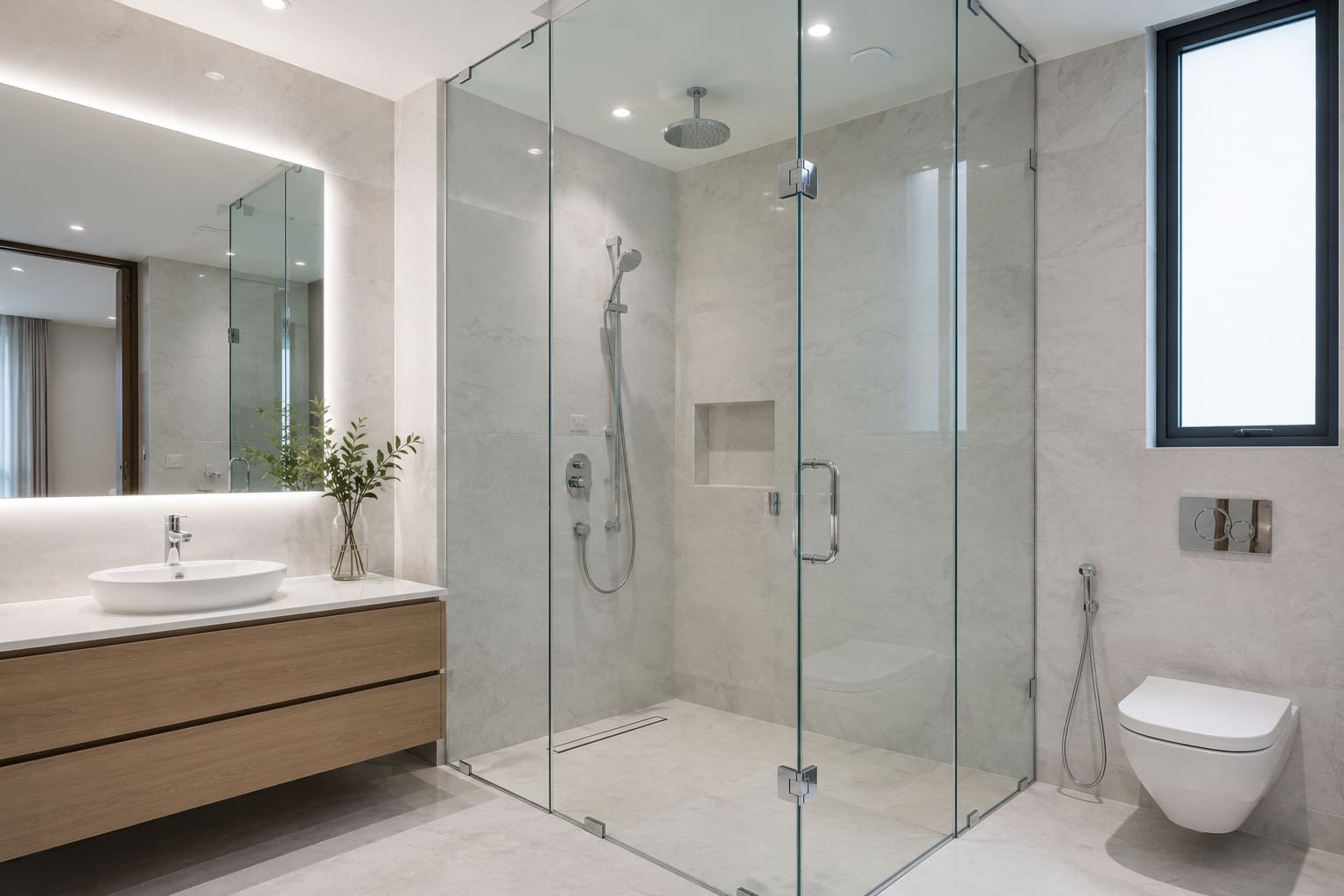
A frameless shower enclosure in Kokapet typically costs between Rs 550 and Rs 1,100 per square foot installed, using 10mm or 12mm toughened glass and stainless-steel or brass fittings. For a standard 3ft x 6.5ft fixed panel with a hinged door in a Kokapet apartment, most homeowners pay roughly Rs 22,000 to Rs 45,000 depending on glass thickness, hardware finish and whether the glass carries an anti-water nano coating. It is one of the fastest, highest-impact upgrades for the new gated communities and villas around Kokapet, the Financial District and Narsingi.
Kokapet's high-rise towers and premium villas favour the clean, open look of frameless glass, which makes compact bathrooms feel larger and brighter. A frameless shower enclosure removes the bulky metal frames and plastic curtains that trap grime, replacing them with a single sheet of crystal-clear toughened glass that shows off your tile and fittings. But Hyderabad's hard borewell water, summer dust and monsoon humidity all affect how a shower enclosure should be specified and maintained.
This guide explains sizing, glass choice, realistic twin-city pricing, installation timelines and long-term care, so your enclosure stays clear and safe for years. Whether you are fitting out a new 3BHK in a Kokapet tower or renovating a villa bathroom in Narsingi, the specifications below reflect what actually works in Telangana's climate and water conditions.
What does a frameless shower enclosure cost in Kokapet?
A frameless shower enclosure in Kokapet costs Rs 550 to Rs 1,100 per square foot installed, so most jobs fall between Rs 22,000 and Rs 60,000 depending on size and hardware. Pricing across Hyderabad and Secunderabad follows the same range, with premium finishes pushing higher in Jubilee Hills and Banjara Hills villas. The cost is driven mainly by the volume of toughened glass, the grade of the hinges and channels, and how much on-site levelling the tower's walls demand.
- Fixed panel only (no door): Rs 18,000-28,000 for a typical 3.5ft x 7ft screen in 10mm toughened glass, ideal for a walk-in wet zone.
- L-shaped enclosure with hinged door: Rs 35,000-60,000, the most common choice in Kokapet and Financial District 3BHK flats.
- Sliding frameless enclosure: Rs 40,000-75,000, useful where a swing door would block a compact Kondapur or Kukatpally bathroom.
- Nano anti-water coating: add Rs 40-70 per square foot, strongly recommended given Hyderabad's hard water.
- Premium hardware (gold, matte-black, SS-304): add 15-25 percent over standard chrome fittings.
As a rule, glass and fabrication account for roughly half the cost, hardware around a third, and labour plus consumables such as silicone and anchors the remainder. Beware quotes that look 30-40 percent cheaper than the range above: they almost always cut corners on glass thickness or hardware grade. For a firm figure on your exact bathroom, get a free quote with your tile layout and drain position noted.
Which glass thickness and fittings suit Hyderabad water?
Choose 10mm toughened glass for most Kokapet bathrooms and 12mm for large fixed panels above 4 feet wide, always specified as certified toughened glass. Toughened glass is 4-5 times stronger than ordinary annealed glass and, if it ever fails, shatters into small blunt granules rather than sharp shards, which is essential for a wet, high-traffic space where people move barefoot.
- Glass thickness: 8mm suits small screens under 2.5ft; 10mm is the Hyderabad standard; 12mm for wide or tall frameless panels that must stay rigid without a frame.
- Hardware: insist on SS-304 grade stainless steel or solid brass hinges, because cheaper SS-202 pits and rusts fast in a humid monsoon bathroom.
- Anti-water coating: Hyderabad's hard borewell water leaves white calcium spots quickly, so a nano hydrophobic coating keeps glass clearer and cuts cleaning time.
- Bottom seal and drip strip: a good PVC seal keeps water inside the cubicle and protects the rest of the bathroom floor from splash.
- Silicone: use anti-fungal neutral-cure silicone, which resists the black mould that Hyderabad monsoon humidity encourages along joints.
The same toughened-glass logic applies to other bathroom and interior upgrades. If you are also planning toughened glass doors elsewhere in the home or fully frameless glass doors for an ensuite, matching the glass grade and hardware finish across the flat gives a cleaner, more coordinated result.
Frameless vs sliding vs semi-frameless: which layout wins?
Pick a frameless enclosure for open, dry bathrooms, a sliding enclosure for tight floor plans, and a semi-frameless cubicle when you want lower cost with most of the clean look. The right answer depends on how much floor space your Kokapet bathroom has and how the door will swing relative to the WC and vanity.
- Frameless hinged: the premium, minimalist look with the fewest visible fittings; needs clear swing space and dead-level walls, so it shines in newer towers with good tile work.
- Sliding shower enclosure: the door rolls along a track instead of swinging, saving 60-70cm of floor clearance in compact Kondapur, Manikonda and Kukatpally bathrooms.
- Semi-frameless shower: a slim frame on two edges cuts cost by 15-20 percent while keeping large clear panels, a sensible middle path for rental or builder-grade flats.
- Frameless shower cubicle: a fully enclosed corner unit that contains splash completely, ideal for shared family bathrooms where the floor must stay dry.
In Kokapet's larger villa bathrooms, a fixed frameless screen with no door at all is increasingly popular: it defines a walk-in wet zone, needs the least maintenance and has no moving hardware to service. In smaller apartment bathrooms, sliding or corner cubicles almost always make better use of the footprint.
How does installation and site measurement work in the twin cities?
A professional frameless enclosure installation in Kokapet takes one measurement visit plus one fitting visit, with 5-7 days in between for toughened glass fabrication. Because tempered glass cannot be cut or drilled after tempering, exact site measurement is critical, especially in high-rise towers where walls are rarely perfectly plumb and floors slope toward the drain.
- Step 1: On-site measurement, checking wall plumb, tile finish and floor slope toward the drain, plus confirming where studs or hollow tile backing sit.
- Step 2: Confirm glass thickness, door swing direction and hardware finish, then send the panels for toughening and edge polishing.
- Step 3: Fix wall channels and hinges into tile using proper anchors, then set and level the glass with precision shims.
- Step 4: Apply silicone, fit the door seal, and cure for 24 hours before first use so joints bond fully.
Reputable Hyderabad and Secunderabad installers handle high floors in Kokapet, Gachibowli and HITEC City towers, and coordinate with building management for material lifts and access windows. You can see the standard of finish to expect across our completed projects before committing. Ask any installer to show fabricated edges and hinge fixings from past jobs, because sloppy anchoring into hollow tile is the most common cause of a glass panel loosening within a year.
How do you keep the glass clear through Hyderabad's seasons?
Wipe the glass with a rubber squeegee after every shower to stop Hyderabad's hard-water calcium from forming a stubborn white film. Ten seconds of squeegeeing removes most mineral deposits before they bond to the glass, which is the single biggest factor in how good a frameless enclosure looks after a year of daily use.
- Weekly: clean with a mild vinegar-water solution or a dedicated glass cleaner; avoid abrasive scrubs and scouring pads that scratch nano coatings.
- Monsoon: check silicone lines for black mould and re-seal any gaps to prevent water seeping behind tiles and into the wall.
- Summer dust: Kokapet and Financial District construction dust settles fast, so a quick daily wipe keeps hinges and tracks grit-free.
- Hardware: apply a drop of silicone lubricant to hinges and rollers every few months so doors stay smooth and rust-free.
If white spots have already etched into an older uncoated panel, a professional cerium-oxide polish can often restore clarity rather than replacing the glass. Reapplying a nano coating every 18-24 months keeps water beading off and dramatically reduces the effort needed to keep the enclosure looking new.
What safety standards should a Kokapet shower enclosure meet?
A safe shower enclosure uses IS 2553 certified toughened safety glass, edges that are fully polished, and hardware anchored into solid backing rather than hollow tile alone. In a wet, barefoot environment shared by children and older family members, glass quality and fixing quality matter far more than the visible finish.
- Certified glass: ask for the toughening certificate or the visible stamp; genuine tempered glass carries a maker's mark in a corner.
- Edgework: all exposed edges should be machine-polished and arris-ground so there are no sharp lines that can chip or cut.
- Anchoring: hinges and channels must reach into masonry or a proper fixing plate, not just tile adhesive, to carry the door's repeated swing load.
- Clear markings: large fixed panels benefit from a subtle etched band or handle so no one walks into an invisible sheet of glass.
Toughened glass is the same safety principle used across our laminated glass work and glass railing installations, where human contact and fall protection are non-negotiable. Insisting on certified glass and correct anchoring is a small part of the total cost and by far the most important part of the specification.
Beyond the shower: matching glasswork across your Kokapet home
Homeowners who add a frameless enclosure often extend the same clean glass language to the rest of the flat, from partitions to balcony glazing. Coordinating glass thickness, hardware finish and edge detailing across rooms gives a Kokapet apartment a consistent, high-end feel rather than a patchwork of styles.
- Interior separation: slim glass partitions let daylight flow between a bedroom and study while keeping sound and dust down.
- Balcony comfort: frameless balcony glazing tames Kokapet's high-floor wind and dust while preserving the skyline view.
- Vanity and dressing zones: a led-backlit mirror or wider mirror work pairs naturally with a frameless enclosure for a hotel-bathroom look.
- Windows and doors: if you are renovating, upgrading to aluminium sliding windows at the same time reduces dust and water ingress that otherwise dirties bathroom glass.
Bundling related glasswork into a single project usually earns a better rate on labour and site visits than commissioning each item separately, and it guarantees the finishes actually match across the home.