Toughened glass suppliers in Secunderabad typically supply 6mm, 8mm, 10mm and 12mm tempered glass at ₹110–₹280 per sq ft depending on thickness, edgework and quantity, with cut-to-size delivery across Secunderabad, Hyderabad and the wider twin-cities area in 3–7 working days. A dependable supplier offers in-house or partnered toughening, provides a proper site measurement, and handles every cutout for hinges, patch fittings and handles before tempering - because toughened glass cannot be cut or drilled once it has been through the heat-treatment furnace.
This guide is written for homeowners, builders, interior designers and facility managers across Secunderabad and Hyderabad who need toughened glass for doors, partitions, railings, shower enclosures, tabletops or shopfronts. It covers realistic 2026 pricing, the right thickness for each application, expected lead times, the BIS safety standard that separates real toughened glass from a cheap substitute, and the exact questions to ask before you place an order.
Getting these decisions right the first time matters more here than in cooler cities: Telangana's summer surface temperatures, dust-laden pre-monsoon winds and heavy June–September rain all stress glass installations, and toughened panels that are the wrong size or thickness cannot be trimmed to fix on site. A 5mm measuring error means a full reorder and another week's wait.
What does toughened glass cost in Secunderabad in 2026?
Toughened glass in Secunderabad generally costs ₹110–₹280 per sq ft depending on thickness, quantity and edge finishing, with clear float glass being the cheapest and low-iron, tinted or frosted variants costing more. These are typical twin-cities supply-and-toughen rates; installation, hardware and transport are usually quoted separately, so always ask whether a price is glass-only or fully fitted.
- 6mm clear toughened: roughly ₹110–₹150 per sq ft - used for cupboard shutters, small tabletops and light partitions.
- 8mm clear toughened: roughly ₹150–₹190 per sq ft - the standard for shower enclosures and framed partitions.
- 10mm clear toughened: roughly ₹190–₹230 per sq ft - used for frameless doors and glass railings.
- 12mm clear toughened: roughly ₹230–₹280 per sq ft - used for heavy frameless doors, spider-fitting facades and large railings.
- Extras to budget for: polished or bevelled edges, cutouts for patch fittings, holes for handles, special coatings, and a minimum-charge on small pieces (many suppliers bill a minimum of about 8–10 sq ft per panel even if the glass is smaller).
For a whole project rather than a single panel, ask for a consolidated per-sq-ft rate that folds in edgework and delivery - bulk orders for toughened glass partitions or a full apartment's worth of shower screens usually earn a better rate than one-off cuts. If you want a firm figure for your exact sizes, you can get a free quote with a site measurement rather than working off rough estimates.
How do I choose the right thickness?
Choose thickness by load and span: 6mm for light shutters and shelves, 8mm for framed partitions and shower cubicles, 10mm for frameless doors and railings, and 12mm for tall frameless doors, structural railings and facade glazing. Using glass that is too thin is the most common and most dangerous mistake in local projects, and it almost always costs more once a flexing or cracked panel has to be replaced.
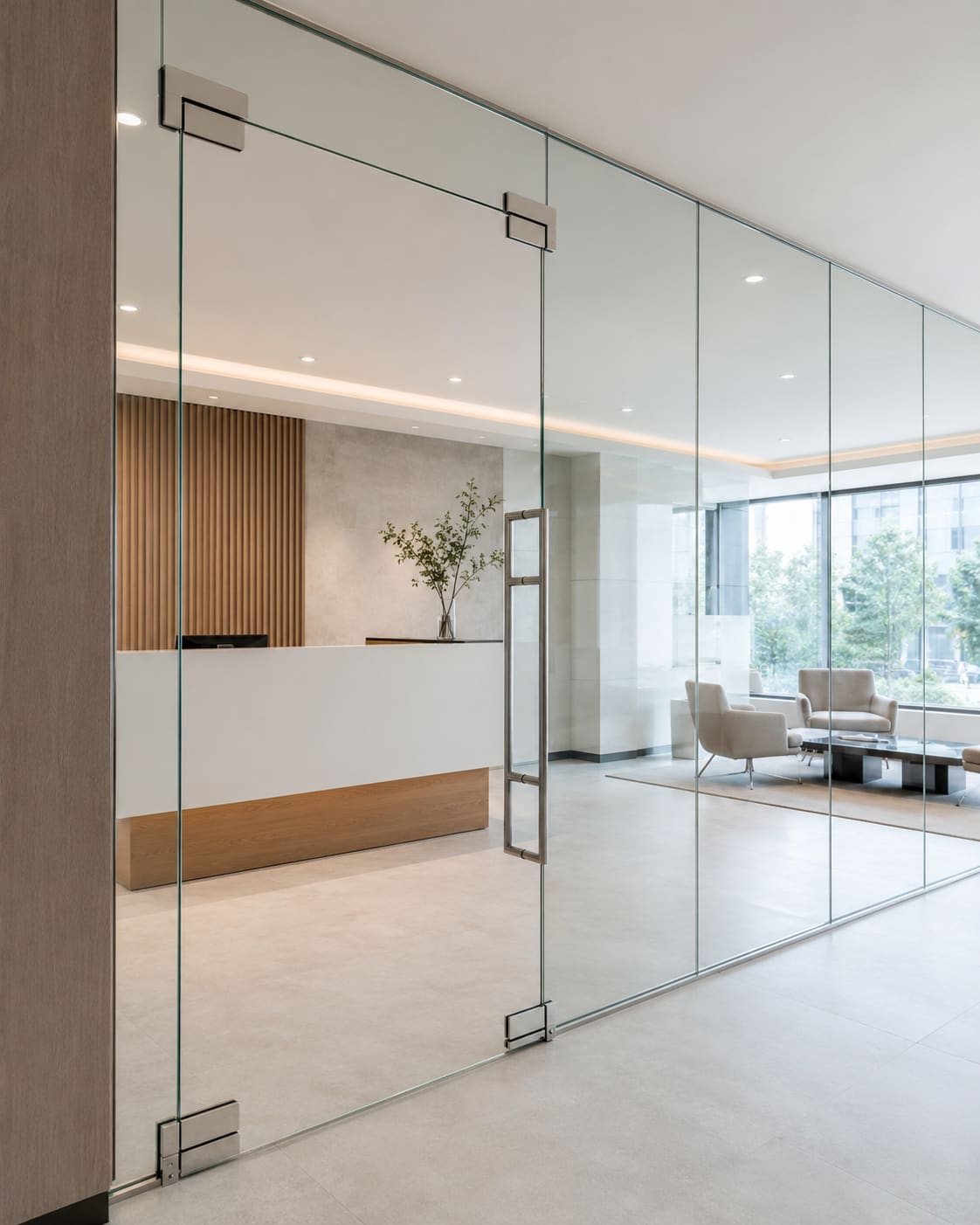
- Frameless glass doors (offices in HITEC City, Gachibowli, Madhapur): 10mm or 12mm with patch fittings or floor springs - see our frameless glass doors work for typical detailing.
- Shower enclosures (apartments in Kondapur, Kukatpally, Kokapet): 8mm or 10mm toughened, with an anti-water nano coating strongly recommended for the hard water common across the twin cities.
- Glass railings (villas in Jubilee Hills, Banjara Hills, Financial District): 12mm toughened, or laminated-toughened for balconies and staircases where a fall-height safety code applies - our glass railing options cover both spigot and standoff systems.
- Tabletops and countertops: 12mm with polished edges for most dining and office tables; step up to 19mm for very large conference or dining tops that span long unsupported distances.
- Shopfronts and showrooms (M.G. Road, Paradise, Begumpet): 10mm or 12mm toughened for large spans and wind load, or a full toughened glass shopfront system where the storefront doubles as signage and security.
Why can't toughened glass be cut after it is made?
Toughened glass cannot be cut, drilled or trimmed after tempering because the process locks the outer surfaces into permanent compression while the core stays in tension. Score or drill that surface and the stored energy releases instantly, shattering the whole panel into thousands of granules. Every hole for a handle, every cutout for a patch fitting and every polished edge must therefore be finished on the raw glass before it enters the furnace.
This single fact drives almost every other decision in this guide. It is why accurate final measurements are non-negotiable, why reputable suppliers insist on approved drawings before production, and why lead times cannot be compressed to same-day. It is also the reason toughened glass is so safe once installed: that granular break pattern is what earns it the name safety glass and makes it the default for doors, railings and any panel at human-impact height.
- Provide exact opening sizes, hinge positions and handle centres before you confirm the order.
- Approve a shop drawing in writing - a good supplier will not toughen a panel without one.
- If a design might change, hold the glass order until layouts are frozen; changing your mind after tempering means paying for the panel twice.
- For openings that genuinely cannot be measured until later, consider laminated glass, which can be cut on site, as covered in our laminated glass work service.
How long do orders take across the twin cities?
Standard toughened glass orders in the twin cities are ready in 3–7 working days, because glass must be cut, edged, drilled and then sent through the tempering furnace - a sequence that cannot be rushed or reversed. Plain rectangular panels are fastest; anything with cutouts, holes or special coatings adds a day or two.
- Same-week delivery is realistic for standard clear sizes in Secunderabad, Marredpally, Begumpet and central Hyderabad.
- Outlying areas like Kokapet, Financial District, Shamshabad and ORR-edge sites may add half a day for transport and access.
- Always finalise measurements before ordering: toughened glass cannot be trimmed on site, so a 5mm error means a full reorder and another furnace cycle.
- Order 5–7 days ahead of installation during peak construction season (October–March), when furnaces across Hyderabad run at capacity and queues lengthen.
- Ask whether measurement, toughening and fitting are scheduled as one continuous job - gaps between stages are where twin-cities projects usually lose a week.
How do I know the glass is genuinely toughened?
Genuine toughened glass complies with IS 2553 (the Indian safety-glass standard), carries a permanent corner stamp from the processor, and breaks into small blunt granules rather than long sharp shards. Ask your supplier to confirm compliance and, where safety is critical, to show a fragmentation test result - a real tempered panel produces at least the required number of small particles in a 50mm square.
The gap between real and fake matters most on the applications where failure hurts: a shower screen over a wet floor, a balcony railing, or a heavy office door. Under-processed or merely heat-strengthened glass can pass a casual glance but breaks into dangerous blades. In Telangana's climate the panels also face genuine stress - surface temperatures on a west-facing shopfront in May, thermal shock from an air-conditioned interior meeting the outside heat, and monsoon wind load - so the safety margin the standard guarantees is not academic.
- Look for the etched IS 2553 mark and the manufacturer's stamp in a corner of the finished panel.
- Confirm the glass is fully toughened, not heat-strengthened, if it is being used as a safety barrier.
- For overhead glazing, balustrades and large facades, ask about heat-soak testing to reduce the rare risk of spontaneous breakage from nickel-sulphide inclusions.
- Where codes require it, specify laminated-toughened build-ups for railings and glass canopy or overhead work so a broken panel still holds together.
Which applications use toughened glass most in Hyderabad?
Across Secunderabad and Hyderabad, toughened glass shows up most in office cabins, shower enclosures, staircase and balcony railings, shopfronts, and frameless entrance doors - anywhere strength, clarity and safety all matter at once. The commercial corridors of Gachibowli, Madhapur and the Financial District drive most of the demand, but villa and apartment interiors are a fast-growing second market.
- Office glass cabins and meeting rooms: frameless or framed glass partitions in 8–12mm, often with frosted film bands for privacy and acoustic comfort.
- Shower cubicles: 8–10mm enclosures in bathrooms across Kondapur, Kokapet and Kukatpally high-rises, ideally with an easy-clean coating for hard water.
- Railings and balustrades: 12mm or laminated-toughened for staircases and balconies in Jubilee Hills and Banjara Hills homes.
- Retail and showroom fronts: large-span shopfronts along Begumpet, Paradise and M.G. Road that need to survive wind, footfall and daily cleaning.
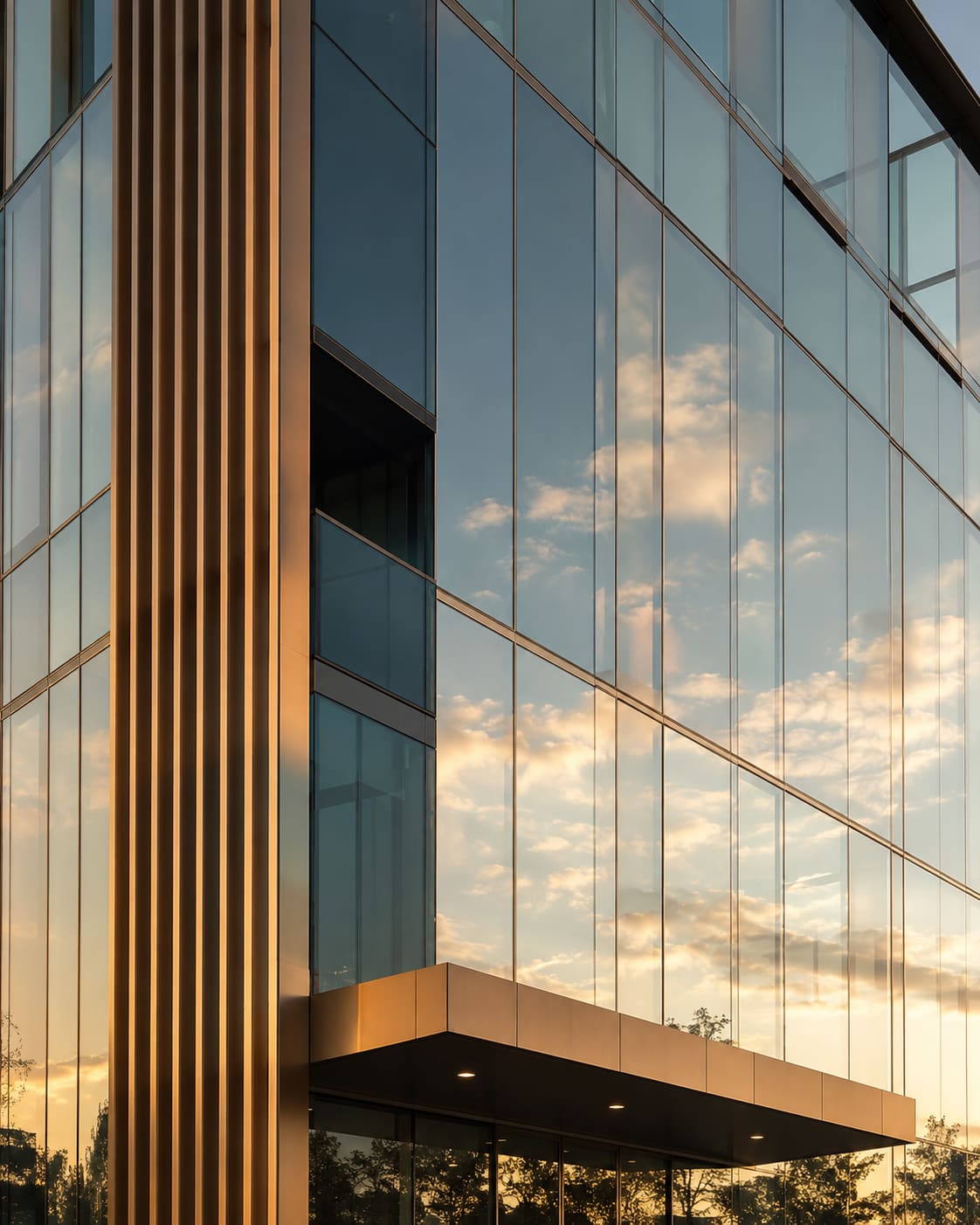
- Facades and spider glazing: toughened and DGU build-ups for commercial elevations, which link into our wider facade and structural glazing work. You can see finished twin-cities installations across our completed projects.
How should toughened glass be handled and maintained here?
Because it cannot be reworked, toughened glass needs careful handling from the furnace to the wall, and simple ongoing care once installed. In Secunderabad's dusty, high-humidity monsoon conditions, edge protection during transport and correct hardware alignment during fitting matter as much as the glass grade itself - most in-service breakages trace back to a chipped edge or an over-tightened fitting, not the glass being weak.
- Insist that panels are transported vertically in padded A-frames, not laid flat, and that edges are protected from knocks.
- Check for edge chips before installation - a nick at the edge is a stress point that can fail weeks later under thermal load.
- Ensure hardware is not over-torqued; patch fittings and spigots should grip through gaskets, never metal directly on glass.
- Clean with a soft cloth and mild soapy water; avoid abrasive pads and harsh acidic cleaners, especially on coated shower glass.
- During the monsoon, keep drainage channels on shower and balcony glass clear so standing water and grime do not etch the surface over time.
What questions should I ask a supplier before ordering?
Pick a supplier who offers a free site measurement, quotes in writing per sq ft, confirms IS 2553 compliance, supplies matched hardware, and handles installation rather than just dropping off panels. The right questions upfront prevent the two most expensive outcomes: a reorder from a wrong size, and a safety failure from under-spec glass.
- Is the quote glass-only or fully fitted, and what exactly is included - edgework, cutouts, hardware, transport and fitting?
- Is the glass fully toughened to IS 2553, and can you show the corner stamp and, if needed, a fragmentation or heat-soak result?
- Are cutouts and holes made before tempering from an approved drawing that I sign off?
- Do you supply matched hardware - patch fittings, floor springs, spigots, D-handles - and warranty the workmanship?
- Can you show completed sites in my locality, whether Gachibowli offices, Kondapur apartments or Banjara Hills villas?
- What is your response time for post-installation service, and what is covered? When you are ready, get a free quote with your measured sizes so the numbers reflect your actual job.