uPVC windows are one of the best-value upgrades for homes in Nizampet and Bachupally, because their multi-chamber frames and rubber gaskets seal out fine construction dust, block road noise and hold up to Hyderabad's hot summers and heavy monsoon without warping, rusting or needing repainting. For a typical 2BHK flat or independent house in this fast-growing corridor off the Outer Ring Road, a full uPVC window replacement usually pays back in less daily dusting, quieter rooms and lower AC bills within a few years.
This guide is written specifically for the Nizampet, Bachupally, Pragathi Nagar and Kukatpally belt. It covers the window styles that suit local apartments and villas, realistic INR pricing for the twin cities in 2026, the glass and hardware choices that actually matter, and how uPVC performs against the dust, glare and 40°C-plus May heat that homes here deal with every year.
If you are weighing uPVC against aluminium, or trying to figure out what a fair per-square-foot rate looks like before a salesperson quotes you, read on - everything below is based on how windows are specified and installed across Hyderabad, not generic brochure claims.
Why do uPVC windows suit Nizampet & Bachupally homes?
uPVC windows suit the Nizampet-Bachupally area because their multi-chamber frames and EPDM rubber gaskets seal tightly against dust and rain, which matters in a locality still surrounded by active construction and busy arterial roads. Unlike wood or mild-steel frames, they are essentially immune to the two things that age windows fastest in Hyderabad: relentless summer UV and monsoon moisture.
The practical advantages for local homes are:
- Dust sealing: tight sashes and continuous gaskets cut the fine cement and road dust that settles on sills near ongoing projects around Pragathi Nagar and the ORR service road.
- Monsoon resistance: uPVC does not rust, rot or swell, so the June-September rains and humidity cause no damage, and the drainage channels push water back outside.
- Heat and glare control: with the right glass they reduce heat gain during Hyderabad's 40°C-plus summer afternoons and lower the load on your split ACs.
- Noise reduction: double-glazed uPVC can cut 25-35 dB of traffic noise from roads like the Nizampet main road and Bachupally X-roads junction.
- Low maintenance: no painting, no polishing, no annual sealing - a periodic wipe with soapy water keeps them looking new for 15-20 years.
For families upgrading from old aluminium or wooden windows, the difference on a windy, dusty afternoon is immediate and obvious.
Which uPVC window styles work best for local apartments and villas?
The most popular uPVC window styles in Nizampet and Bachupally are sliding, casement and fixed windows, chosen to fit both compact gated-community flats and larger independent villas. Picking the right style is mostly about how much swing space you have and how much ventilation the room needs.
- Sliding windows: the default choice for apartments and balconies here because they need no swing space; 2-track and 3-track uPVC sliding window options suit most 2BHK and 3BHK flats and let you fit an insect mesh track too.
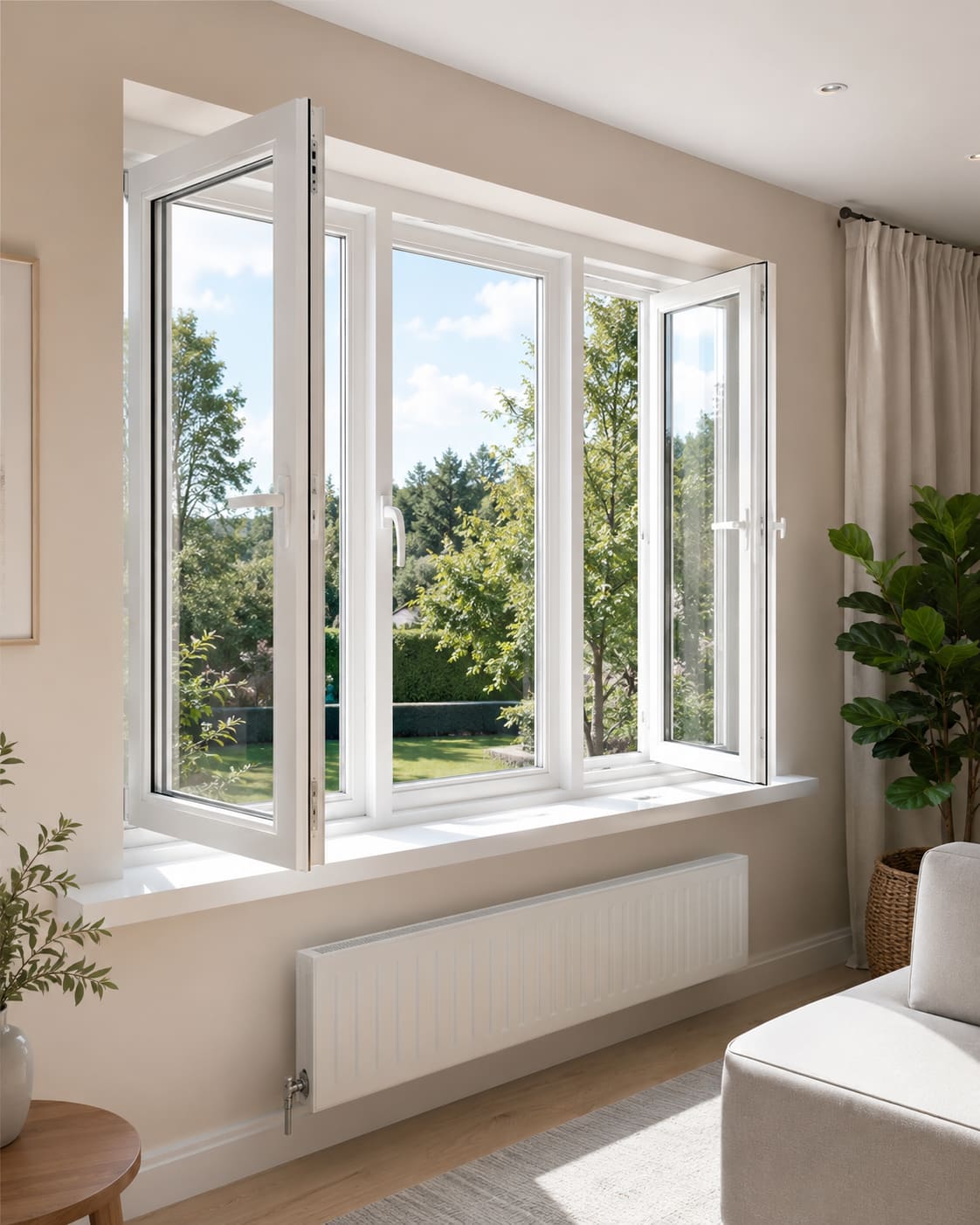
- Casement windows: hinged sashes that open fully for maximum ventilation, ideal for villas and bedrooms in Pragathi Nagar and Kukatpally where a strong cross-breeze matters; a uPVC casement window also seals tighter than a slider.
- Fixed and combination windows: large fixed panes for staircases and living rooms, often paired with an openable sash for light plus airflow.
- Tilt-and-turn windows: a tilt-and-turn sash gives secure rain-time ventilation - you can leave it cracked open during a downpour without water blowing in.
- Ventilators and combinations: small top-hung ventilators suit kitchens and bathrooms where you want extraction without a full opening.
For upper-floor flats facing the open west, pair any style with performance glass to keep rooms cooler. Many homes here mix styles - sliders in living areas and balconies, casements in bedrooms - and a good fabricator will help you plan that room by room.
How much do uPVC windows cost in Hyderabad in 2026?
uPVC windows in the Nizampet and Bachupally area typically cost between Rs 450 and Rs 1,200 per square foot in 2026, depending on the profile brand, glass type, reinforcement and hardware you select. The per-square-foot figure is the fairest way to compare quotes, because window sizes vary so much between projects.
- Sliding windows, single glazing: roughly Rs 450-650 per sq ft - the economical choice for standard apartments.
- Casement windows, single glazing: roughly Rs 550-800 per sq ft, reflecting the extra hinges, handles and multi-point locking.
- Double-glazed (DGU) windows: roughly Rs 850-1,200 per sq ft, worth it for road-facing rooms and better heat and sound insulation.
- Toughened safety glass: add about Rs 90-160 per sq ft, recommended for large panes, ground-floor and low-sill windows.
As a rough guide, kitting out a 2BHK flat with quality single-glazed sliding uPVC windows commonly lands around Rs 55,000-90,000 installed. A larger 3BHK or independent villa with a mix of casement, sliding and fixed units, some in DGU, will usually run Rs 1.3-2.5 lakh. Prices are broadly similar across Kukatpally, Miyapur, Gachibowli, Kondapur and Kokapet; the biggest swing is glass and reinforcement, not location. Always confirm with a site measurement before ordering, and get a free quote that itemises profile, glass and hardware separately so you can see exactly what you are paying for.
uPVC vs aluminium windows: which should you pick?
For most residential rooms in Nizampet and Bachupally, uPVC gives better thermal and sound insulation for the money, while aluminium wins where you need very slim sightlines or very large spans. It is less a question of good versus bad and more about matching the frame to the opening.
- Choose uPVC when: insulation, dust sealing and low maintenance are the priority - bedrooms, living rooms, road-facing windows and any room you air-condition.
- Choose aluminium when: you want minimal frame width, floor-to-ceiling glazing or a large sliding door; explore aluminium sliding windows for wide openings, or thermal-break aluminium windows when you want aluminium's strength with much better heat performance.
- Structural or big-span openings: for full-height villa glazing or facade-style openings, aluminium framing or aluminium doors and windows are the safer engineering choice.
uPVC frames are wider than aluminium, so for a fixed opening you lose a little glass area - usually a fair trade for the insulation gain. If you are torn on a specific window, ask the fabricator to quote both and compare the per-square-foot rate against the performance you actually need in that room.
Which glass should you choose for Hyderabad's heat and glare?
Choose your glass by the room's orientation and the road it faces, not by a single default across the whole home. Glass is where a uPVC window either controls Hyderabad's heat and glare or does very little, so it deserves as much thought as the frame.
- West- and south-facing rooms: these take the worst of the afternoon sun, so use double-glazed or reflective/low-E glass to cut heat gain and glare and keep AC bills down.
- North- and shaded east-facing rooms: clear single glazing is usually fine and keeps costs sensible.
- Road-facing rooms: a DGU unit is the single biggest upgrade for noise, especially on the Nizampet main road, Bachupally junction and the ORR side.
- Ground-floor and large panes: specify toughened glass for safety, since it fragments into blunt granules instead of sharp shards if it ever breaks.
- Privacy areas: frosted or laminated glass suits bathrooms and street-level windows.
A good DGU pairs two glass panes with a sealed air or argon gap; that gap is what does the insulating, so make sure the quote specifies the glass thickness and gap, not just the words 'double glass'.
What should you check before you buy?
To choose the right uPVC windows, match the profile and glass to your room's orientation and budget, then confirm the supplier does proper site measurement, factory fabrication and clean installation. The frame is only as good as the fitting, so vet the installer as carefully as the product.
- Insist on lead-free, UV-stabilised profiles rated for Indian conditions so frames do not yellow or chalk under Hyderabad sun.
- Choose galvanised-steel-reinforced frames for large windows and sliders to prevent sagging and flexing over time.
- Check the wall thickness of the profile and the number of chambers - more chambers means better insulation and rigidity.
- Confirm quality EPDM gaskets and a proper sloped drainage design so monsoon water drains out, not into the wall.
- Ask for branded hardware (rollers, locks, handles) since these are the parts that wear first on a daily-use window.
- Get a written warranty - typically around 10 years on the profile and 1-2 years on hardware - and see an installed reference nearby.
- Confirm the quote includes old-window removal, wall making-good and silicone sealing, not just the window itself.
You can see examples of completed residential and commercial glazing in our projects gallery to get a feel for finish quality before you commit.
How are uPVC windows measured and installed?
A proper uPVC window job follows a clear sequence: site survey, factory fabrication to exact sizes, then careful on-site fitting and sealing. Skipping any step is where leaks, drafts and rattling sashes come from.
- Site measurement: the fabricator measures each opening precisely, notes the wall type (brick, block or RCC) and checks whether the old frame stays or goes.
- Fabrication: profiles are cut, welded at the corners and reinforced with steel in a workshop, then glazed with your chosen glass.
- Removal: the old aluminium or wooden frame is taken out, ideally with minimal wall damage.
- Fixing: the new frame is levelled, screwed to the masonry and packed so it sits square and does not bow.
- Sealing: the gap between frame and wall is filled and finished with weatherproof silicone on both faces so no dust or rain tracks in.
- Finishing: sashes are hung, hardware adjusted, and the window is tested for smooth operation and a clean seal all round.
For a full 2BHK, expect measurement to installation within one to two weeks, and the actual fitting to take a day or two depending on the number of windows. A tidy installer will protect floors, clean up debris and demonstrate that every sash locks and drains correctly before leaving.
How do you maintain uPVC windows in a dusty area?
uPVC windows need very little maintenance, but a dusty corridor like Nizampet-Bachupally rewards a simple routine that keeps sliders gliding and gaskets sealing. None of it requires a technician.
- Wipe frames and glass every few weeks with a soft cloth and mild soapy water; avoid harsh solvents that can dull the surface.
- Vacuum or brush out the sliding tracks periodically so grit does not grind the rollers or block the drainage holes.
- Keep the small weep/drainage holes at the bottom of the frame clear so monsoon water always has a way out.
- Once a year, put a drop of light lubricant on rollers, hinges and locks to keep operation smooth.
- Check the gaskets occasionally; if any section hardens after years of sun, a good supplier can replace just the gasket rather than the whole window.
Done consistently, this handful of habits is why a quality uPVC window still looks and works like new well past the 15-year mark, even a stone's throw from an active construction site.