The best windows for a Hyderabad villa are uPVC or thermal-break aluminium frames fitted with double-glazed or solar-control glass. uPVC wins for insulation and quiet bedrooms, aluminium wins for wide living-room spans and slim modern frames, and most villas use a mix of both. Whatever you choose, the glass and the gaskets matter as much as the frame, because Hyderabad's 42-degree summers, gritty pre-monsoon dust and heavy October rain all test a window at once.
Choosing villa windows in Hyderabad is a bigger decision than most homeowners expect. A villa has large openings, high ceilings and long sightlines, so windows shape the light, the heat, the noise and the entire look of the elevation. Get them right and the home stays cool through a scorching May afternoon in Kokapet or Kompally; get them wrong and you fight glare, dust and leaking sills every monsoon.
At Hakimi Aluminium and Glass we have fitted windows across gated communities in Gachibowli, Kokapet, Financial District, Kondapur and the wider Telangana and Andhra Pradesh region, and the same questions come up on every villa site. This guide walks you through frame material, glass, sizing, hardware and cost so you can specify windows that suit both the Deccan climate and your budget, and you can always get a free quote once you know what you want.
uPVC vs aluminium: the first choice for villa windows in Hyderabad
The frame material decides how your villa windows handle heat, dust and years of hard Deccan sun. Both uPVC and aluminium work well in Hyderabad, but they suit different priorities, and the honest answer for most villas is that you will want both in different rooms.
- uPVC: excellent thermal insulation, naturally dust and termite resistant, and quiet. The multi-chamber profile blocks heat transfer, so bedrooms and home offices stay cooler and calmer. Ideal for villas near busy roads such as the ORR, the Gachibowli corridor or the Kokapet junction. Explore the range of uPVC windows if silence and lower AC bills are your priority.
- Aluminium: slimmer sightlines, far stronger for very large openings, and a crisp modern look that suits contemporary elevations. Powder-coated or anodised finishes shrug off Hyderabad's UV load and do not warp on a west wall. Our aluminium windows are the default for double-height glazing and wide balcony openings where a chunky frame would spoil the view.
The one thing to watch with plain aluminium is heat conduction: metal carries heat inward. For premium villas we specify thermal-break aluminium windows, which insert a polyamide barrier inside the frame so you get slim aluminium looks with close to uPVC-level insulation.
For most Hyderabad villas we recommend a mix: aluminium for wide living-room, staircase and stairwell glazing where you want minimal frame, and uPVC for bedrooms where insulation and silence matter most. There is no rule that says the whole villa must use one material, and mixing them is how you get both performance and looks.
Which glass suits the Deccan climate?
Glass selection matters as much as the frame. Hyderabad sits on a hot, dry plateau with fierce afternoon sun, and single clear glass on a large west-facing villa window will turn a room into an oven no matter how good the frame is. Match the glass to the orientation and the room.
- Double glazed units (DGU): two panes with a sealed air or argon gap that cut both heat and noise significantly. This is the workhorse choice for master bedrooms, media rooms and any room where you run the AC hard. A DGU can drop the incoming heat noticeably compared with single glazing.
- Solar-control or reflective glass: a metallic coating reflects a large share of solar heat before it enters. Essential on west and south elevations that take the harshest 3pm to 6pm sun.
- Tinted glass: reduces glare and heat at lower cost than a full solar coating, useful on secondary openings.
- Laminated glass: two panes bonded with a PVB interlayer that adds security, cuts UV fade on your furniture, and holds together if broken. Useful for ground-floor villa windows facing the compound wall; see our laminated glass work for security-focused openings.
- Toughened glass: heat-treated for strength and safety, mandatory for large and low-level panes. Our toughened glass work covers the big living-room lights that need to pass safety norms.
For a typical villa in Telangana we specify DGU on upper-floor bedrooms, solar-control glass on any large opening facing west, and laminated glass at ground level. That combination handles the heat, the glare and the security concern in one specification.
Which window style is best for a villa: sliding, casement or tilt-and-turn?
Villa openings are large, so the operating style affects comfort, cleaning and how well the window survives the monsoon. There is no single best style; each earns its place in different parts of the house.
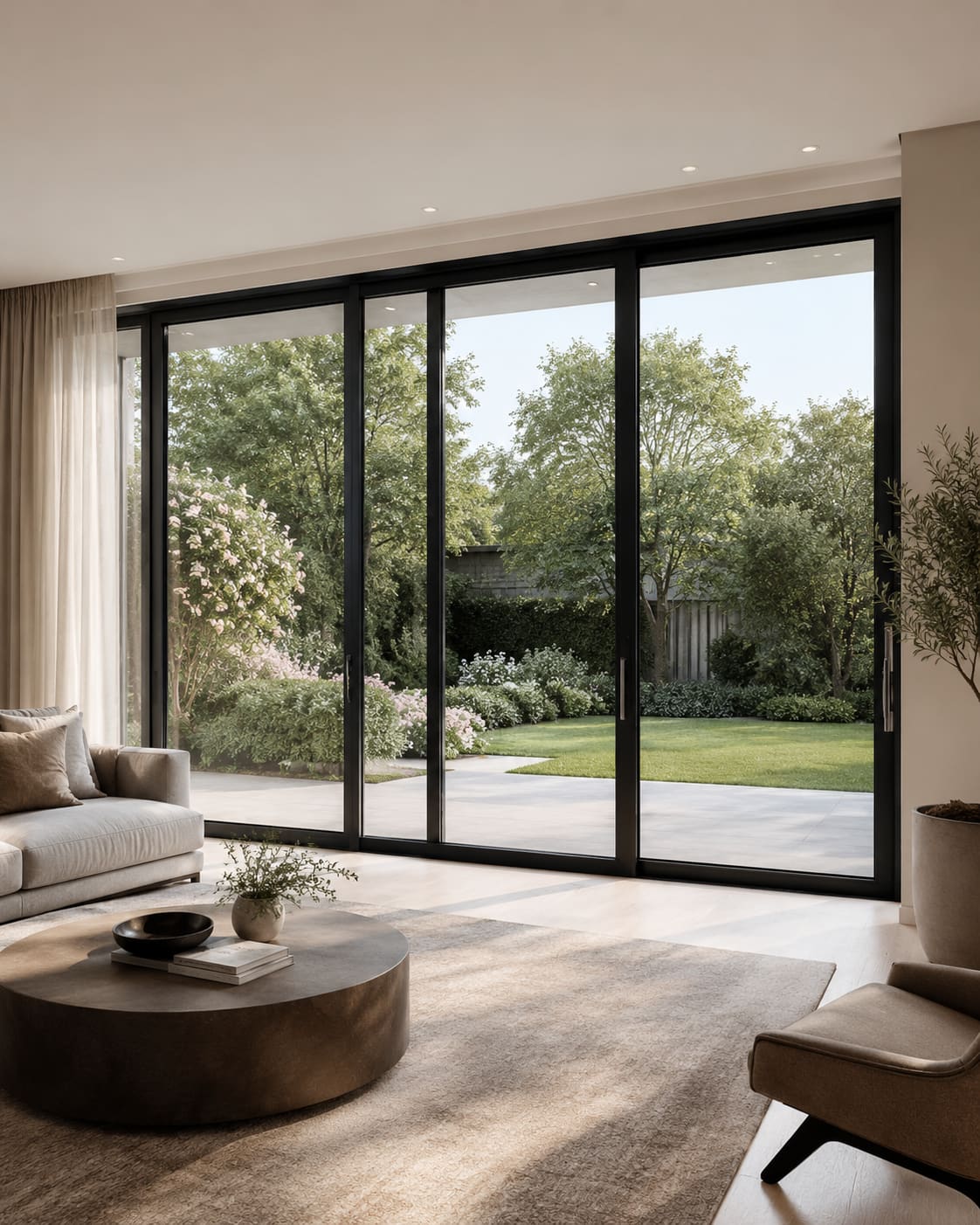
- Sliding windows: practical for wide spans, balconies and any opening where a swinging sash would get in the way. They are the easy default, but a basic slider seals less tightly than a casement, so pair it with good interlocks and brush seals. See aluminium sliding windows for large villa openings.
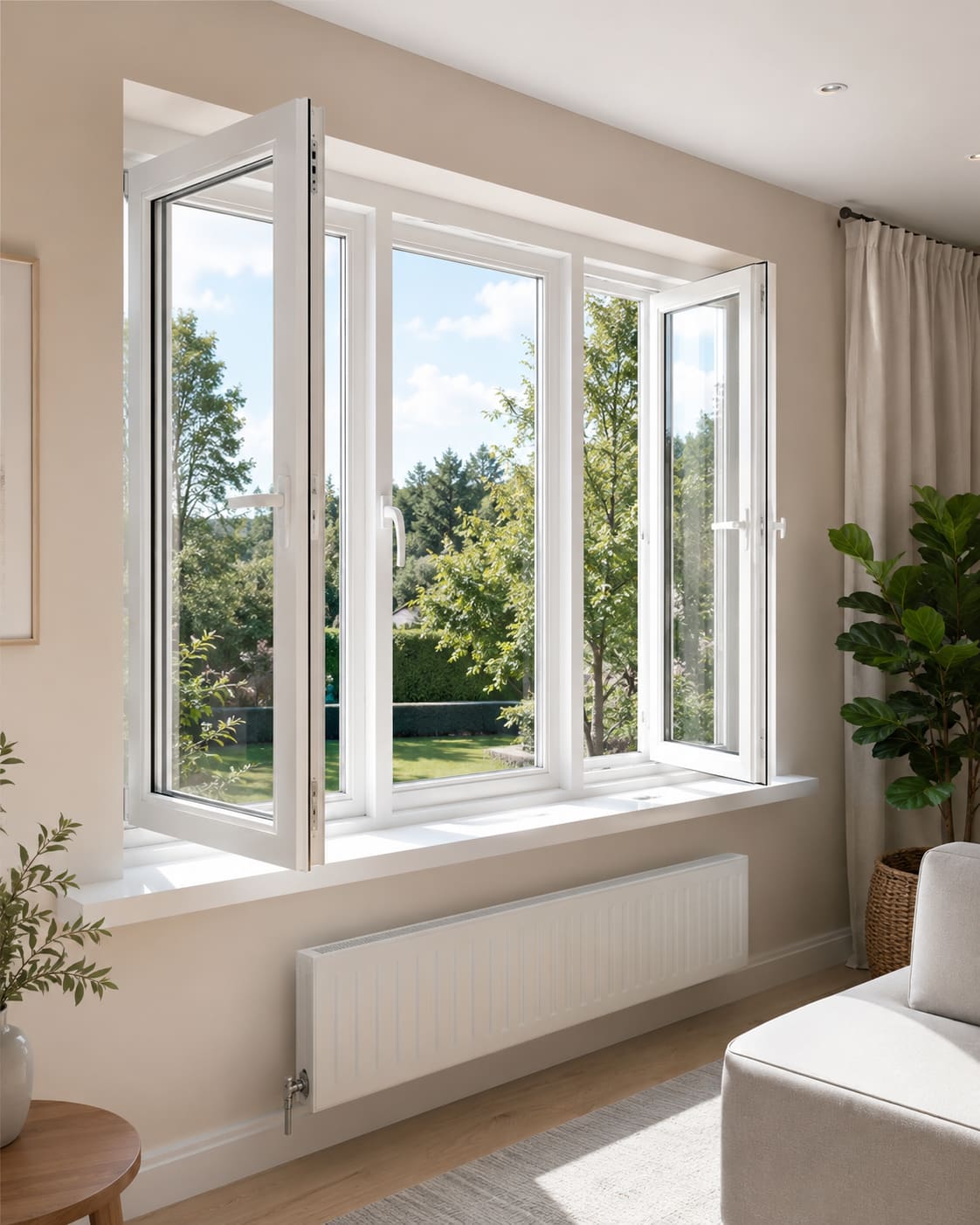
- Casement windows: hinged sashes that press against a gasket all the way round, giving the best insulation and the best monsoon resistance. Choose aluminium casement windows or their uPVC equivalent for bedrooms and any wall that takes wind-driven rain.
- Tilt-and-turn windows: a clever dual action that tilts inward at the top for secure trickle ventilation, or swings fully open for cleaning. Excellent for first-floor bedrooms where you want airflow overnight without an open, insecure sash. Our tilt-and-turn windows are popular in gated communities around Financial District and Narsingi.
- Fixed picture windows: non-opening panes that keep sightlines clean in double-height living areas and stairwells. Combine a large fixed light with a small operable vent beside it for the best of both.
A good villa mixes these: fixed glazing for the view, casements for the bedrooms, tilt-and-turn for security, and sliders for the balconies.
Design details that decide whether the window leaks
Most window failures in Hyderabad villas are not about the frame brand at all. They come down to the parts you cannot see in the showroom, and this is where a cheap installer cuts corners.
- EPDM gaskets: high-grade rubber gaskets seal the sash to the frame and stay flexible for years. Cheap gaskets harden and crack in the UV, and that is where monsoon water gets in. Insist on EPDM, not generic PVC beading.
- Drainage and weep holes: every sliding track and casement sill needs weep holes so rain that gets in can drain back out. Blocked or missing weep holes are the number one cause of water pooling on a sill.
- Hardware quality: multi-point locks, stainless friction stays and good rollers cost more but decide whether a large sash still seals and slides smoothly after five monsoons.
- Frame reinforcement: uPVC sections for large villa windows must have galvanised steel inside them, or the sash sags over a wide span. Ask what gauge of steel is used.
- Fly and dust screens: integrated mesh or aluminium grills let you ventilate on a cool evening without inviting Hyderabad's pre-monsoon dust and mosquitoes indoors.
- Proper sill slope and sealing: the external sill must slope outward and be sealed with quality silicone so water runs away from the wall, not into it.
Windows by room: how to specify a whole villa
A villa is not one window repeated thirty times. The smart approach is to specify room by room, matching material, glass and style to how each space is used and which way it faces.
- Master and children's bedrooms: uPVC or thermal-break aluminium casements with DGU glass for quiet, cool sleep. Add tilt-and-turn on upper floors for secure night ventilation.
- Living and dining: large aluminium sliders or fixed picture windows for the view, with solar-control glass if the elevation faces west.
- Kitchen and utility: easy-clean sliding windows with good ventilation and mesh screens.
- Stairwell and double-height voids: tall fixed glazing that floods the core with light; for a truly dramatic elevation this often flows into full-height aluminium doors and windows or a glazed facade element.
- Bathrooms: small frosted or obscure-glass casements or tilt vents for privacy plus airflow.
- Home theatre or study: DGU or even acoustic laminated glass to kill road noise from the ORR or an internal road.
If your villa design pushes toward a fully glazed elevation on the front, it is worth talking to our facade and structural glazing team early, because the window and facade lines need to be planned together rather than patched later.
How much do villa windows cost in Hyderabad?
Prices vary with size, glass, hardware and finish, but these Hyderabad market ranges help you budget per square foot of window opening, supplied and fitted.
- Aluminium sliding windows: roughly INR 450 to 750 per sq ft with single glass, more with premium finishes and thermal breaks.
- uPVC casement or sliding windows: roughly INR 550 to 950 per sq ft depending on profile, number of chambers and steel reinforcement.
- Double glazed (DGU) upgrade: add around INR 250 to 500 per sq ft over single glass.
- Laminated or solar-control glass: add roughly INR 150 to 400 per sq ft.
- Tilt-and-turn hardware: add roughly INR 2,000 to 5,000 per sash over a plain casement.
A typical 4,000 sq ft villa with 25 to 30 windows commonly lands between INR 4.5 lakh and INR 9 lakh for a good mid-to-premium specification, fitted. Going full thermal-break aluminium with argon-filled DGU throughout can push a large villa past INR 12 lakh, while a value uPVC-and-single-glass approach can come in under INR 4 lakh. The cheapest quote is rarely the cheapest window over ten years, because poor gaskets and thin hardware fail first.
Handling Hyderabad's heat, dust and monsoon
Three local conditions test a villa window here, and a good specification answers all three at once.
- Heat: from March to June, west and south faces take a brutal solar load. Solar-control or DGU glass, light powder-coat colours and deep external reveals or canopies and skylights all cut the heat that reaches the glass.
- Dust: the pre-monsoon weeks fill the air with fine grit that clogs sliding tracks and coats sills. Tight gaskets, good brush seals and easy-clean track designs keep it out. Casements and tilt-and-turn windows seal better against dust than open sliders.
- Monsoon: October rain in Hyderabad often arrives sideways on the wind. Weep-hole drainage, an outward-sloping sill, EPDM gaskets and, ideally, casement or tilt-and-turn sashes on the exposed elevations are what keep the water outside.
Design the exposed elevations for the worst-case afternoon storm and the calmer walls look after themselves. You can see how we have handled these conditions on real villas in our project gallery.
How to choose a villa window installer in Hyderabad
The fabricator matters as much as the profile. A premium uPVC or aluminium system installed badly will still leak, and a mid-range system installed carefully will serve you for decades.
- Ask to see finished villa work in your area, ideally in Gachibowli, Kokapet, Kondapur or a comparable gated community, so you can judge finish and sealing in person.
- Confirm the profile brand, glass make and hardware make in writing, not just a lump-sum rate.
- Check that DGU units are factory-sealed, not site-assembled, so they do not fog internally later.
- Ask about the guarantee on hardware, gaskets and glass, and who honours it.
- Insist on a site measurement before quoting; a villa quoted from a drawing alone usually needs revisions.
If you are weighing up materials in more detail, our guide on choosing between the two systems is worth a read, and when you are ready our team can survey your site and turn a drawing into a firm, itemised quote. Start by asking us to get a free quote for your villa.