Selecting an aluminium system starts with one rule: choose the typology and performance envelope before you choose a brand or a price. An aluminium system is a structural, thermal, acoustic and water-management assembly, and the visible profile is only its most obvious part - so the right method is to define what the facade must actually do, pick the typology (casement, sliding, stick or unitised) that delivers it with sensible margin, then compare vendors and cost last. Getting this order wrong is why so many facades in Hyderabad, Secunderabad and across Telangana look correct on the elevation yet leak, whistle or overheat once occupied.
This guide is written for architects, facade consultants, PMCs, builders and discerning homeowners who will carry the decision onto the drawings and into the tender. It covers how to frame typology, the performance criteria to quantify, the standards to cite, the Hyderabad-specific climate calls, realistic budgets in INR, the hardware that decides how a system operates and lasts, and the interface detailing that decides whether the installed facade behaves like the tested sample. Where it helps, we point to our aluminium windows and thermal-break aluminium work so you can see the detailing applied in practice.
The emphasis throughout is on decisions with trade-offs - the same framework a good facade consultant applies anywhere in India, tuned for building conditions in Hyderabad, Telangana and Andhra Pradesh.
What is aluminium system selection, and why typology comes first
Aluminium system selection is the process of matching a window or facade assembly - its typology, profile depth, glass, thermal treatment, hardware and interfaces - to the structural, thermal, acoustic and weather demands of a specific project. The first and most consequential decision is the operating and structural typology, because it constrains everything downstream: glass weight limits, achievable spans, weather performance, hardware and cost per square metre. Choosing a brand before the typology is decided is choosing the answer before you have asked the question.
- Openable windows: casement, top-hung and tilt-turn deliver the best air and water performance and acoustic sealing because the sash closes onto compression gaskets. They suit residential, hospitality and any facade where controlled ventilation and quiet matter.
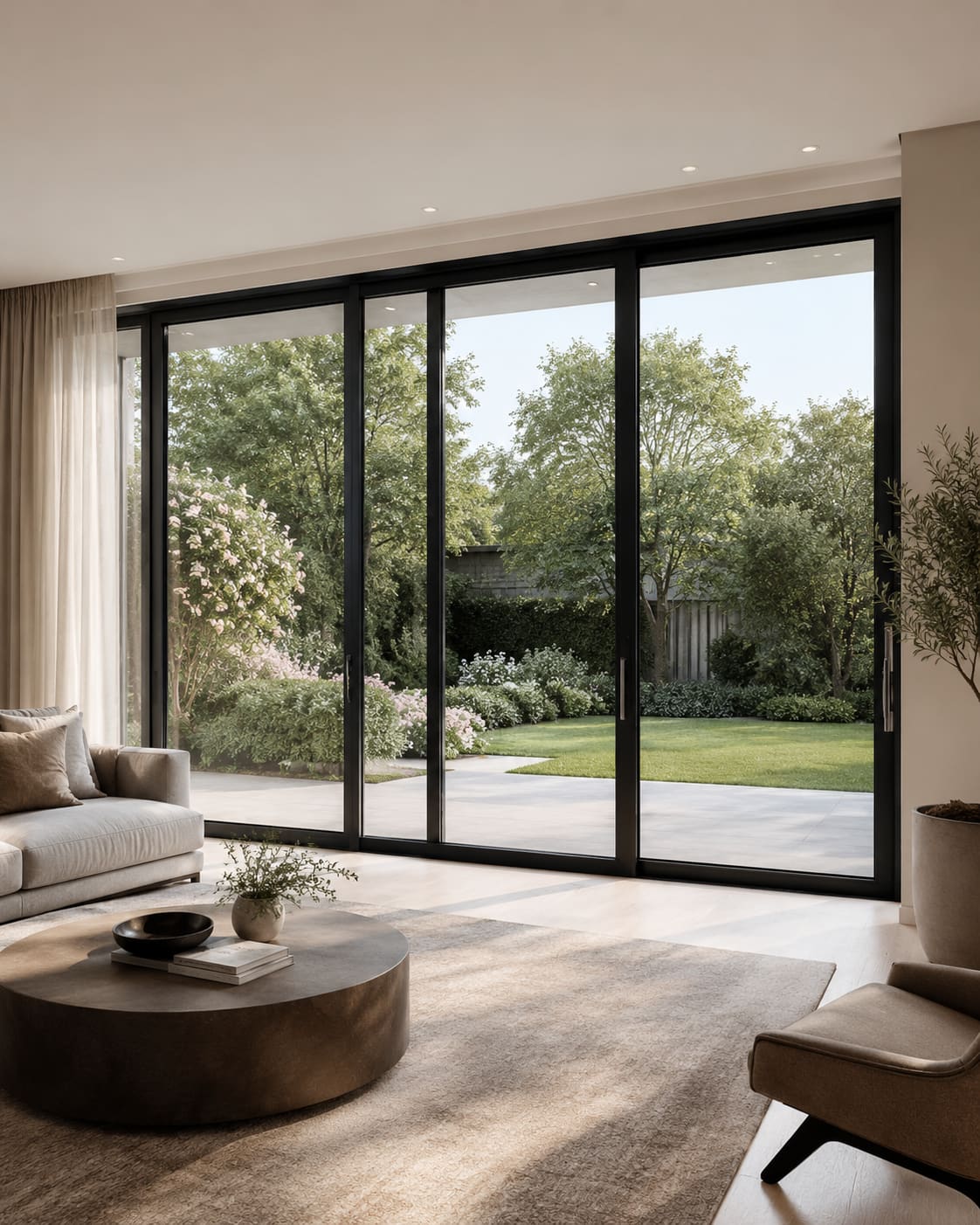
- Sliding systems: 2-track and 3-track sliders and lift-slide units are space-efficient for large openings, balconies and terraces, but sealing and thermal performance are inherently harder than a compression-seal casement because they rely on brush seals and interlocks.
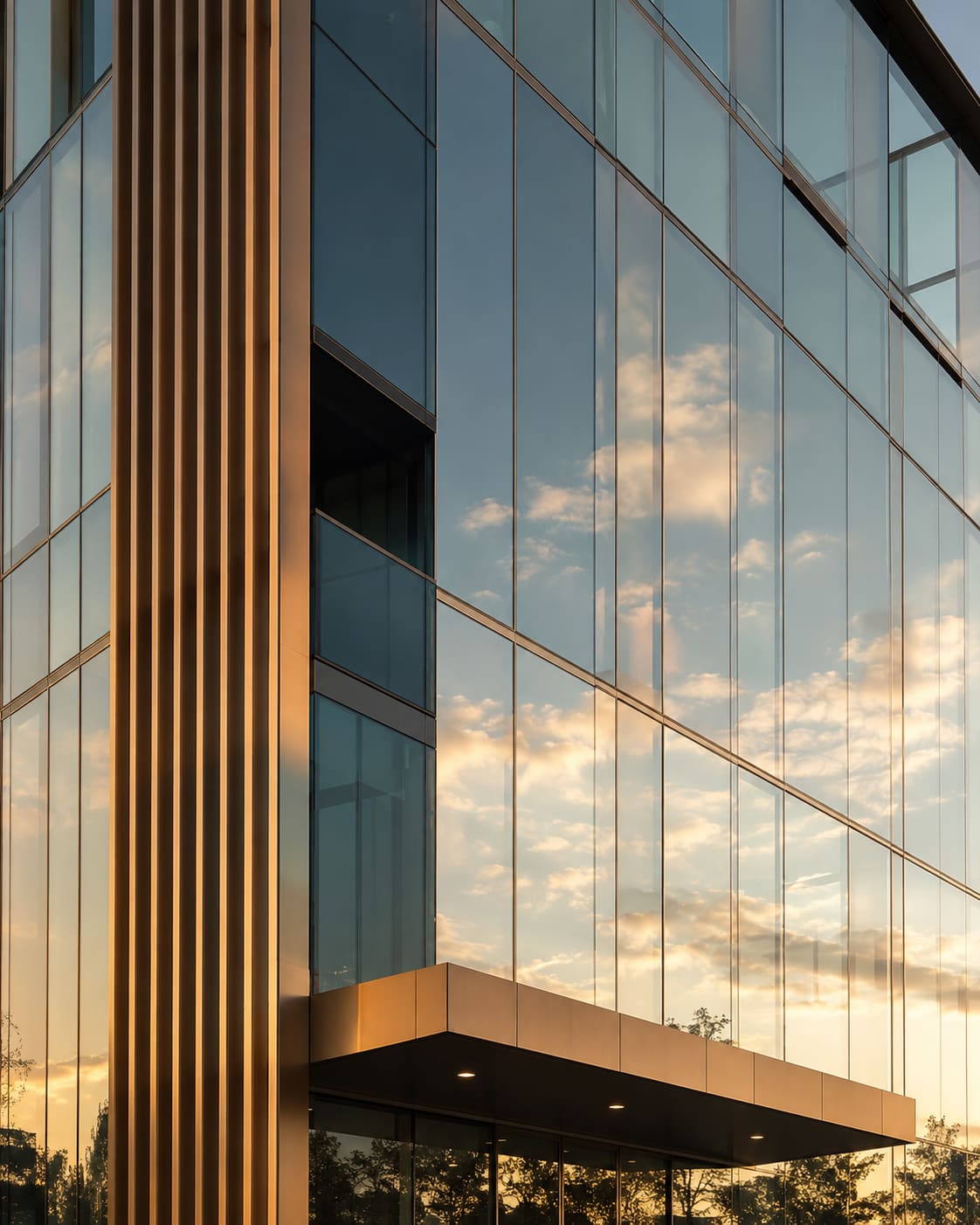
- Stick curtain wall: site-assembled mullion-and-transom grids for continuous glazed facades. Economical in material terms but labour- and tolerance-sensitive on site, which matters given typical site conditions on many Hyderabad projects.
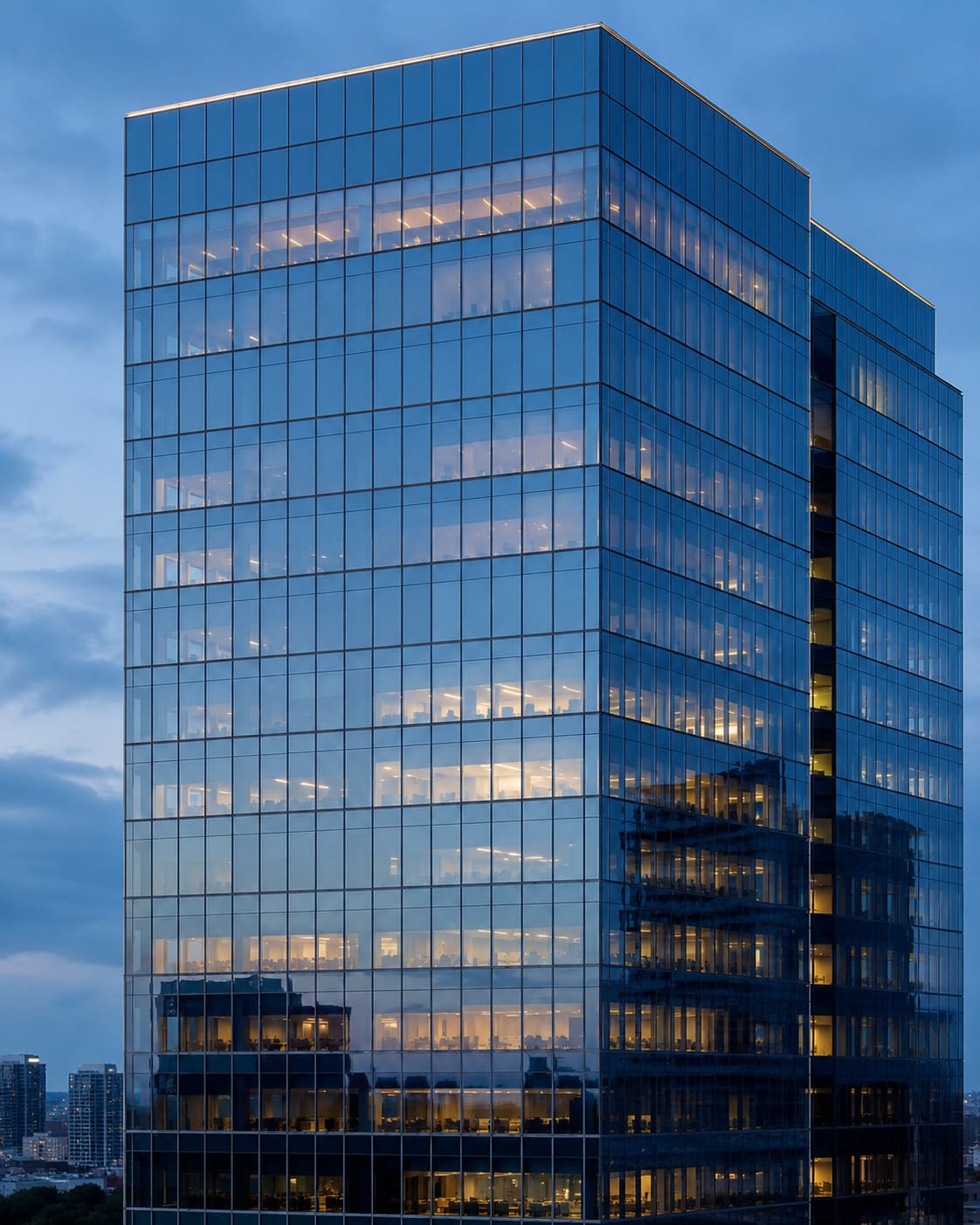
- Unitised curtain wall: factory-assembled storey-height panels for tall or fast-track towers in the HITEC City, Gachibowli and Financial District corridors - higher quality control and speed, higher tooling cost, and it needs an early design freeze.
Fix the typology against the facade's function, floor-to-floor height and wind exposure before you shortlist any aluminium series. For most residential and mid-rise commercial work in the city, our aluminium windows practice covers the casement, sliding and tilt-turn range, and you can see completed installations among our recent projects.
Quantify the performance criteria with test methods
Write performance as numbers backed by test methods, not adjectives. 'Heavy-duty' and 'weather-tight' are unenforceable at tender; a pressure and a standard are. Establish and state the following on the window and facade schedule:
- Structural: design wind pressure derived from IS 875 (Part 3) for the site, terrain and building height; framing deflection limited to L/175 or 20 mm, whichever is less, under design load. For a tall tower on an open peri-urban Telangana site, this figure can be materially higher than a sheltered inner-city plot.
- Air infiltration and water penetration: specify test pressures and reference ASTM E283 (air), ASTM E331 (static water) and ASTM E330 (structural), or the AAMA/EN equivalents your consultant prefers.
- Thermal: overall assembly U-value plus glass SHGC and VLT, coordinated to ECBC and NBC 2016 envelope requirements and any IGBC, GRIHA or LEED targets the project pursues.
- Acoustic: required Rw or Rw+Ctr where road, rail or airport noise governs - this drives the glass build-up and frame sealing, not just profile depth. It matters near the ORR, the airport corridor and busy arterial roads.
- Safety glazing: toughened or laminated glass to IS 2553 wherever the location, pane area or fall risk requires it.
State each as a target with the governing test standard so the fabricator tenders to a measurable brief rather than to a picture. A schedule written this way also makes competing bids genuinely comparable, which alone can save a client from a false economy.
Thermal break and glazing for Hyderabad's climate
Hyderabad, Secunderabad and most of Telangana and coastal Andhra Pradesh sit in a warm-composite climate where solar heat gain, not winter heat loss, governs the envelope - so SHGC control typically earns more than chasing the lowest U-value. This single fact reshapes the whole glazing decision, especially for the long April–May peak and a cooling season that runs most of the year.
- Prioritise low-SHGC glazing with high-performance solar-control coatings. A target SHGC around 0.25 to 0.35 while retaining enough VLT (visible light transmittance) for useful daylight and reduced lighting load is a sensible starting band for commercial work.
- Use polyamide thermal-break aluminium framing where the assembly U-value target, condensation control on air-conditioned facades, or a green rating justifies it. Plain aluminium bridges heat readily and can quietly undermine an otherwise good insulated glass unit at the perimeter.
- Coordinate frame and glass together: a low-U insulated glass unit set in a non-broken aluminium frame wastes performance exactly where the frame conducts.
- Exploit shading and reveal depth in the detailing - external shades, deep reveals and fins often beat an incremental glazing upgrade on cost per unit of heat avoided, and they suit the harsh Deccan sun.
Model the trade-off between glass performance, frame type and shading rather than defaulting to the highest-spec IGU in isolation. The cheapest kWh of cooling is the solar gain you never let in - which is why thermal-break framing pays off only when paired with the right glass and shading, not on its own.
Hardware, fittings and ironmongery selection
The aluminium profile is only half the system; the hardware determines how it operates, seals and lasts. Under-specifying ironmongery is a common way to spoil an otherwise well-chosen system, because worn or under-rated fittings show up within a year or two of daily coastal-humidity use.
- Openable windows and doors need friction stays, hinges, handles and multi-point locks matched to sash weight and cycle count. Specify grade and finish rather than accepting the fabricator's cheapest default.
- Heavy aluminium doors and pivot entrances need correctly sized floor springs and door closers; undersizing the closer or spring is a frequent cause of sagging and slam damage.
- Frameless glass elements, spider glazing and canopies rely on structural spider and patch fittings rated to the actual glass weight and wind load.
- In humid coastal Andhra Pradesh belts, corrosion resistance and finish consistency of every fitting matter as much as its load rating.
State hardware grade, finish and load rating on the schedule. If you want fittings matched to a specific system and sash size, you can get a free quote and we will specify the ironmongery alongside the profile and glass.
Detailing, tolerances and interfaces
Most facade problems are junction problems. The tested system rarely fails on its own; the interface between it and the adjacent construction does. This is where drawings earn their keep, and it is the single highest-return effort in facade documentation.
- Show the perimeter seal, backer rod and sealant joint at head, jamb and sill on the drawings - do not leave the weatherline to site improvisation.
- State movement and construction tolerances so the system can absorb structural deflection and slab-edge variation without transferring load into the glass.
- Detail the sill and drainage path explicitly; specify pressure-equalised or drained-and-vented designs where wind-driven monsoon rain is a risk, which on exposed Telangana and coastal Andhra Pradesh sites it usually is.
- Coordinate with waterproofing, RCC and blockwork tolerances and any external cladding so responsibilities at the junction are unambiguous between trades.
- Require anchorage and bracket design to be verified against the same wind load used for the framing, not a nominal fixing.
A well-specified system with an under-detailed interface will leak. Put the same rigour into the junctions as into the profile schedule - you can see how we resolve these details across our recent projects.
Specification language and shop-drawing coordination
Write the specification so it is enforceable at tender and verifiable on site. Prefer performance clauses backed by test evidence over proprietary lock-in, unless a single system is genuinely required for a design reason.
- Require the fabricator to submit shop drawings, structural calculations and, where warranted, test reports or mock-up results for approval before fabrication begins.
- Specify the aluminium alloy and temper and the finish system - anodising or powder coating - with finish quality and coating thickness stated (for example, a minimum powder-coat thickness or a specified anodising grade).
- Name the glazing build-up, gasket material and hardware grade rather than leaving them open to substitution.
- Retain a review step for interface details, and require a site mock-up on larger facades to lock down workmanship before the main run.
Written this way, the specification protects both the client and a competent fabricator, because everyone tenders and builds to the same measurable brief. Hakimi Aluminium and Glass offers design-assist, shop drawings, fabrication and installation across Hyderabad, Secunderabad, Telangana and Andhra Pradesh - explore our services to see the full scope we support from concept through handover.
Budget, timeline and value in the Hyderabad market
Cost belongs at the end of the selection process, not the start - but it must be realistic, because an underfunded brief simply reappears as substituted profiles and thinner glass. The figures below are indicative installed rates for the Hyderabad market as of 2026; always price the actual schedule for a firm number.
- Plain 2-track and 3-track sliding windows are the entry point, roughly Rs 450–750 per sq ft depending on section and glass.
- Quality thermal-break casement and tilt-turn systems sit materially higher, around Rs 1,000–1,800 per sq ft, because of the polyamide profile, better gaskets and multi-point hardware.
- Structural glazing and curtain wall typically run Rs 900–2,000 per sq ft installed, and carry design, testing and access overheads that windows do not - price the mock-up, calculations and access equipment, not just the aluminium and glass.
- High-performance solar-control double-glazed units cost more than single or plain glass, but they repay it through lower cooling load over the building's life, which matters over the long Hyderabad cooling season.
- Programme matters: unitised systems need an early design freeze but install faster on tall towers, while stick systems are cheaper to buy but slower and more weather-dependent to erect.
Match spend to the performance the project genuinely needs, not to the lowest headline rate - that is what separates a facade that lasts from one rectified within its first monsoon. For a project-specific figure, get a free quote with your drawings and window schedule.
Common mistakes to avoid
A handful of recurring errors account for most disappointing facades in the region. Avoiding them costs nothing at the design stage and a great deal to fix afterwards.
- Selecting the profile brand before fixing the typology and performance brief - the most common and most expensive sequencing error.
- Chasing the lowest U-value glass while ignoring SHGC, which is the number that actually governs comfort and cooling load in Hyderabad.
- Pairing a good insulated glass unit with a non-thermal-break frame, so the perimeter conducts away the performance you paid for.
- Under-sizing hardware - stays, closers, floor springs - relative to sash weight and daily cycles, leading to sag, slam damage and failed seals.
- Leaving the weatherline, sill drainage and tolerances to site improvisation instead of drawing them.
- Accepting substitutions at tender because the specification used adjectives instead of test standards. Tighten these six points and the system you selected on paper is the system that gets built.