Child safety glass in homes means using safety glazing - toughened (tempered) or laminated glass conforming to IS 2553 - in every location where a child could fall against, run into, or break a pane, so the glass either resists impact or fails safely without producing sharp, flying shards. Ordinary annealed glass breaks into large, dagger-like pieces that cause the most serious glass injuries; safety glass is engineered specifically to remove that risk. In Indian homes the highest-risk spots are full-height glass doors, low-sill windows within a toddler's reach, staircase and balcony railings, shower and bathroom partitions, and glass tabletops.
The two accepted forms of safety glass behave very differently and are chosen by location. Toughened glass, made by heating float glass to about 620-650 degrees C and rapidly cooling it, gains high impact and thermal strength and disintegrates into small rounded granules when it finally fails. Laminated glass sandwiches a polyvinyl butyral (PVB) interlayer between glass plies so that, when cracked, the fragments stay bonded to the film and the pane keeps acting as a barrier - the safer choice wherever fall-through is possible. Choosing the right type, thickness and installation detail is what actually protects a child, not simply picking the thickest glass on offer.
This guide sets out the standards, specifications, hardware and realistic INR costs relevant to families in Hyderabad, Secunderabad and across Telangana and Andhra Pradesh. Whether you are building new, renovating an apartment, or simply making a home safer for a crawling toddler, the goal is the same: keep the glass strong enough to resist a child's impact, and safe enough to fail without cutting. If you would rather skip the theory, you can get a free quote and we will survey your home and specify the right glazing room by room.
What Counts as Child Safety Glass
Child safety glass is safety glazing that either resists breaking under impact or, if it does break, fails without producing sharp, penetrating fragments - as defined for toughened and laminated glass in IS 2553. Not every 'thick' or 'strong-looking' pane qualifies. The classification is about how the glass behaves at the moment of failure, not merely how hard it is to break, which is why an 8 mm ordinary annealed pane is far more dangerous to a child than a 6 mm toughened one.
- Toughened (tempered) glass: 4-5x the strength of annealed glass; breaks into small blunt granules; ideal for doors, windows and shower screens.
- Laminated glass: a PVB interlayer (0.38-0.76 mm) bonds the plies so broken glass stays in place and the pane remains a barrier; preferred for railings and overhead glazing.
- Toughened-laminated glass combines both properties and is the highest-safety option for balcony guards and high-traffic doors used by children.
- Wired glass and ordinary annealed glass are NOT child-safe for impact zones and should be avoided anywhere within a child's reach.
A simple field check: look for the manufacturer's permanent IS 2553 mark etched or sand-blasted into a corner of toughened panes. Genuine safety glass carries that stamp; if it is missing, treat the pane as ordinary annealed glass until proven otherwise. You can also tell toughened glass apart by its faintly wavy reflection and, on close inspection, the small dimple or roller marks left by the tempering furnace.
Toughened vs Laminated: How Each Protects a Child
Toughened glass protects by strength and by breaking safely; laminated glass protects by staying intact even after it breaks. Understanding this difference is the single most important decision in child-proofing your home's glass, because the two materials solve different problems and the wrong one in the wrong place gives false confidence.
Toughened glass is roughly four to five times stronger than annealed glass of the same thickness, so a child running into a toughened door or leaning on a toughened window is far less likely to break it in the first place. When it does fail - usually from an edge impact or a rare nickel-sulphide inclusion - it dices into thousands of small, cuboidal granules with dull edges, dramatically reducing laceration injuries. Its one weakness is that it fails suddenly and completely, so nothing is left in the frame.
Laminated glass takes the opposite approach. Two or more glass plies are bonded with a tough PVB or SGP interlayer, so when the assembly cracks the fragments cling to the interlayer like a car windscreen. There is no fall-through and no cascade of loose glass onto a child below, which is precisely why it is mandated for overhead glazing and preferred for any barrier.
- Choose toughened for interior doors, glass doors and shower screens where impact resistance and safe fragmentation matter most.
- Choose laminated (or toughened-laminated) for balcony guards, staircase railings and any overhead or upper-floor glazing where a child could fall through or be struck from above.
- For the ultimate combination, 11.52 mm (5+5) toughened-laminated glass delivers both high impact strength and full fragment retention - the specification we recommend for frameless balcony rails in high-rise flats.
Where Safety Glass Should Be Used in a Home
Safety glass should be used in every 'critical location' where a child could contact, fall against or break the pane - a principle reflected in the NBC 2016 and IS 2553 guidance on glazing in doors, low openings and barriers. Mapping these zones room by room is the practical way to budget a retrofit rather than replacing every pane in the house at once.
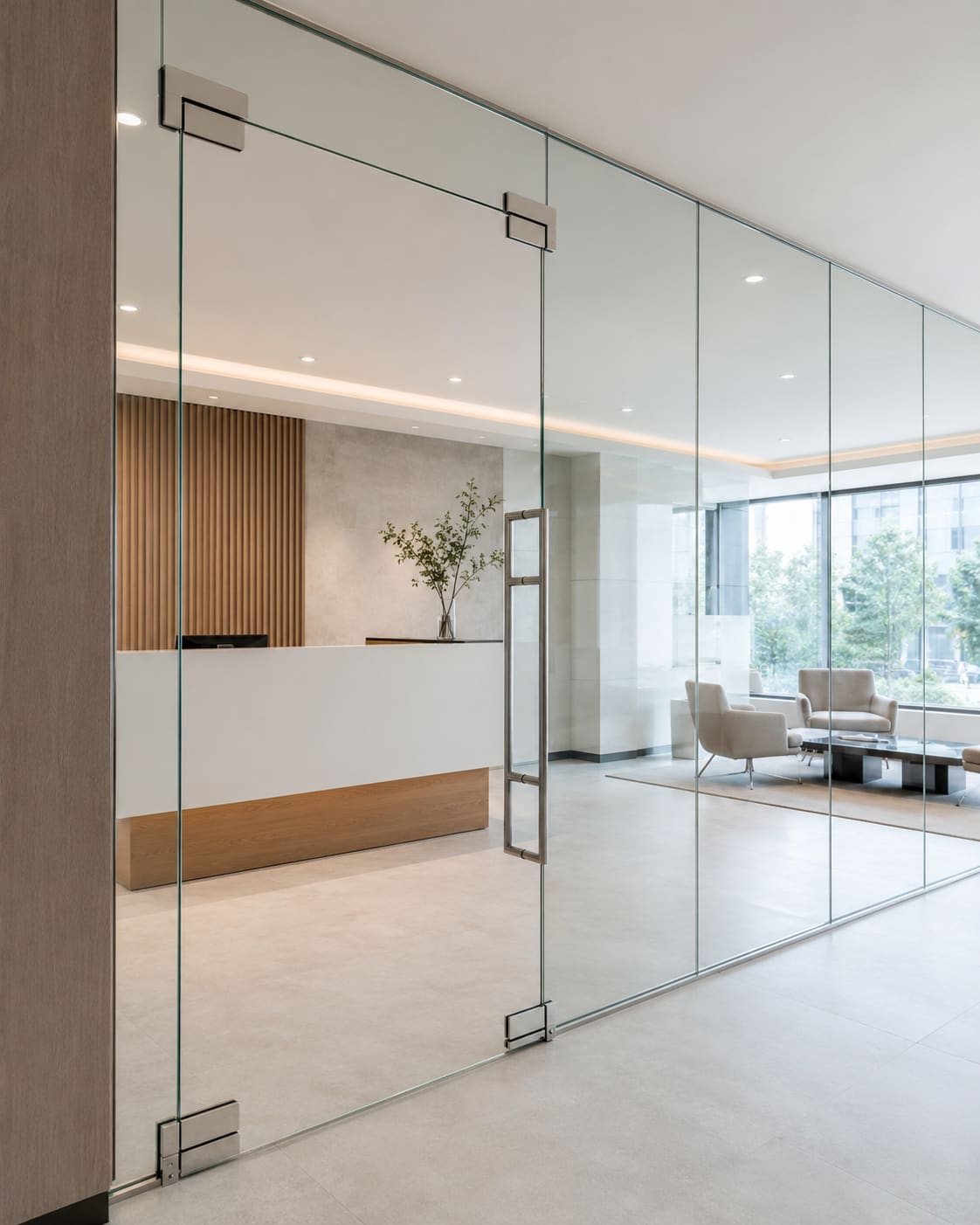
- Glass doors and the side panels next to doors, plus any full-height glazing a child could mistake for an open doorway and run into.
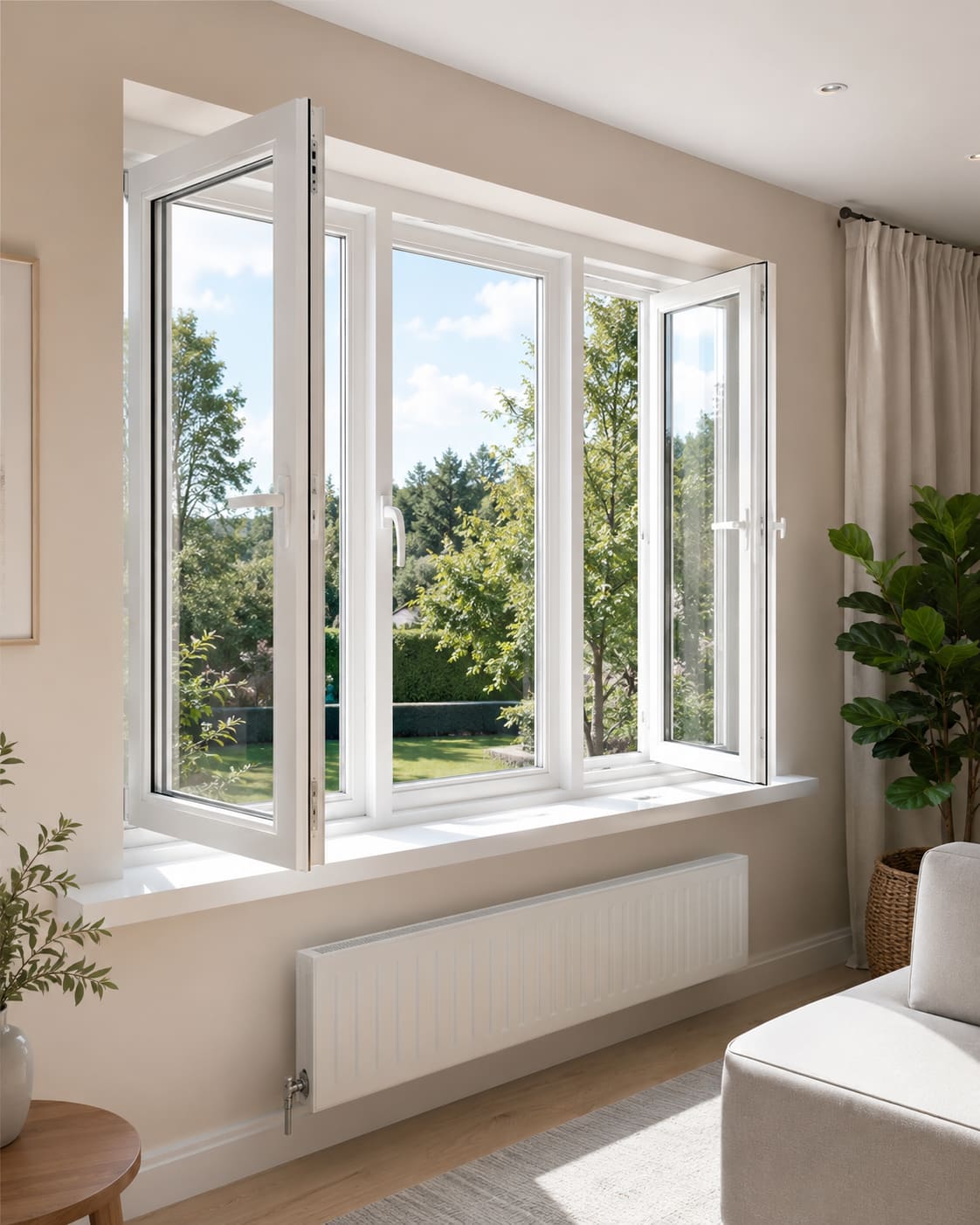
- Windows with a sill lower than about 500-800 mm from floor level, where toddlers can reach, climb or lean out.
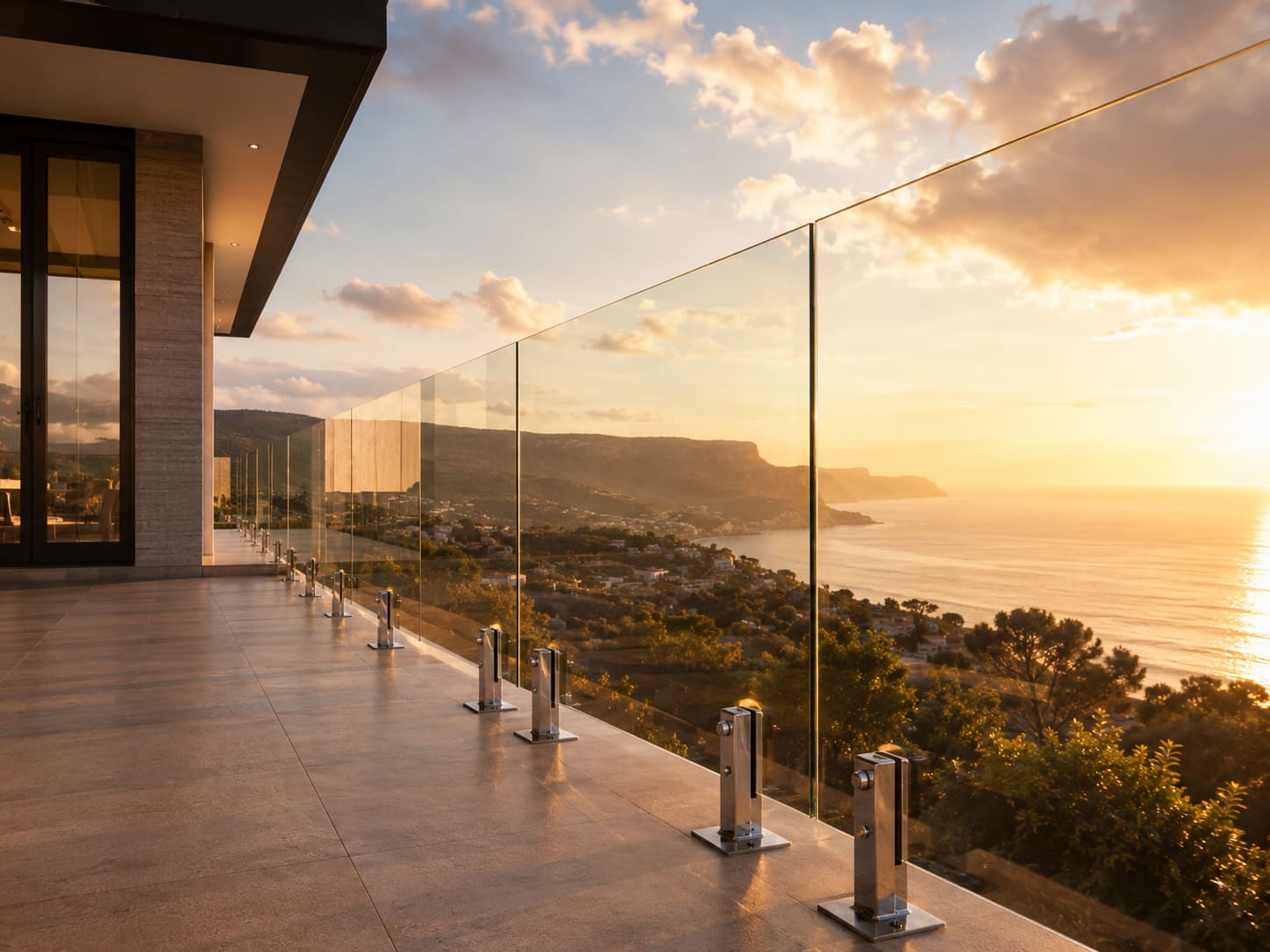
- Staircase, balcony and mezzanine railings acting as fall protection - the highest-consequence location in any home.
- Shower enclosures, bath screens and bathroom partitions, where wet floors and hard surfaces multiply the injury risk.
- Glass tabletops, shelves and low glass furniture positioned in play areas.
In apartments across Hyderabad and Secunderabad, the two spots we most often find under-specified are low-sill living-room windows in older builds and thin frameless balcony rails fixed only at the base. Both are prime candidates for an upgrade to laminated safety glass, and you can see how we detail these in our recent projects.
Recommended Thicknesses and Specifications
For residential child-safety applications, toughened glass is typically specified from 6 mm upward, with thickness rising as the pane grows and the load increases; laminated glass adds a PVB interlayer on top of the glass plies. Under-specifying thickness is a false economy - the few hundred rupees saved per pane are not worth the risk to a child, and an undersized rail can also flex enough to fail in a gust.
- Interior doors and shower screens: 8-10 mm toughened glass.
- Windows and fixed panels: 5-8 mm toughened, depending on span and wind load per IS 875 Part 3.
- Balcony and staircase railings: 10-12 mm toughened, or 11.52 mm (5+5) toughened-laminated for genuine fall protection.
- Glass tabletops: 10-12 mm toughened with polished, rounded edges.
- Railing height for child safety is generally kept at a minimum of 900-1100 mm, with no gap wide enough for a child to pass through or trap a head (commonly kept under 100 mm).
For high-rise balconies, always have the glass thickness and fixing verified against the local wind load rather than copied from a neighbour's flat. Edges matter too: every child-safety pane should have polished or ground edges, never raw cut edges, because a sharp arris is both a cut hazard and the weak point where toughened glass most often initiates failure.
Safe Hardware and Installation Details
Child safety glass is only as safe as the hardware that holds and controls it - the right fittings prevent the slamming, pinching and slipping that cause many everyday injuries around glass. A perfectly specified toughened door still hurts a small hand if it swings shut like a guillotine, so hardware selection is part of the safety design, not an afterthought.
- Glass doors: pair the pane with soft-close floor springs and closers so a heavy toughened door cannot slam on small fingers, and add finger-guard strips at the hinge edge.
- Door handles: choose smooth, rounded handles without sharp protrusions, and avoid mounting them at a small child's head height.
- Shower enclosures: use corrosion-resistant hinges and a firm seal so the screen cannot swing loose in a wet, slippery bathroom.
- Frameless railings: never rely on a single base clamp - use a properly engineered base channel or spigots sized for the glass, ideally with a continuous top handrail capping the glass edge.
- Sliding doors and wardrobes: quality sliding systems with anti-jump and soft-stop features stop panels derailing onto a child.
Installation quality decides whether these details actually work. Glass should sit on setting blocks with clearance around all edges so it is never pinched directly against metal or concrete, and every fixing should be torqued to the hardware maker's spec. Poor installation is the most common reason 'safety glass' still fails, so treat the fitting as carefully as the glass itself and lean on our services team where a barrier is load-bearing.
Retrofitting Existing Glass on a Budget
Existing annealed glass can be made meaningfully safer by applying a transparent safety/security film that holds broken fragments together, at roughly INR 60-200 per sq ft - a fast, low-cost interim measure where replacing the glass is not immediately practical. This is often the first step for renters, or for families who have just discovered ordinary glass in a risky spot and want protection this week rather than next month.
- Safety film (100-300 micron) bonds fragments so a cracked pane does not shower loose shards across the floor.
- Film improves fragment retention but does NOT give annealed glass the impact strength of toughened glass - a hard knock can still crack it.
- For true protection, replacing critical panes with toughened or laminated glass remains the recommended long-term solution.
- Corner guards, soft edge trims and door safety stops cheaply reduce pinch and impact injuries around glass doors and tables.
A sensible strategy for a family home is to film everything as an immediate stopgap, then replace the two or three highest-risk panes - typically the balcony rail and a low living-room window - with proper safety glass over the following months. If you are unsure which panes are already toughened, book a survey and we will tell you exactly what is safe and what needs upgrading; you can get a free quote for the whole audit at once.
Indian Standards, Costs and the Hyderabad Climate
Child-safe glazing in India is governed chiefly by IS 2553 (safety glass) alongside the NBC 2016, with wind loading checked to IS 875 Part 3 - important for high-rise balconies in cities like Hyderabad and Secunderabad. Knowing the standards protects you from being sold ordinary glass at a safety-glass price, a common trap for buyers who only compare rate cards.
- Toughened glass: roughly INR 90-180 per sq ft depending on thickness and finish (supply).
- Laminated safety glass: roughly INR 150-350 per sq ft depending on interlayer and number of plies.
- Safety film retrofit: roughly INR 60-200 per sq ft applied.
- A complete supply-and-fit toughened glass door with hardware typically runs into several thousand rupees per leaf, so budget the fittings alongside the glass.
- Always insist on the manufacturer's IS 2553 mark etched or labelled on toughened panes to confirm genuine safety glass.
Hyderabad's strong summer glare and heat make the upgrade doubly worthwhile: toughened low-E or laminated glass cuts heat and UV while adding safety. Across Telangana and Andhra Pradesh, laminated glass also reduces traffic noise and blocks over 99% of UV, protecting furnishings from fading in the harsh Deccan sun. That combination of injury prevention, comfort and lower energy bills often makes safety glass an easy decision for growing families, and it explains why we specify it as standard on glass doors for homes with young children.
Common Mistakes to Avoid
Most child-glass accidents trace back to a handful of avoidable errors, not to freak events. Knowing them in advance is the cheapest safety upgrade available, and every one below is something we routinely find during home surveys in Hyderabad.
- Using plain toughened glass in a fall-through barrier: when it fails there is nothing left in the frame, so railings need laminated or toughened-laminated glass.
- Assuming existing glass is toughened: many older flats have annealed glass in doors and low windows - always check for the IS 2553 mark.
- Drilling, cutting or grinding toughened glass on site: it cannot be modified after tempering and will shatter, so all holes and cut-outs must be made before toughening.
- Ignoring edge protection: raw cut edges cut skin and weaken toughened panes, so specify polished edges everywhere.
- Leaving large clear panes unmarked: add manifestation (frosted bands or decals) at a child's eye level so they do not run into 'invisible' full-height glass.
- Skimping on hardware: a soft-close closer and finger guards cost little but prevent the finger and slam injuries that clear glass alone cannot.
A Room-by-Room Child-Proofing Checklist
The fastest way to child-proof a home's glass is to walk through it room by room with one question in mind: could a child hit, fall against, or fall through this pane? Use the checklist below as a starting audit before you call anyone for a quote.
- Entrance and living room: full-height glass doors and low windows upgraded to toughened, side panels included.
- Balconies and staircases: laminated or toughened-laminated railings at 900-1100 mm height with gaps under 100 mm.
- Bathrooms: toughened shower screens with secure, non-slam hardware and a firm seal.
- Bedrooms and nursery: no low glass furniture or glass tabletops in the play zone; film any existing annealed windows.
- Kitchen and utility: toughened panes near work areas, plus soft-close fittings on any glass cabinetry.
- Throughout: rounded-edge tabletops, corner guards, manifestation decals and finger-guards on glass doors.
Hakimi Aluminium and Glass supplies and installs toughened and laminated child-safety glazing - with matching Taiton, Enox and Ozone hardware - for homes across Hyderabad, Secunderabad and the wider Telangana and Andhra Pradesh region. Walk the checklist, mark the risky panes, and get a free quote for a room-by-room specification tailored to your family.