Daylight factor (DF) is the ratio, expressed as a percentage, of the illuminance at a point indoors to the illuminance available simultaneously from an unobstructed standard overcast sky outdoors - and glazing is the single biggest lever that sets it. A space with a 2 percent average daylight factor receives, at any instant, 2 percent of the outdoor daylight at the reference plane, so if the overcast sky delivers 10,000 lux outside, the room averages about 200 lux from daylight alone. Because DF is a ratio and not an absolute lux figure, it stays constant regardless of how bright the sky is, which makes daylight factor glazing a stable, comparable metric for judging one facade scheme against another.
Glazing governs the daylight factor because DF is driven by glazing area, glass visible light transmittance, the maintenance (dirt) factor and the angle of sky each window can see. In a hot region such as Hyderabad and Secunderabad the real challenge is admitting generous daylight while rejecting solar heat, which is why modern daylighting leans on high-transmittance, low-heat-gain coated glass and shading rather than simply cutting bigger holes in the wall. Whether you are planning an office glass facade or a top-lit atrium, the physics of DF decides how the finished building will actually feel to occupy.
This guide defines the metric, sets target ranges by room type, explains how glass, coatings and Indian standards shape a well-daylit building, and gives realistic Telangana costs. If you want a scheme sized for your own site, you can get a free quote or browse our services for facades, skylights and structural glazing across Hyderabad and Andhra Pradesh.
How Daylight Factor Is Defined and Calculated
Daylight factor equals the internal daylight illuminance divided by the external unobstructed horizontal illuminance under a CIE standard overcast sky, multiplied by 100. It is made up of three components that add together at any point in a room:
- Sky Component (SC): light reaching the point directly from the visible patch of sky through the glazing - usually the largest contributor near windows.
- Externally Reflected Component (ERC): light reflected off external surfaces such as adjacent buildings, paving or the ground before it enters.
- Internally Reflected Component (IRC): light that enters and then bounces off internal walls, ceiling and floor - the reason light-coloured finishes matter so much.
The average daylight factor for a room can be estimated with the BRE formula DF = (T x A x theta) / (Area_total x (1 - R^2)), where T is glass transmittance, A is net glazing area, theta is the visible sky angle in degrees, Area_total is total internal surface area, and R is the area-weighted average internal reflectance.
A quick worked example: a 20 sq m Secunderabad office with 4 sq m of clear glazing (T about 0.85), a 70 degree sky angle, 90 sq m of internal surface and R of 0.5 gives a DF of roughly 3.5 percent - comfortably daylit.
Because the metric assumes a uniform overcast sky, it is deliberately conservative for a sunny climate like Hyderabad, where clear-sky illuminance is far higher, so real daylight availability usually exceeds the DF prediction. That built-in safety margin is one reason DF remains a trusted first-pass design tool even in the age of hourly climate-based simulation.
Target Daylight Factor Ranges by Room Type
An average daylight factor of about 2 percent is the accepted minimum for a space to be considered usefully daylit, with higher targets for tasks that need more light. Practical design ranges are:
- Below 1 percent: the space looks gloomy and needs electric light through most of the working day.
- 1 to 2 percent: partially daylit; supplementary lighting usually required.
- 2 to 5 percent: well daylit; electric lighting needed only intermittently. Living rooms and general offices target around 2 percent, kitchens around 2 percent, and offices, classrooms and studios 2.5 to 5 percent.
- Above 5 percent: strongly daylit and bright, but glare and, in Hyderabad, solar heat gain must be actively controlled with shading and coatings.
Uniformity also matters: a DF uniformity ratio (minimum divided by average) of at least 0.4 across the working plane avoids the harsh bright-to-dark contrast that forces occupants to draw blinds and switch on lights anyway - defeating the whole purpose of the glazing.
For the deep floor plates common in Hyderabad IT offices, a single wall of windows rarely lifts the back of the room above 1 percent, which is where clerestories, light shelves and rooflights earn their place. As a rule of thumb, useful side-lit daylight penetrates only about 1.5 to 2 times the window head height into the room, so anything beyond roughly 4-5 metres from the glass needs top-lighting or a second facade.
Glazing Properties That Control Daylight
Visible light transmittance (VLT) is the fraction of visible light a glazing lets through and is the glass property that most directly sets daylight factor. Typical values:
- Clear float glass: about 88-90 percent VLT (single glazing).
- Tinted (bronze, grey, green) glass: roughly 40-75 percent VLT depending on colour and thickness.
- High-performance low-E and solar-control coated glass: about 40-70 percent VLT while cutting solar heat sharply.
- Double glazed unit (two clear panes): around 78-80 percent VLT because each glass surface reflects a little light.
The complementary property is the solar heat gain coefficient (SHGC): the fraction of solar heat admitted. A high light-to-solar-gain ratio (LSG = VLT / SHGC) above about 1.25 marks glass that delivers daylight without excess heat - exactly what a Hyderabad or Vijayawada building needs. Premium double-silver and triple-silver coatings push LSG well past 1.8.
Glazing U-value (thermal transmittance) governs conductive heat flow: single glazing is around 5.7 W/m2K, a standard double glazed unit around 2.7-3.0 W/m2K, and low-E DGUs can reach 1.6-1.8 W/m2K. In an air-conditioned Telangana building, a lower U-value keeps the inner pane cooler, reduces radiant discomfort near the glass and trims the cooling load.
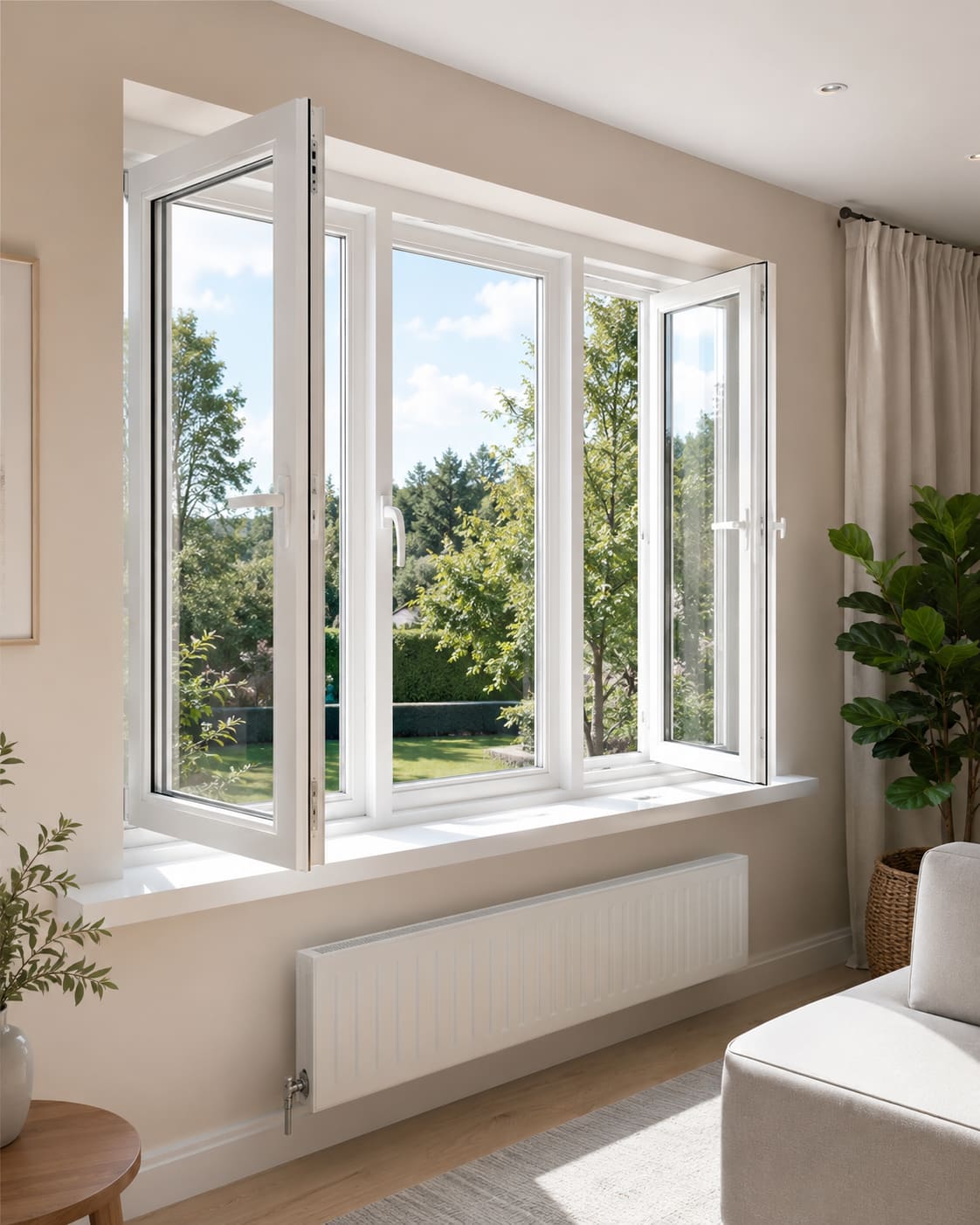
The glass is only half the system - the frame, spacers and hardware matter too. Slim thermally broken aluminium sections maximise the glass-to-frame ratio so more of the opening actually transmits daylight, and warm-edge spacers reduce condensation and edge heat loss on DGUs.
Glass Types and Systems for Daylighting
Choosing the right glass build-up is a balance of daylight, heat, acoustics and budget. Common daylighting options used across Telangana and Andhra Pradesh:
- Clear toughened glass: highest VLT and cheapest, best where solar gain is shaded or on north facades.
- Single-silver low-E coated glass: high VLT with moderate heat rejection, a strong all-round choice for most commercial elevations.
- Double or triple silver solar-control low-E: keeps VLT respectable while dropping SHGC below 0.30 for demanding west-facing glass.
- Insulated glass units (DGUs): pair a coated outer pane with a clear inner pane for the best balance of daylight, U-value and acoustics.
- Laminated glass: mandatory over head height for safety, and useful for cutting UV fade and noise on busy Hyderabad roads.
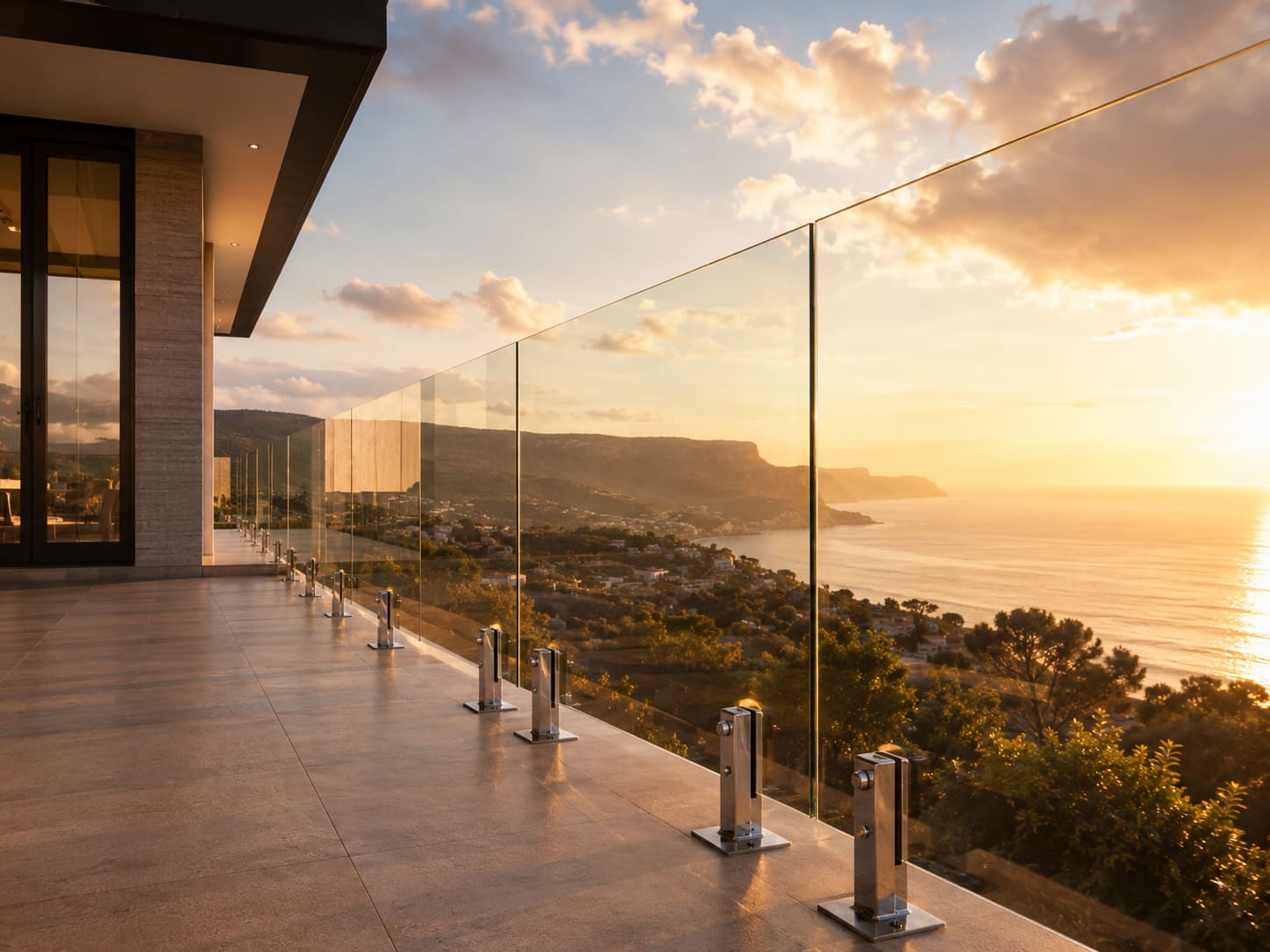
Frameless and minimal-frame systems admit the most light. A well-detailed structural glazing facade holds glass with almost no visible frame, so more of the elevation is working daylight aperture rather than opaque mullion. You can see how this reads in practice across our recent projects, where large clear spans and slim sightlines do the heavy lifting.
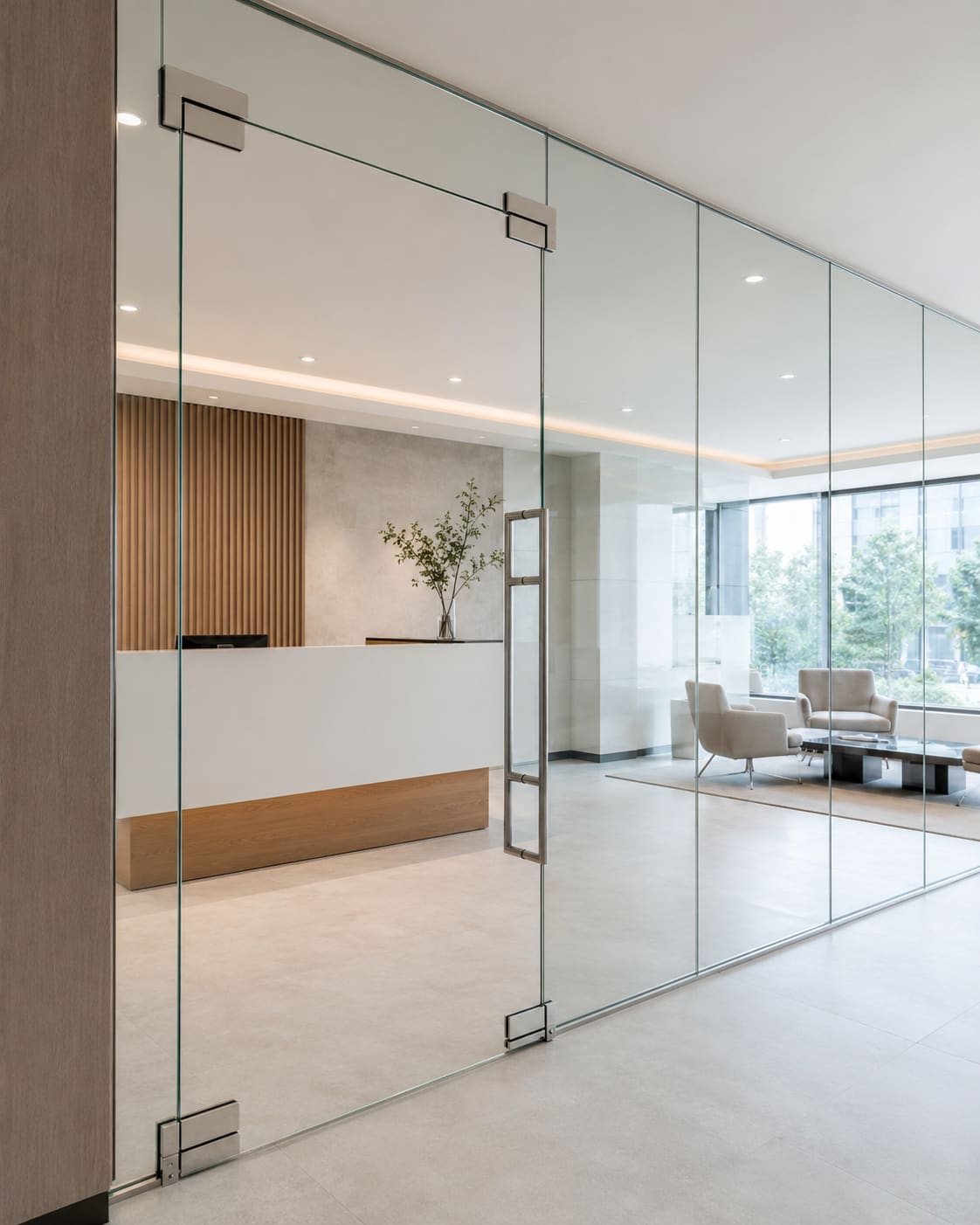
For daylit interiors, glass partitions let borrowed light travel from the facade into meeting rooms and corridors instead of being walled off - a low-cost way to raise the effective daylight factor of internal spaces without adding a single square foot of external glazing.
Standards, Codes and Safety in India
Daylighting and glazing in India are governed chiefly by the National Building Code of India (NBC) 2016 and the Energy Conservation Building Code (ECBC), which set window-to-wall ratio, VLT and SHGC guidance to balance daylight with energy use. Key references:
- ECBC: prescribes maximum SHGC and minimum VLT by window-to-wall ratio and climate zone, and rewards daylighting controls that dim electric lighting when daylight is sufficient.
- NBC 2016 Part 8 (Building Services): covers lighting and ventilation, including daylighting provisions and recommended illuminance levels for different occupancies.
- IS 2553: specification for safety (toughened) glass, required for large facade panes, doors and low-level glazing.
- Laminated glass is the standard for skylights and overhead glazing, so that if broken the fragments are retained by the interlayer rather than falling.
- Structural glazing sealants are validated to ASTM C1401 (guide for structural sealant glazing) using approved structural silicone with documented adhesion tests.
BEE star ratings and Bureau of Indian Standards marks help specifiers select rated, compliant glass and units - worth insisting on when you compare quotes from different Hyderabad suppliers, because uncertified imported glass can under-deliver on both VLT and SHGC. Always ask for the manufacturer's performance data sheet naming the exact coating, not just a generic 'reflective glass' label.
Designing Daylight for the Hyderabad and Secunderabad Climate
In Hyderabad's composite-to-hot climate, the goal is to maximise daylight factor while minimising cooling load, which favours high-VLT, low-SHGC coated glass combined with shading. Practical strategies:
- Prefer solar-control low-E glass with an LSG above 1.25 so daylight enters but heat is rejected.
- Use external shading, fins and overhangs on south and west facades to block high-angle summer sun while preserving diffuse daylight.
- Place daylight openings high on the wall (clerestories) to push light deeper into the room and improve uniformity.
- Use light shelves and high-reflectance, light-coloured ceilings to raise the internally reflected component.
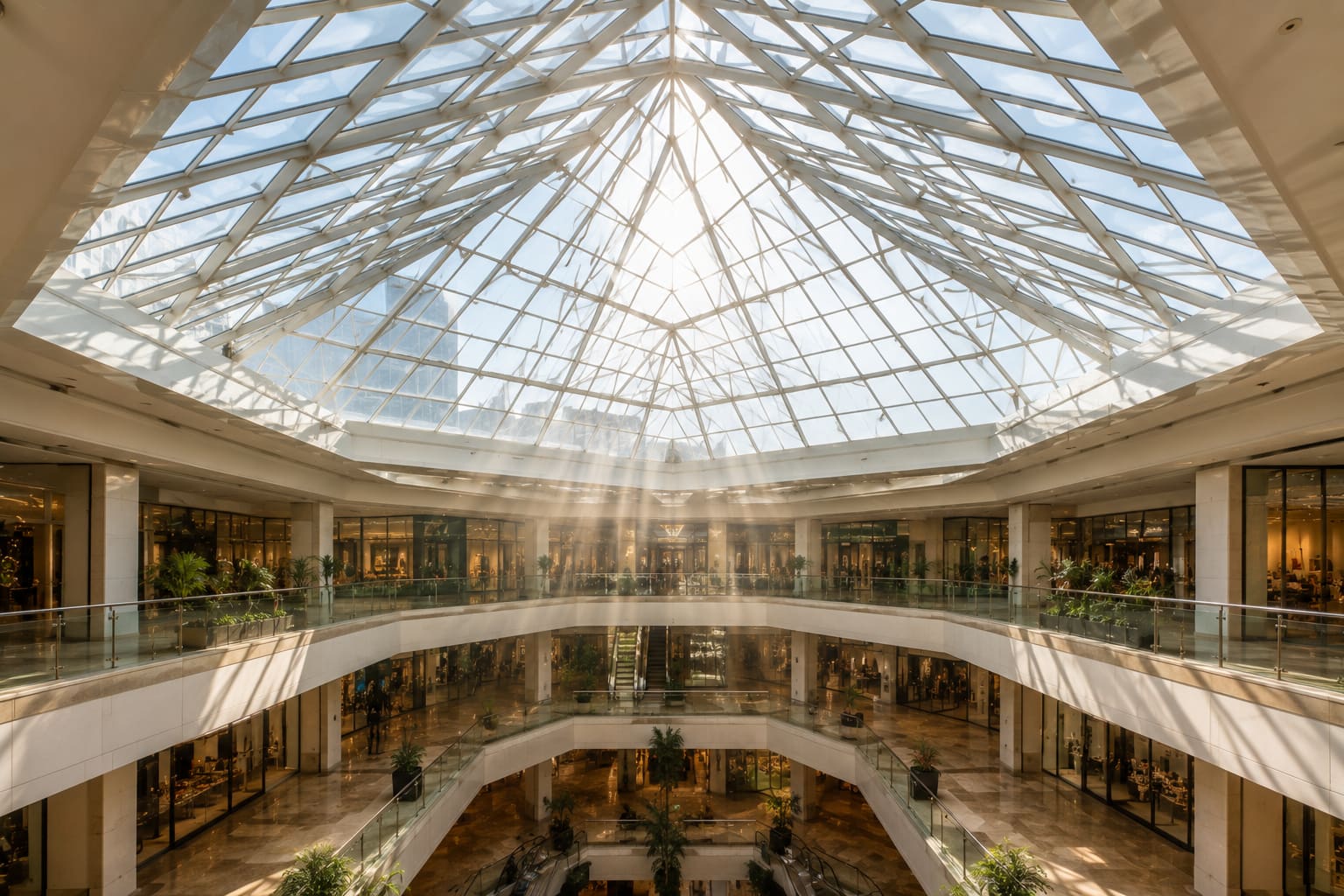
- Add roof skylights or roof monitors for top-lit interiors, using laminated safety glass and a controlled glazing area (typically 3-8 percent of floor area) to avoid overheating.
A well-designed skylight can lift the average daylight factor of a deep hall from under 1 percent to well over 4 percent, transforming warehouses, showrooms and atriums across Telangana without a huge electricity bill. On the vertical facade, a considered glass facade with the right coating and orientation-specific shading does the same for offices and retail.
Orientation is decisive in this latitude. North-facing glazing gives soft, glare-free daylight almost for free and can carry high VLT; east and especially west glass gets low, hard morning and evening sun that external shading struggles to block, so it should use the lowest-SHGC glass and, where possible, be reduced in area.
Daylighting Glazing Costs in Hyderabad and Telangana (2026)
Realistic 2026 budget figures help set expectations before you commit to a daylighting scheme. Approximate installed rates in the Hyderabad and Secunderabad market:
- Clear toughened glass (single, 10-12 mm): about INR 250-400 per sq ft.
- Solar-control low-E coated single glass: about INR 400-700 per sq ft.
- Low-E double glazed units (DGUs): about INR 750-1,600 per sq ft depending on coating and spacer.
- Structural glazing facade (supply and install): about INR 550-1,200 per sq ft.
- Skylights with laminated glass and aluminium framing: about INR 900-2,200 per sq ft depending on span and profile.
Aluminium framing and profiles add cost but pay back in slim sightlines and durability, and thermally broken sections further reduce heat transfer at the frame. The higher upfront cost of high-performance glass is usually recovered through lower lighting and air-conditioning bills within a few years, especially for large commercial facades that run cooling most of the year.
For a firm number on your project, get a free quote with your elevation drawings and orientation, and our team will size the glass specification, VLT and SHGC to hit your target daylight factor for the least lifetime cost.
Common Daylighting Mistakes to Avoid
Even generous glazing can disappoint if the details are wrong. The mistakes we see most often on Hyderabad projects:
- Chasing VLT alone and ignoring SHGC, which produces bright but uncomfortably hot rooms and runaway cooling bills.
- Oversized west-facing glass with no external shading, guaranteeing late-afternoon glare and heat regardless of coating.
- Dark internal finishes that swallow the internally reflected component, so a good facade still yields a gloomy back-of-room.
- Treating a single deep glazed wall as enough for a 10-metre-deep floor plate instead of adding clerestories or rooflights.
- Specifying 'reflective' glass by name only, with no VLT, SHGC or U-value data - making performance impossible to verify.
- Forgetting the maintenance (dirt) factor: unwashed glass and dusty Telangana facades can lose 10-20 percent of their VLT, quietly dragging the daylight factor down.
Avoiding these is mostly a matter of specifying glass to measured targets and pairing it with shading, light-coloured interiors and, where the plan is deep, a top-lighting strategy - exactly the workflow a good glazing partner should walk you through before a single pane is ordered.