Ordinary window glass blocks nearly all UVB rays (280-315 nm) but lets 50-75% of longer-wave UVA rays (315-400 nm) pass through, so plain glass gives only partial UV protection. To block UV comprehensively you need laminated glass, which stops up to 99% of total UV, or a UV-absorbing spectrally selective coated glass. This single distinction between UVA and UVB is the fact behind the common half-truth that "glass blocks UV," and it decides whether your interiors stay protected or slowly fade.
The reason is chemical, not mechanical: soda-lime float glass naturally absorbs high-energy UVB, but it is largely transparent to lower-energy UVA. Laminated glass adds a polyvinyl butyral (PVB) or EVA interlayer loaded with UV absorbers, cutting UVA as well as UVB. Low-E and solar-control coatings do the same job with a microscopic metallic layer. In structural glass facade work and windows, this difference decides whether furnishings fade, interiors overheat, and occupants sit exposed to UV straight through the glazing.
For Hyderabad and Secunderabad, where the clear-sky UV Index routinely reaches 10-12 through the March-June summer across Telangana and Andhra Pradesh, this is not academic. Choosing the correct glass and interlayer up front is far cheaper than re-glazing later, and it lets you get a free quote against real UV, SHGC and U-value targets rather than vague "UV protected" marketing.
How Much UV Does Each Glass Type Block?
UV rejection varies widely by glass construction, from about 25% for thin clear glass to 99% for a laminated unit. The figures below are typical UV transmittance values measured over 280-380 nm per ISO 9050, the same band quoted on manufacturer spec sheets:
- Clear annealed / float glass (3-6 mm): blocks ~100% UVB, transmits ~50-75% UVA, giving only ~25-50% total UV block
- Tinted / heat-absorbing float glass: ~55-75% total UV block depending on colour and thickness
- Toughened (tempered) glass: same UV profile as annealed glass of equal composition (~25-50% total UV block)
- Low-E (low-emissivity) coated glass: ~84-95% total UV block
- Laminated glass (PVB interlayer): up to 99% total UV block, including the stubborn UVA band
- Double-glazed IGU with Low-E + laminate: 98-99%+ UV block combined with much lower U-values
The pattern is clear: base glass composition and thickness barely move UV rejection, but adding an interlayer or a coating transforms it. That is why specifiers for aluminium and glass facades rarely rely on monolithic clear glass when UV control matters, and why a spec sheet quoting one big "UV block" number is worthless unless it names the glass build behind it.
Why Plain Glass Stops UVB But Not UVA
Plain glass stops UVB because soda-lime glass strongly absorbs wavelengths below about 315 nm, while UVA passes through because its lower photon energy is not absorbed by the base material. UVB is the higher-energy band responsible for sunburn; UVA penetrates deeper and is the primary cause of fading in fabrics, artwork, timber and flooring.
This is why you cannot get a sunburn through a closed car or office window under normal glass, yet upholstery near that window still fades noticeably over a few Hyderabad summers. Blocking UVA requires an added absorber, which is exactly what a laminated interlayer or a spectrally selective coating provides.
Glass thickness has only a modest effect: doubling thickness from 3 mm to 6 mm raises UV absorption slightly, but it never turns clear float glass into a full UV barrier. Green and bronze body tints do a little better because the colouring oxides absorb more broadly across the spectrum, but they still leak significant UVA and are not a substitute for a laminate or coating.
The practical takeaway is that "my windows block UV" is true for skin-burning UVB and false for fade-causing UVA unless the glass has been deliberately engineered with an interlayer or coating. If protecting interiors is the goal, the base glass choice is almost irrelevant; what you add to it is everything.
Laminated and Coated Glass: The Near-Total UV Solutions
Laminated glass is the most effective everyday UV barrier, blocking up to 99% of UV because the PVB or EVA interlayer is loaded with UV-absorbing compounds. This is the same technology used in car windshields and museum display cases, and it is the default recommendation whenever furnishings, art or retail merchandise sit behind the glass.
- Laminated safety glass in India is specified to IS 2553, with the interlayer permanently bonded between two glass plies
- Low-E coatings reject UV and infrared while keeping high visible light transmittance (VLT), improving UV and solar-heat performance at once
- Solar-control and spectrally selective glasses report UV, VLT, SHGC and U-value together on the spec sheet under EN 410 / ISO 9050
- Retrofit UV films can lift an existing clear pane to 99% UV rejection without full re-glazing, useful for occupied offices and shops
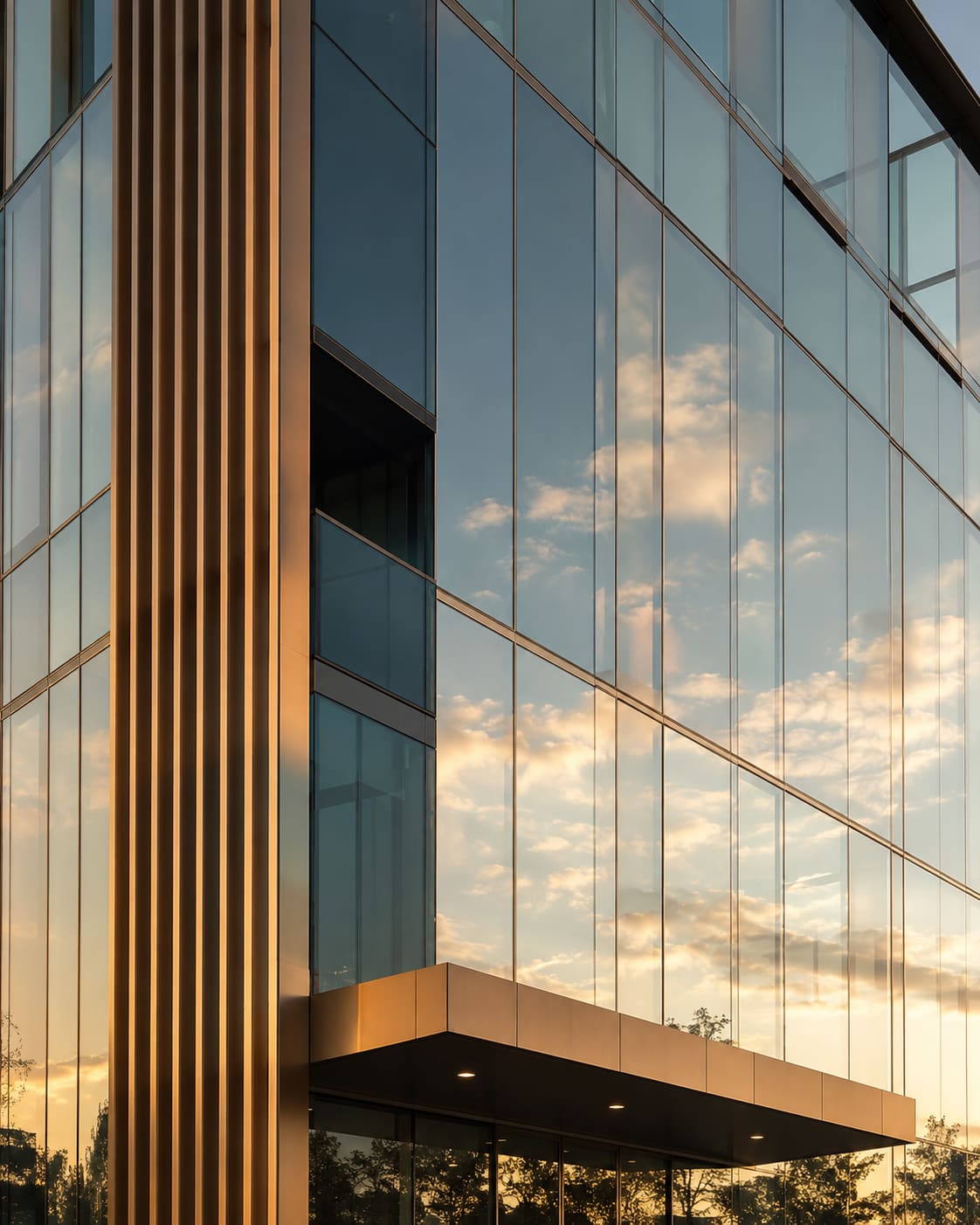
For maximum protection, a double-glazed insulating unit combining a Low-E coating with a laminated pane delivers 98-99%+ UV rejection plus genuine thermal insulation. This build is common in premium toughened and laminated glass work for corporate lobbies and showrooms, and you can see how it looks in finished elevations across our recent projects. Laminated glass also brings safety and acoustic benefits, since the interlayer holds shards together on breakage and damps external noise.
UV Protection vs. Heat: Do Not Confuse the Two
Blocking UV does not automatically block heat; UV is only about 3-5% of incoming solar energy, while most heat arrives as visible light and near-infrared. A glass can block 99% of UV yet still let substantial heat through if its Solar Heat Gain Coefficient (SHGC) is high, which is a common and costly misunderstanding on Hyderabad projects.
- UV block: governs fading of interiors and UV skin exposure
- SHGC (0 to 1): governs how much solar heat enters; lower is cooler
- U-value (W/m2K): governs conductive heat flow; lower insulates better
- VLT (%): governs daylight levels and glare
For Telangana's hot climate, the Energy Conservation Building Code (ECBC) and BEE star-rated glazing push designers toward low-SHGC Low-E glass that controls heat and UV together, not UV alone. A laminated pane with an ordinary interlayer might read 99% UV but SHGC 0.6, meaning a west facade still cooks in the afternoon. Specify UV and SHGC as a pair, then verify both on the spec sheet before ordering. Getting this wrong is the single most expensive mistake we see: buildings that solved fading but never touched their cooling load.
Where UV-Blocking Glass Matters Most in Hyderabad Buildings
UV-blocking glass earns its cost fastest on west- and south-facing elevations, retail frontages, and anywhere valuable interiors sit in direct sun. The worst fading in Hyderabad and Secunderabad interiors almost always traces back to unprotected UVA on these orientations, where the afternoon sun is at its harshest.
- Retail and showroom frontages: merchandise, textiles and packaging fade fast under UVA; laminated glass protects stock and brand appearance
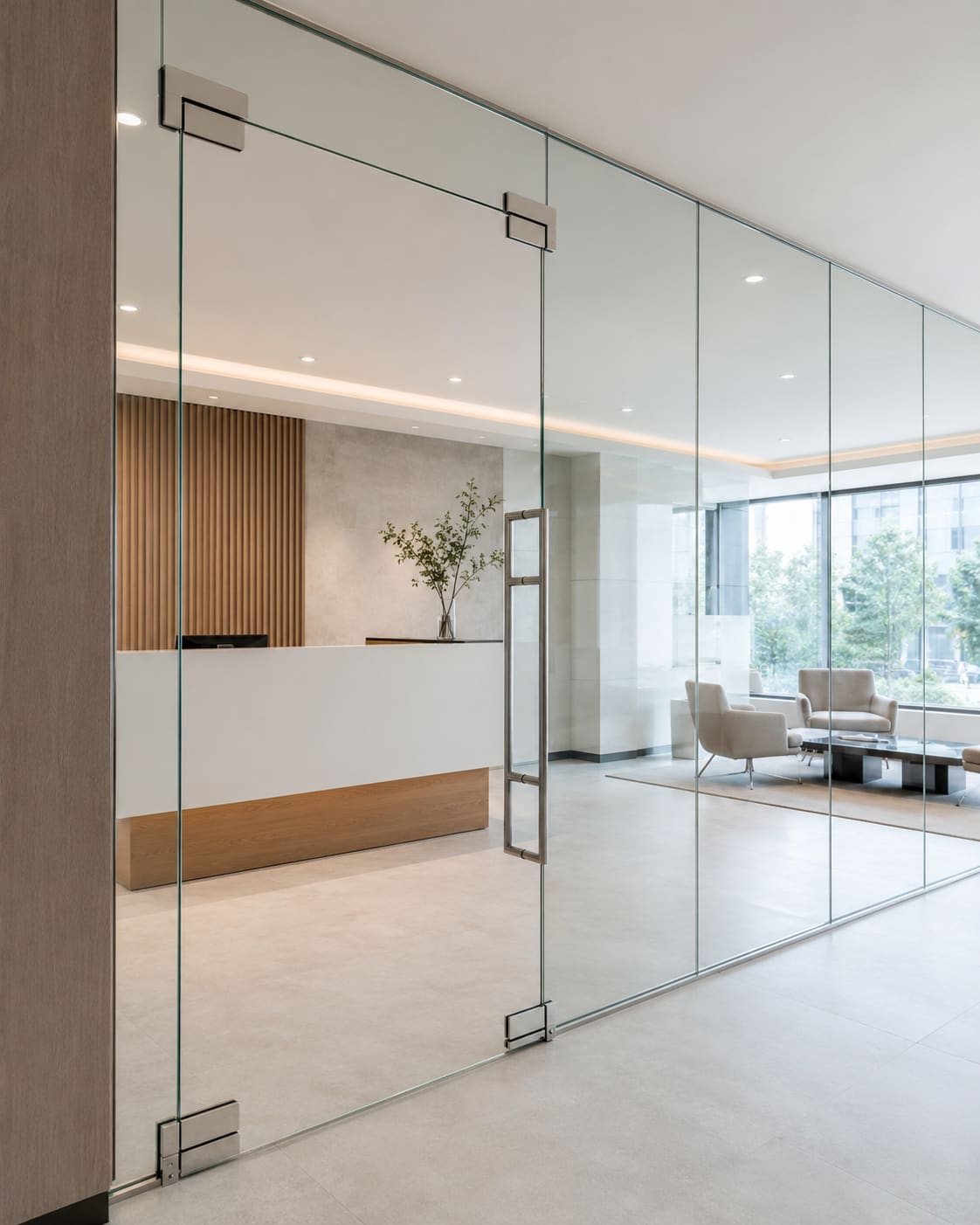
- Corporate lobbies and cabins: timber veneers, artwork and upholstery hold colour far longer behind laminated or Low-E units
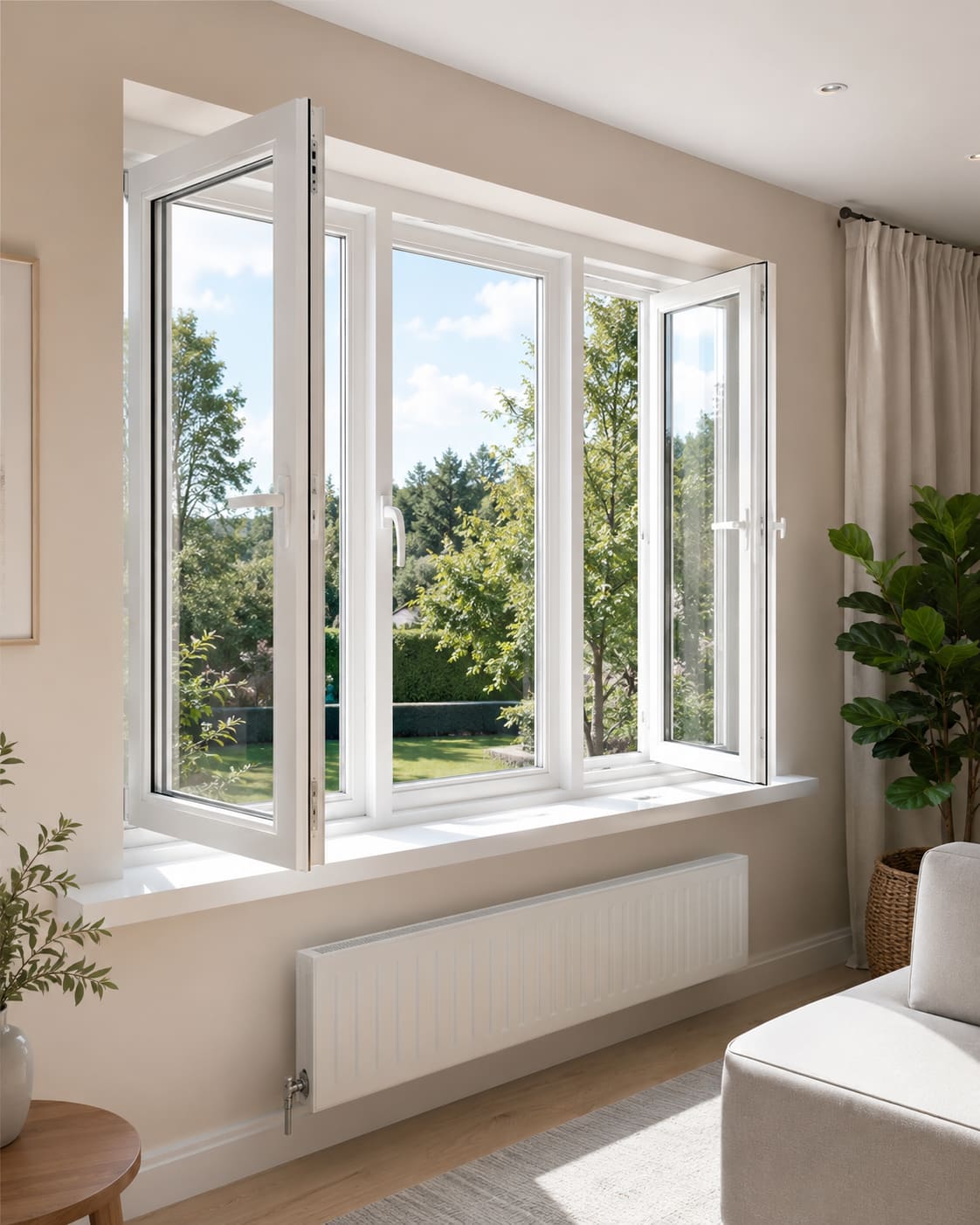
- Homes with large windows: hardwood floors, curtains and sofas near sliding windows benefit most, especially on the afternoon side
- Bathrooms and spas: shower screens are usually clear toughened glass, but where glazing faces the sun a UV film or laminate helps protect fittings and finishes
- Museums, clinics and pharmacies: UV degrades artefacts, samples and medicines, making a 99% UV laminate close to mandatory
Because the glass is only half the assembly, matching it to the right hardware and framing keeps the finished opening as durable as the UV rating promises. Explore the full range on our services page, or share your elevations so we can recommend the exact build for each orientation rather than one glass for the whole envelope.
How to Choose the Right UV Glass
Choose UV glass by defining the problem first, then matching the glass build to it, because there is no single "best" UV glass for every situation. Work through these questions before you compare products:
- Are you protecting interiors from fading, cooling a hot elevation, insulating a room, or all three? Fading needs UV block; heat needs low SHGC; comfort needs low U-value.
- Which way does the glazing face? North elevations rarely need heavy solar control; west and south almost always do.
- Is this new glazing or an occupied space? New work suits laminated or coated glass; occupied offices often suit a retrofit UV film.
- Do you need safety or acoustic performance too? If so, laminated glass covers UV, safety and noise in one product.
- What is your budget per square foot, and does it include framing, hardware and installation, not just the glass rate?
A quick rule of thumb for Telangana and Andhra Pradesh projects: for fade protection alone, laminated glass at up to 99% UV is the value pick; for heat plus UV on sun-facing walls, a Low-E or spectrally selective coating on laminate is the stronger choice; and for occupied interiors where re-glazing is disruptive, a quality UV film delivers most of the benefit at a fraction of the cost.
Standards and Specifications to Check Before You Buy
Always ask for the measured UV transmittance value on the manufacturer's spec sheet rather than relying on "UV protected" marketing claims. A number tied to a test standard is verifiable; a slogan is not. Key references applicable in India and globally:
- ISO 9050 and EN 410: the methods for measuring UV transmittance, VLT, solar factor and SHGC of glazing
- IS 2553: Indian standard for safety glazing, covering toughened and laminated safety glass
- IS 14900: specification for transparent float glass
- National Building Code of India (NBC) 2016: glazing, safety and facade provisions
- ECBC and BEE star ratings: energy-performance benchmarks that bundle UV, SHGC and U-value
When you compare quotes, insist the UV figure is stated over 280-380 nm and cross-check that the same document lists SHGC and U-value. A reputable supplier will hand this over without hesitation; if a vendor cannot, treat the UV claim as unproven and move on. This one habit separates a facade that performs from one that merely looked good on a brochure.
What UV-Blocking Glass Costs in Hyderabad (Indicative INR)
As a rough 2026 guide for Hyderabad and Secunderabad, expect to pay a clear premium for real UV protection over plain glass, but the fade and comfort savings usually repay it. Prices vary with brand, thickness, size and coating, so treat these as planning figures only:
- Clear toughened glass (8-12 mm): roughly INR 130-260 per sq ft supplied
- Laminated glass (6.38-11.52 mm, clear PVB): roughly INR 180-400 per sq ft, blocking up to 99% UV
- Low-E / solar-control coated glass: roughly INR 250-550 per sq ft depending on coating grade
- Double-glazed Low-E + laminated IGU: roughly INR 500-1,000+ per sq ft for the top UV and thermal spec
- Retrofit UV / solar film on existing glazing: roughly INR 90-250 per sq ft installed
Add framing, hardware and installation on top of the glass rate. For a full facade or shopfront, the smart move is to fix a target UV percentage and SHGC first, then build the glass and aluminium facade to hit it. Weigh the cost against what fading actually replaces: re-upholstering a showroom, refinishing a hardwood floor or reprinting faded stock often exceeds the glass upgrade within a couple of Hyderabad summers.
How Hakimi Aluminium and Glass Specifies UV Glass
Hakimi Aluminium and Glass supplies and installs laminated, Low-E and toughened glazing across Hyderabad, Secunderabad and wider Telangana and Andhra Pradesh, matching the UV, SHGC and U-value figures to each facade's orientation and code requirements. We start from the problem, not the product: are you protecting merchandise, cooling a west elevation, insulating a home, or all three?
- For fade protection alone, a laminated pane at up to 99% UV is usually the value pick
- For heat and UV together on sun-facing elevations, a Low-E or spectrally selective coating on laminate is the stronger choice
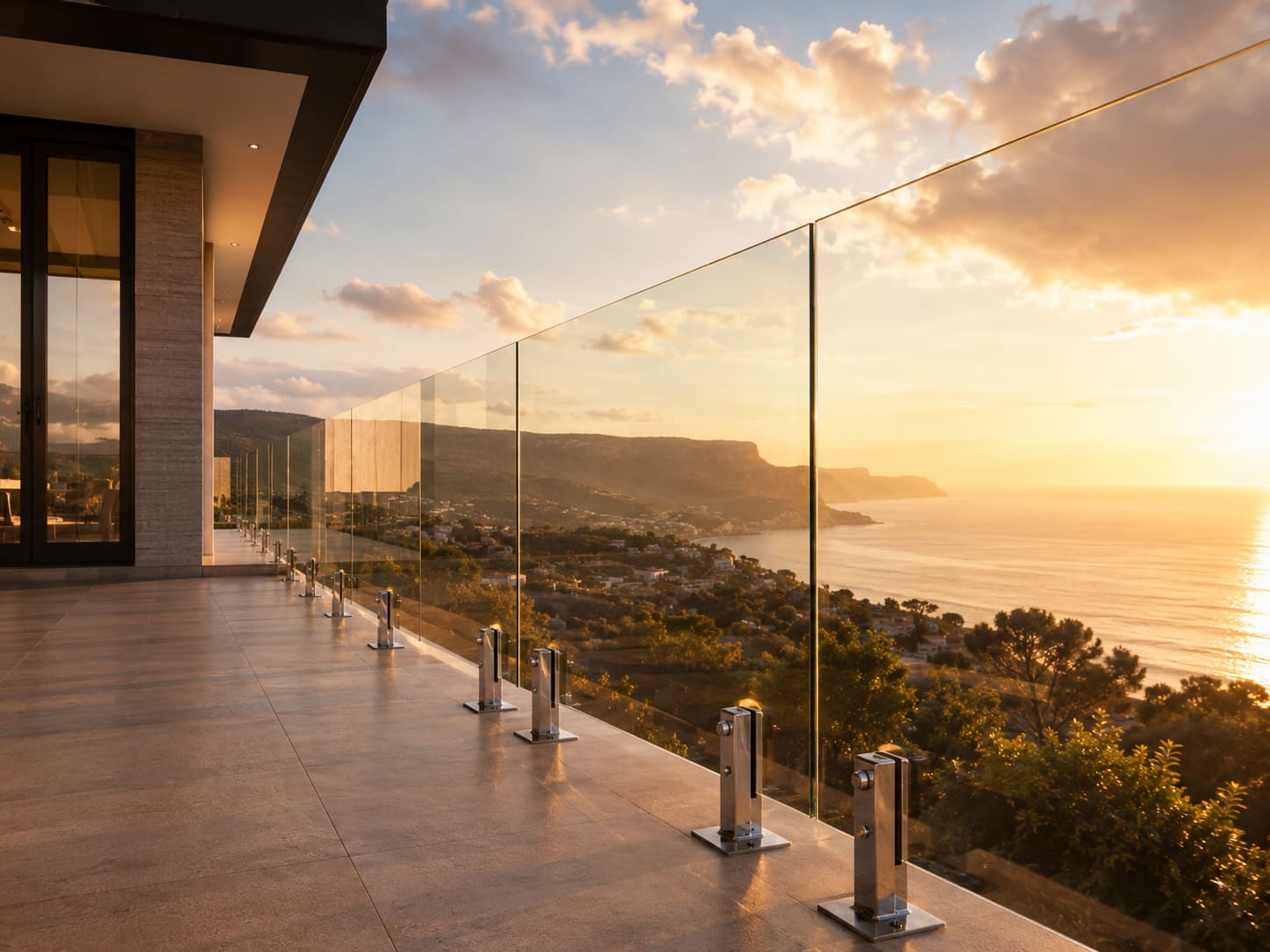
- For frameless and point-fixed designs, we integrate the glass with the right structural fittings, patch sets and matched hardware from trusted brands
Because we deal in both the glass and the hardware, we can quote the complete opening, avoid mismatched components, and stand behind the UV number on the spec sheet. If you are weighing options for a home, office or shopfront, share your elevations and orientations and we will recommend the exact glass build, standard reference and indicative INR cost, then get a free quote that spells out UV, SHGC and U-value in black and white.