The right glass thickness depends on the job: 5-6mm for framed windows, 8-10mm for showers and partitions, 10-12mm toughened for frameless doors and glass railings, and 13.52-19mm laminated for canopies, fins and structural facades. Get it wrong and the cost is real. Order 4mm where you needed 12mm and a shower door becomes a hazard; order 12mm where 6mm would do and you have paid double for a window that a lighter frame could never carry safely. This glass thickness guide gives you the correct mm for every common application, matched to the right hardware and to realistic 2026 prices.
It is written for actual projects across Hyderabad, Secunderabad and the wider Telangana and Andhra Pradesh market. Glass in India is sold in standard nominal thicknesses of 4, 5, 6, 8, 10, 12, 15 and 19mm, and thicker is not automatically better. Thicker glass is heavier, costlier and needs stronger framing, hinges and fixings. What actually decides the correct thickness is the span of the panel, the load it carries, the wind exposure, and whether human safety is involved. Those four factors matter far more than a rule of thumb.
Below we break it down application by application, pair each thickness with the correct fittings, and give indicative INR figures so you can specify with confidence. When you are ready to move from planning to fabrication, our team can size, toughen and install every option here. You can get a free quote with your openings and we will spec the glass and the hardware together, or browse our recent projects to see the same thicknesses installed across the city.
Quick reference: which glass thickness for what
Use this as a fast lookup before you get into the detail. These are the thicknesses we specify most often for residential and commercial work across the Hyderabad and Secunderabad region, and they cover the large majority of real openings.
- 4mm to 5mm: small windows, glazed cabinet doors, picture frames and mirrors
- 6mm: standard windows, sliding window shutters, small tabletops, kitchen splashbacks
- 8mm: shower enclosures, low-traffic partition glazing, medium tabletops, shopfront glass
- 10mm to 12mm: frameless glass doors, glass railings, large partitions, spider-fitting facades
- 15mm to 19mm: structural glass fins, oversized frameless doors, heavy-duty flooring and canopies
Two rules sit on top of the table. Every panel above 8mm in a door, railing, shower or facade should be toughened (tempered), and every overhead or fall-protection panel should be laminated. Those two rules prevent the vast majority of glass failures we are called to fix, and they matter more than squeezing an extra millimetre of thickness out of the design.
Glass thickness for windows and sliding shutters
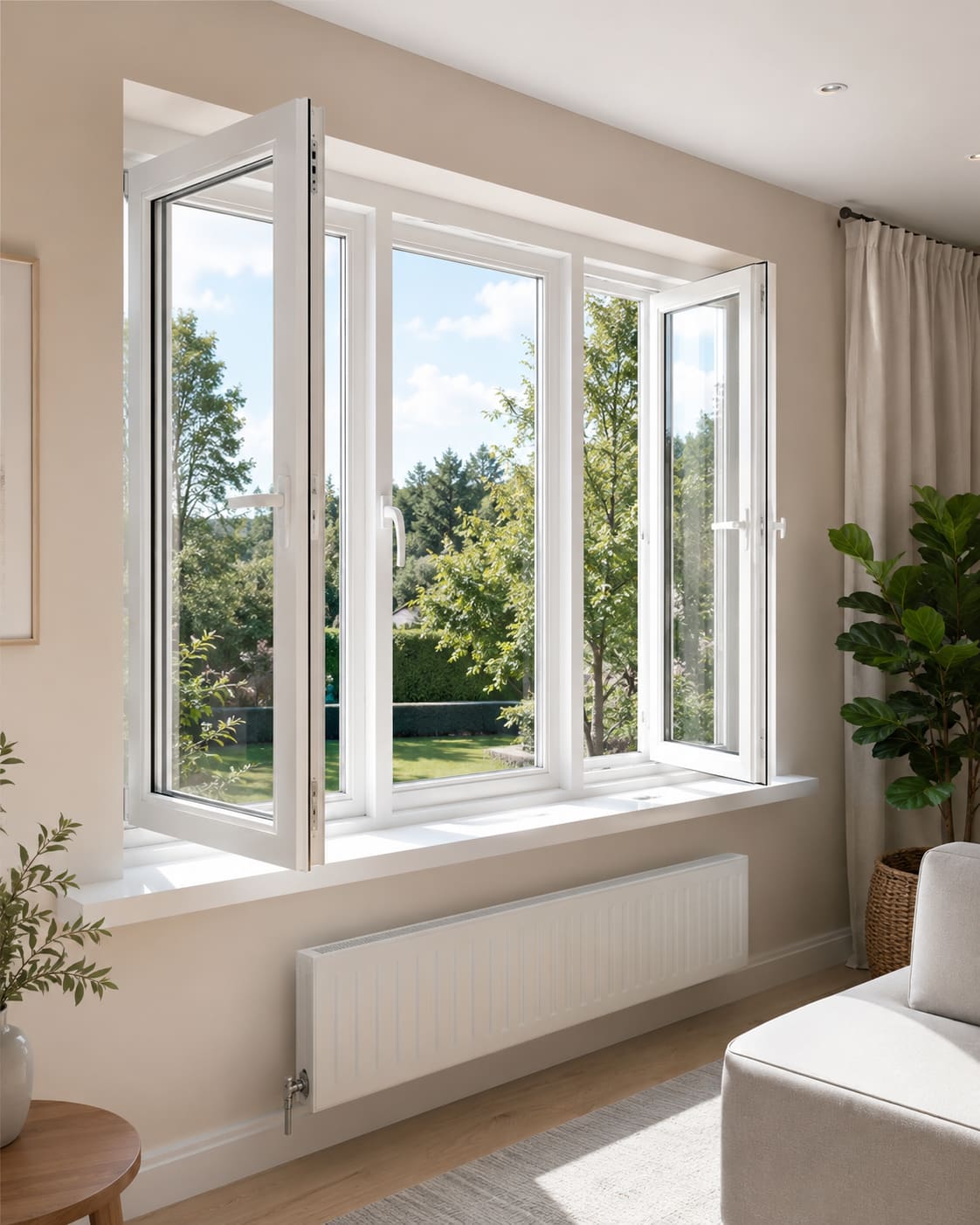
For ordinary window shutters in an aluminium or uPVC frame, 5mm or 6mm is the workhorse. Below roughly 1.5 square metres, 5mm float glass is fine; larger panes, or shutters on higher floors facing Telangana's pre-monsoon gusts, should move to 6mm for stiffness and wind resistance. Single-glazed 5mm float typically runs around INR 60 to 95 per square foot as material in 2026, before fabrication and fitting, and 6mm adds only a modest premium over that.
Sliding windows add a second consideration: the shutter has to run smoothly for years on its track. Heavier 6mm glass glides better and sags less than thin glass in a flimsy section, provided the aluminium profile is deep and well reinforced. A thin economy section may flex under a large 6mm shutter, so the glass and the frame have to be specified as a pair, not separately.
- 5mm: small framed windows and fixed panes under about 1.5 sq m
- 6mm: large window shutters, sliding shutters, upper-floor and wind-exposed openings
- Double-glazed units (5+12+5 or 6+12+6): premium acoustic and heat control for main-road and west-facing rooms
For west-facing rooms and homes on busy Hyderabad roads, a double-glazed unit is worth the cost. The sealed air gap cuts both heat gain during the long summer and traffic noise, and the two panes together are far stiffer than a single sheet.
Glass thickness for frameless doors and partitions
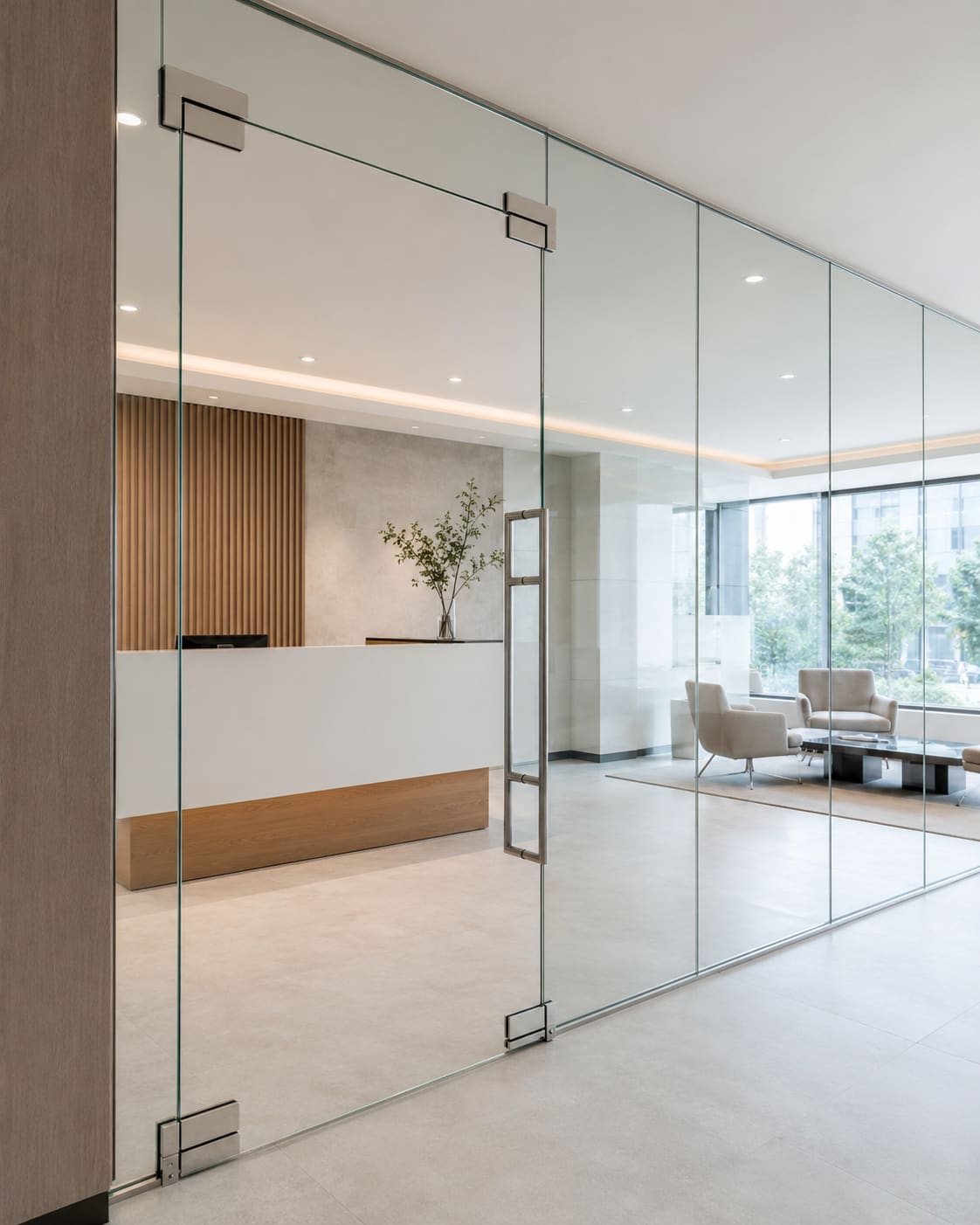
Frameless glass doors carry their own weight on patch fittings and pivots, so they demand toughened 10mm or 12mm, never annealed. A 12mm toughened door leaf gives the rigidity a tall entrance needs and resists the twisting that loosens fixings over years of daily use. The glass is only half the job: the leaf must hang on correctly rated patch fittings and swing on a floor spring or door closer sized for the panel weight, or it will sag and drop out of square within months.
Office and home partitions are usually 10mm or 12mm toughened for acoustic mass and stability, and the choice of thickness follows the height and the framing. A frameless full-height screen needs 12mm; a partition captured in an aluminium track can drop to 10mm because the track shares the load. All of this cutting, toughening and installation is covered under our toughened glass work service, and you can see completed doors and cabins in our recent projects.
- 8mm toughened: light internal doors and low-traffic partitions
- 10mm toughened: framed or track-captured full-height partitions
- 12mm toughened: frameless entrance doors and unsupported full-height screens
A common mistake is ordering a heavy 12mm frameless door but pairing it with a light-duty closer to save money. The closer fails first, the leaf drops, and the fix costs more than the correct hardware would have. Size the closer to the glass weight from the start.
Glass railing thickness: balconies and staircases
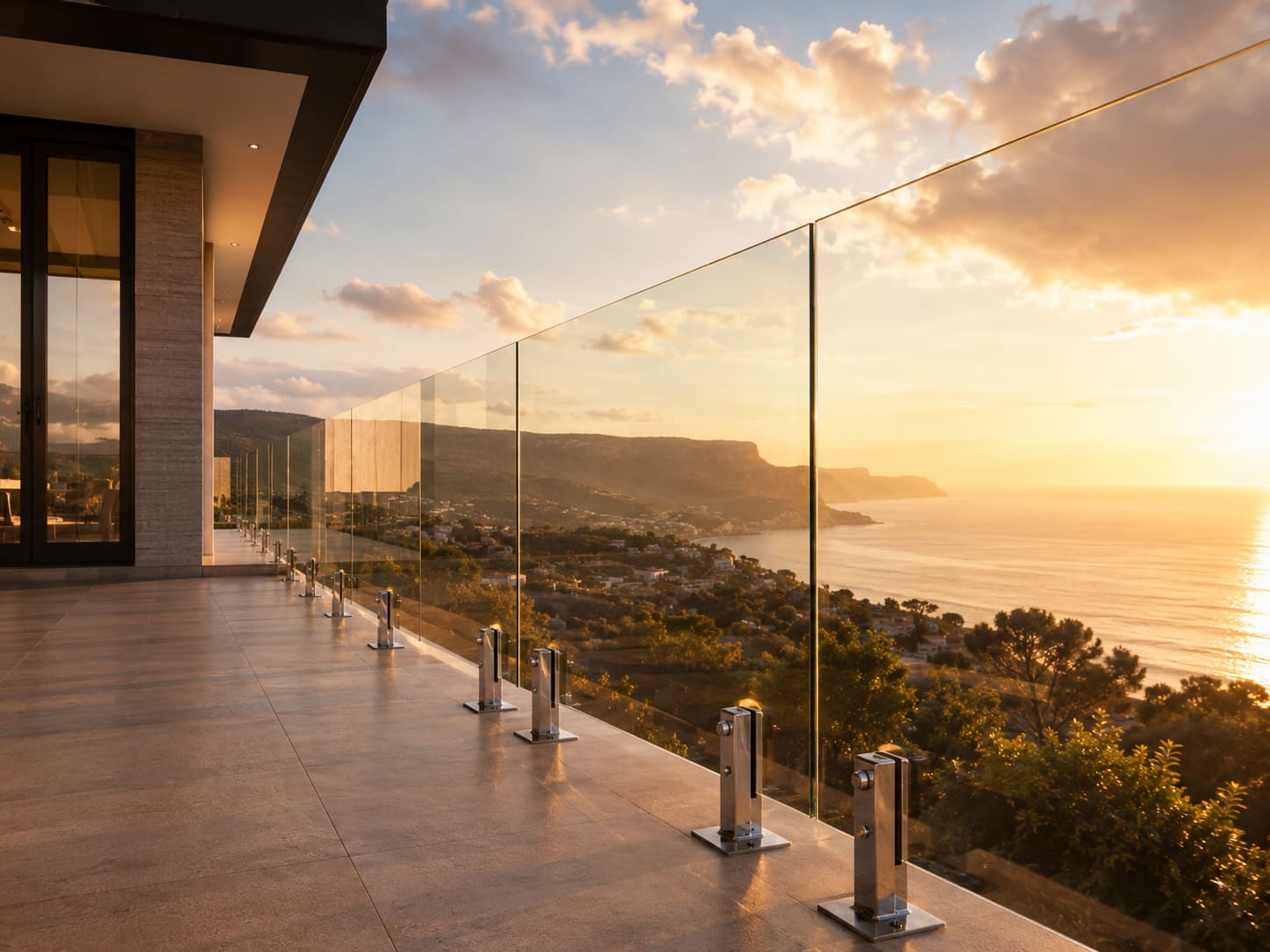
Glass railings are a safety-critical, fall-protection application, so both code and common sense point to toughened glass, ideally laminated toughened for balconies and staircases. For a base-shoe or spigot-mounted railing, 12mm toughened is the standard; where the top edge is unsupported by a handrail, 13.52mm laminated toughened (two 6mm plies with a PVB interlayer) is the safer specification, because the interlayer holds the panel in place even if the glass cracks. On a balcony four floors up, that difference is the whole point.
The mounting hardware is as important as the glass. Spigots, standoffs and base channels must be correctly torqued and, ideally, from a known brand, because point-fixed systems concentrate their load on a few contact points. Our glass railing service uses matched structural fittings sized to the panel, and we torque and level every spigot on install. Indicative supply-and-install pricing for toughened glass railing in Hyderabad runs roughly INR 550 to 1,150 per running foot in 2026, depending on hardware, finish and whether the glass is single-toughened or laminated.
- Balcony and staircase railing: 12mm toughened, or 13.52mm laminated toughened for unsupported tops
- Pool, terrace and high-exposure railings: laminated toughened, always
- Handrail-supported low screens: 10mm toughened may be acceptable, confirm with the fabricator
For any railing that protects against a fall of more than a metre or so, do not compromise on the laminated option to save a few hundred rupees per foot. It is the single most important safety decision in a residential glass project.
Shower enclosures and bathroom glass
Shower enclosures see water, heat cycling and repeated door slams, so 8mm toughened is the practical minimum and 10mm gives a noticeably more solid, premium feel with a steadier swing. Thin glass in a shower flexes, rattles the hinges loose and looks cheap within a year, which is why we rarely quote below 8mm for a walk-in enclosure.
Hardware choice tracks the thickness: heavier 10mm panels need robust hinges, clamps and seals, and every shower panel should carry polished edges and, ideally, a hydrophobic coating to resist Hyderabad's hard-water staining. A typical 8mm frameless shower screen in the city, supplied and fitted with standard hardware, lands around INR 650 to 1,000 per square foot in 2026, with 10mm and premium hinges pushing toward the upper end.
- 8mm toughened: standard framed and semi-frameless shower screens
- 10mm toughened: frameless walk-in enclosures and pivot doors
- Always toughened, with polished edges and a hydrophobic coating to resist hard-water staining
In areas with very hard water, budget for the anti-stain coating up front. Retro-treating scaled glass is difficult, and untreated 10mm glass will look dull far sooner than the enclosure should ever need replacing.
Tabletops, shelves and furniture glass
Tabletop thickness depends almost entirely on span and support. A small side or lamp table is fine at 6mm, but a dining, office or conference top needs 10mm or 12mm to resist flex and impact, with polished or bevelled edges. A protective glass overlay on an existing timber table can be as thin as 5mm because the wood carries the load; a fully self-supporting glass top spanning a wide frame cannot, and specifying overlay thickness for a self-supporting top is a frequent and expensive error.
For shelving inside wardrobes, display units and cabinets, 6mm to 8mm toughened balances load capacity against the weight the brackets have to hold. The wider the shelf span, the thicker the glass needs to be to avoid a permanent bow in the middle.
- Overlay on solid furniture: 5mm to 6mm
- Self-supporting side tables: 8mm to 10mm
- Dining, conference and reception tops: 10mm to 12mm, toughened, polished edges
- Cabinet and wardrobe shelves: 6mm to 8mm toughened per span
Any glass people sit around or lean on should be toughened. A 12mm annealed conference top looks identical to a toughened one until the day someone knocks the corner, and then the failure mode is large, sharp shards instead of harmless granules.
Facades, canopies and structural glass
Commercial facades across Hyderabad's IT corridor and Secunderabad's retail zones rely on thicker, high-performance glass. Spider-fitting and structural glazing systems typically use 10mm or 12mm toughened, and often double-glazed units for heat and glare control given Telangana's long, bright summers. Where glass fins brace a curtain wall, 19mm toughened or laminated is common. These systems live and die by their fixings, because a spider bolt concentrates the wind load onto a small drilled hole in the glass, and the toughening and hole tolerances have to be exact.
Canopies and overhead glazing must be laminated so that, if broken, the plies stay bonded rather than falling on people below. A typical entrance canopy uses 13.52mm or 17.52mm laminated toughened, and always with a verified wind-load calculation for the building's height and exposure. For any of these projects, never rely on annealed glass, and confirm the hardware rating in writing. You can compare the full scope of facade and structural options across our services and we will match the glass, the fittings and the wind-load spec for your site.
- Structural glazing and spider facades: 10mm to 12mm toughened, often as double-glazed units
- Glass fins and heavy frameless features: 15mm to 19mm toughened or laminated
- Overhead canopies and skylights: 13.52mm to 17.52mm laminated toughened
On tall buildings, the wind-load calculation, not the aesthetic, should drive the thickness. A facade that looks fine at ground level can be badly under-specified at the twelfth floor, where gust pressures are far higher.
Toughened vs laminated vs annealed: the safety layer
Thickness answers 'how strong', but the glass type answers 'how safe when it fails'. Annealed (ordinary float) glass breaks into large sharp shards and is unsafe for any door, railing, shower or overhead use, so restrict it to framed windows and picture glass. Toughened (tempered) glass is four to five times stronger and shatters into small blunt granules, which is why it is mandatory for frameless doors, showers and railings under standard safety-glazing practice.
Laminated glass bonds two or more plies with a PVB interlayer, so it holds together when cracked. That is what makes it the correct choice for balustrades, canopies and skylights where a falling panel would be dangerous. In many premium projects we combine both as laminated-toughened, to get maximum strength and post-breakage safety in one panel. Our toughened glass work service can supply any of these builds to spec.
- Annealed float: framed windows and picture frames only
- Toughened: doors, showers, partitions, tabletops, most railings
- Laminated (or laminated-toughened): overhead glazing, staircases, unsupported railings, security glazing
When in doubt, over-specify the safety type before the thickness. A slightly thinner laminated panel is almost always safer than a thicker annealed one, and it is the cheaper mistake to avoid.
Common thickness mistakes and how to avoid them
Most glass problems we are called to fix in Hyderabad trace back to a handful of specification errors, and every one of them is avoidable at the quoting stage. The pattern is almost always the same: the glass was chosen in isolation, without matching the hardware, the span or the safety requirement.
- Using annealed glass in a door or railing to save money, then replacing it after a dangerous break
- Ordering the correct thickness but under-rating the hinge, closer or spigot, so the hardware fails first
- Specifying overlay-thin glass for a self-supporting tabletop, which then flexes or cracks
- Skipping lamination on an unsupported balcony railing, the single riskiest cut corner in a home
- Ignoring wind load on upper floors and facades, where a thickness fine at ground level is under-specified
The fix in every case is to specify the glass, the fittings and the safety type together, and to get the sizes measured on site rather than estimated. That is exactly how we quote, so a measured survey before ordering will save you far more than it costs. When you are ready, get a free quote and we will size every panel and fitting for your openings.