GST on glass and aluminium work in India is 18% for almost everything you are likely to buy: fabricated aluminium windows, doors, partitions and glazing systems supplied and installed as a works contract, plus standalone toughened, laminated and float glass and most hardware. Only a narrow band of finished or decorative glass articles ever reaches the 28% slab. For a typical home or office project in Hyderabad or Secunderabad, plan for 18% added on top of the fabrication-and-installation value, and remember that tax is fully recoverable as input tax credit when the work is for a GST-registered business.
Because Hyderabad's twin-city market spans everything from a Kukatpally flat balcony to a HITEC City curtain-wall facade, the tax you actually pay depends on how you buy: loose material, fabricated units, or a full supply-and-fix contract. A single job can combine aluminium windows, a run of glass partitions and a basketful of hardware, and each line can carry its own HSN code even when the slab is still the same 18%. Getting the structure right is what keeps your invoice compliant and your credit safe.
This guide breaks down the exact GST slabs, the HSN codes that decide them, how works-contract billing differs from buying material loose, how the tax lands on your final bill across Telangana and Andhra Pradesh, and what a compliant quote from a registered fabricator should look like. If you want a transparent, GST-inclusive estimate for your own project, you can get a free quote and see every line spelled out before you commit.
What GST rate actually applies to glass and aluminium work?
Most glass and aluminium work in Hyderabad is taxed at 18% GST, whether it is billed as a works contract (supply plus installation) or as fabricated units delivered to your site in Gachibowli, Kondapur or Banjara Hills. Knowing this one number removes the bulk of the confusion around pricing, because it holds true for the overwhelming majority of residential and commercial jobs.
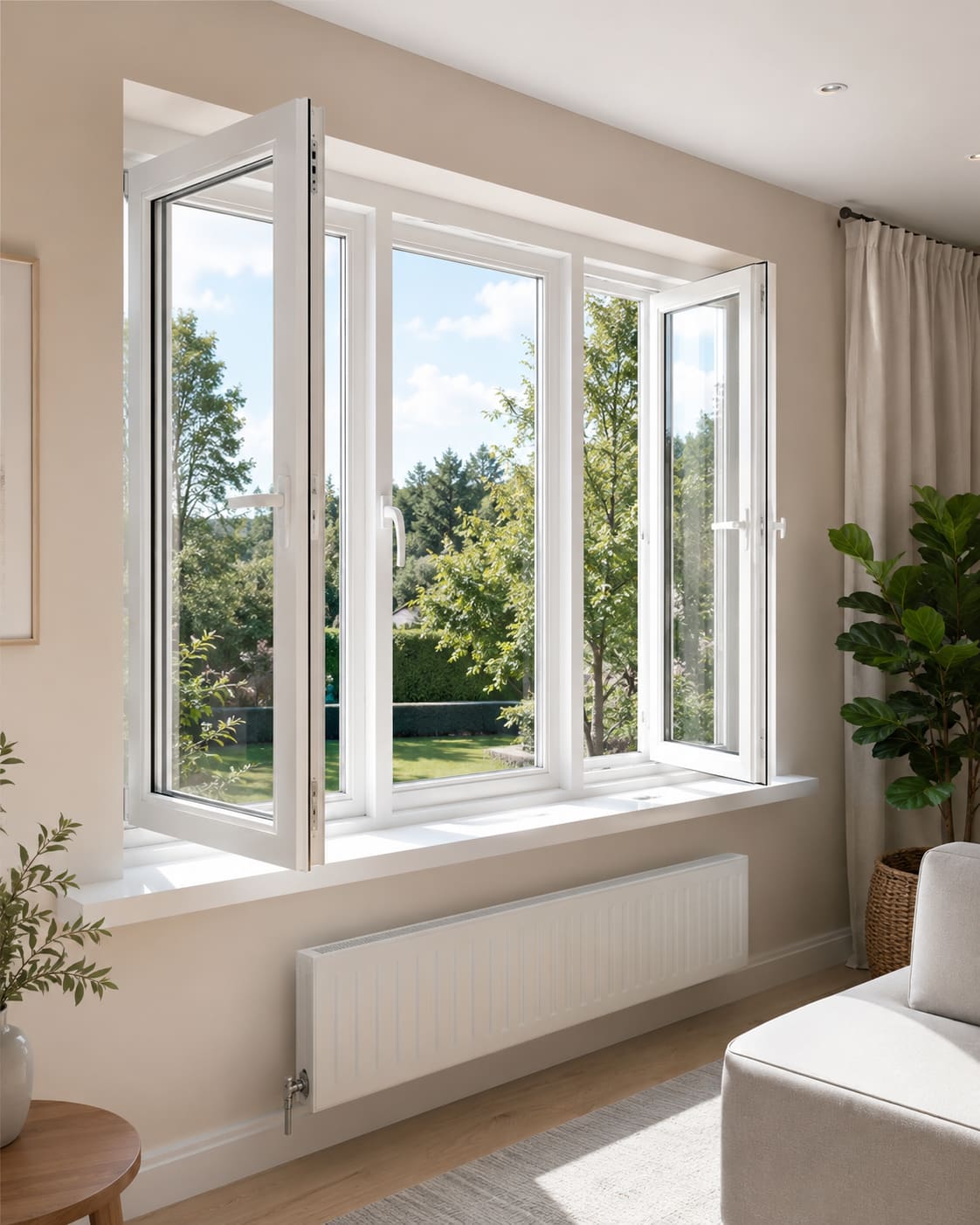
- Aluminium windows, doors and partitions (fabricated and installed): 18%
- Aluminium composite panel (ACP) facades and structural glazing works contract: 18%
- Toughened, laminated, insulated and float glass supply: 18%
- Aluminium sections, profiles and extrusions (raw material): 18%
- Hardware, handles, hinges, floor springs, sealants and silicone: 18%
- Framed mirrors and certain finished or decorative glass articles: can reach 28% in limited cases
For nearly every residential and commercial job across the twin cities, 18% is the number to plan around. The 28% slab is rare and usually touches only specific luxury or finished-goods categories such as certain framed mirrors, glass statuettes or decorative glassware, not the standard supply-and-fix fabrication that makes up the bulk of Hyderabad and Secunderabad projects. When someone quotes you a rate that is not 18%, ask which HSN code they are applying - the code, not the casual product name, decides the slab, and that single question exposes most billing errors before you sign.
HSN codes: the numbers that decide your GST slab
Your GST slab is set by the HSN (Harmonized System of Nomenclature) code, not by what the item is casually called, so understanding the main codes lets you sanity-check any Hyderabad quote in seconds. Glass and aluminium work touches a predictable handful of chapters, and once you recognise them the invoice stops being a mystery.
- HSN 7005-7008: float glass, toughened safety glass, laminated glass and insulated glass units - 18%
- HSN 7009: glass mirrors, framed or unframed - usually 18%, with some finished decorative mirrors at 28%
- HSN 7610: aluminium structures, doors, windows, thresholds and their frames - 18%
- HSN 7604-7608: aluminium bars, rods, profiles, tubes and extruded sections used in fabrication - 18%
- HSN 8302: base-metal mountings, fittings, handles, hinges and door closers - 18%
- HSN 9954: construction and works-contract services, including facade and glazing installation - 18%
The practical takeaway is that one facade invoice can legitimately carry two or three HSN codes - one for glass, one for aluminium sections, one for the works-contract service - while every line still lands at 18%. This is normal and fully compliant, not a sign of over-billing. What you should question is any line where the HSN code and the rate do not match the tables above, because that mismatch is exactly where inflated 28% charges and honest keying errors tend to hide. Ask for the code in writing and the rest of the quote becomes easy to verify.
Works contract vs material-only: why your bill changes shape
How you buy decides how the GST stacks up. A full supply-and-fix works contract carries a single 18% on the combined material-plus-labour value, while buying material yourself means you pay 18% on the material and then separately on any labour or job-work. The headline rate is the same 18% either way, but the paperwork, the warranty and your legal protection differ sharply.
- Supply and fix (works contract, HSN 9954): 18% on the total fabricated-and-installed value - the simplest and most common route for Hyderabad projects.
- Material only: 18% on glass and aluminium, after which you arrange your own fitting, often from an unregistered fitter who issues no GST invoice.
- Job work / fabrication charges: 18% when the fabricator only converts material that you have supplied.
Buying material loose to save tax rarely works out cheaper in Telangana. A registered fabricator claims input credit on the sections, glass and hardware it purchases and passes a cleaner net rate through to you, so the loose-material route often costs the same or more once you add a separate fitter. That unregistered fitter, meanwhile, gives you no warranty, no invoice and no recourse when the monsoon exposes a bad seal on your balcony glazing in Kukatpally or a leaking shower enclosure in a Jubilee Hills bathroom. The single 18% works-contract line is usually the smarter buy, and you can compare finished scopes across our recent projects to see how a properly billed job is put together.
What GST means for your Hyderabad quote in INR
On a real twin-city quote, you add 18% GST to the pre-tax rate to get your payable amount - so a 3-track aluminium sliding window quoted at around INR 650 per sq ft becomes roughly INR 767 per sq ft after GST. Working the tax out on paper before you sign is the surest way to stop the final invoice from surprising you. The indicative pre-tax ranges below reflect current Hyderabad market rates and will vary with brand, glass thickness and section series.
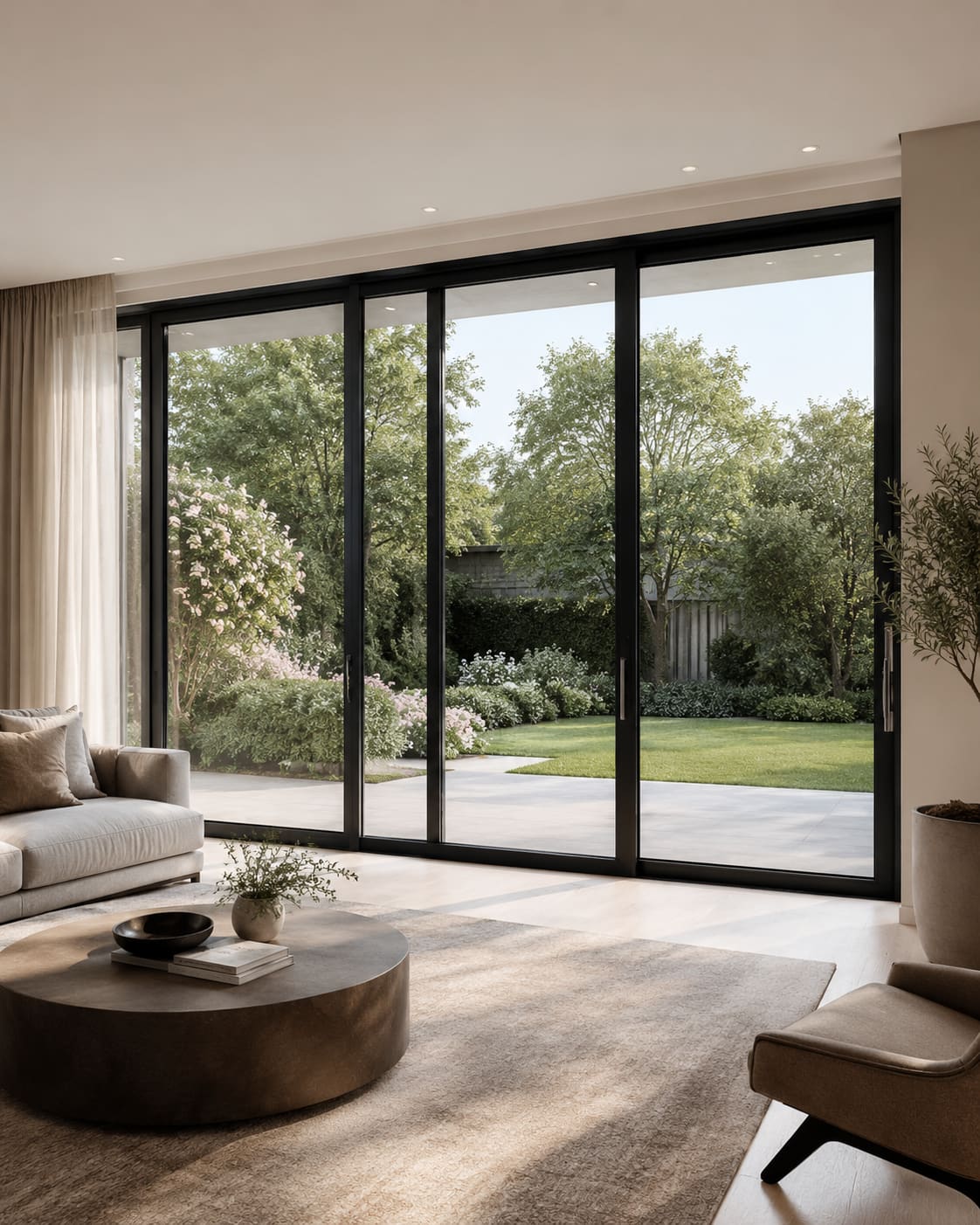
- Standard aluminium sliding window: ~INR 550-750/sq ft pre-tax, ~INR 649-885 with 18% GST.
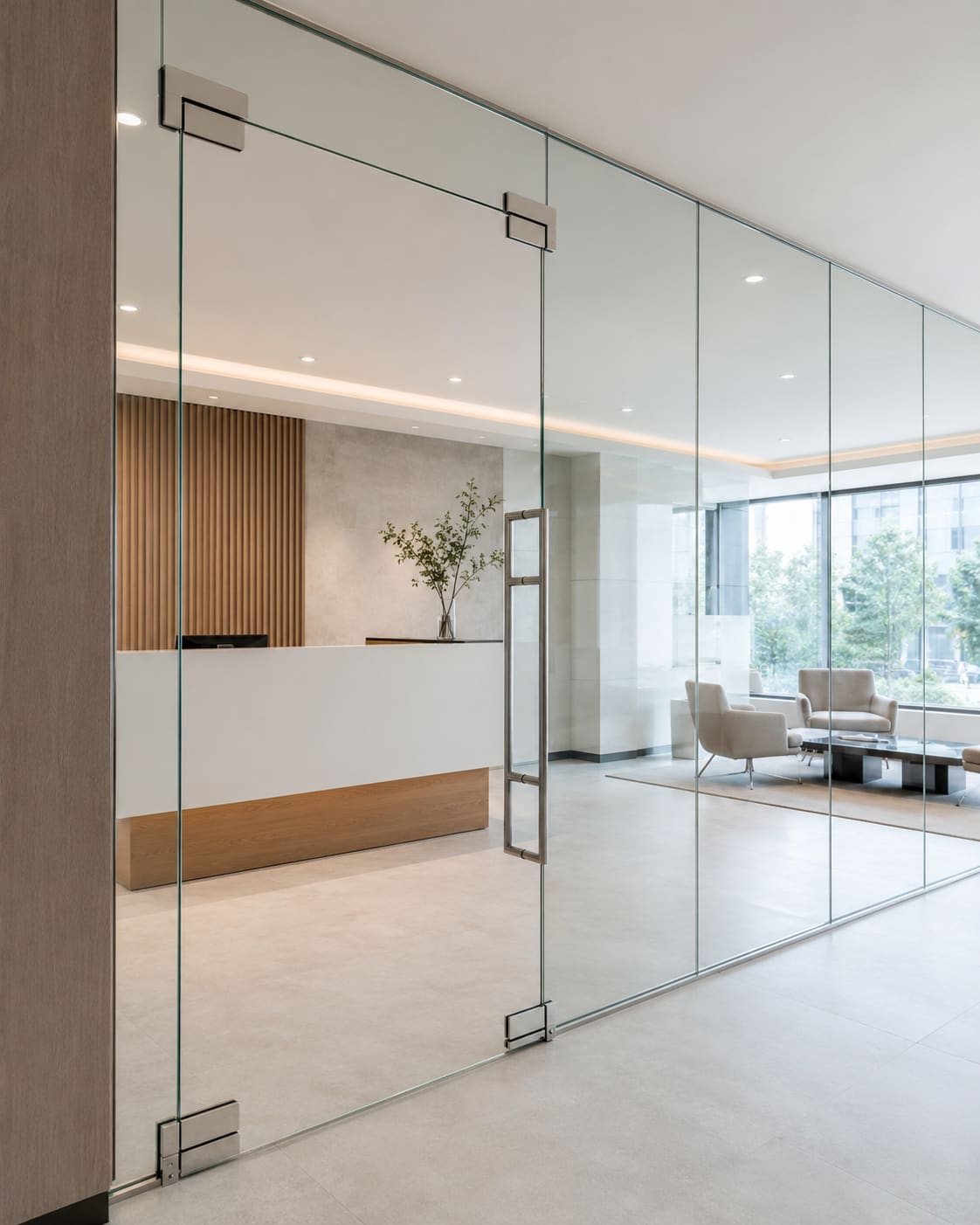
- Toughened glass partition (12mm): ~INR 900-1,300/sq ft pre-tax, ~INR 1,062-1,534 with GST.
- Structural glazing / curtain-wall facade for Financial District and HITEC City offices: ~INR 1,400-2,400/sq ft pre-tax, plus 18%.
- ACP cladding: ~INR 350-550/sq ft pre-tax, plus 18%.
- Frameless glass door with patch fittings: ~INR 18,000-32,000 per door pre-tax, plus 18%.
As a worked example, a 200 sq ft office partition at INR 1,100/sq ft comes to INR 2,20,000 pre-tax; add 18% GST of INR 39,600 and your payable is INR 2,59,600. A compliant Hyderabad fabricator will show the pre-tax value, the 18% GST line and their GSTIN separately on the invoice so the arithmetic is transparent. If a quote is suspiciously low with no GST mentioned at all, you are almost certainly dealing with an unregistered supplier - that can be acceptable for a tiny cash job, but it is a genuine risk on any warrantied facade or office fit-out in Madhapur, Kokapet or Gachibowli where you may need to enforce that warranty years later.
Input tax credit: how to claim it and how to keep it
If your project is for a GST-registered business or a commercial building, you can claim the 18% GST back as input tax credit, effectively making the tax cost-neutral - but only when the invoice is compliant and the work is not for a personal residence. ITC is the single biggest reason to insist on a registered fabricator rather than a cash fitter, because it can turn an 18% cost into a wash.
- Get a proper tax invoice showing the fabricator's 15-digit GSTIN, the correct HSN codes and a separate GST line.
- ITC generally applies to commercial fit-outs - offices, showrooms and retail in Jubilee Hills, Kondapur or Banjara Hills - not to your own home.
- Note the ITC restriction under Section 17(5) of the CGST Act for construction of immovable property on your own account; facade, structural glazing and civil-linked works often fall here.
- Pay by traceable bank transfer, not cash, so the credit trail and your GSTR-2B reconciliation hold up under scrutiny.
For homeowners in Kukatpally or Secunderabad there is no ITC, so the 18% is a real out-of-pocket cost that should simply be planned into the budget. For businesses in the Financial District it is usually recoverable, which is why registered fabrication is almost always the smarter choice for commercial work. If you are dealing with a mixed-use or under-construction property, confirm the exact eligibility with your CA before you assume the credit - the rules on immovable property under Section 17(5) are the ones buyers most commonly misread, and getting them wrong means a reversal later with interest.
GST on hardware, fittings and accessories
Hardware and fittings that go into glass and aluminium work - patch fittings, floor springs, door closers, locks, tracks, rollers, sealants and silicone - are almost universally taxed at 18% GST under HSN 8302 and related codes, matching the fabrication itself. That consistency keeps most fit-out billing on a single, predictable rate rather than a patchwork of slabs.
- Patch fittings and architectural glass hardware for frameless doors: 18%
- Floor springs and door closers for heavy glass entrances: 18%
- Locks, cylinders and access hardware: 18%
- Sliding tracks, rollers and pulley systems: 18%
When you buy hardware over the counter, the GST is charged at the point of sale and shown on your retail invoice, which a business buyer can then claim as ITC in the normal way. When the same hardware is embedded inside a supply-and-fix works contract, it is absorbed into the single 18% works-contract line rather than billed as a separate item - either way you pay the same slab, so choose the buying route that best fits your paperwork, your warranty and your credit position. There is no tax saving in splitting hardware out, only a difference in how the invoice reads.
How to read a compliant GST invoice from a Hyderabad fabricator
A compliant GST invoice from a Telangana fabricator must carry a valid 15-digit GSTIN beginning with 36 (the state code for Telangana), the correct HSN codes, a clear pre-tax taxable value and a separate GST line - anything missing is a warning sign, not a rounding detail. Learning to read the invoice protects both your money and your input credit.
- Supplier legal name, address and 15-digit GSTIN (Telangana GSTINs start with 36; Andhra Pradesh with 37).
- A unique, sequential invoice number and the date of supply.
- HSN codes against each line item, with the taxable value shown before tax.
- CGST and SGST at 9% each for local Hyderabad supply, or IGST at 18% for inter-state work into Andhra Pradesh.
- The total GST amount and the final payable amount clearly separated at the foot of the bill.
For any supply within Telangana, the GST splits into 9% CGST and 9% SGST; for work billed across the border into Andhra Pradesh, it becomes a single 18% IGST instead. Both add up to the same 18% - the split simply tells you whether the transaction is intra-state or inter-state, and it has no effect on what you finally pay. If you intend to claim ITC, verify the supplier's GSTIN on the government portal and confirm the invoice actually appears in your GSTR-2B before treating the credit as safe, because a credit that never reconciles is a credit you will eventually have to reverse.
Common GST mistakes on glass and aluminium projects
The most expensive GST mistakes on glass and aluminium projects come from chasing a no-GST discount, misjudging ITC eligibility, or accepting an invoice with the wrong HSN code - all of which surface later as lost credit, a reversal with interest, or unenforceable work. A little diligence at the quoting stage avoids every one of them.
- Taking a no-GST cash quote to save 18%, then getting no warranty, no invoice and no recourse when a facade seal fails during Hyderabad's monsoon.
- Assuming ITC on a residential flat or an owner-account construction where Section 17(5) actually blocks the credit.
- Accepting an inflated 28% charge on standard fabrication that should sit at 18% - always ask for the HSN code first.
- Paying in cash so there is no traceable trail to support the credit or a later warranty claim.
- Not verifying the supplier's GSTIN, only to find the invoice never appears in your GSTR-2B and the credit is disallowed.
The pattern across all of these is the same: registered, invoiced, traceable work costs a little more on paper but is almost always cheaper once you account for ITC, warranty and peace of mind. Whether you need aluminium windows, glass partitions or a full structural-glazing facade, insist on a clean GST invoice, and browse our services to match the right scope to your budget before you commit to a fabricator.