Double glazing works by placing two panes of glass a fixed distance apart, sealing the cavity between them, and filling that cavity with dry air or an inert gas such as argon so the trapped, still gas layer sharply slows the transfer of heat by conduction and convection. This sealed sandwich is called an insulated glass unit (IGU), and because gas conducts heat far more slowly than glass and cannot circulate freely in a narrow gap, the inner pane stays much closer to room temperature than the outer pane, reducing heat flow, condensation and noise. It is the same principle behind the uPVC double-glazed windows and large-format glass facade systems we install across Hyderabad and Secunderabad.
The insulating effect is measured as a U-value (thermal transmittance in W/m2K): the lower the number, the better the insulation. A single 6mm pane has a U-value of about 5.7 W/m2K, while a standard double-glazed unit ranges from 1.1 to 3.0 W/m2K depending on gap width, gas fill and coatings. In India's hot climates, double glazing is specified far more for blocking solar heat gain and preventing air-conditioning loss than for retaining winter warmth, and its performance is governed by the National Building Code of India (NBC) 2016 and the Energy Conservation Building Code (ECBC).
For homeowners, architects and developers across Telangana and Andhra Pradesh, understanding how the IGU is built, sealed and specified is the difference between a window that pays back its cost in cooling savings and one that fogs up within a few monsoons. This guide covers the physics, the anatomy of the unit, the specifications that matter, realistic INR pricing, the mistakes that ruin performance, and how to choose the right make-up for your building.
The Physics: How the Sealed Gap Slows Heat
Double glazing slows heat because a sealed layer of still gas is a far poorer conductor than solid glass, and confining that gas in a narrow gap prevents the convection currents that would otherwise carry heat across it.
Heat crosses a window three ways, and a well-engineered IGU is designed to attack each of them:
- Conduction: glass conducts heat readily, but the trapped gas layer has very low thermal conductivity, so the second pane blocks most direct conduction from outside to inside.
- Convection: in a 12-16mm gap the gas is too confined to circulate, which stops heat being carried across by moving air. Make the gap too wide and convection restarts.
- Radiation: a low-emissivity (low-E) metal-oxide coating reflects infrared heat back toward its source, closing the third pathway that plain float glass leaves wide open.
- Gas fill: argon or krypton is denser and less conductive than air, improving the U-value by roughly 10-20% over an identical air-filled unit.
The net result is measurable comfort. On a 42 degree Celsius Hyderabad afternoon, the inner pane of a well-specified low-E argon IGU can sit 8-12 degrees cooler than a single sheet of clear float glass would. That difference is felt directly as radiant comfort when you stand near the window and measured indirectly every month as a lower air-conditioning bill.
Anatomy of an Insulated Glass Unit (IGU)
An insulated glass unit is built from two (or three) glass panes bonded to a perimeter spacer bar and sealed twice, once to lock in the gas and again to lock out moisture and add structural strength.
- Glass panes: typically 4-6mm each. Toughened safety glass to IS 2553 or laminated glass is used where impact resistance, human safety or acoustic performance matters.
- Spacer bar: an aluminium or warm-edge polymer frame, usually 12-20mm wide, that fixes the cavity width and holds the desiccant.
- Desiccant: molecular-sieve beads packed inside the spacer absorb residual moisture so the cavity stays optically clear and never fogs internally.
- Primary seal: polyisobutylene (PIB) forms the main gas and vapour barrier between the glass and the spacer.
- Secondary seal: structural silicone or polyurethane around the perimeter bonds the whole unit and gives it long-term durability and edge strength.
- Cavity fill: dry air, argon or krypton gas occupying the sealed gap.
The quality of those two seals is what separates a 20-year IGU from a 5-year one. A double-sealed, machine-assembled unit with the correct desiccant is the standard we insist on, because a hand-sealed or single-sealed unit will lose its gas and fog up quickly. If you are planning a project, get a free quote and we will specify the seal and desiccant grade alongside the glass.
Key Specifications and What They Actually Mean
The performance of double glazing is defined by four numbers, and reading them correctly is how you avoid overpaying for the wrong glass.
- U-value: 1.1-3.0 W/m2K for double glazing; lower means better insulation against heat flow in either direction.
- Solar Heat Gain Coefficient (SHGC): the fraction of solar heat admitted through the glass. A low SHGC of 0.25-0.40 suits hot cities like Hyderabad and directly cuts cooling load.
- Visible Light Transmittance (VLT): the percentage of daylight that passes through, typically 40-70% for coated units. Too low and interiors feel dim; too high and glare returns.
- Optimal gap: 12-16mm gives the best balance of conduction and convection control.
- Overall thickness: a common unit reads as 6-12-6 (glass-gap-glass), giving roughly 24mm total, which the frame must be designed to hold.
When comparing quotes, always ask for these numbers in writing rather than a vague promise of energy efficiency. A unit sold as double glazing but built with clear glass, no coating and a narrow 6mm air gap can underperform a single low-E pane, so the specification, not the label, is what you are buying. The right combination depends on facade orientation, glare tolerance and daylighting goals, all of which we size on our own installs and document in our recent projects.
Performance in the Hyderabad, Telangana and Andhra Pradesh Climate
In Hyderabad and Secunderabad, double glazing primarily reduces air-conditioning load by blocking solar heat gain rather than retaining warmth, because summer temperatures regularly exceed 40 degrees Celsius and heating is almost never required.
- Low-E, low-SHGC coatings are prioritised over gas fill here because the dominant problem is keeping cooled interiors cool, not stopping heat from escaping.
- Reduced heat gain meaningfully lowers a building's cooling energy demand, supporting ECBC compliance and improving BEE-linked star ratings for commercial buildings.
- Acoustic double glazing cuts transmitted noise by 20-35 dB, a major benefit for homes and offices near busy corridors such as the ORR, HITEC City, Gachibowli and the airport route.
- Wind-load resistance for high-rise facades must be designed to IS 875 Part 3, which sets minimum glass thickness for the local basic wind speed across Telangana and coastal Andhra Pradesh.
- Reduced condensation keeps the inner pane clear during humid monsoon spells when a single pane would sweat.
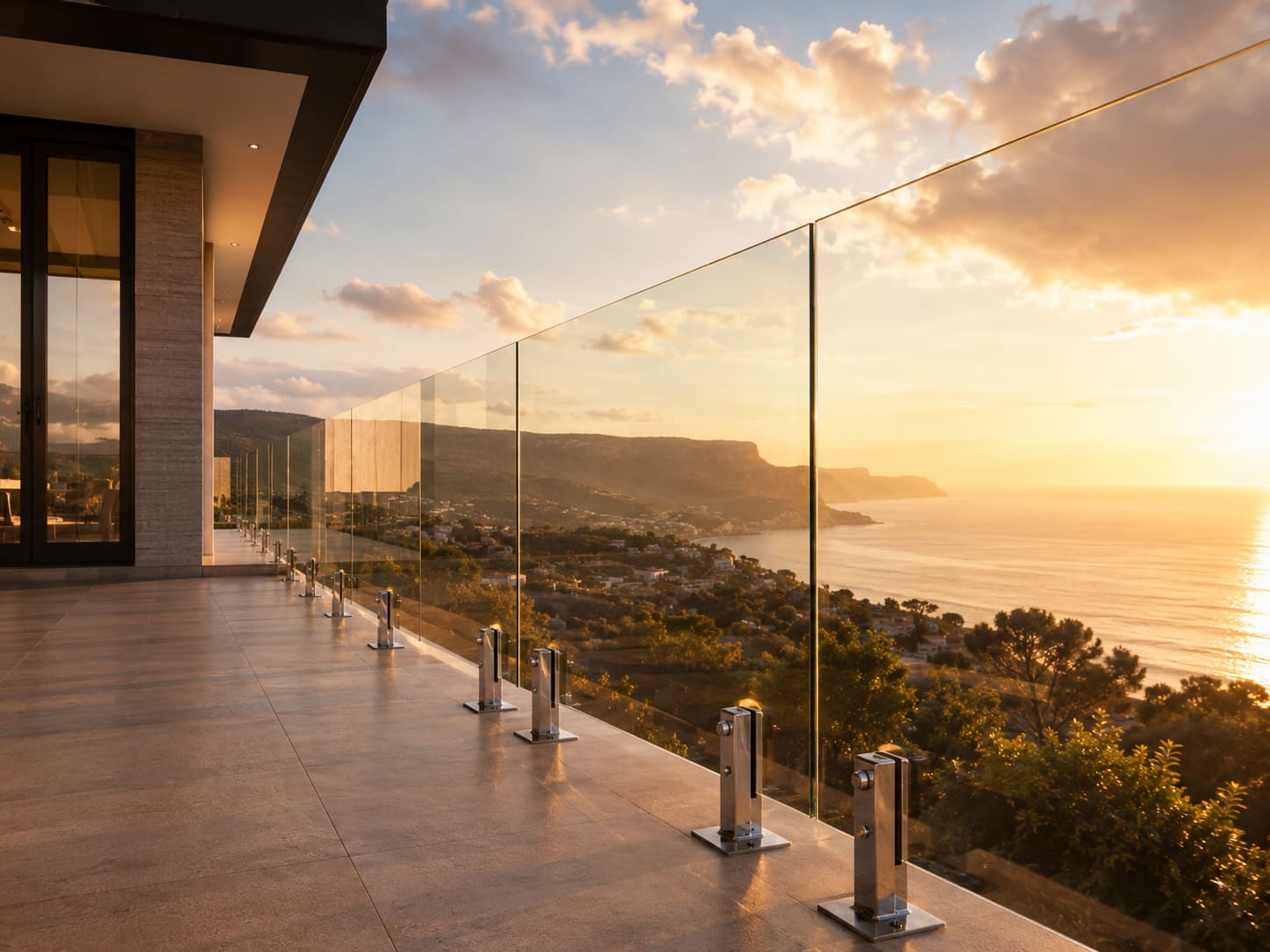
Coastal Andhra Pradesh projects in Visakhapatnam or Vijayawada face higher basic wind speeds and salt-laden air, which pushes glass thickness up and makes corrosion-resistant hardware essential. For tall or exposed elevations, structural glass facade work carries wind load into the building frame while keeping sight lines clean, and the IGU make-up is chosen to match both the wind zone and the sun path.
How to Choose the Right Double-Glazed Make-Up
Choosing double glazing is really about matching three variables, glass thickness, coating and gas fill, to the specific problem your window faces.
- Facing the afternoon sun: prioritise a low-E, low-SHGC coating on the outer pane. West- and south-facing glass in Hyderabad takes the harshest load and benefits most.
- Near heavy traffic or flight paths: choose asymmetric pane thicknesses, for example 6mm outer and 4mm inner, so the two panes resonate at different frequencies and cancel more noise. Laminated glass adds further acoustic damping.
- Safety-critical openings: use toughened or laminated glass to IS 2553, especially for full-height glazing, doors and balustrades.
- Coastal or high-rise sites: increase glass thickness per IS 875 Part 3 and specify marine-grade, corrosion-resistant hardware.
- Daylight-sensitive interiors: balance VLT against SHGC so the room stays bright without glare or heat.
For most homes and offices, a 6-12-6 low-E argon unit is the practical optimum. If you are unsure which numbers your project needs, our team maps them across our services and sizes the glass to your facade orientation, wind zone and budget rather than selling a one-size-fits-all unit.
Realistic Costs in INR for Hyderabad Projects
Double glazing in Hyderabad typically costs between INR 550 and INR 1,400 per square foot for the glass unit alone, with the final figure driven by glass thickness, coating and gas fill.
- Basic clear double glazing (6-12-6, air-filled): roughly INR 550-750 per sq ft.
- Low-E coated, argon-filled units: roughly INR 850-1,200 per sq ft, the sweet spot for hot climates.
- Toughened or laminated acoustic double glazing: roughly INR 1,100-1,400 per sq ft for noise-critical or safety-critical openings.
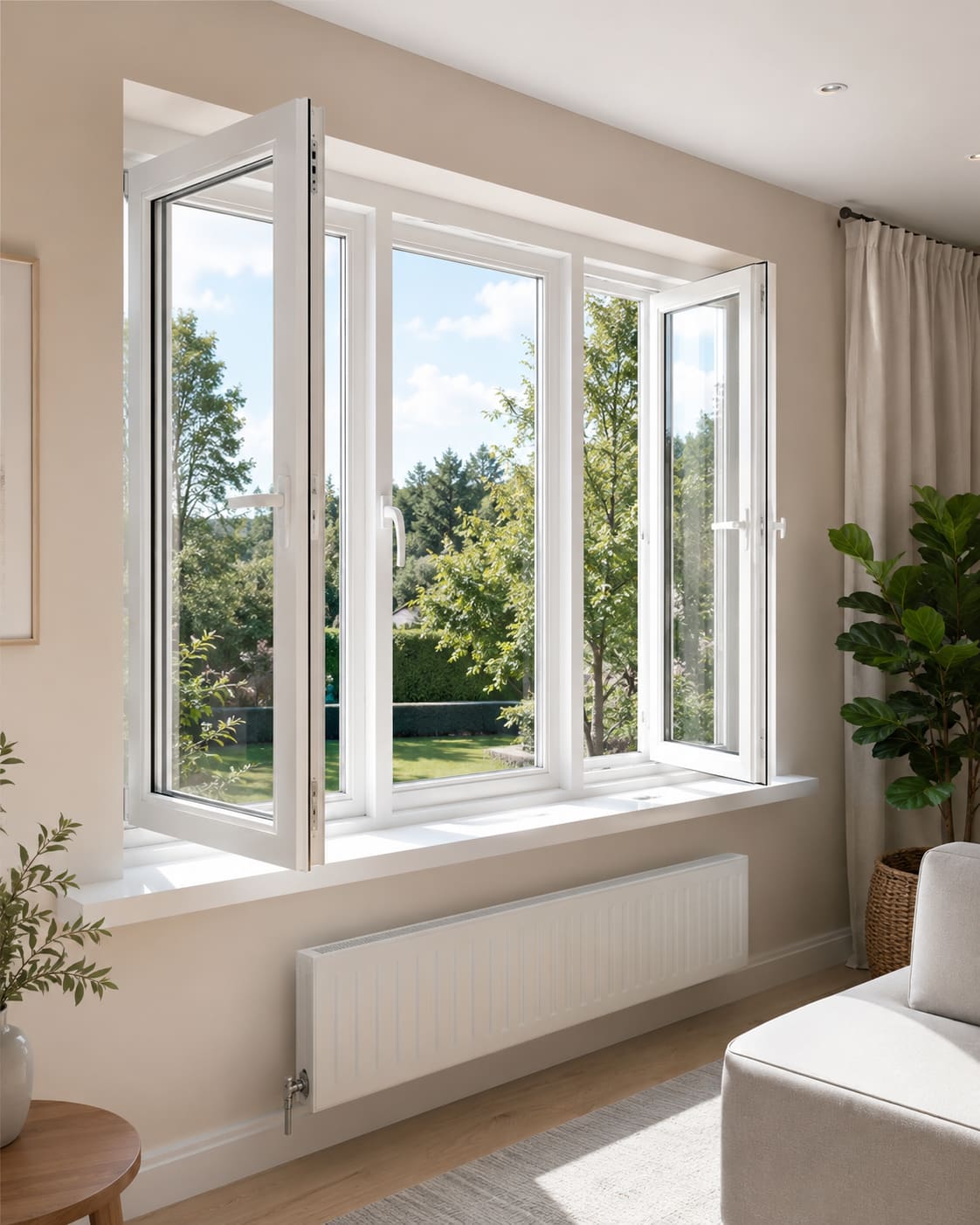
- Complete uPVC or aluminium double-glazed windows, supplied and installed: commonly INR 650-1,000 per sq ft of window, depending on system and hardware grade.
For a typical 3BHK apartment in Kokapet or Kondapur with around 250-350 sq ft of glazing, budget roughly INR 2.0-3.5 lakh for a full low-E double-glazed retrofit including frames and fittings. The premium over single glazing is usually recovered within 4-7 years through lower cooling bills, and it is recovered faster on west- and south-facing facades that take the worst of the afternoon sun. A retrofit into good uPVC windows also improves airtightness, which compounds the energy saving beyond the glass alone.
Installation, Timeline and the Frame That Holds It
A double-glazed unit is only as good as the frame and installation around it, because a perfect IGU in a leaky frame still lets conditioned air escape at the edges.
- Survey and specification: 1-2 days to measure openings, confirm orientation and finalise glass make-up and hardware.
- Fabrication: 1-3 weeks for the IGUs and frames, as sealed units are machine-assembled to order and cannot be cut down later.
- Installation: typically 1-3 days for a flat, longer for a full facade, with each frame set plumb, packed and sealed against air leakage.
- Frame choice matters: uPVC and thermally broken aluminium frames prevent a conduction bridge that would undo much of the glass performance.
- Airtightness: multi-point locking and quality gaskets compress the seal so the double-glazed opening actually performs to its rated U-value.
This is why the frame system, the hardware brand and the installation crew matter as much as the glass label on the invoice. We fit IGUs into properly engineered systems so the rated performance survives contact with a real building, and you can see the standard of finish across our recent projects around Hyderabad and Secunderabad.
Common Mistakes to Avoid
Most disappointing double-glazing outcomes trace back to a handful of avoidable errors made at the specification or installation stage.
- Buying on label, not spec: accepting double glazing without U-value, SHGC and VLT figures in writing. Insist on the numbers.
- Skipping the low-E coating: in Hyderabad a clear double-glazed unit blocks little solar heat. The coating, not just the second pane, does the heavy lifting.
- Wrong gap width: a narrow 6mm gap to cut cost sacrifices most of the insulating benefit.
- Cheap single seals: single-sealed or hand-sealed units fog within a few years as the desiccant is overwhelmed.
- Non-thermally-broken aluminium frames: a bare aluminium frame conducts heat straight through and creates a cold or hot bridge around the glass.
- Ignoring wind load and safety glass: undersized or annealed glass in high-rise or full-height openings is both a performance and a safety failure under IS 875 and IS 2553.
Avoiding these six mistakes costs nothing extra at the quotation stage but protects the entire investment. If a quote is unusually cheap, it is almost always missing the coating, the second seal or the safety glass, and those omissions surface within a few monsoons.
Lifespan, Failure and Maintenance
A well-made double-glazed unit lasts 15-25 years, after which seal degradation is the usual failure that lets moisture and fogging into the sealed cavity.
- The first visible sign of failure is internal condensation or misting between the panes that cannot be wiped away from either side.
- Failure is driven by UV exposure, thermal cycling and seal breakdown, which lets the gas escape and moisture enter past the exhausted desiccant.
- A failed IGU cannot be repaired in place; the sealed unit is replaced while the existing frame is retained.
- Maintenance is minimal: keep drainage weep holes clear and inspect seals and gaskets periodically for gaps.
- Argon fills lose roughly 1% of gas per year, so a small, gradual efficiency decline over the unit's life is normal and expected.
Hardware maintenance matters as much as the glass itself, because worn locking gear or a failed door closer lets a heavy sash drop out of square and stress the edge seal. Keeping the frame hardware in good order protects the seal that keeps the gas in and the moisture out, extending the practical life of the whole unit.
Double Glazing vs Single, Triple and Vacuum Glazing
Compared with single glazing, double glazing insulates two to five times better, and it sits within a clear hierarchy of glass options for different priorities and budgets.
- Single glazing: cheapest at INR 60-150 per sq ft, but a U-value around 5.7 W/m2K and almost no acoustic benefit.
- Laminated single glazing: good for safety and moderate noise, but thermally similar to plain single glass.
- Double glazing: the balanced choice for heat, noise and condensation control, with a U-value of 1.1-3.0 W/m2K.
- Triple glazing: U-value below 1.0 W/m2K, but rarely cost-justified in a cooling-dominated climate like Telangana.
- Vacuum glazing: a very thin evacuated gap gives excellent insulation in a slim profile, but at a significant price premium and limited local availability.
For most homes and offices in Hyderabad and Secunderabad, a low-E argon double-glazed unit is the practical optimum, delivering the bulk of the achievable comfort and energy benefit without the cost or supply challenges of triple or vacuum glazing. To weigh these options against your own budget and facade, talk to our team and we will recommend the make-up that earns back its cost fastest for your building.