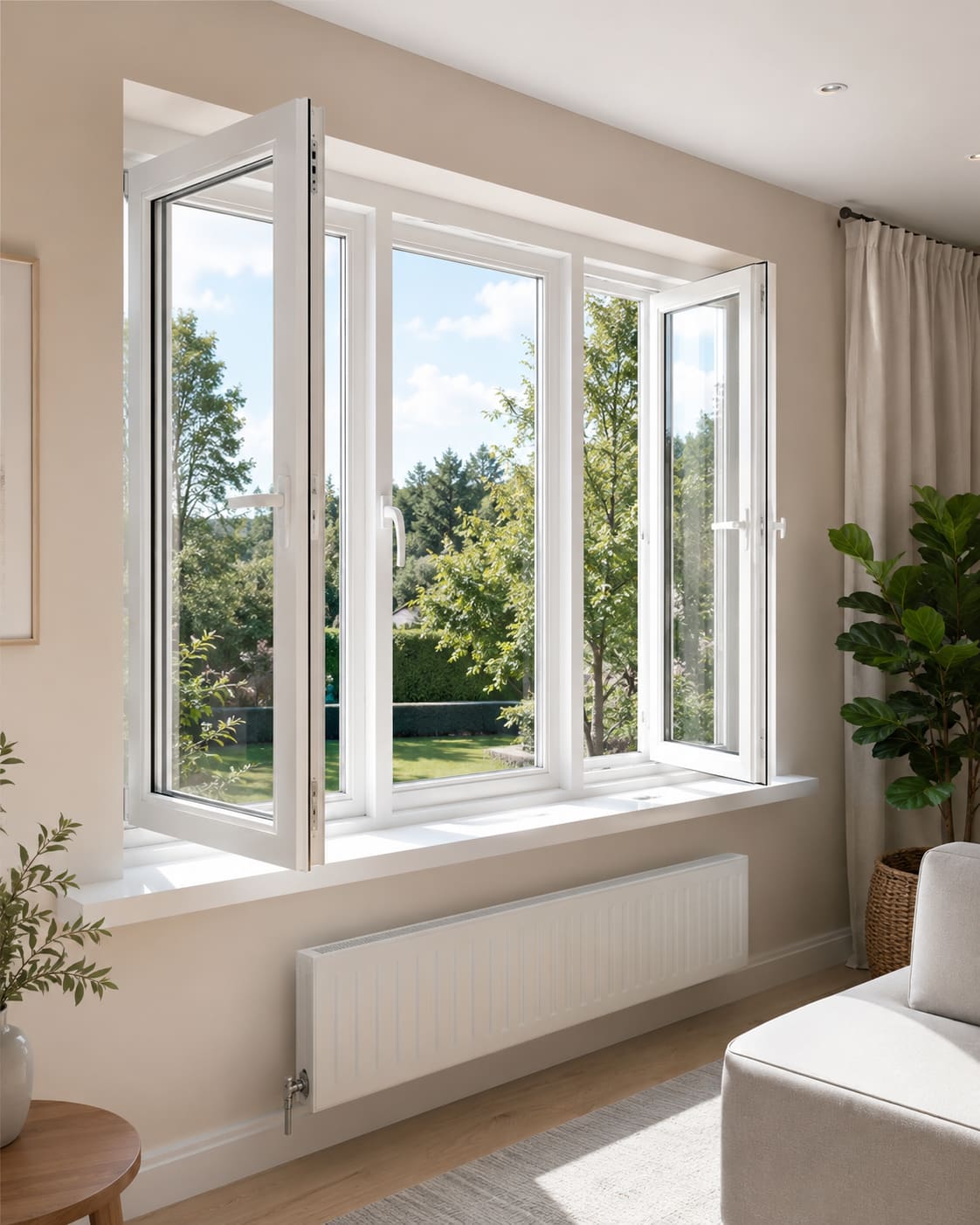
uPVC windows last 25 to 40 years on average, and quality lead-free, multi-chamber profiles frequently exceed 40 years when correctly manufactured, installed and maintained. The frame itself is made of unplasticised polyvinyl chloride, a chemically stable material that does not rust, rot or corrode, so its ageing is driven mainly by UV exposure, thermal cycling and the wear of moving hardware rather than the material breaking down. In practice, the profile almost always outlives the first set of hinges, rollers and gaskets ever fitted to it.
Actual service life depends heavily on profile grade, stabiliser chemistry, steel reinforcement, glazing and installation quality. In Hyderabad and Secunderabad, where summer surface temperatures on dark facades can exceed 60 degrees C, UV-stabilised lead-free profiles are essential to reach the upper end of that range. A well-specified uPVC window will comfortably serve a Telangana home for three to four decades, while a cheap profile with thin walls and poor sealing can start failing within a decade.
This guide explains exactly what determines uPVC window longevity, the standards that govern it, how uPVC compares with aluminium and timber, realistic costs in Indian rupees, and how to squeeze maximum life out of your windows in Hyderabad, Secunderabad and across Telangana and Andhra Pradesh. Whether you are glazing a new villa in Kokapet or replacing tired windows in an older Secunderabad flat, the same fundamentals apply.
Typical uPVC Window Lifespan by Profile Grade
uPVC window lifespan scales directly with profile grade, wall thickness and stabiliser type. Cheaper profiles at the low end of the market can start showing wear within 10-15 years, while engineered systems routinely last decades. Two windows that look identical on installation day can diverge dramatically over twenty years depending on what sits inside the frame.
- Economy profiles (1.0-1.7 mm walls, minimal or no reinforcement): 10-20 years before warping, sagging or discolouration set in.
- Standard profiles (Class B, around 2.5 mm walls, steel reinforced): 20-30 years of reliable service.
- Premium multi-chamber profiles (Class A, 2.8-3.0 mm visible walls, lead-free calcium-zinc stabilised): 30-40+ years.
- Manufacturer warranties on quality Indian and imported profiles typically run 10 years against yellowing and warping, which is a floor, not the expected life.
The lesson for buyers in Hyderabad is simple: the price gap between a Class B and a Class A profile is modest against the total window cost, but the difference in service life can be a decade or more. Ask specifically about the profile class and the steel reinforcement gauge being quoted before you sign, and treat any supplier who cannot answer as a warning sign.
What Determines How Long uPVC Windows Last
The single biggest lifespan factor is the profile system itself, followed by installation quality and climate exposure. uPVC does not simply wear out on a timer; it degrades where heat, sun and mechanical stress concentrate. Six elements govern durability more than anything else:
- Wall thickness: Class A profiles (>=2.8 mm on visible walls per EN 12608) resist sagging and warping far better than thin Class C sections.
- Steel reinforcement: galvanised steel inserts inside the chambers prevent deflection on large sashes carrying heavy double glazing over time.
- Stabiliser chemistry: modern calcium-zinc (lead-free) stabilisers resist UV-driven yellowing and embrittlement under strong Deccan sunlight.
- Number of chambers: 3 to 5 air chambers improve rigidity, insulation and resistance to thermal distortion.
- Glazing weight and hardware quality: heavier double or triple glazing needs stronger hinges and multi-point locks to avoid premature sag and misalignment.
- Installation: correct anchoring, level fitting and quality sealant prevent water ingress and drafts that quietly shorten effective life.
Get these six factors right and a uPVC window becomes a fit-and-forget component. Get them wrong, and you will be chasing draughts, sticking sashes and fogged glass long before the material's real limit. Installation is the factor most often skimped on, which is why choosing an experienced fitter matters as much as choosing the profile brand.
Standards and Specifications to Look For
uPVC window quality is defined by recognised profile and glazing standards that correlate directly with lifespan. Specifying to these benchmarks is the most reliable way to secure a long service life rather than trusting a salesperson's promises.
- EN 12608 classifies profile wall thickness as Class A, B or C, with Class A being the most durable and the grade worth insisting on.
- IS 2553 governs safety glass, requiring toughened glass in windows for impact resistance and safe fracture behaviour.
- IS 875 Part 3 defines wind load design, critical for sizing frames, reinforcement and glazing in exposed high-rise facades around Gachibowli and the Financial District.
- The National Building Code of India (NBC) 2016 sets fenestration, ventilation and safety-glazing provisions.
- The Energy Conservation Building Code (ECBC) and BEE star ratings address window thermal performance and U-values.
- Insulated glass units (IGUs) should carry a durability rating and a warm-edge or well-sealed spacer to preserve the argon fill and prevent internal fogging.
When you get a free quote, ask the fabricator to state the EN 12608 class, the stabiliser type and the reinforcement gauge in writing. A supplier confident in their product will list all three without hesitation, and putting the specification on paper protects you if a warranty claim ever arises.
uPVC Lifespan vs Aluminium and Timber
uPVC windows generally match or outlast aluminium and untreated timber in maintenance-free service life, though thermally-broken aluminium can equal or exceed uPVC structurally. The right choice depends on climate, spans and how much maintenance you are willing to do.
- uPVC: 25-40+ years, no painting, no corrosion, strong thermal performance (U-value around 1.2-1.8 W/m2K).
- Aluminium (anodised or powder-coated, thermally broken): 30-45+ years, very rigid and ideal for large spans, but higher heat conduction without a thermal break.
- Timber (well maintained): 20-40 years, but requires periodic sealing, painting and rot protection that few Hyderabad homeowners keep up.
- In humid coastal Andhra Pradesh and high-UV inland Telangana, uPVC's resistance to corrosion and rot gives it a genuine low-maintenance advantage.
For very wide sliding openings or slim sightlines on a facade, aluminium sliding systems often win; for standard casement and sliding windows in homes, uPVC usually offers the best life-per-rupee. If you are still weighing materials, our team can walk you through matching uPVC doors and framed alternatives side by side so the decision fits your elevation and budget. Seeing finished installations helps too, so it is worth browsing our recent projects before you commit.
The Role of Hardware, Locks and Seals in Longevity
Hardware, not the frame, is almost always the first thing to fail on a uPVC window, and treating it as an afterthought is the most common reason windows feel old before their time. The profile can be immaculate while a worn roller or a sagged hinge makes a sash bind and leak air.
- Friction hinges and rollers: expect meaningful wear at 10-15 years on daily-use sashes; good-quality replacements restore smooth operation cheaply.
- Multi-point locking gear: quality locks keep the sash pulled tight against the seal, which protects both security and the weather line.
- Handles: durable branded handles survive tens of thousands of open-close cycles without loosening or corroding.
- Sliding gear: large sliders live or die by their track and roller quality, so specify proven stainless or bearing rollers rather than generic parts.
- Gaskets and glazing beads: EPDM seals and beads that hold the pane square all contribute to a leak-free, decades-long window.
As a hardware dealer for established brands such as Taiton, Enox and Ozone in Hyderabad, Hakimi Aluminium and Glass supplies and installs the same graded fittings across our services, so a window fitted today can be re-serviced with matching parts years later rather than scrapped when a single component wears out.
Signs Your uPVC Windows Are Nearing End of Life
You rarely need to guess when uPVC windows are wearing out; the symptoms are visible and progressive. Catching them early often means a cheap hardware or gasket fix rather than a full replacement.
- Persistent condensation or fogging between the two panes of a sealed unit, indicating the IGU seal has failed and the gas fill is gone.
- Sashes that stick, drop or no longer latch cleanly, usually a hinge, roller or reinforcement issue rather than the frame.
- Noticeable draughts or water seeping at the sill, pointing to hardened gaskets or worn seals.
- Yellowing, chalking or brittle surfaces on older lead-stabilised or economy profiles exposed to years of direct sun.
- Visible bowing or warping of the frame under load, which suggests undersized or missing steel reinforcement.
If only the seals, glass unit or hardware have failed, a targeted repair using quality replacement parts can add many more years of service. If the profile itself is warped or embrittled, replacement is the sensible route, and it is a good moment to upgrade to a Class A lead-free system that will comfortably outlast the one you are removing.
Maximising uPVC Window Life in Hyderabad's Climate
Choosing UV-stabilised lead-free profiles and performing light periodic maintenance are the two most effective ways to reach 40 years of service in Hyderabad's climate. The material is low-maintenance, but not maintenance-free, and a few simple habits make a large difference.
- Clean frames and drainage slots twice a year to prevent grime buildup and water pooling that can back up into the frame.
- Lubricate hinges, rollers and locks annually; these moving parts are the components most likely to need replacement around 10-15 years.
- Replace worn EPDM gaskets and seals as soon as they harden or shrink, to maintain the weather and acoustic seal.
- Prefer light-coloured or foil-laminated UV-rated profiles on west and south facades that take the brunt of intense afternoon sun.
- Ensure professional installation with correct anchoring and sealant to prevent water ingress and frame movement across the seasons.
Because the Deccan plateau combines dry, dusty summers with a punishing monsoon, both the drainage design and the seal quality matter more here than in milder regions. A window that drains and seals well will keep dust and water out for decades, whereas a poorly drained frame can trap monsoon water and stress its own hardware within a few years.
uPVC Window Costs and Value Over Their Lifespan
In Hyderabad and Secunderabad, quality uPVC windows typically cost between INR 500 and INR 1,200 per square foot depending on profile grade, glazing and hardware, and that spread maps closely to expected lifespan. Spending at the lower end can be a false economy if the window needs replacing within 15 years.
- Economy single-glazed uPVC: roughly INR 400-600 per sq ft, shorter life, best only for low-exposure openings.
- Standard double-glazed Class B systems: around INR 650-900 per sq ft, a sensible mainstream choice for most homes.
- Premium Class A, lead-free, double or acoustic glazed with branded hardware: INR 950-1,400+ per sq ft, the option that reaches the 40-year end of the range.
- Ongoing costs are minimal, mainly the occasional gasket set or hardware replacement running from a few hundred to a couple of thousand rupees per window over its life.
Amortised over 30 to 40 years, a premium uPVC window often works out cheaper per year of service than a cut-price one replaced twice. When you factor in lower cooling bills from better U-values and near-zero maintenance, the long-life specification is usually the smart financial decision for Telangana and Andhra Pradesh homeowners. If you would like a room-by-room estimate for your own home, you can get a free quote and we will spec the right grade for each facade.