Double glazing reduces external noise by approximately 20 to 35 decibels (dB) for standard units, and up to 40-45 dB when acoustic laminated glass is used, compared with about 25-30 dB for a single 4 mm pane. Because every 10 dB reduction is perceived as roughly halving loudness, a well-specified double-glazed window can make outside traffic sound 50-75% quieter to the human ear. The exact figure depends on the glass thicknesses, the width of the air or gas cavity, whether laminated acoustic glass is used, and the airtightness of the window frame and its installation.
A double glazed unit, also called an insulated glazing unit (IGU) or DGU, consists of two glass panes separated by a sealed spacer that traps a layer of air or argon gas. This assembly is engineered primarily for thermal insulation, but the sealed cavity and the combined mass of the two panes also break up sound transmission. Both uPVC windows and aluminium windows can be built with acoustic double glazing, so the frame material you choose is only part of the equation - the glass build inside the frame matters just as much for how quiet your room ends up.
In dense Indian cities such as Hyderabad and Secunderabad, where ambient traffic noise commonly reaches 70-85 dB on arterial roads like the ORR service lanes, Tank Bund Road and NH-65, the right double glazing specification can bring interior levels down toward the 35-40 dB range recommended for bedrooms and living spaces. If you already know roughly what you need, you can skip ahead and get a free quote; otherwise, this guide walks through every number that matters.
How Much Noise Reduction to Expect (in Numbers)
Double glazing delivers a measurable drop in sound that depends entirely on how the unit is built. The figures below are typical weighted sound reduction index (Rw) values for the complete glazed unit, from a bare single pane up to a full acoustic DGU.
- Single 4 mm float glass: Rw of about 25-30 dB (baseline, minimal noise control).
- Standard DGU (4-6-4 mm, 6 mm air gap): Rw of about 29-32 dB.
- Wide-cavity DGU (6-12-4 mm, argon fill): Rw of about 33-36 dB.
- Acoustic laminated DGU (8.8 mm laminated + 16 mm gap + 6 mm): Rw of about 40-45 dB.
- As a rule of thumb, a 10 dB reduction is heard as about half as loud, and a 20 dB reduction as about one-quarter as loud.
To translate this into everyday terms: if a Kukatpally or Gachibowli home records 80 dB of street noise at the window, a standard DGU brings it to roughly 48-51 dB indoors, while a well-built acoustic DGU can pull it down to 35-40 dB. That is the difference between a room where conversation is strained and a phone call is a struggle, and one that feels genuinely calm and rested. It is worth being realistic, though: glazing tackles the noise coming through the window, not through walls, doors, ceilings or ventilation gaps, so the numbers above describe the window's contribution, not the whole room.
What Actually Determines the Noise Reduction
The acoustic performance of double glazing is governed by five physical factors, not simply the presence of a second pane. Get these right and even a mid-priced window performs; get them wrong and an expensive one disappoints.
- Glass mass and thickness: heavier, thicker panes block more sound energy, particularly at higher frequencies. Doubling the mass of a pane can add several decibels.
- Asymmetric panes: using two different thicknesses (for example 6 mm and 4 mm) stops both panes resonating at the same frequency, typically improving performance by 2-5 dB over an equal-pane unit.
- Cavity width: air gaps of 12-20 mm dampen low-frequency traffic and aircraft noise far better than a 6 mm gap, though beyond about 20 mm the acoustic gain flattens out.
- Laminated acoustic glass: a viscoelastic acoustic PVB interlayer converts sound vibration into a tiny amount of heat and is the single biggest upgrade you can make for noise control.
- Frame and seal quality: even the best glass fails if the frame leaks air, so multi-chamber uPVC or thermally broken aluminium frames with continuous, well-compressed gaskets are essential.
That last point is where many installations quietly go wrong. A perfectly specified acoustic pane loses much of its value if the sash does not compress tightly against the frame, or if the gap around the frame is only siliconed on the outside rather than foam-filled. Sound behaves like water - it finds the smallest unsealed path and pours through it. You can see how we detail these seals on completed jobs among our recent projects, where the frame-to-wall junction is treated as carefully as the glass itself.
Understanding dB and Rw Ratings
Sound insulation of glazing is expressed as the weighted sound reduction index Rw, a single-number decibel rating derived under ISO 717-1 from laboratory tests conducted to ISO 10140. A higher Rw means better sound blocking averaged across the standard frequency range. When a salesperson says a window is soundproof, the honest version of that claim is a tested Rw figure for the exact glass build.
For real-world traffic and urban noise, spectrum adaptation terms C and Ctr are added, written as Rw + C or Rw + Ctr. Low-frequency road noise is harder to block than the average, so an Rw of 35 dB may correspond to an Rw + Ctr closer to 30 dB against traffic. The Ctr term specifically captures the low-frequency rumble of buses, trucks and two-wheeler engines that dominate Hyderabad's arterial roads.
- Rw: the general weighted index for average noise, useful for comparing one product against another.
- Rw + C: adaptation for mid-to-high-frequency sources such as speech, television and railway noise.
- Rw + Ctr: adaptation for low-frequency sources such as urban road traffic and aircraft, the most relevant number for most homes.
When comparing quotes, always ask for the Rw and, ideally, the Rw + Ctr value of the complete unit rather than a vague soundproof label. A supplier who can quote a tested Rw + Ctr figure for the exact glass build is quoting real acoustic performance; one who cannot is quoting marketing. This single question separates a serious glazier from a reseller.
Double Glazing vs Laminated vs Triple Glazing
For noise control specifically, acoustic laminated glass matters more than simply adding panes. The most common mistake buyers make is assuming triple glazing must be the quietest option because it has the most glass.
- Standard double glazing: good all-round thermal and moderate acoustic performance (Rw around 29-34 dB).
- Acoustic double glazing with a laminated pane: the best value for noise, reaching Rw 40-45 dB.
- Triple glazing: excellent thermal insulation, but often only marginally better acoustically than a well-designed acoustic double unit, while being heavier and costlier.
- For most Hyderabad and Secunderabad homes facing busy roads, an asymmetric acoustic DGU outperforms plain triple glazing on noise, at lower cost.
The reason is straightforward physics. Three thin, equal panes can share resonant frequencies and re-radiate sound between the cavities, whereas one thick laminated pane paired with a different-thickness outer pane and a wide argon cavity attacks a much broader slice of the sound spectrum. Triple glazing earns its keep in cold European climates where heat retention is the priority. In Telangana and Andhra Pradesh, where the real enemies are heat gain and noise rather than sub-zero winters, an acoustic double unit is usually the smarter spend. You can compare the full glazing range across our services before committing to a build.
Frames, Doors and Whole-Room Acoustics
Windows rarely act alone, and a quiet room depends on every glazed opening in the wall performing together. A brilliant acoustic window loses much of its effect if an adjoining balcony door or an office partition leaks sound, because a room is only as quiet as its weakest surface.
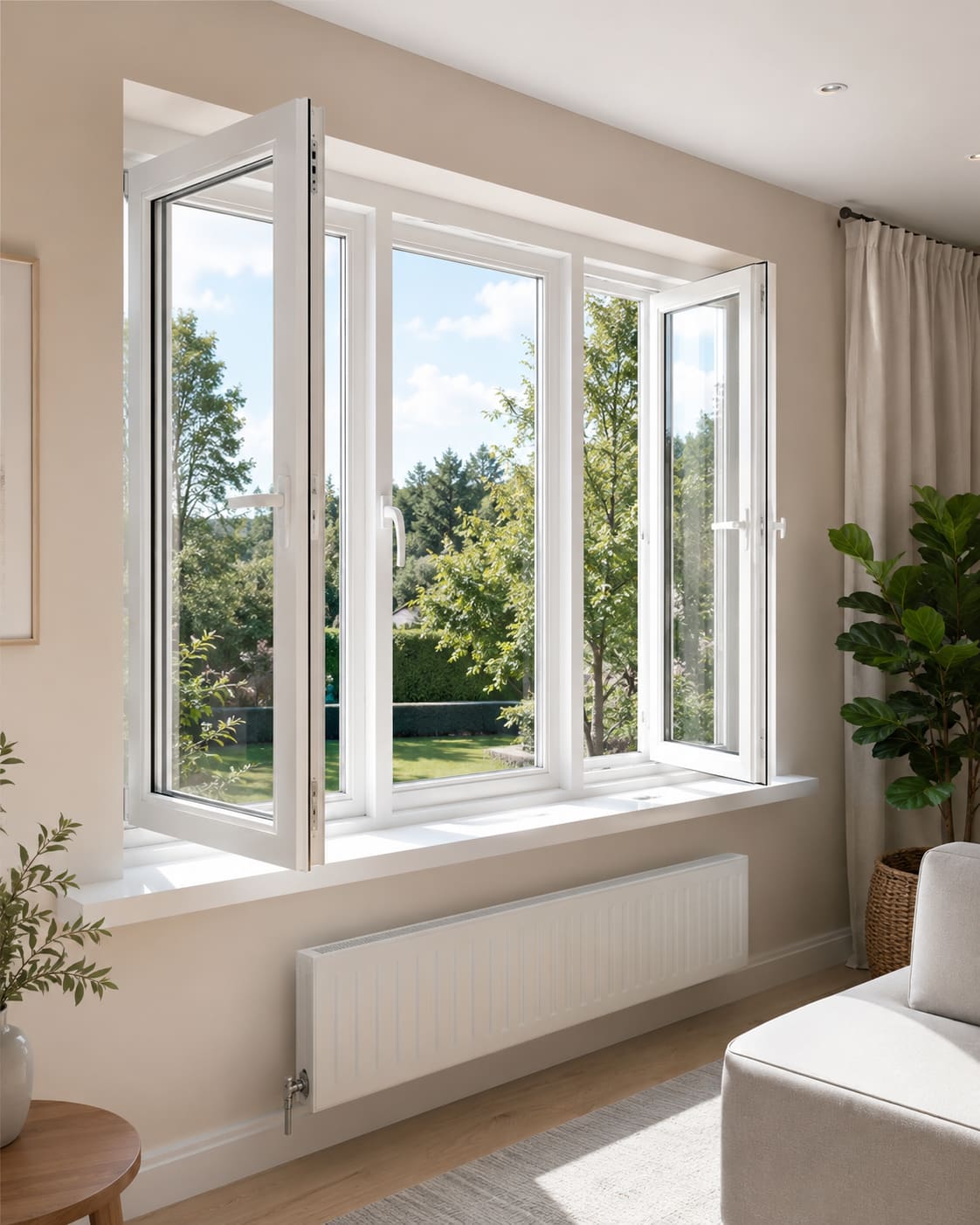
The frame system carries a large share of the result. uPVC windows use multi-chamber profiles and welded corners that naturally damp vibration and seal tightly, which is why they often edge out aluminium on pure acoustics for the same glass. Thermally broken aluminium windows can match them closely when specified with continuous gaskets and quality locking hardware that pulls the sash firmly onto its seals at every point.
- Sliding windows and doors are inherently harder to seal than casements because they slide past a track rather than compress onto a gasket; specify brush-plus-fin seals and interlocking meeting stiles for the best result.
- Balcony and terrace doors facing the road should carry the same acoustic glass build as the windows beside them, not a thinner economy pane.
- Locking points matter: a multi-point lock that draws the whole sash tight will out-perform a single centre latch that lets the corners breathe.
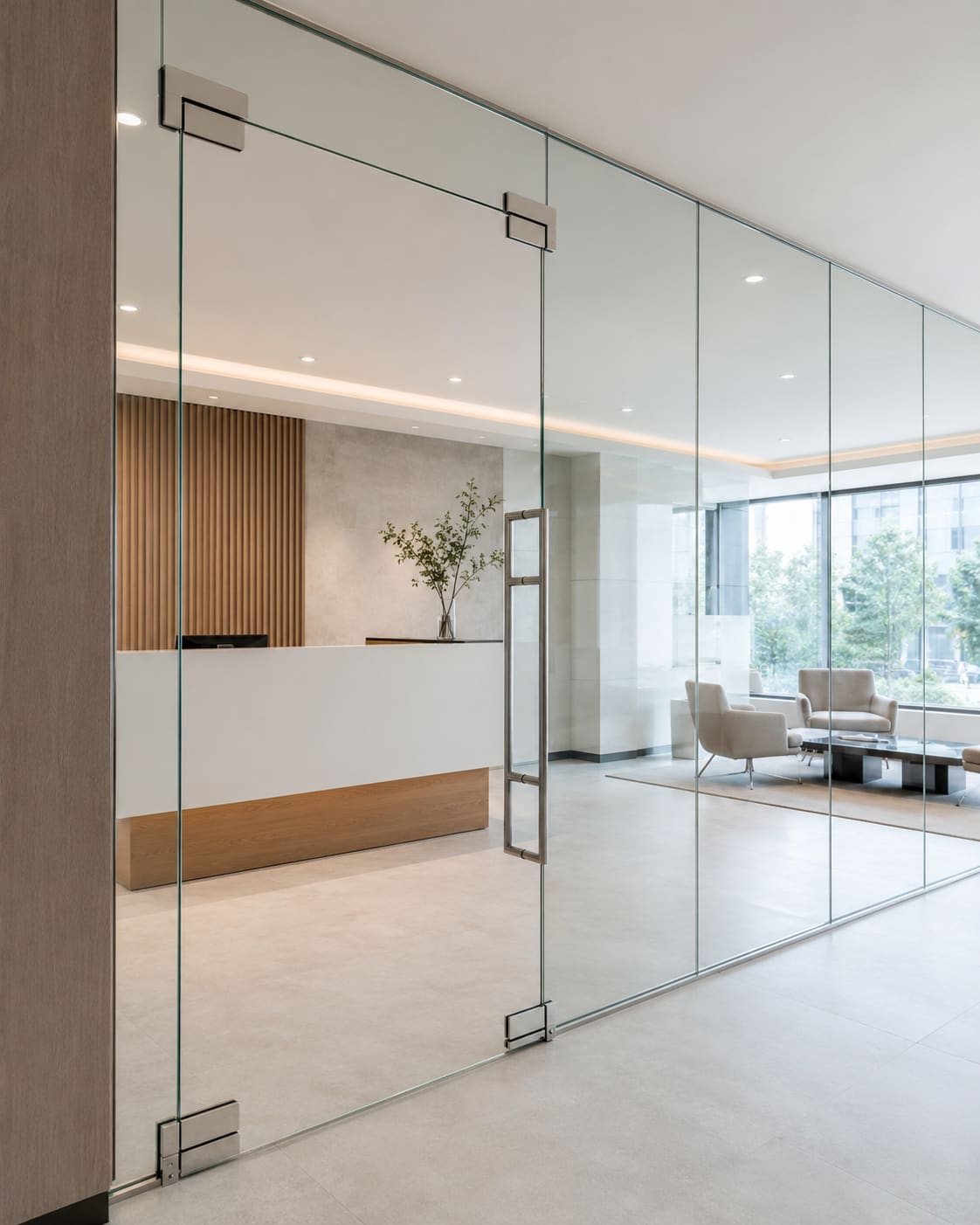
For commercial facades and shopfronts in areas like Banjara Hills and HITEC City, pairing acoustic DGUs with a well-sealed structural glazing detail keeps street noise out while preserving the clean architectural look. The principle is always the same across homes and offices alike: tight, gap-free assembly is what turns a good pane into a quiet room.
Indian Standards and Local Context
Glass and glazing in India are governed by several standards that intersect with acoustic double-glazing selection. Toughened safety glass used in facades and large windows is specified under IS 2553, and laminated glass is covered under IS 2553 Part 1. The National Building Code of India (NBC) 2016 addresses glazing, wind load and human safety in Part 6, while wind pressure on glass panes is calculated per IS 875 Part 3 - important for tall buildings and exposed elevations across the city.
The Energy Conservation Building Code (ECBC) and BEE star ratings drive the thermal side of DGU selection, which pairs neatly with acoustic goals because both benefit from wider cavities and better seals. On the noise side, the Central Pollution Control Board sets ambient limits of 55 dB by day and 45 dB by night for residential zones under the Noise Pollution (Regulation and Control) Rules, 2000. On a plot facing a busy road those limits are routinely exceeded outdoors, and acoustic double glazing is one of the few practical ways for residents in Hyderabad, Secunderabad and the wider Telangana and Andhra Pradesh region to bring indoor levels back within a restful range.
Hakimi Aluminium and Glass supplies and installs acoustic double-glazed uPVC and aluminium windows across Hyderabad and Secunderabad, and specifies branded, tested glass builds and hardware so every opening meets both the safety code and the acoustic target you set.
Typical Costs in India (INR)
Acoustic double glazing costs more than standard DGU because of the laminated pane and the wider cavity, but the premium is modest relative to the years of comfort it buys. The ranges below are indicative, supplied and fitted, and will move with glass thickness, frame system, gas fill and site conditions.
- Standard DGU windows: roughly INR 550-900 per square foot (glass plus frame, supplied and fitted).
- Acoustic laminated DGU windows: roughly INR 900-1,600 per square foot depending on frame system and glass build.
- Premium thermally broken aluminium acoustic systems: INR 1,600 per square foot and above.
- Acoustic glass doors and large sliders: typically INR 1,000-2,200 per square foot including hardware.
- Argon gas fill, low-E coatings and thicker asymmetric panes each add a small premium but improve both noise and heat performance.
As a worked example, upgrading three standard bedroom windows totalling around 90 sq ft from plain single glass to acoustic DGU might cost roughly INR 90,000 to 1,45,000 supplied and fitted. That is a one-time investment measured against years of quieter sleep on a busy road, and it typically lifts resale appeal too. The cheapest quote is rarely the quietest window, so weigh the tested Rw figure against the price rather than the price alone.
How to Specify the Right Acoustic Window
The best way to buy is to work backwards from the noise you actually face, rather than picking a glass thickness at random or copying a neighbour's spec. Five steps get you to the right build without over-spending.
- Measure or estimate the outdoor noise level at the window; arterial roads in Hyderabad often run 75-85 dB during peak hours.
- Decide the target indoor level: 35-40 dB for bedrooms, 40-45 dB for living and work areas.
- Choose a glass build whose Rw + Ctr closes that gap, typically Rw 35-40 dB or higher for a genuinely busy road.
- Insist on asymmetric panes, a 12-20 mm cavity and, for serious noise, an acoustic laminated pane rather than plain float glass.
- Match the frame to the glass: multi-chamber uPVC or thermally broken aluminium with continuous gaskets and multi-point locking.
Finally, treat installation as part of the specification, not an afterthought. The gap around the frame must be foam-filled and taped, the sill must be level, and the sash must compress evenly onto its seals along its whole length. When you are ready, share your window sizes and the road you face and get a free quote - we will recommend the exact glass build, frame and hardware that hits your target decibel level, and nothing you do not need.