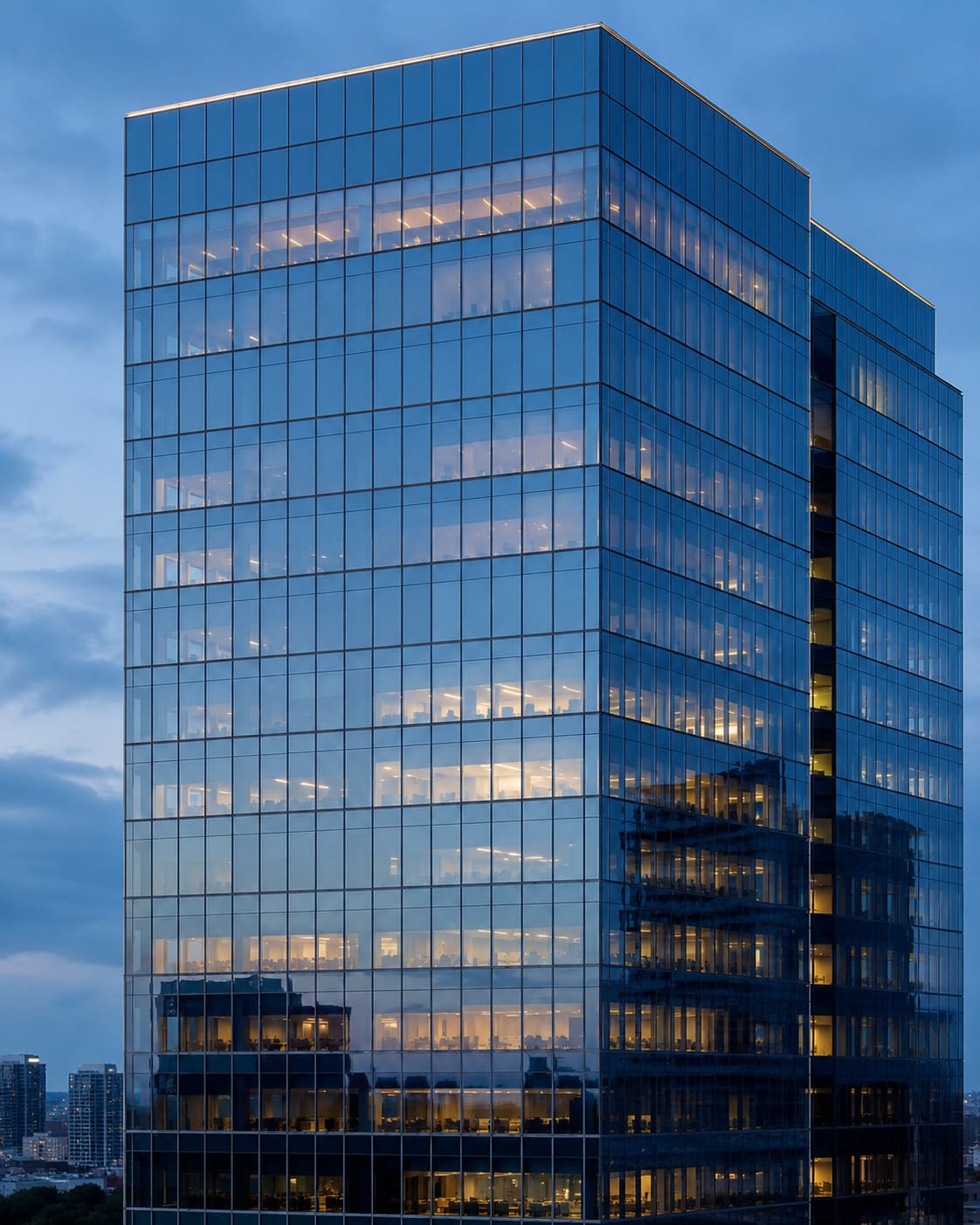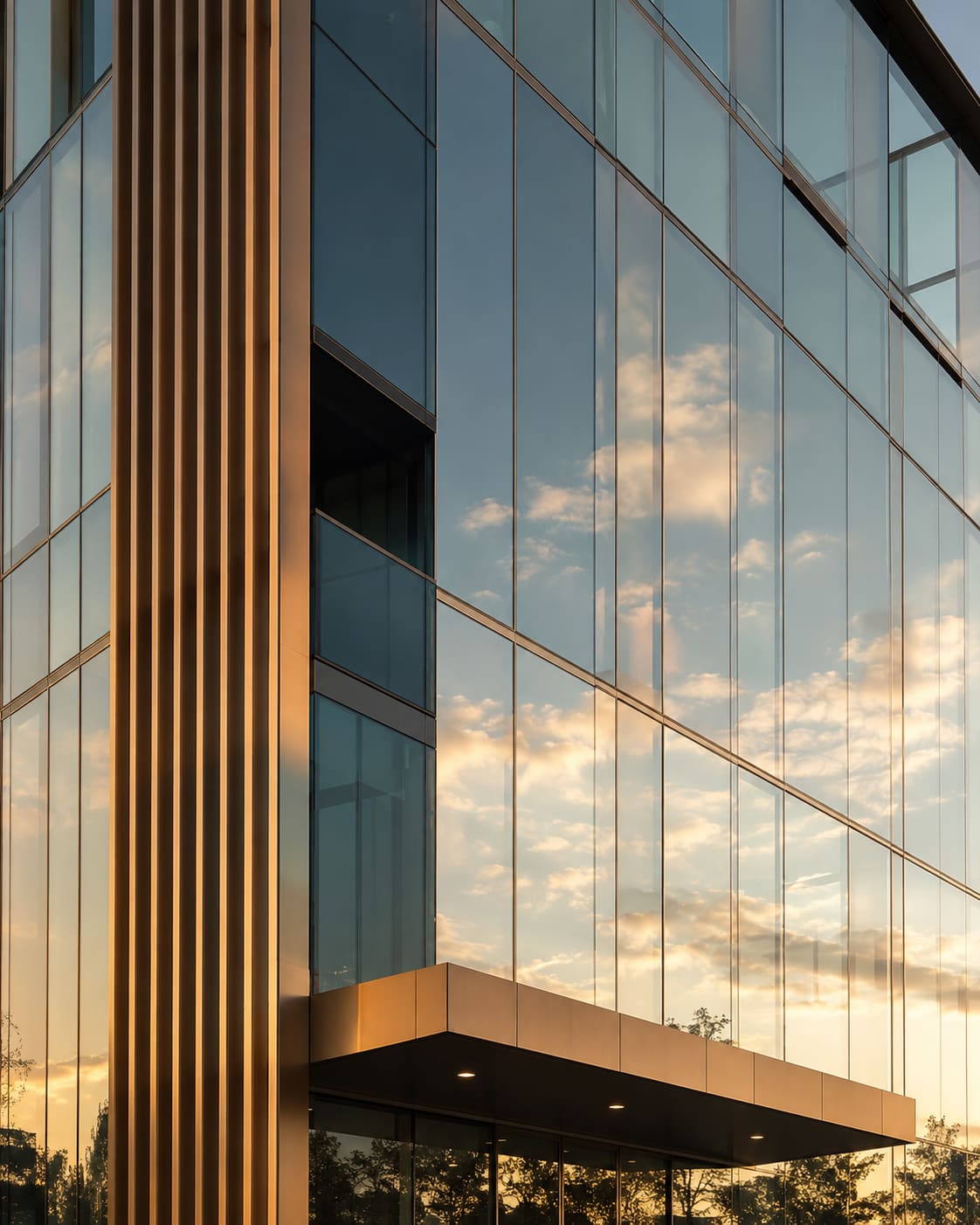
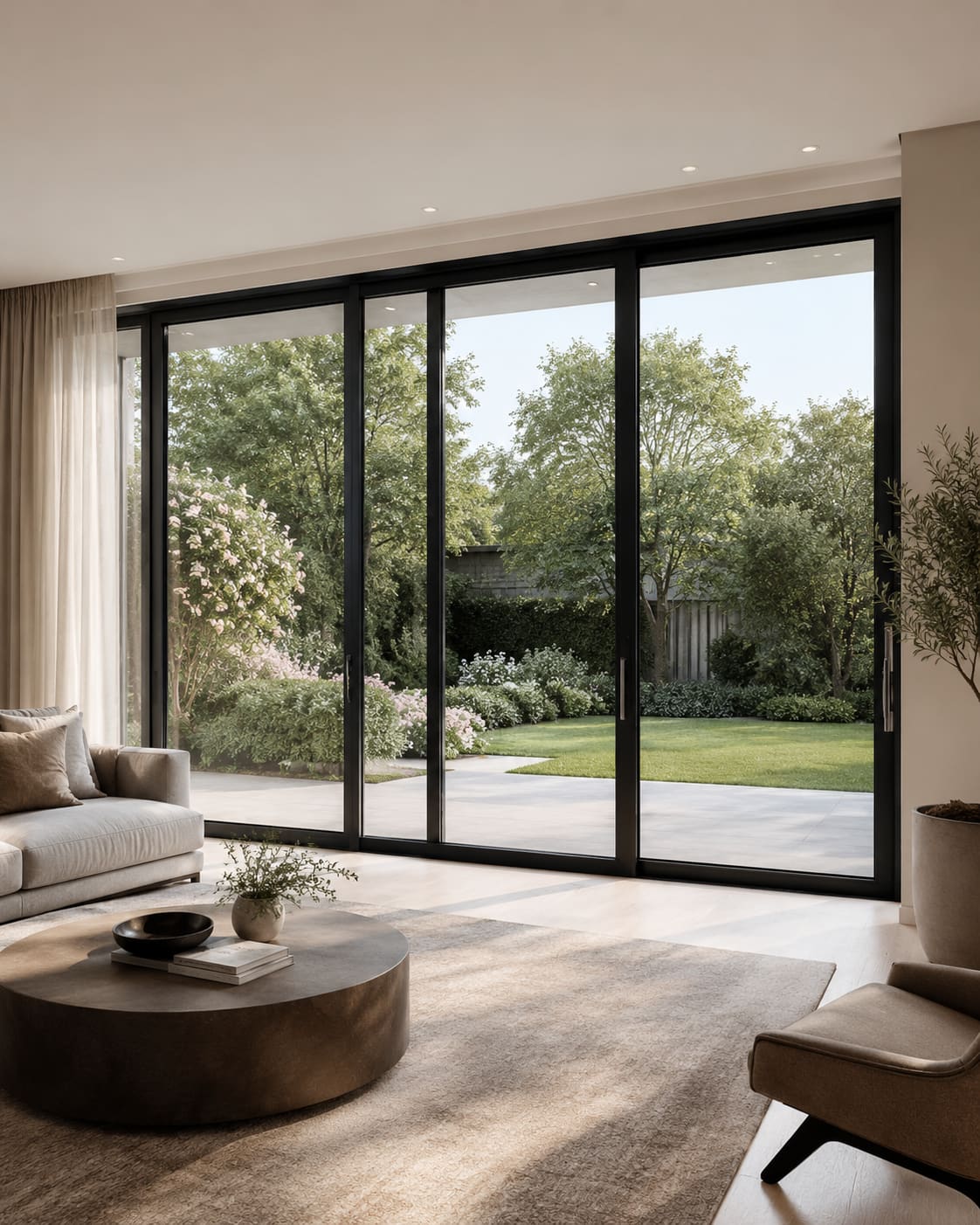
To specify aluminium windows well, write the performance you require in measurable terms - thermal, acoustic, structural, and air and water tightness - and let the fabricator engineer a system that meets it, instead of naming one proprietary series and hoping it suits every opening. A specification built around criteria, Indian standards and tolerances is defensible on site, comparable across tenders, and testable at handover. That is precisely what protects the architect when a facade is questioned for leakage or heat gain two monsoons after handover.
This matters most in Hyderabad, Secunderabad and the wider Telangana and Andhra Pradesh region, where the governing design problem is solar heat gain and glare, not winter heat loss. That single fact inverts several instincts imported from temperate-climate detailing: SHGC and external shading routinely outrank U-value, and the joint between window, wall and shading device is where most real-world failures begin. Whether you are drawing a residence in Jubilee Hills or a commercial block on the Outer Ring Road, well-detailed aluminium windows live or die on the clauses below.
This guide walks through the performance schedule, the numbers, the standards to cite, the glass and hardware, indicative INR costs, and the testing regime worth locking down before the drawings leave your office - with a local lens on what actually performs in this climate.
Start With a Performance Schedule, Not a Profile Name
The strongest way to specify aluminium windows is to open the document with a performance schedule the fabricator must meet, keyed to each window type and orientation. This lets you compare bidders on outcomes rather than marketing, and it makes non-compliance visible at the test rig instead of at a leak. Name a reference system as an 'approved equal' if you like, but let the numbers govern.
- Thermal transmittance (U-value): state the whole-window U in W/m2K and distinguish centre-of-glass from frame and overall. Frame and edge effects dominate on slim units, and this is exactly where cheap systems quietly under-deliver.
- Solar Heat Gain Coefficient (SHGC): the primary lever in Hyderabad. Target 0.25–0.35 on east, west and south elevations, relaxing on shaded or north-facing openings.
- Visible Light Transmittance (VLT) and the SHGC-to-VLT ratio: a higher light-to-solar-gain ratio keeps daylight while rejecting heat, which matters in a city that runs air-conditioning nine months a year.
- Acoustic performance: weighted sound reduction index Rw (with the C and Ctr spectrum adaptation terms) for road-facing elevations or sites near the Shamshabad airport corridor.
- Air infiltration, water penetration and wind resistance, each stated as a class with its specific test pressures (covered under testing below).
State every value as a minimum requirement and require certified test data or calculations substantiating compliance. Browse our services if you want to see how a written schedule translates into a buildable system.
Cite the Indian Standards That Govern Each Clause
Anchor every requirement to a named standard so the design intent survives value-engineering on the way to site. Naming the standard raises the floor even where you are not certain of the exact clause number.
- Safety glazing: IS 2553 governs toughened and laminated glass selection at low sills, doors, full-height glazing and overhead applications.
- Wind loading: IS 875 (Part 3) sets design wind pressure by terrain category, height and location - the basis for frame, mullion and glass thickness. Basic wind speed across most of Telangana sits around 44 m/s, but always confirm for the specific site and height.
- Building and life-safety context: NBC 2016 covers openings, ventilation, egress and fire provisions.
- Energy performance: ECBC sets envelope U-value and SHGC compliance paths for conditioned commercial buildings, increasingly enforced on larger Hyderabad developments.
- Green-rating alignment where pursued: IGBC, GRIHA or LEED credits tied to daylight, glare control and envelope performance.
- Where imported system data is used, cite the actual ASTM air, water and structural test methods rather than inventing a pass figure.
Casement or Sliding: Match the System to the Opening
Choose the opening type before you choose the profile, because the operation dictates how well the window can seal, span and drain. In Hyderabad both casement and sliding aluminium windows are common, and each has a defensible place.
- Casement and top-hung windows: compress against a continuous EPDM gasket, so they achieve the best air and water tightness and the highest acoustic ratings. Specify them on conditioned rooms, acoustic elevations and high-rise exposures where wind-driven rain is severe.
- Sliding windows: sashes bypass on tracks and cannot compress a full-perimeter seal, so air and water performance is inherently lower. They remain the practical, cost-effective choice for balconies, utility areas and wide openings where a projecting sash is impractical.
- Slim-interlock and lift-and-slide systems: bridge the gap for large glazed openings, offering better seals and roller capacity than a basic two-track slider, at a premium.
- Fixed lights and ventilators: combine fixed glazing for daylight with a small operable ventilator to meet NBC openable-area requirements without compromising the whole wall's tightness.
As a rule for this climate, use casements where sealing and acoustics matter and reserve sliders for exposure-tolerant openings. Where the whole elevation is glazed, step up to thermal-break aluminium systems engineered for the span rather than stretching a residential slider.
Glass Make-Up: Where Most of the Performance Lives
The glass specification carries most of the thermal, acoustic and safety performance, so treat it as a first-class clause rather than a note. In a cooling climate the coating does more work than the frame.
- Double-glazed unit (DGU) build-up: nominate the full make-up - for example 6 mm high-performance low-E / 12 mm air or argon / 6 mm clear - and specify the low-E coating surface (surface 2 for solar control in India).
- Edge spacer: use a warm-edge spacer where thermal performance and condensation resistance are critical, and state the desiccant and secondary-seal expectations.
- Safety glass locations: toughened or laminated to IS 2553 at doors, low sills, full-height glazing and overhead; laminated glass also adds acoustic and security benefit.
- Solar-control single glazing: on naturally ventilated or budget projects, a good solar-control coating on 6 mm can still deliver useful SHGC without the DGU premium.
- Coating surface matters: name the coating and its surface explicitly, or a fabricator can legally substitute a weaker configuration that still 'meets' a loosely written line item.
As a Hyderabad sanity check on rates, a performance DGU runs roughly ₹280–₹550 per sq ft of glass depending on coating and low-E grade, before framing.
Detail the Interfaces and Tolerances Yourself
Most window failures are interface failures - the joint between frame and structure, and between window and shading or cladding. Draw these details; do not leave them for the shop floor to improvise on site.
- Perimeter joint: nominate a joint width (a 10–15 mm perimeter is a common, workable default) sized for structural movement and construction tolerance, not just for what looks neat on paper.
- Sealant and backing: low-modulus neutral-cure silicone over closed-cell backer rod at the correct width-to-depth ratio; specify the sealant class and expected service life.
- Water management: continuous sill flashing, end dams and a drained, weeped path. Never rely on face sealant alone as the primary barrier - it fails first in Hyderabad's driving monsoon rain.
- Fixing: bracket type, spacing and edge distances coordinated with the substrate, whether RCC, blockwork or a separate sub-frame.
- Deflection limits: cap frame and mullion deflection under design wind load - span/175 for single glazing and span/240 or 20 mm for insulating glass are widely used limits; confirm against your glass supplier.
- Thermal movement: allow for aluminium's expansion over the profile length, especially on dark powder-coat or anodised finishes baking in the direct west sun.
Hardware, Gaskets and Finish - The Details That Age
Hardware and finish decide how a window feels on day one and whether it still seals in year ten, so specify grade and finish, not merely function. Under-specifying this line is the quiet cause of most 'the windows feel cheap' complaints.
- Operating hardware: friction stays, multi-point locking and quality gaskets rated for the window type and weight; specify locks and handles by grade and corrosion class, not by lowest price.
- Sliding gear: for large sliders and slim-interlock sashes, the rollers, tracks and interlocks determine whether a 100–150 kg sash still glides after five years - specify load-rated stainless components.
- Finish: powder coat to a recognised architectural grade or anodising, with a stated minimum coating thickness (60 microns is a sensible powder-coat floor) and warranty; note colour and gloss on the schedule.
- Gaskets and weatherseals: EPDM appropriate to service temperature, with corner vulcanising or welding at frame junctions so the seal stays continuous around the sash.
- Corrosion: near coastal Andhra Pradesh, uprate fasteners and hardware to marine-grade stainless, because standard fixings pit and streak within a couple of seasons in salt air.
Match the hardware to the exact profile system before the schedule is frozen; a mismatched track or stay quietly undoes an otherwise good specification. You can see how we resolve these details on our recent projects.
Budget, System Selection and Indicative Costs
Match the system to the exposure and budget honestly, because over-specifying a thermal break on a shaded north elevation wastes money a shading fin would spend better. Here is how the numbers typically fall in the Hyderabad and Telangana market in 2026.
- Plain aluminium sliders: roughly ₹350–₹550 per sq ft of window, including glass and standard hardware - fine for budget residential and semi-exposed openings.
- Premium casement and thermal-break systems: roughly ₹650–₹1,200 per sq ft, justified on conditioned buildings, acoustic elevations or ECBC and green-rating projects.
- Performance glass: budget ₹280–₹550 per sq ft of glass for a DGU with a good low-E coating, on top of the framing rate.
- Hidden costs: mock-ups, site water testing, and proper flashing add a few percent to the headline rate but prevent leaks that cost lakhs to chase later.
As a rough split, on a well-specified conditioned building the glass carries the majority of the energy performance and the frame and hardware carry the durability, so do not starve either. When you have elevations ready, get a free quote so the system, glass and fittings are priced as one engineered package rather than three disconnected line items.
Require Testing, Mock-Ups and Submittals
For anything beyond small residential runs, a written performance number is only as good as the test that verifies it - so build testing into the specification and the programme, not the punch list.
- Air, water and structural: specify the test method and the exact pressures - water-penetration test pressure and the structural positive and negative wind pressures derived from your IS 875 (Part 3) loads.
- Project mock-up: require a representative visual and performance mock-up for large or premium facades before bulk fabrication is released. Catching a drainage error here saves lakhs later.
- Site quality checks: hose or field water testing on completed openings, plus a documented snag and sign-off protocol.
- Submittals: shop drawings, structural and thermal calculations, glass and hardware cut sheets, and test certificates as a condition of approval before manufacture.
- Programme: allow time for mock-up approval in the construction schedule so testing is not compressed into the final week before handover.
Hakimi Aluminium and Glass provides design-assist input, shop drawings, fabrication and installation for architects across Hyderabad, Secunderabad, Telangana and Andhra Pradesh - useful when you want early feedback on buildability and test strategy while the specification is still open.
Common Specification Traps to Avoid
Most weak aluminium window specifications fail in the same predictable ways. Screen your document against this shortlist before it is issued for tender.
- Chasing U-value while ignoring SHGC: in a cooling climate this spends money in the wrong place and the building still overheats.
- Leaving the perimeter joint and sill drainage to the installer: this is the single most frequent cause of monsoon leaks in Hyderabad.
- Naming a glass make-up but not the coating surface: the fabricator legally substitutes a weaker configuration.
- Specifying by profile depth alone: depth is not performance - two 60 mm systems can differ hugely in air, water and thermal results.
- Forgetting openable-area and egress checks: an all-fixed elevation may look clean but fail NBC ventilation and life-safety requirements.
- Omitting a testing clause on large facades: without it, you have no contractual lever when performance is challenged after handover.
When the openings grow into full facades - curtain walls, structural glazing or spider-glass entrances - step up from a window specification to a dedicated facade approach so the system, glass and fittings are engineered together from the start.