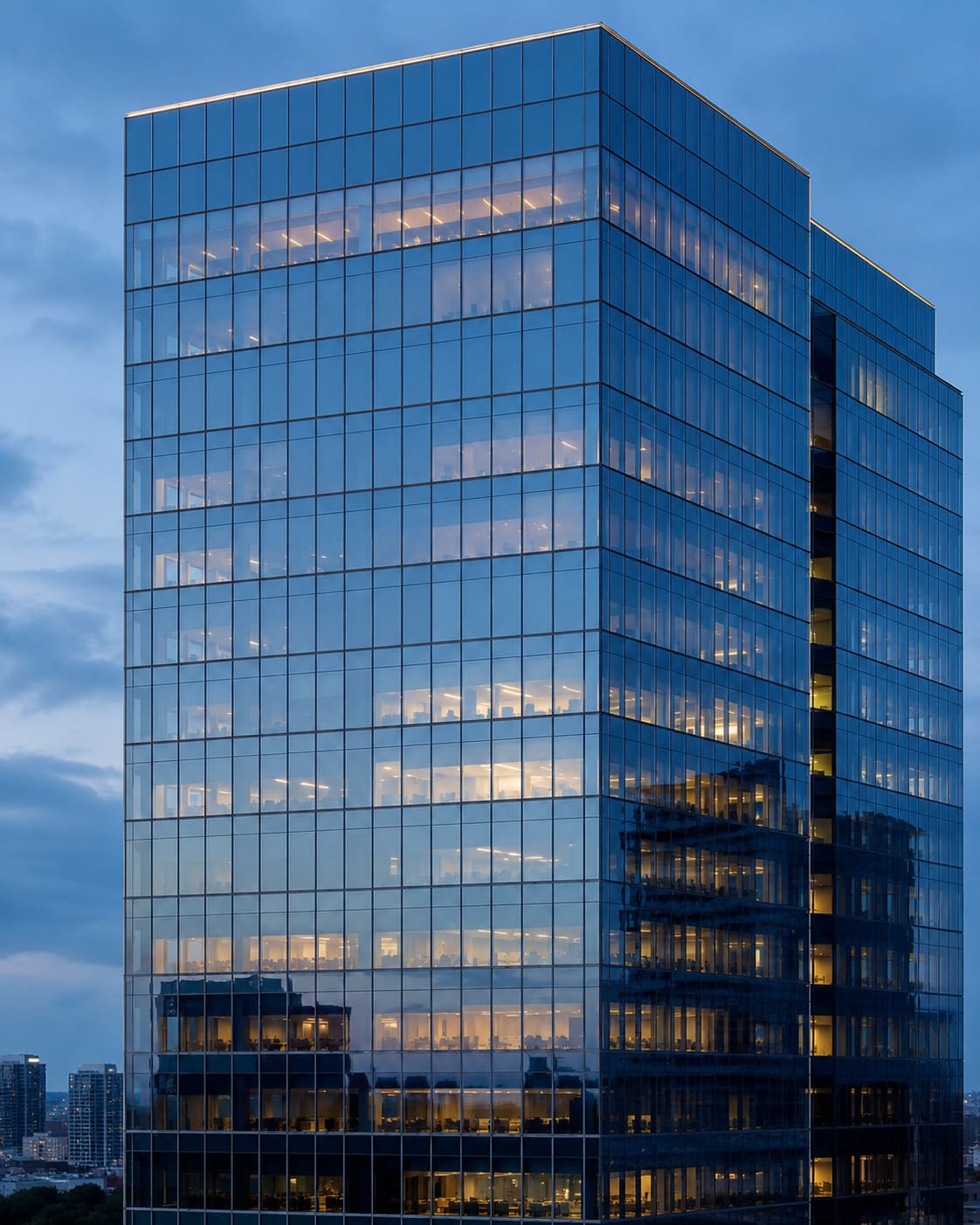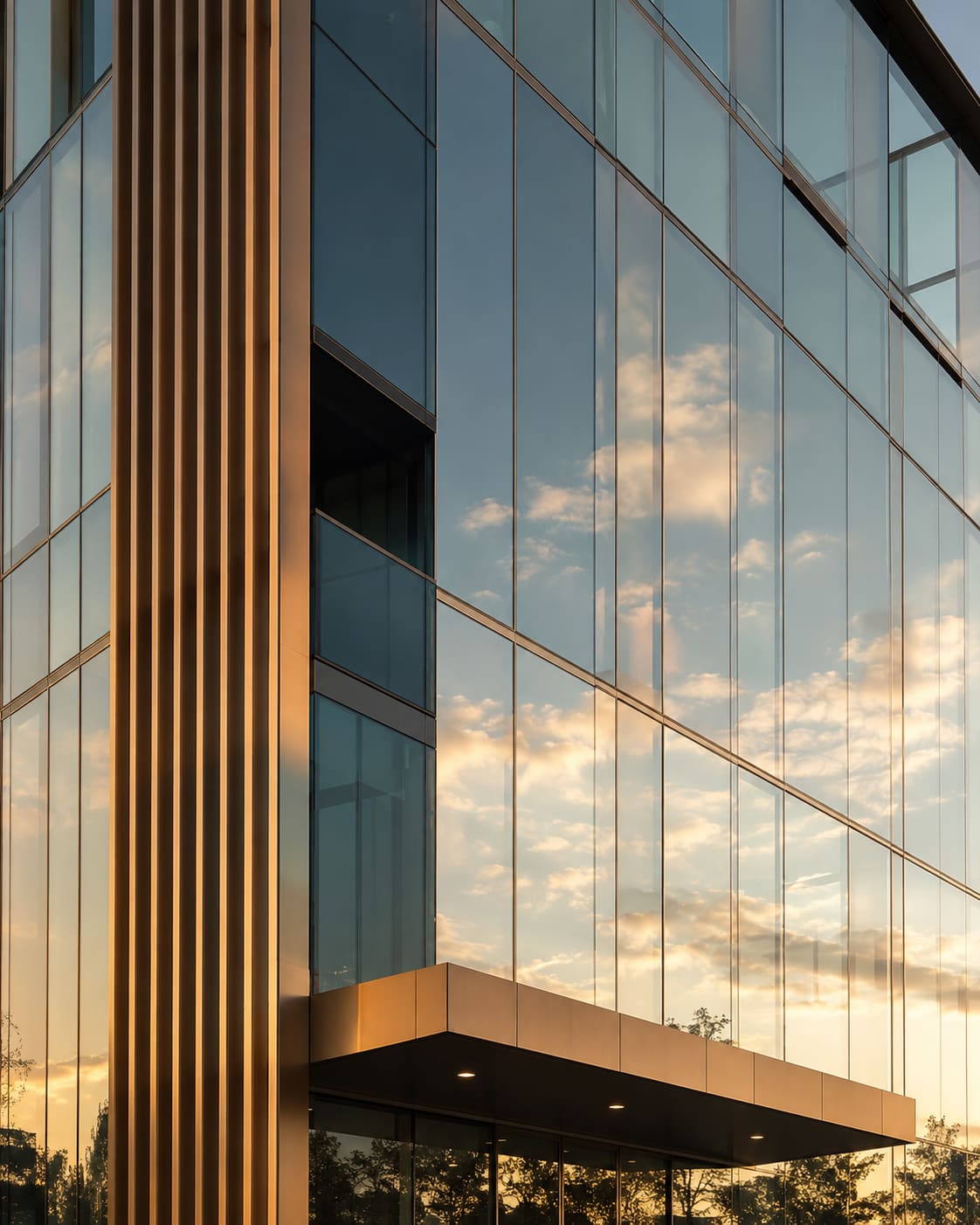

IGBC facade credits are earned when your glazing, shading and cladding specifications push envelope performance beyond the mandatory ECBC baseline, feeding points across Energy Efficiency, Daylighting, Thermal & Acoustic Comfort and Materials & Resources at the same time. There is no single line item called a facade credit; instead, the SHGC, U-value, VLT, acoustic rating and material-sourcing decisions you draw quietly write several credit lines together. Treating the envelope as one performance system, rather than as separate product picks, is what converts a facade into points instead of a compliance risk.
This guide maps exactly where those credits live, the indicative numbers and costs behind them, and the specification language that secures them under IGBC Green New Buildings and the allied rating systems. The goal is that by the time your facade section is drawn, the SHGC, U-value, VLT, Rw and recycled-content values are already stated as verifiable figures your rating consultant and the IGBC reviewer can accept without back-and-forth.
For architects and developers building in Hyderabad, Secunderabad and across Telangana and Andhra Pradesh, the composite, cooling-dominated climate makes these choices even sharper. Solar heat gain is the enemy for most of the year, so the facade decisions that earn credits are also the ones that cut running cost for the life of the building.
What IGBC facade credits actually are
IGBC rating systems, including Green New Buildings, Green Homes and the interiors variants, do not award a standalone facade credit. Instead the envelope contributes across several credit categories, and understanding which lever moves which credit lets you trade off intelligently rather than guessing.
- Energy Efficiency: envelope performance against ECBC forms the mandatory prerequisite, and enhanced performance above it earns graded energy points, often the largest single block of credits available to the facade.
- Daylighting: minimum VLT and a daylight factor or spatial daylight autonomy across regularly occupied spaces, where glazing transparency is the primary driver.
- Thermal & Acoustic Comfort: U-value, SHGC and glazing acoustic rating (Rw) support the occupant-comfort credits.
- Materials & Resources: recycled content, regional sourcing and low-emitting sealants in the aluminium framing and cladding.
The central tension is obvious. Pushing VLT up for the daylight credit tends to raise SHGC and solar gain, working against the energy credit. Resolving that trade-off with the right coating and shading is the core design job, and it is where a well-detailed glass facade specification pays for itself. If you want the credit strategy sanity-checked before tender, you can get a free quote that includes the buildable assembly behind each number.
Energy Efficiency: the ECBC envelope baseline
The energy credits ride on ECBC (Energy Conservation Building Code) compliance for the envelope, which is a prerequisite before any enhanced points are counted. You can demonstrate it via the prescriptive route or whole-building energy simulation. The simulation route usually gives the facade more latitude to trade glass performance against shading and orientation, which matters when your WWR is high.
- U-value: specify the assembly U-value for the vision glazing, meaning glass plus spacer plus frame, not the centre-of-glass figure alone, so the audited number matches ECBC's basis. Typical high-performance DGU assemblies land around 1.6 to 2.2 W/m2K.
- SHGC: this is the dominant metric for Hyderabad's composite, cooling-dominated climate. A lower SHGC directly cuts cooling load and helps the energy credit. Aim for 0.25 to 0.30 for most vision glazing, tighter where WWR is high.
- WWR: window-to-wall ratio drives the applicable ECBC SHGC and U-value limits. High glazing ratios tighten the allowable values, so coordinate WWR with glazing selection early rather than discovering the clash at the compliance stage.
- Shading: external projections, fins and reveal depth reduce effective solar gain and can relax the glass SHGC you need. Model them explicitly rather than ignoring them, because unmodelled shading is credit left on the table.
A high-performance double-silver or triple-silver low-e coating on a double-glazed unit is typically the route to a low SHGC while holding VLT high enough for the daylight credit. Triple-silver coatings deliver the best selectivity but add cost and reduce VLT slightly, so match the coating to the orientation.
Daylight and glare: the VLT lever
Daylight credits reward useful daylight across regularly occupied area, usually assessed by VLT combined with a daylight factor or a spatial daylight simulation. This is where the facade fights itself, because the same coating that lowers SHGC also lowers VLT, and darkening the glass to kill glare quietly destroys the daylight credit.
- Target a glazing selectivity ratio (VLT divided by SHGC) above roughly 1.25. High-selectivity low-e glass, for example VLT 0.40 against SHGC 0.27, is what lets you satisfy both the energy and daylight credits from one specification.
- Keep vision glazing VLT high enough to meet the daylight-factor target, commonly VLT 0.40 or above for deep floor plates, and manage glare with external shading or internal blinds rather than by darkening the glass.
- Zone the facade by function: clerestory or upper glazing for daylight penetration, view glazing at eye level, and spandrel or insulated panel where daylight adds no value but heat load does.
- Watch external reflectance. High reflectance throws glare off your building onto neighbours and roads and can trigger local objections, so state a reflectance ceiling on the drawings, usually 15 to 20 percent.
Getting this balance right is visible in our recent projects, where daylight zoning and shading are resolved on the section rather than patched later with film and blinds.
Comfort credits: thermal and acoustic
The comfort credits are earned by the same assembly, with two additional performance lines you must state explicitly so the reviewer can award them.
- Thermal comfort: a low assembly U-value and controlled SHGC reduce radiant asymmetry and the hot near-glass zones occupants complain about. This is the comfort argument, distinct from the energy one, and both use the same numbers.
- Acoustic (Rw): specify the laminated interlayer and DGU cavity to hit the target Rw. On arterial Hyderabad sites, along corridors like the Outer Ring Road or busy Secunderabad junctions, a laminated outer lite with an acoustic PVB interlayer is often needed to reach an Rw of 38 to 42 dB for the comfort criterion.
- Air and water tightness: specify performance-tested systems for air infiltration, water penetration and structural wind load to IS 875 Part 3, so the comfort and energy models hold in reality rather than only on paper.
- Condensation: check the U-value and internal surface temperature against Hyderabad's warm-humid monsoon dew points, especially where cavity-conditioned spaces meet glazing, to avoid surface condensation that undermines both comfort and finishes.
Materials credits: aluminium, cladding and sourcing
The Materials & Resources credits reward what the facade is made of and where it comes from. Capture the evidence at tender, because chasing certificates at handover is where projects lose points they had already earned in the design.
- Recycled content: request aluminium mill certificates stating pre- and post-consumer recycled percentage. Both extrusion framing and ACP cores can contribute, and framing-grade aluminium commonly carries meaningful recycled content already.
- Regional materials: sourcing within the IGBC distance radius earns the local-materials credit, so favour Telangana and Andhra Pradesh fabrication and note the fabrication location in the spec. Local ACP cladding fabrication also shortens lead times and cuts transport emissions.
- EPDs and low-emitting products: request Environmental Product Declarations and low-VOC structural sealant and adhesive data for the indoor-air-quality credits.
- Durability: a fire-rated or FR-grade ACP core and a quality PVDF coating protect the credit intent over the building life, and on tall Hyderabad facades the fire rating is increasingly a code expectation as well as a green one. Compare the full our services scope so the framing, glazing and cladding evidence is coordinated under one specification.
Indicative costs and the credit trade-off in INR
Green facade decisions carry a cost premium over plain single glazing, but the premium is modest against the credit value and the lifetime cooling saving. The figures below are indicative supplied-and-fixed ranges for Hyderabad and Telangana projects as of 2026 and will move with aluminium and glass prices, panel size and system choice.
- Single-glazed clear or tinted in an aluminium frame: roughly INR 450 to 700 per sq ft. This rarely clears the ECBC baseline on its own in a cooling-dominated climate.
- Double-silver low-e DGU, SHGC around 0.27: roughly INR 900 to 1,300 per sq ft, the workhorse for energy plus daylight credits.
- Triple-silver high-selectivity DGU, SHGC 0.22 to 0.25: roughly INR 1,300 to 1,600 per sq ft, used on east and west elevations with high solar exposure.
- Unitised curtain wall with high-performance glass: roughly INR 1,600 to 2,600 per sq ft depending on module and finish.
- ACP cladding, FR-grade with PVDF coating: roughly INR 300 to 520 per sq ft installed, with recycled-content and regional-sourcing evidence feeding the Materials credits.
The economics favour the upgrade. The step from single glazing to a double-silver DGU adds around INR 400 to 600 per sq ft but can move SHGC from above 0.6 to below 0.3, roughly halving solar gain through the glass and paying back through reduced chiller sizing and running cost while unlocking the energy and daylight credits.
Specification language and common mistakes
Write performance, not brand. On your drawings and schedules, state SHGC, U-value, VLT, Rw and recycled-content targets as numbers with the governing test standard, and list acceptable products only as an indicative equal-or-better schedule. This keeps the credit path auditable and the tender competitive, and it stops a value-engineering substitution from quietly breaking your energy model.
Common mistakes that cost credits:
- Quoting centre-of-glass U-value instead of the assembly value, so the audited figure fails the ECBC basis.
- Chasing VLT for daylight without checking SHGC, ending up with a glass that fails the energy credit.
- Darkening glazing to fix glare instead of adding external shading, which sacrifices the daylight credit.
- Leaving external shading and reveals out of the energy model, forfeiting an easy path to a lower required SHGC.
- Deferring recycled-content and regional-sourcing evidence to handover, when it should be a tender deliverable.
- Ignoring reflectance limits and triggering neighbour or authority objections after installation.
A design-assist partner who fabricates locally closes these gaps early. Hakimi Aluminium and Glass provides design-assist, shop drawings, fabrication and installation for architects and developers across Hyderabad, Secunderabad, Telangana and Andhra Pradesh, which is useful when you want the glazing performance values on the drawings validated against a buildable, ECBC-compliant assembly before the tender goes out.
Process and timeline for a credit-ready facade
Sequencing the facade credit work early keeps it cheap. Retrofitting performance after the glass is ordered is where budgets and programmes slip.
- Concept stage: fix WWR, orientation and shading strategy, and set target SHGC, U-value and VLT bands against the ECBC route you intend to use.
- Design development: run the envelope model or simulation, lock the selectivity ratio, and write performance specifications with test standards.
- Tender: issue the equal-or-better schedule and require recycled-content certificates, EPDs and regional-sourcing declarations as returnable documents.
- Fabrication and shop drawings: validate the specified numbers against a buildable assembly, confirm frame thermal breaks and interlayers, and freeze the glass order.
- Installation and testing: verify air, water and structural performance on a mock-up or site test, and collate the certificates the IGBC reviewer will want.
On a typical medium commercial facade in Hyderabad, allow several weeks for glass procurement after the order is frozen, so the credit and specification decisions must be settled well before that point. Front-loading them is the difference between a facade that scores and one that scrambles for documentation at the end.