The laminated glass standard in India is IS 2553 (Part 1): 2018, the Bureau of Indian Standards specification for safety glass in architectural, building and general use. It defines laminated glass as two or more glass plies permanently bonded by a plastic interlayer, usually polyvinyl butyral (PVB), and requires that the interlayer retain broken fragments on impact so the pane holds together instead of shattering into loose shards. That fragment-retention property is what separates a genuine safety glass from ordinary annealed float glass.
Beyond the material specification, laminated glazing in India is regulated by three more documents working together: the National Building Code of India (NBC) 2016 dictates where safety glass is mandatory, IS 875 (Part 3): 2015 governs wind-load design, and the Energy Conservation Building Code (ECBC) covers thermal and daylight performance. Between them they fix minimum thickness, interlayer count, impact resistance and structural fixing for facades, skylights, canopies and balustrades.
This guide explains each standard in plain terms, lists the build-ups and INR pricing you will actually see quoted, and shows where laminated glass is compulsory. It is written for architects, builders and homeowners across Hyderabad, Secunderabad and the wider Telangana and Andhra Pradesh region, where intense summer heat, high UV, dust and a heavy monsoon all put real demands on glazing. At Hakimi Aluminium and Glass we specify and install IS-compliant laminated safety glass on projects from Gachibowli to Kokapet.
What Is the Laminated Glass Standard in India?
IS 2553 (Part 1): 2018 is the primary Indian standard for laminated and toughened safety glass in architectural and building applications. It replaced older editions and aligns Indian practice with international safety-glass testing, so a pane certified to this standard behaves predictably under impact anywhere in the country.
The standard defines classification, dimensions, tolerances and the mandatory fragmentation and impact tests a laminated pane must pass before it can be sold as safety glass. When you ask a fabricator for a test certificate, this is the number that should appear on it.
- Covers laminated glass, toughened (tempered) glass and heat-strengthened safety glass
- Specifies impact behaviour: the interlayer must retain fragments after breakage
- Sets thickness tolerances and permissible limits for bubbles, delamination and edge defects
- Part 2 of IS 2553 addresses safety glass for road transport (automotive) and is separate from buildings
Always insist on a mill certificate or test report referencing IS 2553 (Part 1): 2018. Unbranded imported laminate sold cheaply in local markets often uses thin, low-grade interlayers that yellow and delaminate at the edges within a few Hyderabad summers.
How Is Laminated Glass Made? Interlayers and Thickness
Laminated glass is built by bonding glass plies with a PVB interlayer under heat and pressure in an autoclave, producing a single monolithic-looking pane. The interlayer thickness directly controls safety, acoustic and security performance, so the right build-up depends entirely on the application.
- PVB interlayers come in nominal thicknesses of 0.38 mm, 0.76 mm and 1.52 mm
- Common architectural build-ups: 3+0.38+3 mm = 6.38 mm; 5+0.76+5 mm = 10.76 mm; 6+1.52+6 mm = 13.52 mm
- Thicker or multiple interlayers give higher blast, bullet and forced-entry resistance for security glazing
- SGP (ionoplast) interlayers offer far greater stiffness and edge stability than PVB, making them the choice for structural spider glazing and cantilevered balustrades
- Laminated glass blocks up to 99 percent of UV radiation and cuts sound transmission by roughly 3 to 5 dB over equivalent monolithic glass
For most residential and commercial work in Hyderabad the 6.38 mm and 8.38 mm build-ups cover doors, partitions and shopfronts, while 10.76 mm and above is reserved for overhead glazing, railings and large spans. You can see completed installations in our project gallery.
Where Is Laminated Glass Mandatory Under NBC 2016?
The National Building Code of India (NBC) 2016, Part 6 Section 3 (Glass and Glazing), requires safety glass in locations of foreseeable human impact and wherever a fall hazard exists. Laminated glass is the preferred safety option in all situations where fragment retention matters, because unlike toughened glass it does not fall out of the frame when it breaks.
- Overhead and sloped glazing such as skylights, glass canopies and atrium roofs
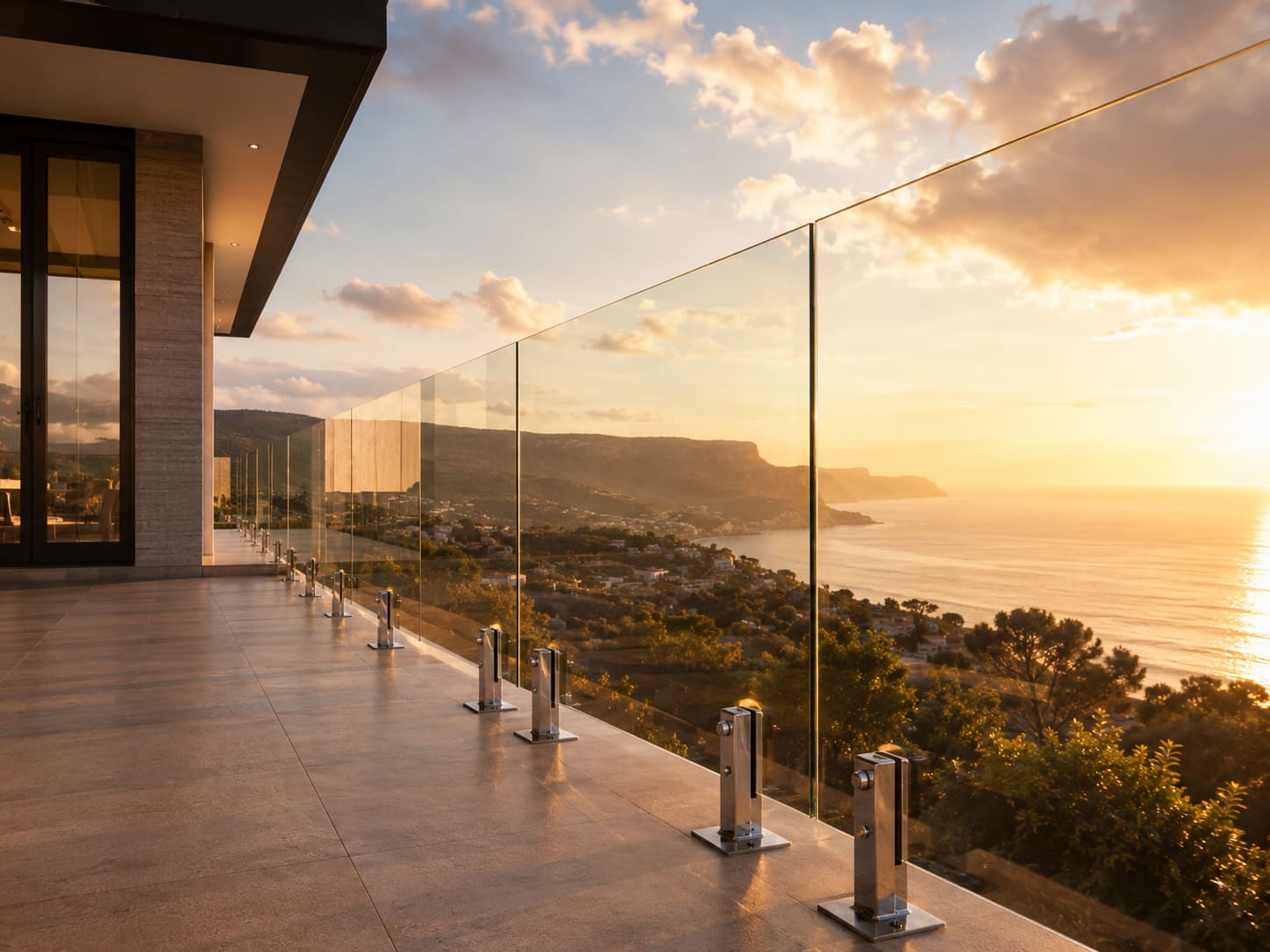
- Glass balustrades, staircases and balcony guarding, including frameless glass railings
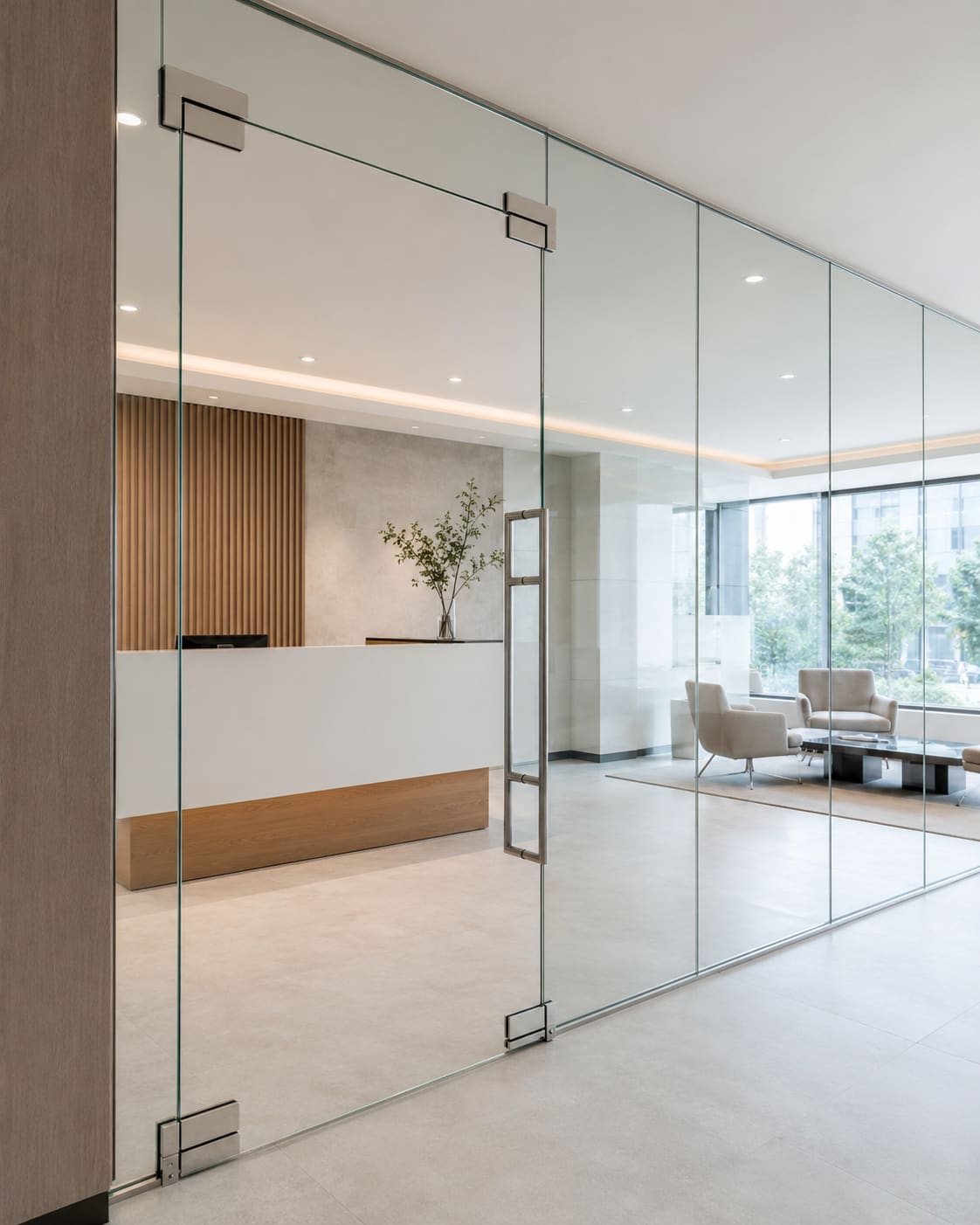
- Large full-height glazing, shopfronts and doors within reach of occupants
- Facades on high-rise and cyclone-exposed buildings requiring post-breakage retention
- Sound-sensitive interiors such as hospitals, recording studios and airport terminals
In practice, building approval authorities and structural consultants in Telangana treat overhead glazing and any guarding above about 0.9 m in height as mandatory laminated applications. Using toughened glass alone in these spots is a common and dangerous shortcut, because a spontaneously shattered toughened panel overhead becomes a shower of granules.
Laminated vs Toughened Glass: Which Standard Applies?
Both laminated and toughened glass are safety glasses certified under IS 2553, but they fail in completely different ways, and that difference decides which one a code officer will accept for a given position.
- Toughened glass is heat-treated to shatter into small, blunt granules; it is strong but offers no post-breakage retention
- Laminated glass holds every fragment on its PVB interlayer, so the pane stays in the opening even when cracked
- For overhead and guarding applications, laminated (or laminated-toughened) is preferred because a fallen toughened panel is a safety hazard
- For doors and partitions at floor level, toughened glass work is often sufficient and more economical
- The strongest option is heat-soaked toughened glass laminated together, combining impact strength with fragment retention for premium structural glazing facades
If you are weighing the two for a specific opening, our guide on choosing between the two glass types walks through the trade-offs in more detail.
Wind Load, Facades and Structural Fixing
Laminated facade glass in India must be sized for wind pressure per IS 875 (Part 3): 2015, which maps basic wind speeds by region and building height. This calculation is critical for the tall commercial towers rising across Hitec City, the Financial District and Kokapet, where wind pressure on upper floors is far higher than at street level.
- Basic wind speeds across Indian zones range from about 33 m/s to 55 m/s; inland Telangana sits in the lower band but tall buildings still see high localised pressures
- Structural silicone glazing joints are designed to ASTM C1401 and manufacturer load tables
- Laminated units used as vision panels in unitised curtain walls resist post-breakage blow-in during storms
- Insulated glass units (double glazing) can incorporate a laminated pane for combined safety, thermal control and acoustics
For any large elevation we recommend an early conversation with a facade consultancy so glass thickness, interlayer type and fixing are engineered together rather than value-engineered after the frame is fabricated. Getting the glass build-up wrong at design stage is expensive to correct on site.
Energy Performance and the Hyderabad Climate
Laminated glass supports Energy Conservation Building Code (ECBC) compliance by pairing safety with solar control through tinted glass, low-E coatings or a laminated pane inside a double-glazed unit. In a hot, high-UV, dust-laden city like Hyderabad, this combination cuts heat gain and interior fading while keeping the safety benefit intact.
- A laminated low-E insulated glass unit can achieve U-values around 1.6 to 2.8 W/m2K
- The near-total UV block protects interiors, timber, textiles and retail merchandise from fading
- Acoustic laminated glass is ideal for offices and apartments along busy corridors like the Outer Ring Road and Madhapur main roads
- A laminated pane inside a DGU facade delivers thermal, acoustic and safety performance in one build-up
During the Telangana monsoon, wind-driven rain and pressure differentials test facade sealing hard, so laminated vision glass paired with correctly designed structural silicone is a sensible specification for exposed elevations in Kondapur and Gachibowli.
Laminated Glass Price in Hyderabad (Indicative 2026)
Laminated glass is priced per square foot in Hyderabad and varies with build-up, interlayer grade, tint and coating. The figures below are indicative supply-and-fix ranges for planning purposes; a measured quote will always reflect your exact sizes, hardware and site access.
- 6.38 mm clear laminated (3+0.38+3): roughly INR 130 to 200 per sq ft
- 8.38 mm laminated (4+0.38+4): roughly INR 180 to 260 per sq ft
- 10.76 mm laminated (5+0.76+5): roughly INR 260 to 380 per sq ft
- Low-E or heat-reflective laminated: add roughly INR 120 to 300 per sq ft
- SGP structural laminate and acoustic PVB command a premium over standard PVB
These are material-led ranges; frameless railing systems, spider fittings and curtain-wall framing add hardware and fabrication cost on top. For an accurate figure on your project, get a free quote with your drawings or site dimensions and we will specify a code-compliant build-up.
How to Specify and Buy Compliant Laminated Glass
Specifying laminated glass correctly is mostly about matching the build-up to the application and then verifying the paperwork. A short checklist prevents the most common and costly mistakes we see on Hyderabad sites.
- Confirm the position: is it overhead, guarding, a door or a facade vision panel? This sets whether laminated is mandatory
- Select the build-up and interlayer grade (standard PVB, acoustic PVB, or SGP for structural spans)
- Ask for an IS 2553 (Part 1): 2018 test certificate and the interlayer brand
- For facades, obtain the wind-load calculation to IS 875 (Part 3): 2015 before fixing glass thickness
- Insist on properly sealed, polished edges; poor edge work is the leading cause of delamination in humid climates
- Use a fabricator who autoclaves in-house or sources from a reputable processor, not a market cut-and-paste job
Hakimi Aluminium and Glass supplies and installs IS-compliant laminated and toughened safety glazing across Hyderabad, Secunderabad and the wider Telangana and Andhra Pradesh region, from single laminated glass doors to full structural facades. Send us your requirement and we will recommend the right standard-compliant build-up for your budget and exposure.