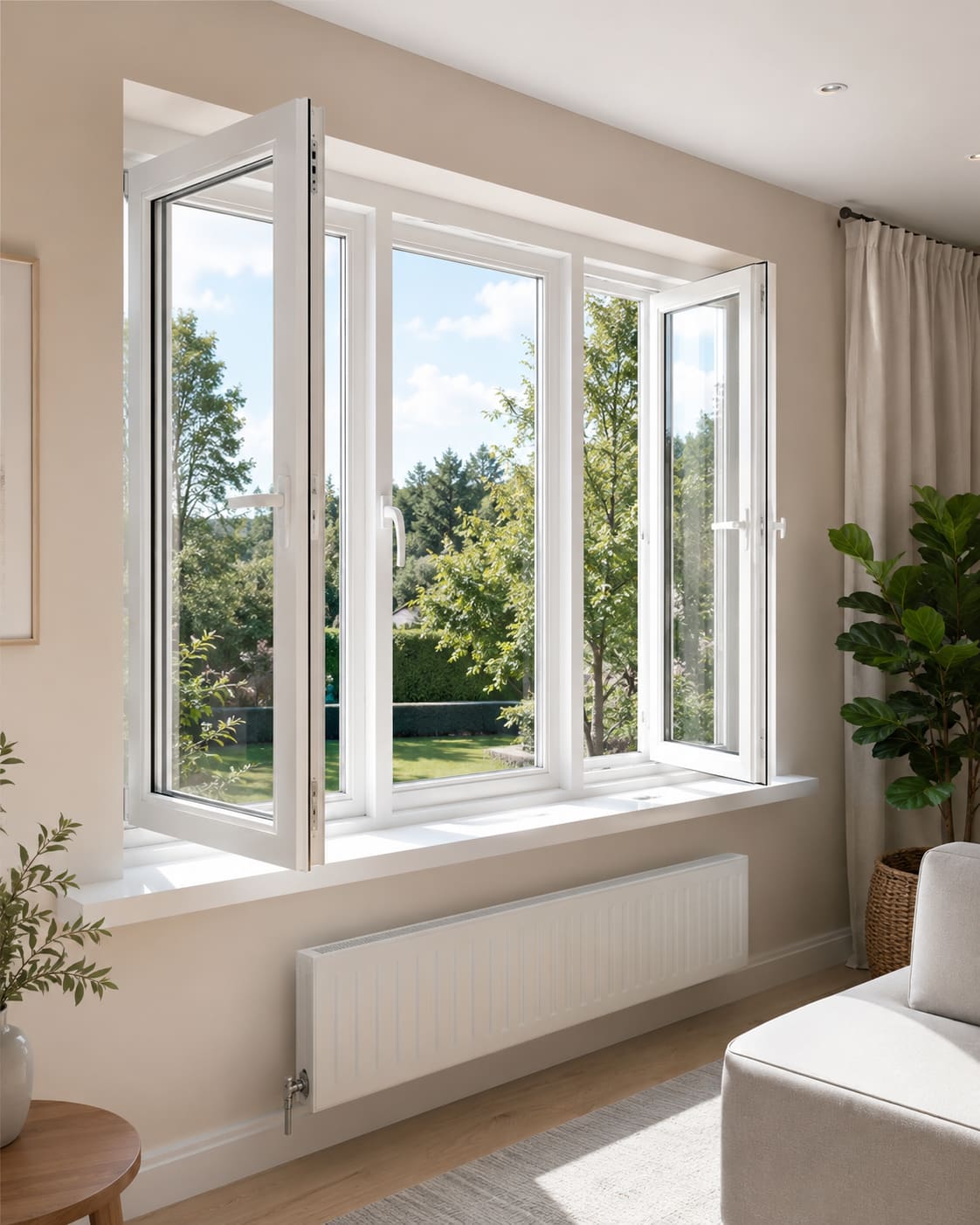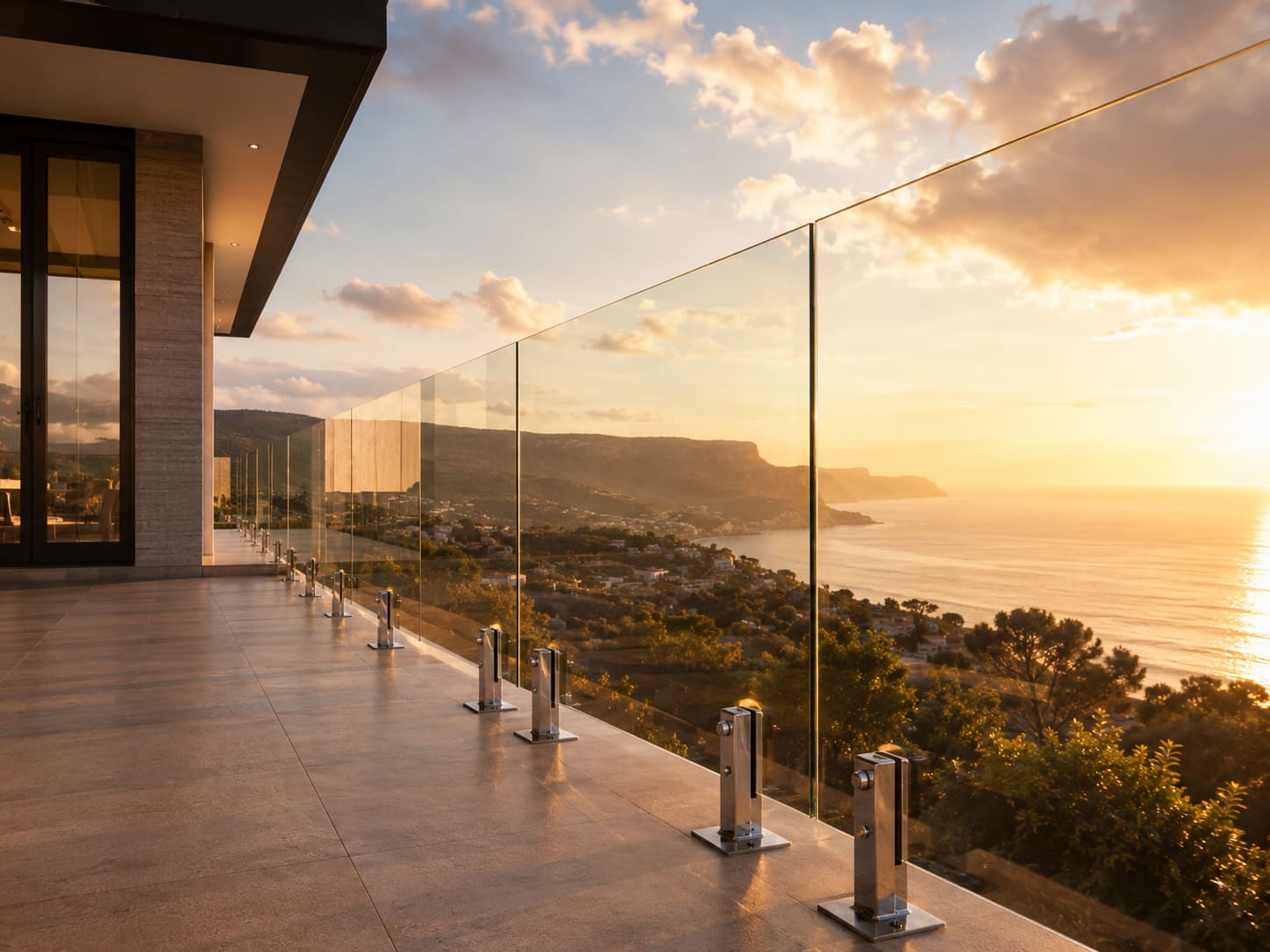
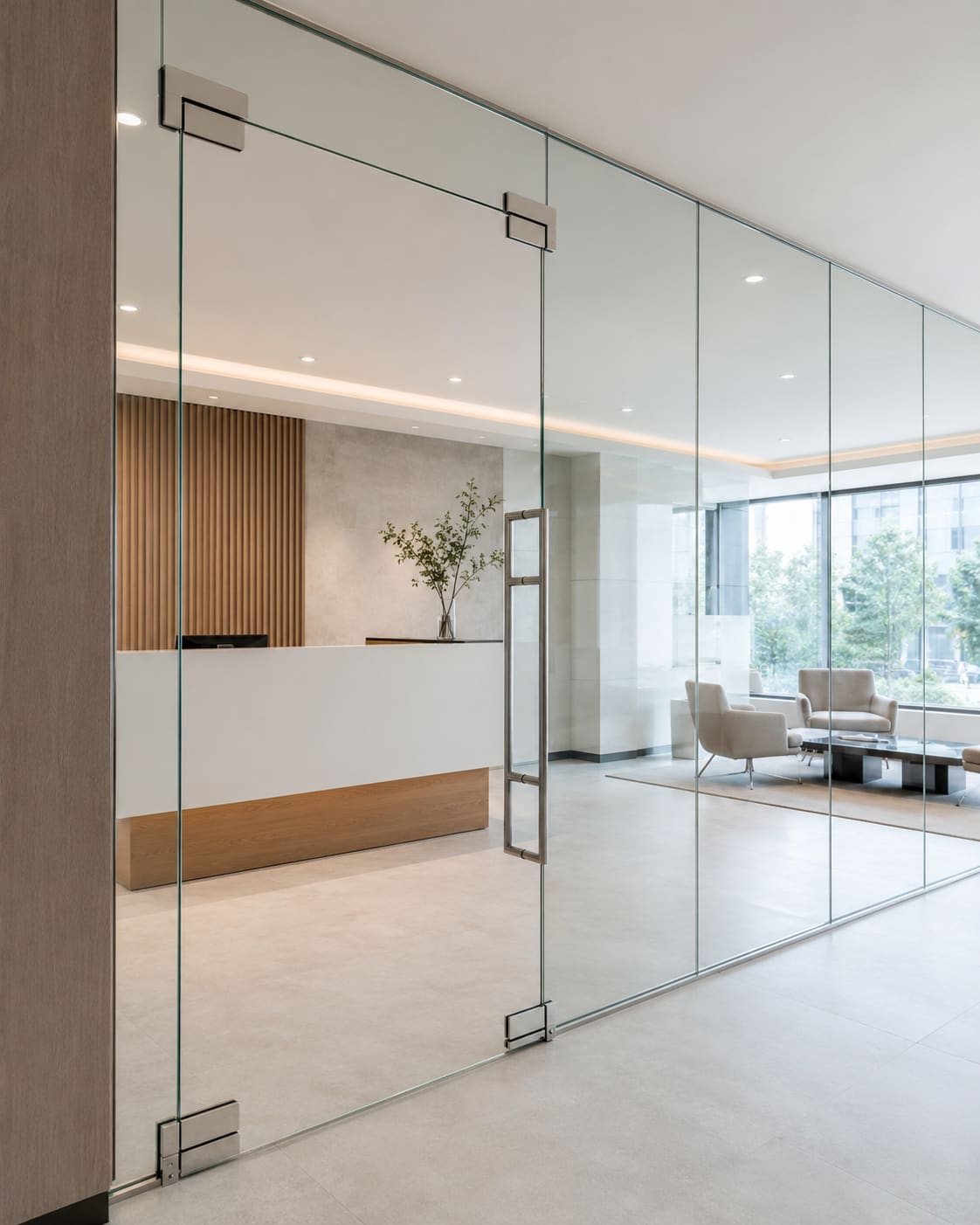
Laminated glass is a safety glass made by bonding two or more glass panes with a tough plastic interlayer (usually PVB) so that, when broken, the fragments stay stuck to the film instead of falling as dangerous shards. Its most common uses are facades, skylights, overhead glazing, balcony railings, shopfronts, French windows and soundproof road-facing rooms, wherever broken glass must not become a hazard. That single property, holding together under impact, is why it appears in almost every high-rise, IT park and premium home across Hyderabad today.
For Hyderabad, Secunderabad and cities across Telangana and Andhra Pradesh, this matters more than ever. With rising high-rise living in Gachibowli, Kokapet and the Financial District, busy road-facing apartments in Kondapur and Madhapur, and a growing focus on security, laminated glass answers three needs at once: it holds together when broken, cuts external traffic noise, and blocks nearly all harmful UV that would otherwise fade your interiors.
This guide breaks down exactly where laminated glass is used, how it compares with toughened glass, why it is genuinely safe, what it realistically costs in the 2026 Hyderabad market, and how to specify it correctly for our local heat, monsoon and dust conditions.
What Is Laminated Glass and How Does It Work?
Laminated glass is a sandwich construction: glass, a plastic interlayer, and glass again, fused together under heat and pressure into a single resilient unit. When impact occurs, the glass may crack but the fragments stay firmly bonded to the interlayer instead of raining down as sharp shards. This is the same principle that keeps a car windshield intact after a stone chip, and it is the foundation of most modern laminated glass work.
Two interlayer materials dominate the market. PVB (polyvinyl butyral) is the standard, cost-effective choice for most homes and offices. SGP (SentryGlas ionoplast) is roughly five times stiffer and far stronger at the edges, making it the specification of choice for structural railings, large canopies and cyclone-prone coastal Andhra Pradesh projects.
The interlayer thickness (commonly 0.38mm or 0.76mm, and 1.52mm for heavy-duty use) together with the glass thickness determines the strength, sound insulation and security level. Thicker interlayers deliver noticeably better acoustic and burglar resistance.
- Standard configurations: 6.38mm, 8.38mm, 10.76mm and 12.76mm laminated units
- Interlayers available in clear, frosted, tinted and even coloured or printed designs
- Can be combined with toughened glass for maximum strength, known as toughened laminated
What Are the Common Uses of Laminated Glass in Hyderabad?
Because it combines safety with clean aesthetics, laminated glass appears in both residential and commercial projects right across Telangana and Andhra Pradesh. The rule of thumb is simple: wherever glass is overhead, near a fall hazard, or facing a security or noise risk, laminated is the correct choice. You can see many of these applications in our completed projects.
- Facades and structural glazing for offices, showrooms and IT parks in HITEC City, Madhapur and Gachibowli
- Overhead glazing, skylights and glass canopies where falling shards would be a serious hazard
- Balcony and staircase glass railings in high-rise apartments across Kokapet and the Financial District
- Glass shopfronts and display windows needing anti-smash security on busy retail streets
- Road-facing bedrooms and MD cabins where noise reduction is a priority
- Bathroom partitions and pooja room panels using decorative or frosted interlayers
Why Is Laminated Glass Considered Safety Glass?
The core benefit of laminated glass is human safety. If someone walks into it, or it is struck by flying debris during a monsoon storm, it will not collapse into sharp pieces. The interlayer holds the broken glass in the frame, so the opening stays sealed and the danger of laceration is dramatically reduced. This makes it the preferred choice for schools, hospitals and homes with children or elderly family members.
- Break-safe: broken glass stays bonded to the interlayer, reducing injury risk
- Security: resists forced entry and repeated blows, buying critical time and deterring intruders
- Acoustic comfort: cuts traffic and construction noise by up to 35-40 decibels in thicker units
- UV protection: blocks around 99 percent of UV rays, protecting furniture, flooring and curtains from fading
- Storm and cyclone resistance, particularly valuable for coastal Andhra Pradesh locations like Visakhapatnam
For high-security requirements such as jewellery showrooms, banks or ground-floor storefronts, thicker multi-ply laminates form the basis of security and burglar-resistant glazing.
Laminated vs Toughened Glass: Which Should You Choose?
This is the single most common question we hear, and the honest answer is that neither is universally better, they solve different problems and are frequently combined. Toughened glass is heat-treated to be four to five times stronger against impact and thermal stress, and it shatters into small blunt granules that are far less likely to cut. Laminated glass, by contrast, holds together when broken and delivers superior sound and UV control.
- Choose toughened for doors, shower enclosures and table tops where impact strength and blunt-fracture behaviour matter most
- Choose laminated for skylights, canopies, railings and soundproofing where fragments must not fall
- Choose toughened laminated when you need both, for example overhead glazing or a road-facing facade
In practice, Hyderabad building safety norms push most overhead and railing applications toward laminated or toughened laminated. If you are weighing the two, our guide on toughened glass work explains the strength side of the equation in more detail, and our team can specify the right combination for your span and wind load.
How Much Does Laminated Glass Cost in Hyderabad? (2026 Prices)
Pricing depends on thickness, interlayer type (PVB or SGP), glass quality (clear, tinted, low-iron) and whether the glass is also toughened. The figures below are indicative 2026 Hyderabad market rates for supply only; installation, aluminium framing, hardware and site conditions are additional.
- 6.38mm clear laminated: approximately INR 140 to 190 per sq ft
- 8.38mm clear laminated: approximately INR 180 to 250 per sq ft
- 10.76mm laminated: approximately INR 270 to 380 per sq ft
- 12.76mm laminated: approximately INR 340 to 480 per sq ft
- Toughened laminated (safety facades and railings): approximately INR 400 to 700 per sq ft
- SGP-interlayer structural laminated: add 25 to 40 percent over PVB equivalents
For an accurate figure, the span, wind load, framing system and location within Telangana all matter, since a 14th-floor Kokapet balcony carries very different loads to a ground-floor Kondapur shopfront. Hakimi Aluminium and Glass provides on-site measurement and a written estimate before any work begins, so you can get a free quote with no surprises later.
How Does Laminated Glass Perform in Hyderabad's Climate?
Telangana and Andhra Pradesh subject glass to a punishing cycle: 42-45 degree summer heat, heavy dust from construction corridors around the ORR, and intense monsoon downpours. Laminated glass copes well with all three, but specification matters.
- Heat: pairing a laminated pane with a reflective or tinted interlayer, or building it into a DGU facade, cuts solar heat gain and lowers air-conditioning load
- Monsoon: the sealed interlayer resists water ingress at the edge far better than an unprotected unit, provided the framing and silicone are done correctly
- Dust: laminated surfaces clean like ordinary glass, and a good coating reduces streaking on west-facing Gachibowli elevations
- UV: the near-total UV block keeps interiors, wooden flooring and upholstery from fading in our high-sunshine climate
The weak point is always the edge seal, not the glass. Poor edge protection lets moisture creep into the interlayer over years and causes delamination (a milky, cloudy edge). This is why professional framing and quality silicone are non-negotiable, and it is exactly where a specialist fabricator earns their fee.
Where Is Laminated Glass Used in Facades and Curtain Walls?
On tall buildings, laminated glass is doing more than looking good, it is a life-safety component. In a curtain wall or structural glazing system, any pane that could fall onto a pavement or atrium below is specified as laminated so that a failure stays in the frame rather than dropping several storeys.
- Spandrel and vision panels on office towers in the Financial District and HITEC City
- Spider and bolt-fixed glazing for lobbies and double-height entrances
- Reflective and tinted laminated units for glare and heat control on west-facing elevations
- Overhead atrium and skylight glazing where laminated is effectively mandatory
If you are planning a commercial elevation, involving a fabricator at the design stage lets you optimise glass thickness against wind load and cost, rather than over-specifying. Our facade and structural glazing team handles this end to end, from load calculation to installation.
How to Specify and Maintain Laminated Glass Correctly
Getting laminated glass right is 20 percent choosing the glass and 80 percent detailing and installation. A few practical pointers will save you money and headaches over the life of the building.
- Match interlayer thickness to the job: 0.76mm PVB for good acoustics and security, SGP for structural railings and large canopies
- Always specify quality edge sealing and correct silicone, this is the number-one cause of long-term delamination
- For railings, confirm the system is designed for the required horizontal load, not just the glass thickness
- Clean with a soft cloth and mild soapy water, avoid abrasive pads and ammonia-heavy cleaners on coated units
- Inspect edge seals and framing after the first monsoon and every couple of years thereafter
Because so much depends on fabrication quality, choosing an experienced local specialist matters more than the glass brand alone. If you want a second opinion on a specification or a competitive estimate, get in touch for a free site visit and our team will advise on the most cost-effective safe option for your project.