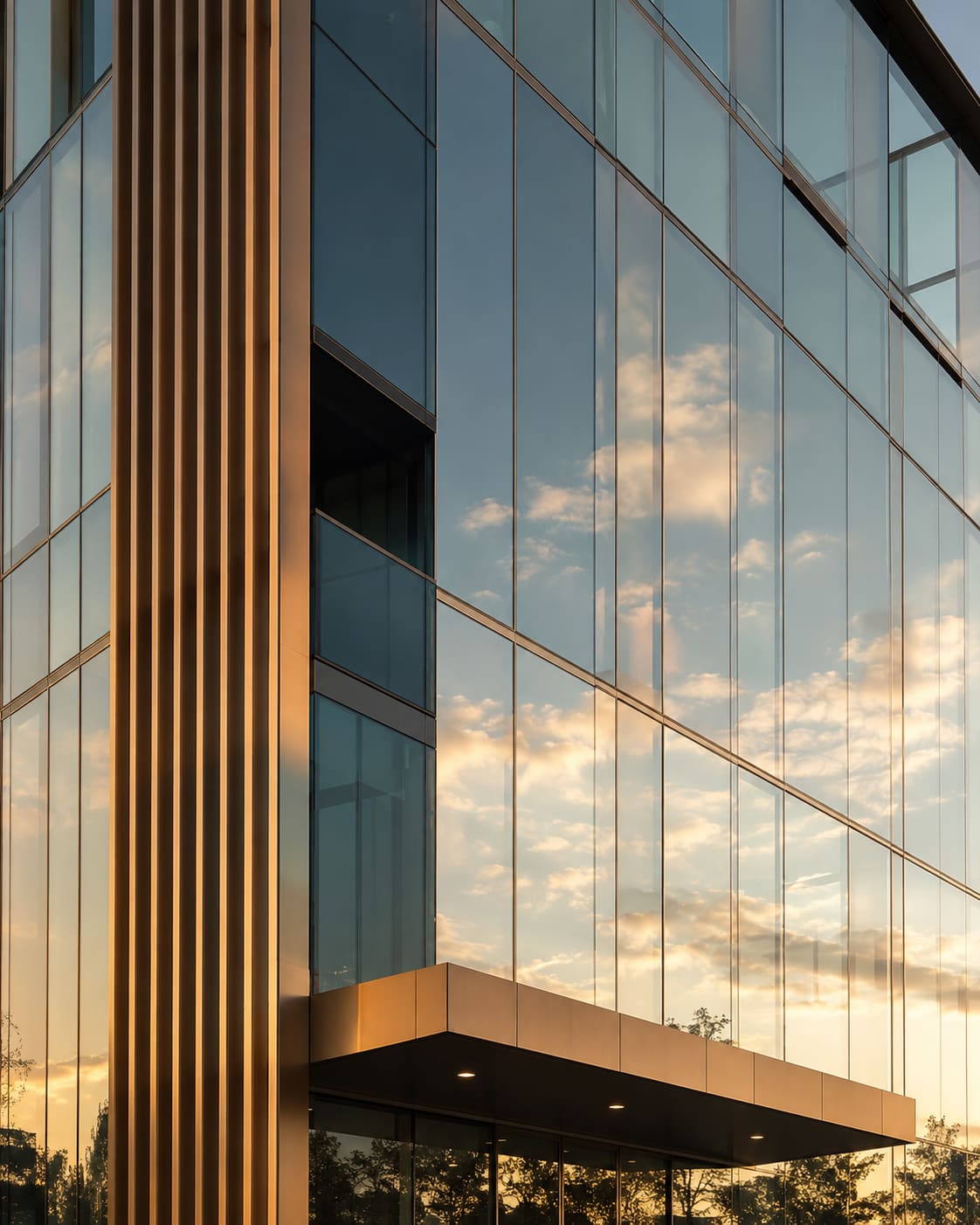
A glass facade lasts 25 to 50 years when correctly designed, installed and maintained, with the toughened or laminated glass panels remaining structurally sound for 50 years or more while the sealants, gaskets and hardware require replacement every 15 to 25 years. In practice the facade's service life is limited not by the glass but by its weakest maintainable component, most often the structural silicone joints and the edge seals of insulated glass units.
Longevity depends on glass type, framing material, the quality of the structural glazing and exposure to climate. In hot, dust-laden and monsoon-heavy conditions such as those in Hyderabad and Secunderabad, thermal cycling and UV load accelerate sealant ageing, making specification and workmanship the decisive factors rather than the glass itself.
This guide breaks the facade down component by component, explains what shortens or extends each part's life, lists the early warning signs to watch for, and puts realistic Hyderabad costs against expected service life. Hakimi Aluminium and Glass designs and installs glass facade systems across Gachibowli, Kokapet, Madhapur and the Financial District engineered specifically for Telangana's climate.
How Long Does Each Part of a Glass Facade Last?
A glass facade is not a single material but a system of components with very different service lives, and the shortest-lived maintainable part sets the maintenance cycle for the whole wall. Understanding these individual timelines is the key to budgeting for a facade over its life rather than being surprised by it.
- Toughened / laminated glass (IS 2553, IS 2835): 50+ years; the glass rarely fails from age alone.
- Insulated glass units (IGUs): 15-25 years before the edge seal degrades and condensation forms between the panes.
- Structural silicone sealant: 20-year design life, with re-sealing typically at 15-25 years.
- EPDM gaskets and weather seals: 15-20 years before they harden and crack.
- Aluminium framing (anodised or PVDF / powder-coated): 40+ years.
- Stainless steel spider fittings and bolts: 40-50 years with grade 316 in polluted or humid air.
The pattern is clear: the glass and the metal outlast everything that holds them together and keeps them watertight. That is why a facade is best thought of as a durable frame with consumable seals, and why the choice of glazing system, from stick glazing to fully unitised curtain wall, affects how easily those consumables can be renewed later.
What Determines How Long a Facade Lasts?
Two identical-looking facades can differ by decades in real service life. The gap almost always comes down to five factors that are decided at the specification and installation stage, long before any maintenance is due.
- Glass type: heat-strengthened and laminated glass resist thermal breakage far better than annealed glass, especially where partial shading creates temperature differences across a pane.
- Coating quality: PVDF (Kynar 500) coatings on aluminium hold colour and gloss for decades longer than standard powder coating under Hyderabad's UV and monsoon rain.
- Workmanship: poor structural silicone application, contaminated substrates or incorrect bite dimensions are the single most common cause of premature facade failure.
- Wind and structural load: designs must satisfy IS 875 Part 3 for wind and the National Building Code (NBC) 2016 for structural safety, which matters for high-rise towers in the Financial District and Kokapet.
- Climate: sustained high UV, airborne construction dust and monsoon humidity, all typical of Hyderabad, accelerate the ageing of sealants, gaskets and coatings.
Of these, workmanship is the one owners most often underestimate. The same reflective glass facade or DGU facade can last 20 years or 40 years depending purely on who installed it and how carefully the silicone was applied and cured. This is why an independent facade consultancy review before award is one of the cheapest forms of life-cycle insurance available.
Glass, Framing and Sealant: Which Choices Add Years?
The material decisions made at design stage have an outsized effect on lifespan, and most of them cost little more upfront while paying back over decades.
On glass, laminated and toughened assemblies handled by our toughened glass work team not only meet safety codes but resist the thermal cycling that cracks annealed panes. Double-glazed low-E units cut heat gain, which in turn reduces the thermal stress the whole system endures over a summer.
On framing, thermally broken aluminium profiles improve both energy performance and condensation resistance. Systems built with thermal break aluminium run cooler internally and avoid the constant expansion-contraction that fatigues seals around single-skin frames.
On sealants, only a structural-grade silicone with a documented 20-year design life and proven adhesion to your specific glass coating and aluminium finish should be used. Cheaper acetoxy or generic silicones may look identical on day one but chalk, lose adhesion and fail years earlier. For spider-fixed and point-supported walls such as bolt-fixed spider glazing, the grade of stainless steel in the fittings matters just as much as the sealant.
What Are the Signs a Glass Facade Needs Attention?
A facade gives plenty of warning before any structural risk develops, and spotting these symptoms early is the difference between a small repair and a full re-cladding bill.
- Fogging or condensation between double-glazed panes indicates IGU edge-seal failure and lost thermal performance.
- Cracked, chalky or peeling structural silicone points to sealant end-of-life and possible loss of adhesion.
- Water ingress or staining at joints suggests failed weather seals, gaskets or blocked drainage paths.
- Hazing, discoloured coatings or a powdery chalk residue on aluminium shows coating wear from UV.
- Any visible crack in a load-bearing panel warrants immediate assessment and replacement, not monitoring.
The important nuance is that most of these are localised and repairable. A single fogged unit does not condemn a wall; it can be swapped individually. The danger is ignoring the pattern, because widespread sealant chalking across a south or west elevation usually means the whole facade is entering its re-seal window. If you see these signs, it is worth arranging a professional inspection early, and you can get a free facade assessment before minor issues become structural ones.
How Do You Extend the Life of a Glass Facade?
Routine maintenance can extend a glass facade's effective life to the upper end of the 25-50 year range and defer costly re-cladding by a decade or more. The measures are simple, but they need to be scheduled rather than reactive.
- Inspect structural silicone and gaskets every 2-3 years for cracking, chalking and adhesion loss.
- Clean glass and frames 2-4 times a year to remove abrasive dust and pollutants, more often near construction zones in Kokapet and the outer Financial District.
- Re-seal joints proactively at 15-20 years rather than waiting for the first leak to appear.
- Replace failed IGUs individually as fogging appears instead of waiting for a full-wall renewal.
- Keep drainage weep holes clear so trapped rainwater does not corrode framing or degrade seals from behind.
The economics strongly favour prevention. Proactive re-sealing of a full elevation is a fraction of the cost of replacing water-damaged framing, spoiled interiors and glass together. For older buildings around Madhapur and Hitec City, a scheduled facade audit every few years is the most reliable way to keep a 1990s or 2000s curtain wall serviceable well past its original design intent.
What Does a Glass Facade Cost in Hyderabad, and Is It Worth It?
A quality glass facade in Hyderabad costs roughly INR 1,200 to 3,500 per square foot depending on glass type, framing and glazing system, and its energy performance directly affects the lifecycle value you get from that spend.
- Structural glazing and fully unitised curtain walls sit at the higher end; capping and semi-unitised glazing systems are more economical for mid-rise work.
- Double-glazed low-E IGUs achieve U-values around 1.6-2.8 W/m2K, meaningfully cutting air-conditioning loads through a Hyderabad summer.
- The Energy Conservation Building Code (ECBC) and BEE guidelines encourage low Solar Heat Gain Coefficient (SHGC) glazing for commercial buildings.
- Higher upfront spend on toughened, coated and well-sealed systems lowers the 30-year lifecycle cost through fewer replacements and lower cooling bills.
Viewed over a 40-year life, the cheapest facade is rarely the one with the lowest quote. A system that needs re-cladding at year 20 costs far more than one specified to reach year 40 with only routine re-sealing. You can see the range of systems and completed elevations in our project portfolio to compare how different specifications age in local conditions, and our team offers facade elevation design advice that balances first cost against long-term durability.
Curtain Wall vs Spider Glazing vs ACP: Which Lasts Longest?
Different facade systems age differently, and choosing the right one for the building's height, exposure and budget affects both lifespan and how easy future maintenance will be.
Unitised and stick-built curtain walls, when properly sealed, deliver the most predictable 40-year life because the glazing, drainage and structural sealant are all engineered as one tested system. Repairs are modular, especially with unitised glazing where a single failed cassette can be replaced.
Point-supported spider systems such as glass fin spider glazing and cable-net walls create dramatic transparent entrances but rely heavily on stainless steel fitting grade and sealant maintenance at every bolt. They last decades but demand more disciplined inspection.
Metal composite cladding, whether ACP cladding or the more durable HPL cladding and Fundermax facade panels, protects opaque zones and typically carries its own 15-25 year coating warranty. Combining glass with these materials in a mixed-material elevation lets you put the most durable, lowest-maintenance option in the hardest-hit areas while keeping glass where transparency matters.
Codes, Safety and Longevity in Indian Conditions
A facade that meets Indian standards is also a facade that lasts, because the codes are written around the loads and hazards that shorten service life. Compliance and durability are two views of the same engineering.
- IS 875 Part 3 governs wind loading, which is the primary structural demand on any tall facade in Telangana and Andhra Pradesh.
- NBC 2016 sets the framework for structural safety, fire and glazing safety across the building's life.
- IS 2553 covers safety glass, ensuring toughened and laminated panels break safely and resist thermal stress.
- ASTM C1401 provides the international guidance on structural silicone design life and re-sealing intervals.
For any owner or developer, the practical takeaway is that cutting corners on code compliance almost always shortens facade life at the same time. Whether the project is a corporate tower needing office front glazing or a retail unit wanting a durable toughened glass shopfront, specifying to these standards from day one is what turns a 25-year facade into a 50-year one. If you are planning a new build or refurbishment, our engineers can help you request a detailed facade quote built around these requirements.