
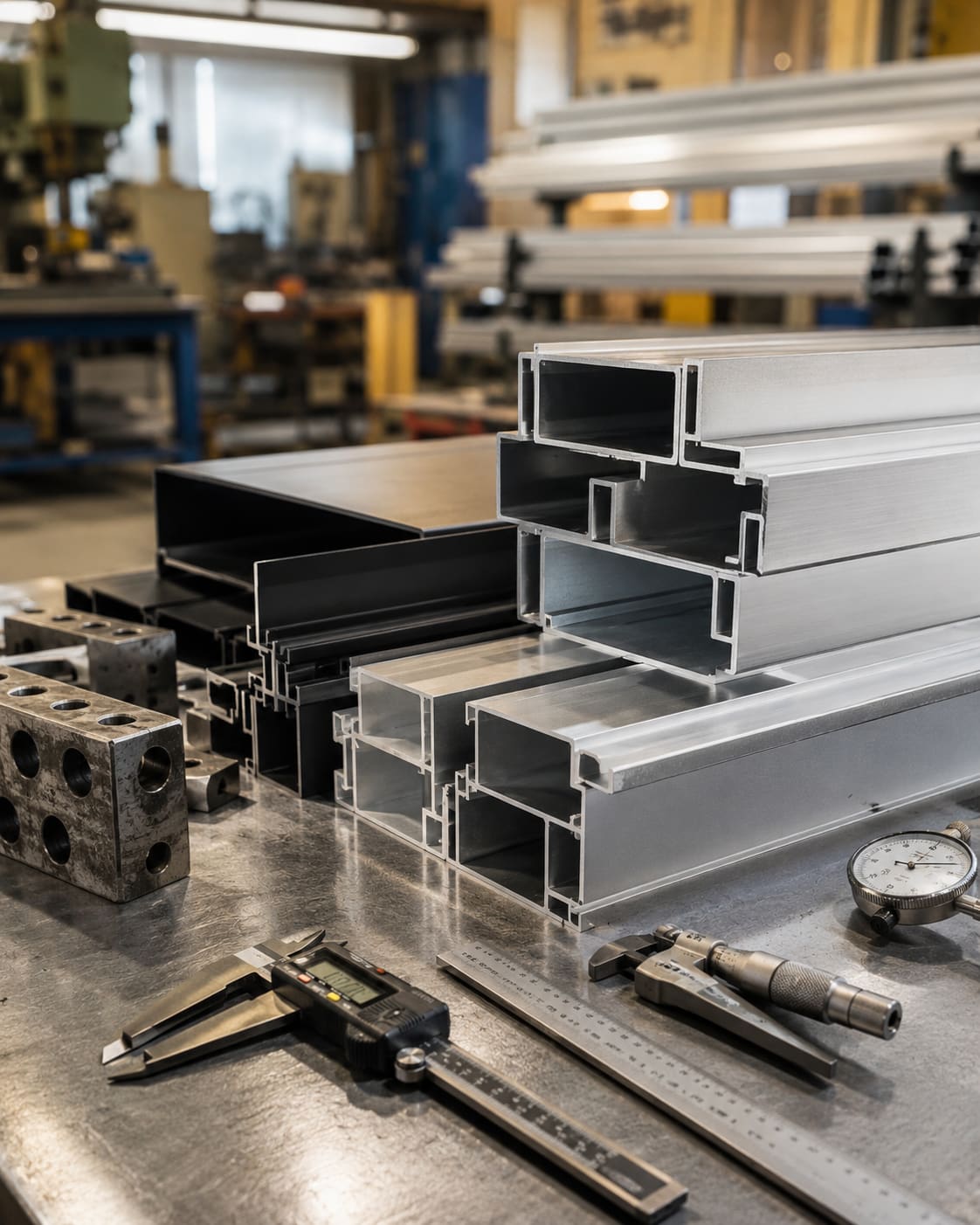
When you specify an aluminium-and-glass facade you are already choosing two of the most recyclable materials in construction - the design question is whether your detailing preserves that recyclability or destroys it. Aluminium can be remelted indefinitely at about 5% of the energy of primary smelting, and soda-lime float glass can return to the furnace as cullet, but both benefits are conditional on how cleanly the materials can be separated when the building is stripped or refurbished. In short: the material is recyclable, but only your detail decides whether it actually gets recycled.
For an architect, recyclability is really two separate decisions: the recycled content you buy into the building today, and the design-for-disassembly you build in for 30-40 years from now. Both are defensible on your drawings and both earn green-rating credits, provided you write the right specification language and detail the interfaces so glass, framing, gaskets and sealants come apart rather than fuse into a composite that only landfill will take.
This guide is written for architects and developers delivering commercial towers, IT parks and premium residences across Gachibowli, Kokapet, the Financial District, Madhapur and Hitec City - where reflective and double-glazed glass facade work is now the default elevation, and where IGBC or LEED ratings increasingly drive the material selection. It covers how to specify recyclability, how to detail for it, and how to convert it into rating-system points that survive audit.
How recyclable are aluminium and glass, really?
Aluminium's advantage is thermodynamic: secondary (recycled) metal needs a fraction of the energy of primary metal, and the alloy does not degrade through repeated remelting, so an extrusion can carry high recycled content with no loss of the temper and mechanical properties you rely on for wind-load performance. A window frame melted down today can become another window frame - a genuinely closed loop, not a downcycle.
Glass is chemically recyclable back to cullet, and adding cullet lowers the float furnace temperature and energy demand. The practical limit is contamination, not chemistry: clean, colour-sorted float glass is furnace-grade, but laminate interlayers, low-E coatings and mixed cullet quickly push a batch off-spec.
- Aluminium billet: specify recycled content by percentage and ask whether it is pre-consumer (process scrap) or post-consumer.
- Float glass cullet: clean, colour-sorted, coating- and interlayer-free glass is furnace-grade; laminated and heavily coated glass usually is not.
- The claim breaks when materials are bonded - structural silicone, laminate interlayers and thermal-break polyamide all reduce the value of the separated stream.
The takeaway for curtain wall glazing is that recyclability is not a property of the material alone; it is a property of the assembly you draw.
Specify recycled content, don't just call it 'recyclable'
'Recyclable' describes a theoretical end-of-life; 'recycled content' is a number you can verify today and report in an embodied-carbon assessment. Put both in the spec, but hold suppliers to the measurable one.
- Require an Environmental Product Declaration (EPD) for the extrusion and, where available, the glass - this gives you audited embodied-carbon figures per functional unit.
- State a minimum recycled-content percentage for aluminium and ask for it to be evidenced by mill certificate or EPD, not a brochure.
- Confirm the finish: powder coating (typically to a qualified standard such as Qualicoat) and anodising (per relevant IS/ASTM anodising specifications) do not block recycling - organics burn off in the remelt.
- Keep the structural spec intact: IS 875 Part 3 wind loads, deflection limits (commonly span/175 for framing supporting glass), and IGU performance (U-value, SHGC, VLT, acoustic Rw) are unaffected by recycled content when temper and alloy are held.
When we do design-assist for aluminium fabrication on Hyderabad projects, this is the language we ask architects to lock into the tender so the recycled-content claim is contractual rather than aspirational.
Why does detailing decide recyclability more than the material?
The single biggest lever you control is whether the facade comes apart. A mechanically captured, gasket-glazed unitised or stick system can be unbolted and sorted; a fully bonded structural-silicone-glazed (SSG) skin often cannot, without cutting glass off metal and losing both streams. Two towers can use identical alloys and identical glass and still have completely different real-world recyclability, purely because of how the glass meets the frame.
- Prefer mechanically captured or pressure-plate glazing where recyclability is a stated project goal; reserve four-side SSG for where its sightlines are genuinely required.
- Use replaceable EPDM/silicone gaskets and dry glazing so glass can be de-glazed and returned as cullet.
- Design accessible fixings and avoid site-applied adhesives that permanently marry dissimilar materials.
- Keep interlayered and coated glass on a separate disposal route in your end-of-life notes; do not assume it becomes furnace cullet.
- Where a thermal break is needed for Hyderabad's cooling-dominated ECBC compliance, note that polyamide breaks in a thermal-break aluminium profile are separable in the remelt but should be flagged to the recycler.
What does the Hyderabad climate change about the calculus?
Recyclability decisions in Telangana and Andhra Pradesh are made under a specific set of loads: summer temperatures crossing 42-44 degrees C, an intense south-west monsoon, and near-constant construction and traffic dust across corridors like Kondapur, Madhapur and the Outer Ring Road. These conditions steer material choices that in turn affect end-of-life outcomes.
- Heat and glare push specifiers toward high-performance coated and double-glazed units on a DGU facade; those coatings and the sealed unit complicate cullet recovery, so plan a separate stream for them from day one.
- Monsoon-driven water management favours robust gasketed, drained-and-ventilated framing - which happens to be the same detailing that helps disassembly, a rare win-win.
- Dust and pollution shorten the practical service life of exposed structural silicone, another argument for mechanically captured systems in dust-heavy micro-markets.
- Cooling-dominated energy use means thermal breaks and low-SHGC glass earn their keep here, so factor their recyclability caveats into the specification rather than discovering them at demolition.
Closing the loop: what happens to your offcuts and old facades
Recyclability is not only about the far-off demolition of the building you are drawing; a large share of the benefit is captured during fabrication and during the retrofit of older facades that your new one replaces.
- Fabrication offcuts and cropped extrusion ends are clean, single-alloy scrap - the highest-value feedstock there is - and should be routed straight back to the extruder as closed-loop scrap rather than mixed skip waste.
- Toughening and cutting generate glass offcuts that, if kept clean and uncoated, are furnace-grade cullet.
- Refurbishment projects across older Secunderabad and Banjara Hills buildings often strip anodised aluminium windows and doors that are ideal remelt stock; capturing them is a genuine recycled-content source for your new aluminium doors and windows.
- Keep a simple materials log during fabrication and installation; that record is what converts good intentions into an auditable diversion rate. You can see the range of systems this applies to across our completed projects.
Turning recyclability into IGBC, GRIHA and LEED credits
Recyclability contributes to certification through recycled-content and construction-waste-management pathways, but the evidence must be assembled at procurement - retrofitting the paperwork after installation rarely works.
- IGBC and GRIHA both reward recycled/regional materials and construction-waste diversion; LEED contributes through its materials and resources credits, including EPDs and recycled content.
- Collect EPDs, mill certificates and recycled-content statements as submittals, and log fabrication offcuts returned to the extruder as closed-loop scrap.
- Coordinate with the NBC 2016 and ECBC envelope requirements so the sustainability narrative and the energy-performance case reinforce, rather than contradict, each other.
- Involve a facade specialist early: our facade consultancy and structural glazing teams provide design-assist, shop drawings, fabrication and installation for architects across Hyderabad, Telangana and Andhra Pradesh, and can supply recycled-content and finish documentation to support your submittal package.
What does recyclability cost in Hyderabad terms?
Specifying for recyclability is rarely a big-ticket premium; it is mostly a detailing and documentation choice. Indicative Hyderabad market ranges (2026, supply-and-install, ex-taxes) help frame the conversation with clients.
- Standard aluminium-and-glass structural glazing typically runs about INR 550-950 per sq ft depending on system, glass make-up and heights.
- Double-glazed / high-performance coated units add roughly INR 150-350 per sq ft over single glazing but pay back through cooling-load savings in this climate.
- Choosing captured/pressure-plate glazing over four-side SSG is broadly cost-neutral and often simpler to maintain - the recyclability gain is essentially free.
- Certified recycled-content billet and EPD-backed supply may carry a modest premium, usually a low single-digit percentage, offset by green-rating value and marketing benefit.
Treat these as planning figures, not a quote; the right number depends on span, wind zone and glass spec. For a project-specific figure, get a free quote and we will price the recyclability-friendly detailing alongside the conventional option so you can compare directly.
A specifier's recyclability checklist
- EPD requested for extrusion and glass, with embodied-carbon figures per functional unit.
- Minimum recycled-content percentage stated for aluminium and evidenced by certificate.
- Glazing method chosen with end-of-life separability in mind (captured vs. bonded).
- Gaskets and dry glazing specified so glass can be de-glazed for cullet.
- Laminated/coated glass flagged as a separate end-of-life stream in the drawings.
- Fabrication offcuts routed back to the extruder as closed-loop scrap.
- Structural criteria (IS 875 Part 3, IS 2553, deflection, wind load) verified as unaffected by recycled-content choices.
- Submittal folder for IGBC/GRIHA/LEED opened at procurement, not after handover.