Safety glass is required by code in any glazed location where accidental human impact is likely, or where broken glass could fall onto people below. That includes glass doors, panels beside doors, low-level windows, bathroom and wet-area enclosures, stair and balcony railings, and overhead glazing such as skylights and canopies. In these hazardous locations, ordinary annealed float glass is prohibited and either toughened (tempered) glass conforming to IS 2553 or laminated glass with a polyvinyl butyral (PVB) interlayer must be used.
The reasoning is simple injury prevention. Annealed glass breaks into large, dagger-like shards that cause deep lacerations; toughened glass fractures into small cuboidal granules, and laminated glass retains its fragments on the interlayer so the pane stays largely in place. In India the governing references are the National Building Code of India (NBC) 2016 and Indian Standard IS 2553 for toughened safety glass, supported by IS 875 Part 3 for wind loading on large facade panes.
This guide maps every location where code and good practice demand safety glazing, explains which type to use where, and gives realistic thickness and Hyderabad cost context. If you are specifying glass for a home, office or commercial elevation and want it done to code, you can get a free quote from our team and see completed projects across the city.
Where Exactly Is Safety Glass Mandatory?
Safety glass is required in what codes call "hazardous locations" - positions where a person may walk into, fall against, or stand beneath the glass. If glazing sits in a path of travel, at low level, at a wet floor, or over people's heads, treat it as a hazardous location by default. The recognised list under NBC 2016 and international glazing codes includes:
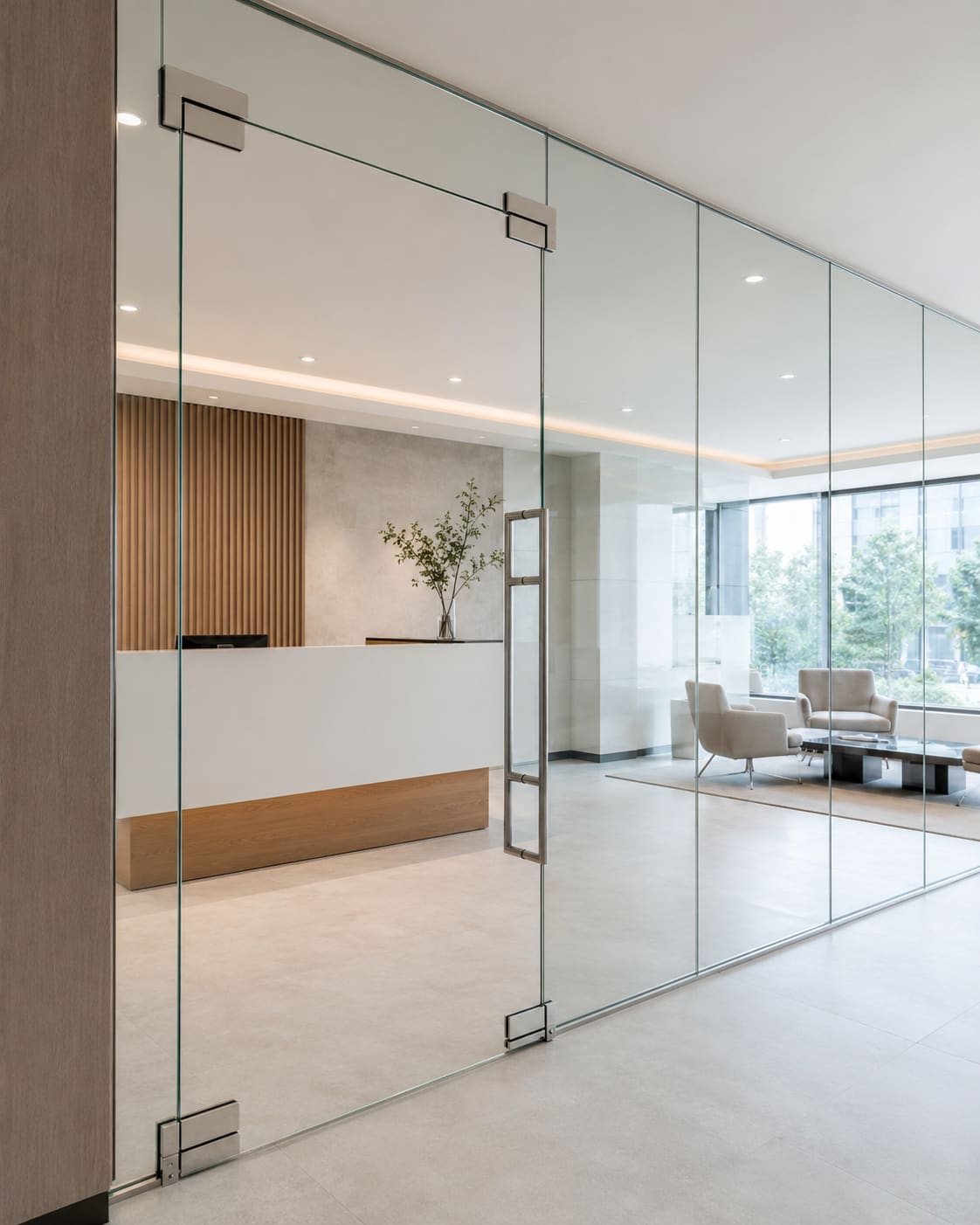
- All glass in swing, sliding and fixed glass doors, including frameless glass doors and shopfront entrances.
- Fixed side-lights and panels within 300 mm of a door edge and less than 1.5 m above floor level.
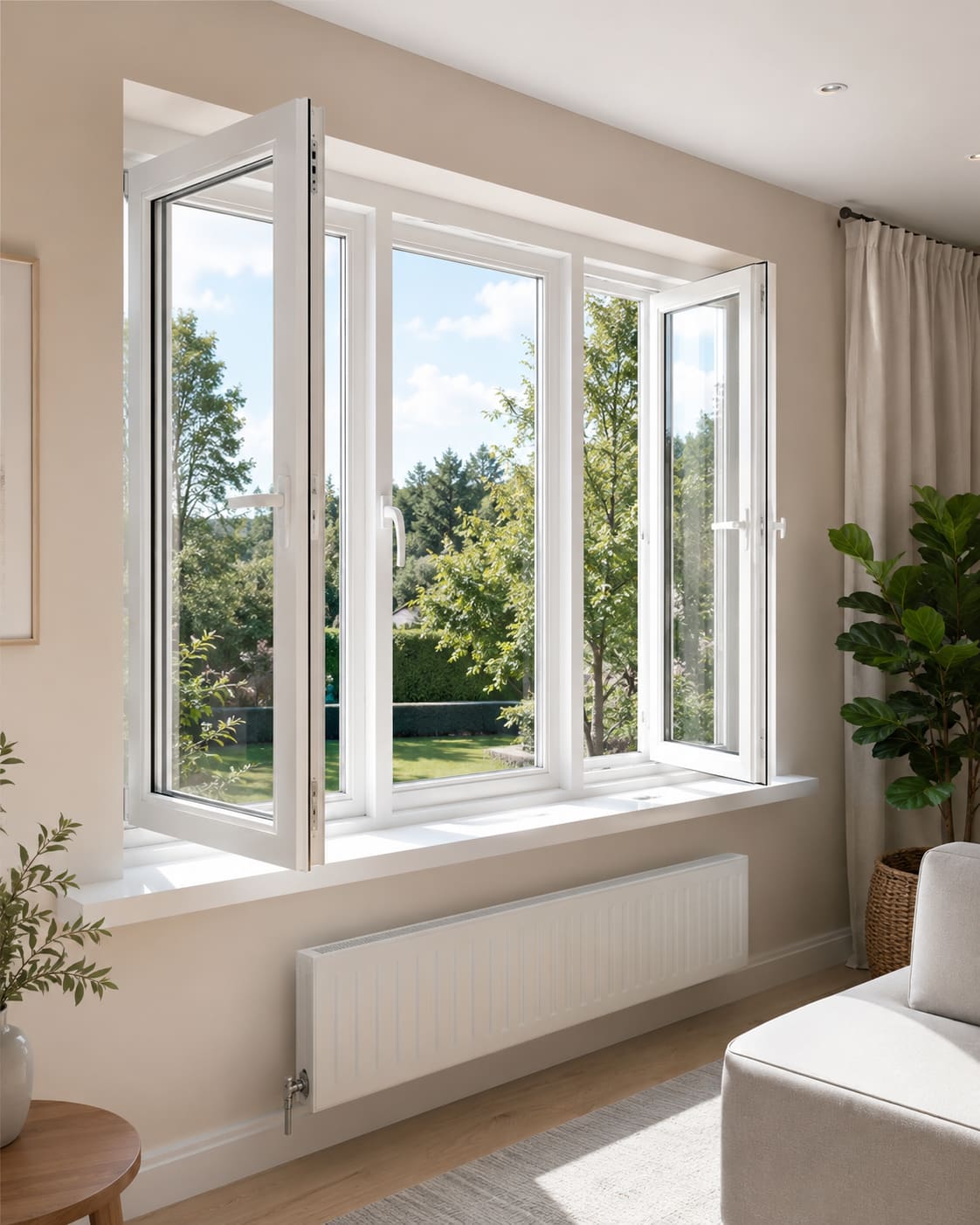
- Windows and panes where the lowest exposed edge is below 500 mm from the finished floor.
- Glass in and around bathtubs, showers, steam rooms and other wet areas, including frameless shower enclosures.
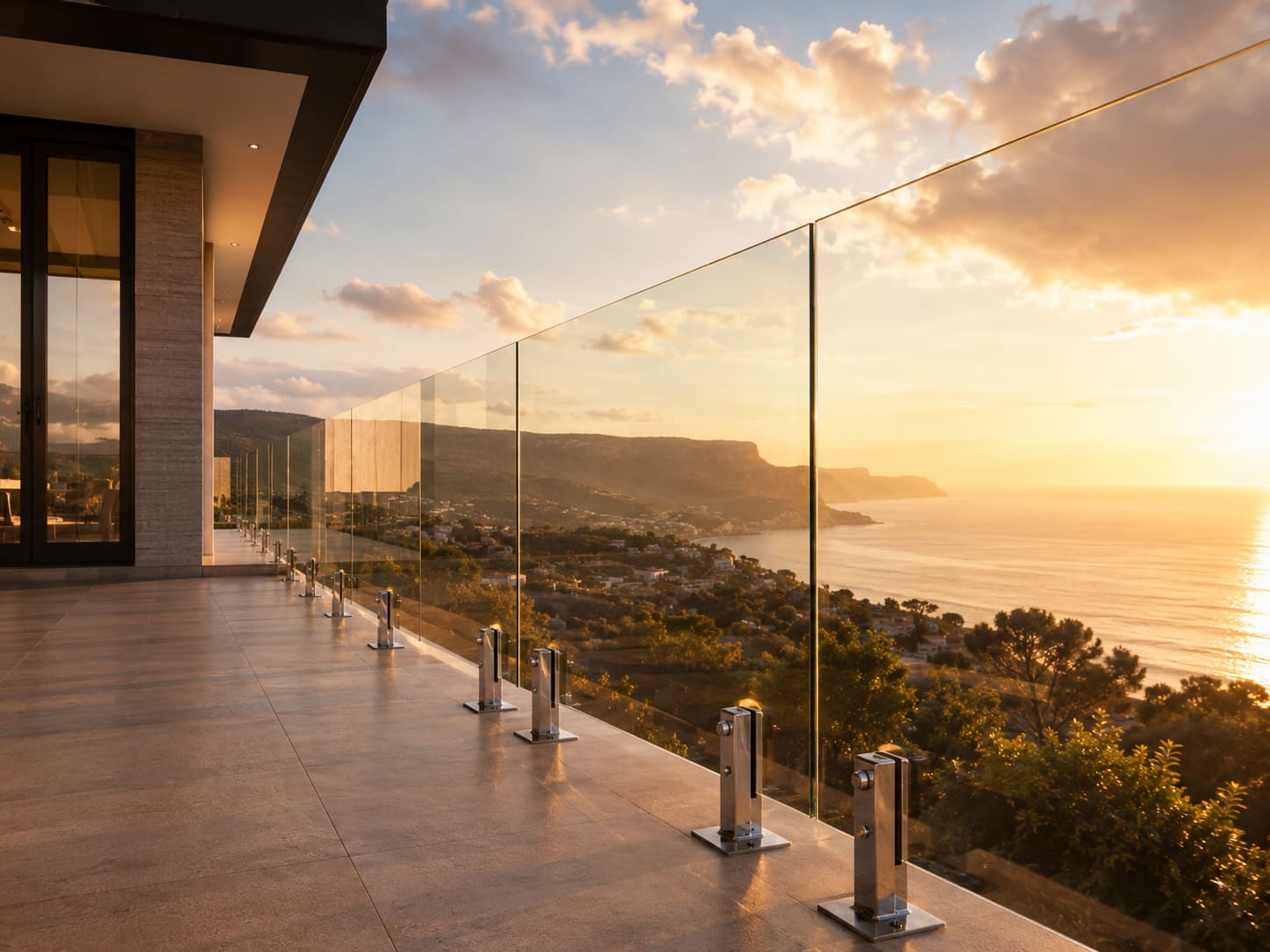
- Railings, balustrades and infill panels for stairs, balconies and ramps.
- Overhead and sloped glazing: skylights, canopies, atrium roofs and glass floors.
- Large facade panes, curtain walls and bonded structural glazing exposed to wind load per IS 875 Part 3.
When in doubt, the safer and cheaper long-term decision is to specify safety glass. Retrofitting compliant glazing after an inspection failure or an injury claim costs far more than getting the original specification right.
Toughened vs Laminated: Which Type Does Each Location Need?
Both toughened and laminated glass qualify as safety glass, but code and physics favour different types in different locations. The simplest rule of thumb: toughened glass suits vertical impact zones you might walk into, while laminated glass suits overhead and fall-protection zones where retention of fragments matters most.
- Toughened (tempered) glass to IS 2553: doors, low windows, shower screens and glass partitions. It is 4-5 times stronger than annealed glass and granulates safely on impact.
- Laminated glass (PVB interlayer): overhead skylights, glass floors, balustrades and security glazing, because broken fragments stay bonded and do not rain down.
- Heat-strengthened glass is about twice as strong as annealed but is NOT a safety glass on its own - it is not permitted in hazardous locations unless laminated.
- For fall-protection railings, many specifications require laminated-toughened glass, combining edge strength with fragment retention.
For glass railings on a first-floor landing or a balcony above a driveway, laminated-toughened is the defensible choice: even if a panel is struck hard, the interlayer keeps the sheet together long enough to prevent a fall and to be replaced safely.
Which Standards and Codes Govern Safety Glazing in India?
Safety glazing in India is regulated primarily by the National Building Code of India (NBC) 2016 and the Bureau of Indian Standards glass specifications. Municipal and fire approvals in Telangana reference these documents, so a compliant specification also smooths your permits. Key references include:
- IS 2553 (Part 1): specification for toughened (tempered) safety glass, covering fragmentation, surface stress and impact performance.
- NBC 2016, Part 6: structural and material provisions, including glazing selection for hazardous locations.
- IS 875 (Part 3): design wind loads used to size facade and curtain-wall glass thickness.
- ASTM C1401: the reference guide for structural sealant (silicone) glazing used in bonded facades.
- Energy Conservation Building Code (ECBC) and BEE-driven norms influence glass selection for solar heat gain in large commercial glazing.
- IS 2553 also mandates a fragmentation test: a broken toughened sample must produce a minimum number of small particles within a defined 50 mm x 50 mm area, proving it will granulate rather than form shards.
Ask your supplier for the IS 2553 test certificate and the toughening batch reference. Genuinely tempered glass also carries a permanent BIS stamp etched in a corner; if a panel has no mark and no paperwork, treat the compliance claim with suspicion.
How Is Safety Glass Thickness and Wind Load Decided?
Safety glass thickness is chosen by pane size, span and wind load, not by aesthetics alone. Standard toughened thicknesses are 4, 5, 6, 8, 10, 12, 15 and 19 mm, and the correct figure comes from an engineering check, not a guess. Typical selections are:
- Shower enclosures and light partitions: usually 8-10 mm toughened.
- Frameless glass doors: usually 10 mm or 12 mm toughened for rigidity and hardware fixing.
- Frameless railings and balustrades: 12 mm toughened or 13.52 mm laminated-toughened.
- Large facade and structural glazing: sized against IS 875 Part 3 wind pressure, often 10-12 mm or insulated double-glazed units.
In Hyderabad and Secunderabad, tall towers in the Financial District, Kokapet and Gachibowli face open-terrain wind gusts that push facade glass toward the upper end of these ranges. West-facing elevations in Madhapur, Hitec City and Kondapur also cope with harsh afternoon glare and 40 C-plus summer heat, so many projects pair correctly wind-rated toughened glass with a solar-control coating or a DGU facade build-up. For anything large or bonded, a short facade consultancy review is cheaper than an under-sized pane failing in the first monsoon.
Safety Glass for Doors, Partitions and Shopfronts
Doors are the single most common hazardous location, because people push, pull and occasionally walk into them. Any full-height or near-full-height glass door must be safety glass, and the fixed panels flanking it usually must be too. This applies equally to home entrances, office cabins and retail entrances.
- Frameless entrance doors and toughened glass shopfronts use 10-12 mm toughened glass with patch fittings or floor springs.
- Office glass partitions and interior systems use 10-12 mm toughened glass, often with a manifestation film or frosted band at eye level so people do not walk into a clear pane.
- Sliding and slide-fold aluminium doors carry toughened glass within their frames as standard.
- Acoustic and meeting-room cabins may use acoustic glass partitions, which are laminated for both sound damping and safety.
In busy commercial lobbies across Hitec City and Gachibowli, a visible manifestation marking is not just good manners - it is a recognised safety measure that prevents impact with an otherwise invisible glass wall.
Safety Glass for Railings, Balconies and Overhead Glazing
Fall-protection and overhead glazing are the most safety-critical categories, because a failure here can cause a fall from height or drop glass onto people below. Codes are strictest in exactly these places, and cutting corners is never worth it.
- Staircase and balcony frameless glass railings should use 12 mm toughened, and laminated-toughened where a fall risk exists below the panel.
- Balcony glazing and enclosures on apartments in Kokapet and Financial District high-rises must resist wind and impact simultaneously.
- Overhead glass canopies at entrances use laminated glass so a broken pane sheds no loose fragments onto arriving visitors.
- Flat-roof skylights and atrium roofs use laminated (often laminated-toughened) glass as the overhead layer, per NBC guidance for sloped and overhead glazing.
- Walkable glass flooring uses multi-ply laminated construction engineered for live load with a sacrificial top ply.
During Telangana's monsoon, wind-driven debris and heavy rain load overhead glazing hard. Laminated build-ups and heat-soaked toughened glass give the reliability these positions demand.
Cost and Practical Notes for Hyderabad Projects
Safety glass costs more than annealed glass but is non-negotiable in hazardous locations, and toughening also improves thermal-shock resistance - useful for the summer heat cycling seen on Hyderabad facades. Indicative local market rates:
- Toughened glass: roughly INR 120-350 per sq ft depending on thickness (6-12 mm) and coating.
- Laminated safety glass: roughly INR 200-500 per sq ft depending on interlayer and glass build-up.
- Frameless glass doors, installed with hardware: commonly INR 600-1,200 per sq ft as a complete system.
- Glass railings, installed: commonly INR 900-1,800 per running foot depending on toughened vs laminated and the fixing type.
A few practical rules save money and rework. Toughened glass cannot be cut, drilled or edged after tempering, so every hole, notch and cut-out must be finalised before the toughening process. Toughened glass also carries a rare risk of spontaneous breakage from nickel-sulphide inclusions; heat-soak testing greatly reduces this for critical overhead and facade applications, and is worth specifying there.
Hakimi Aluminium and Glass supplies and installs IS 2553-compliant toughened and laminated safety glazing for doors, partitions, railings, shopfronts and facades across Hyderabad, Secunderabad and the wider Telangana and Andhra Pradesh region. If you are not sure which locations on your drawings need safety glass, send us the plans and get a free quote with the correct specification marked up for you.