Textured and patterned glass lets you deliver privacy, diffused daylight and a distinct visual signature without resorting to opaque infill - but it behaves differently from clear float, and your specification has to say so. To specify it correctly you fix four things in writing: the glass family and substrate, the finished safety state (annealed, heat-strengthened or toughened), the textured face orientation, and the performance numbers you will hold the fabricator to. Get those four right and what arrives on site matches what you drew; leave them vague and you invite substitution, mismatched patterns and glare complaints after handover.
The category is broader than most sample boxes suggest. It spans rolled (figured) glass such as reeded, fluted, mistlite and morgan patterns; acid-etched and sandblasted satin finishes; and ceramic-frit and digitally printed glass where the 'pattern' is a fired-on ceramic layer that also does solar-control work. Each family carries different light, safety and buildability implications, so the first job is matching the family to the function rather than the mood board.
This guide is written for architects and specifiers working in Hyderabad, Secunderabad and across Telangana and Andhra Pradesh, where heat, monsoon and dust all shape the right choice. It sets out the specification language, the criteria to schedule, realistic INR pricing and the detailing traps - the kind of detail Hakimi Aluminium and Glass resolves on projects in Gachibowli, Kokapet, Madhapur and the Financial District before the glass is ordered.
What are the main types of textured and patterned glass?
Match the family to the job before you talk aesthetics; each has different performance and safety implications.
- Rolled / figured glass: molten glass passed between patterned rollers to create reeded, fluted, mistlite or chequered profiles. It diffuses light and obscures view, and the pattern is integral to the substrate rather than a coating.
- Acid-etched / satin glass: a uniform frosted surface giving even diffusion and a soft, glare-free finish. It is the workhorse for office glass partitions and balustrade infill where you want privacy without a busy pattern.
- Sandblasted glass: mechanically abraded to look similar to acid-etched, but more porous and prone to finger-marking unless anti-stain treated - worth avoiding on high-touch doors.
- Ceramic frit / digital ceramic print: fired ceramic ink applied as dots, lines or bespoke imagery. It is permanent, abrasion-resistant and the only 'pattern' that delivers genuine solar-control and glare benefit on a facade.
- Fluted / reeded low-iron: increasingly specified for its crisp vertical rhythm in reception fronts and cabins; the low-iron substrate keeps the edge and body neutral rather than bottle-green. Explore how these read at scale in our specialty glass work.
Which performance criteria must you schedule?
Never carry a decorative glass on appearance alone - put numbers against it in your glazing schedule and require them on the fabricator's submittal. Specifying only 'frosted' or 'reeded' is what lets a cheaper, worse-performing lite slip in on site.
- Visible Light Transmittance (VLT): texture lowers measured VLT and raises diffusion. State a target range and whether you want an obscuration rating, because privacy is a function of diffusion and viewing distance, not simply low transmission.
- Solar Heat Gain Coefficient (SHGC) and U-value: for Hyderabad's hot, high-radiation climate, drive these with a coated double-glazed (DGU) facade unit or ceramic frit, not the texture alone. Verify the build-up against your ECBC envelope compliance path before you commit.
- Acoustic Rw: pattern has negligible acoustic effect. Achieve real sound reduction with laminated interlayers or asymmetric IGU build-ups - the approach we use for acoustic glass partitions in open-plan offices around Hitec City.
- Wind load and deflection: design glass thickness and support to IS 875 (Part 3) wind pressures, with deflection typically limited to span/175 or 20 mm - confirm the system limit. Rolled glass thickness varies across the pattern, so use the minimum (trough) thickness for structural calculation.
- Safety and human impact: where NBC 2016 and safety-glazing practice apply, use toughened or laminated glass processed to IS 2553.
How do you write the specification so nothing gets substituted?
Precise callouts prevent substitution and site surprises. Put these on the drawing, not just in the sample approval, and repeat the critical ones in the glazing schedule.
- Name pattern, substrate and finished state in one line: for example, '10 mm toughened low-iron fluted glass, reeds vertical, textured face inboard (face 2)'. Ambiguity here is the single most common cause of rejected deliveries.
- Specify surface orientation explicitly. The textured face is normally protected inboard; on an IGU the pattern usually sits on face 2 or 3, never exposed to weather or wash-down.
- For directional patterns, note reed or flute direction and require continuity across joints so the vertical rhythm reads as one plane across a run of frameless glass partitions.
- Call out edgework, cut-outs and holes before toughening - patterned and toughened glass cannot be cut or drilled after processing. This is where our toughened glass work team catches coordination gaps early.
- Where privacy is the driver, state the required obscuration level and viewing distance, not just 'frosted'.
- For frit, supply artwork, dot or line geometry, coverage percentage and colour, and require a fired sample for approval - screen renders never match the fired result.
What tolerances and buildability issues should your details absorb?
Textured glass carries wider manufacturing tolerances than clear float, and your details must absorb them rather than fight them.
- Pattern registration and depth vary lite-to-lite. Keep joint widths generous and avoid tight butt-joint conditions that expose mismatch under raking light.
- Toughened rolled glass shows roller-wave distortion; on large reflective facades this reads visually, so orient waves consistently and review mock-ups on site before bulk fabrication.
- Nominal thickness is measured at the pattern's high points; account for the thinner troughs in framing bite and every structural check.
- Frameless and point-fixed applications need the patterned glass tested with the specific fitting, because local stress at the texture can differ from clear glass. This matters for glass railings and spider-fixed screens.
- Cleaning and maintenance: acid-etched and sandblasted surfaces mark more easily, and Hyderabad's fine construction dust settles into deep textures. Specify anti-stain or oleophobic treatment for high-touch partitions and doors.
How does textured glass support daylight and sustainability targets?
Diffusing glass is a genuine daylighting tool when you coordinate it with the daylight strategy rather than bolting it on at the end.
- Diffusion spreads daylight deeper into a floorplate and cuts direct glare on screens - directly useful for IGBC, GRIHA and LEED daylight and glare-control credits that reward even illuminance and low discomfort glare.
- Ceramic frit reduces solar gain while preserving views through unfritted zones, supporting ECBC envelope targets across Telangana and Andhra Pradesh conditions. A graded 'fade' frit at the head of a lite is a common tactic on west-facing elevations in Kokapet and the Financial District.
- Low-iron substrates raise clarity and colour-neutrality where you want the pattern, not a green cast, to be the feature - important behind branded reception walls.
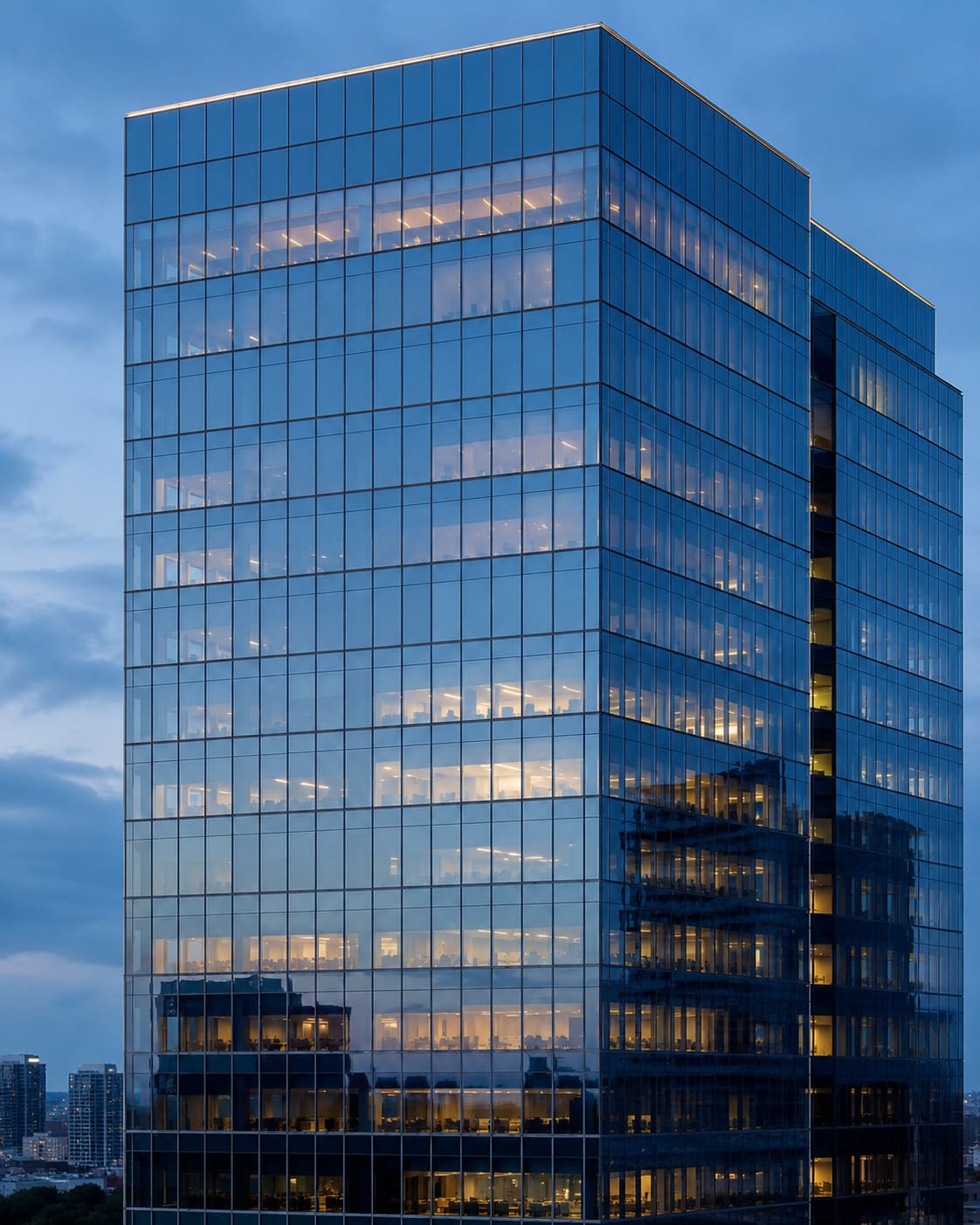
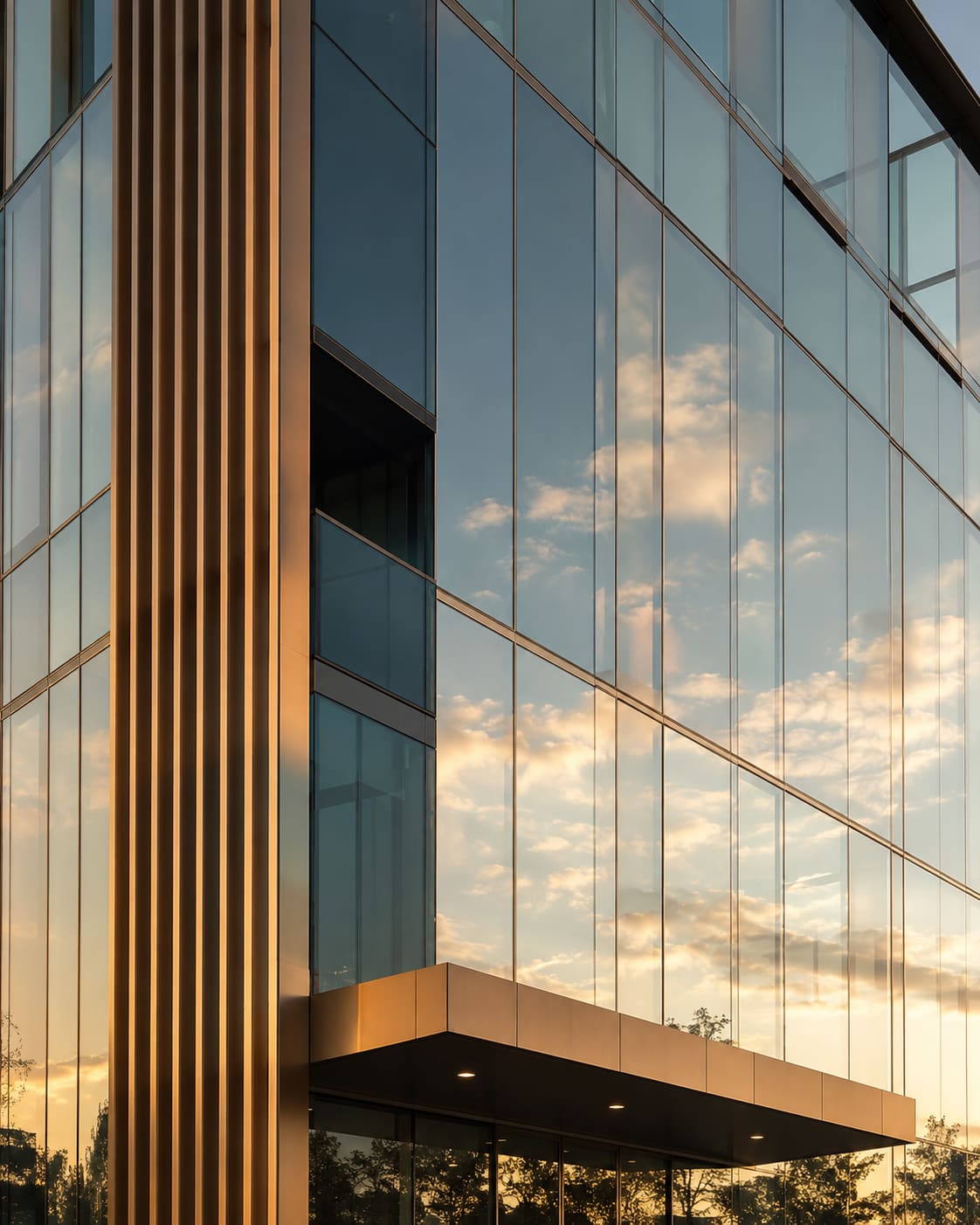
For facade-scale applications, pairing frit or reeded glass with a properly engineered glass facade system and, where required, spandrel glazing at floor bands keeps both the aesthetic and the thermal envelope consistent. Our facade consultancy can model VLT/SHGC build-ups against your compliance path before anything is ordered.
Where does textured glass work best in commercial and residential projects?
Choosing the right application is half the specification. Textured glass earns its place where you need to separate space or admit light without giving up privacy.
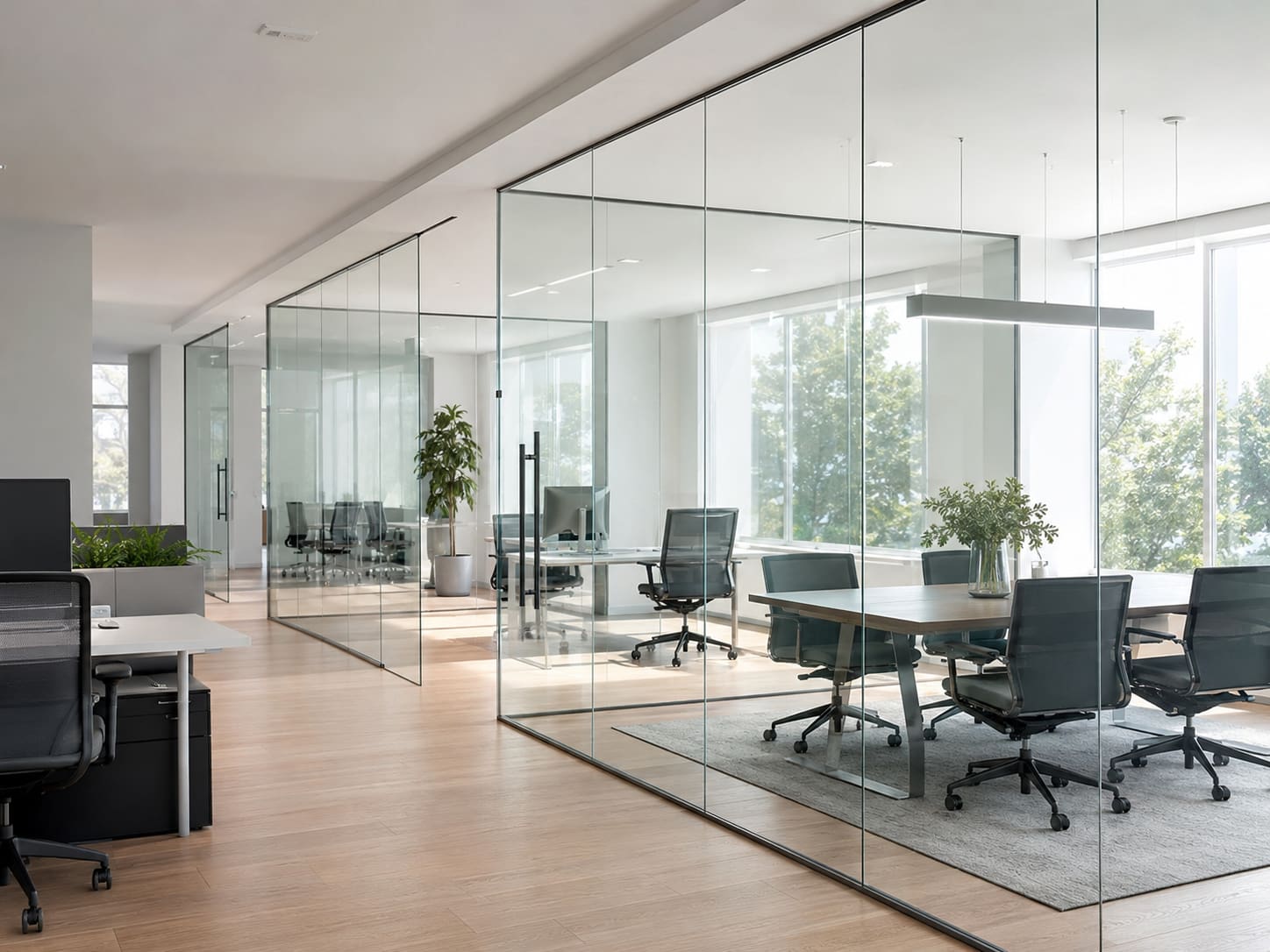
- Meeting rooms and MD cabins: reeded or satin glass gives visual privacy while keeping rooms feeling open - a staple in Madhapur and Kondapur office fit-outs.
- Reception and lift lobbies: fluted low-iron behind a logo wall adds depth and catches light, and pairs well with backlighting.
- Washrooms and shower screens: acid-etched or patterned toughened glass provides obscuration where clear glass would be uncomfortable, and satisfies wet-area safety glazing.
- Staircases and balustrades: satin infill diffuses light between floors and hides fingerprints better than clear glass on a busy stair.
- Facades and elevations: ceramic frit is the go-to for shading and pattern on the outer skin of Gachibowli and Hitec City towers, where a plain reeded lite would neither perform nor weather well.
See how these read at built scale across our completed projects before you lock a pattern into your drawings.
What does textured and patterned glass cost in Hyderabad?
Pricing moves with substrate, thickness, finished state and pattern, so treat these as planning-stage ranges for Hyderabad and Secunderabad supply-and-fit, not quotations. Always confirm against a measured shop drawing.
- Acid-etched / satin toughened (8-10 mm): roughly Rs 220-380 per sq ft, depending on brand and thickness.
- Rolled / reeded toughened (8-10 mm): roughly Rs 260-450 per sq ft; low-iron reeded sits at the upper end and beyond.
- Ceramic frit toughened (single lite): roughly Rs 450-800 per sq ft depending on coverage and artwork complexity, plus setup for bespoke geometry.
- Ceramic-frit DGU facade units: typically Rs 750-1,400 per sq ft installed, driven by the coating, cavity and framing system.
- Digital ceramic print (bespoke imagery): quoted per project because artwork, colours and coverage vary widely.
Framing, hardware, edge polishing, cut-outs and site access are additional. For a firm number tied to your drawings and site, get a free quote and we will price the exact build-up rather than a generic rate.
Common specification mistakes to avoid
A handful of recurring errors account for most disputes on textured-glass packages. Designing them out costs nothing at drawing stage.
- Specifying only 'frosted' or 'reeded' with no substrate, thickness or face orientation - the fastest route to a substituted, weaker lite.
- Relying on texture for solar control on a west or south facade; it does almost nothing for SHGC, and only a coated unit or frit will meet ECBC.
- Forgetting to fix cut-outs, hinges and holes before toughening, then discovering the glass can no longer be worked.
- Exposing the textured face outboard, where Hyderabad dust and monsoon grime lodge in the pattern and cleaning abrades it.
- Butt-jointing directional patterns with tight joints, so registration mismatch becomes the first thing anyone notices.
- Skipping the site mock-up on large or reflective runs, then being surprised by roller-wave distortion at handover. A short design-assist conversation with your fabricator removes nearly all of these before they reach a purchase order.