Acoustic glass is laminated safety glass made of two or more glass panes bonded together with one or more specialised sound-damping polyvinyl butyral (PVB) or EVA interlayers that absorb and dissipate sound-wave energy, reducing noise transmission by approximately 35 to 50 decibels compared with 25 to 30 decibels for standard single glazing. Because the interlayer is viscoelastic, it dampens the vibrations that carry sound across the glass, particularly the mid-to-high frequencies of traffic, aircraft and crowd noise. In short: it is the single most effective glazing upgrade for a quieter home or office.
Unlike ordinary float or toughened glass, which simply reflects some sound, acoustic glass actively converts vibrational energy into tiny amounts of heat within the flexible interlayer, breaking the path sound takes through a window. This makes it a preferred glazing choice for homes, offices, hospitals, hotels and recording studios near busy corridors such as Hyderabad's Outer Ring Road, the flight paths around Rajiv Gandhi International Airport, and the dense commercial zones of Secunderabad, Madhapur and Hitec City.
This guide explains exactly how acoustic glass works, the thicknesses and interlayers to specify, how to read Rw and STC ratings, the standards that apply in India, and realistic per-square-foot pricing so you can budget accurately before you buy. If you already know you need quieter windows, you can get a free quote and we will size the right build for your location and noise problem.
How Does Acoustic Glass Work?
Acoustic glass works by using a soft, damping interlayer between glass panes to disrupt the transmission of sound vibrations, so less noise energy passes from outside to inside. Ordinary glass acts like a drum skin, re-radiating sound into the room; the acoustic interlayer breaks that coupling.
Three mechanisms combine to reduce noise:
- Mass: thicker and heavier glass resists vibration and blocks more low-frequency sound, following the acoustic 'mass law' where doubling the weight adds roughly 5 to 6 dB.
- Damping: the viscoelastic PVB or acoustic-grade interlayer absorbs vibration energy and converts it to heat, taming the 'coincidence dip' where plain glass suddenly gets transparent to certain frequencies.
- Asymmetry: using two panes of different thickness (e.g. 4 mm + 6 mm) shifts the resonant frequency so the two panes do not vibrate in unison, widening the range of noise blocked.
The result is a marked drop in perceived loudness, since a reduction of about 10 dB is heard as roughly halving the noise. A room facing an 80 dB arterial road can feel genuinely calm behind a well-installed acoustic unit.
Construction and Typical Thickness
A standard acoustic glass unit is built from two glass panes laminated around a 0.76 mm or thicker acoustic interlayer, giving total thicknesses from 6.8 mm to 12.8 mm. The interlayer is the same family used in laminated glass work, but tuned specifically for sound damping rather than just impact retention.
Common configurations include:
- 6.8 mm: 3 mm + 0.76 mm interlayer + 3 mm, for internal partitions and light noise.
- 8.8 mm: 4 mm + acoustic PVB + 4 mm, a common residential window choice.
- 10.8 mm to 12.8 mm: 5 mm/6 mm panes with thicker interlayers for heavy traffic or airport-adjacent sites.
- Acoustic IGU: an acoustic laminate paired with a second pane and a 12 to 20 mm air or argon-filled cavity for maximum insulation.
The panes can be toughened before lamination for extra strength, which is why acoustic laminates overlap so closely with toughened glass work and safety glazing. Edges must be sealed properly to keep the interlayer stable in Hyderabad's summer heat, where west-facing glass can exceed 60 degrees Celsius surface temperature.
What Do dB, STC and Rw Ratings Mean?
Acoustic performance is quantified by decibel (dB) reduction and by single-number ratings called STC (Sound Transmission Class, used in North American standards) or Rw / weighted sound reduction index (used in ISO and Indian practice). Always ask the supplier which number they are quoting and against which standard.
- Standard 4 mm single glass: around 25 to 29 dB / STC 27 to 30.
- 6.8 mm acoustic laminate: roughly Rw 35 to 38 dB.
- 12.8 mm acoustic laminate: up to Rw 45 to 47 dB.
- Acoustic IGU with argon: often Rw 45 to 50 dB or more.
Higher numbers mean a quieter room; each 3 dB improvement represents a doubling of the sound energy stopped. For reference, city traffic is about 70 to 85 dB, normal conversation is 60 dB, and a peaceful bedroom should sit below 40 dB. Manufacturers also publish spectrum adaptation terms (C and Ctr) that show how the glass copes with low-frequency road and rail rumble, so a fuller spec looks like 'Rw (C; Ctr) = 40 (-1; -4) dB'.
Standards and Safety in India
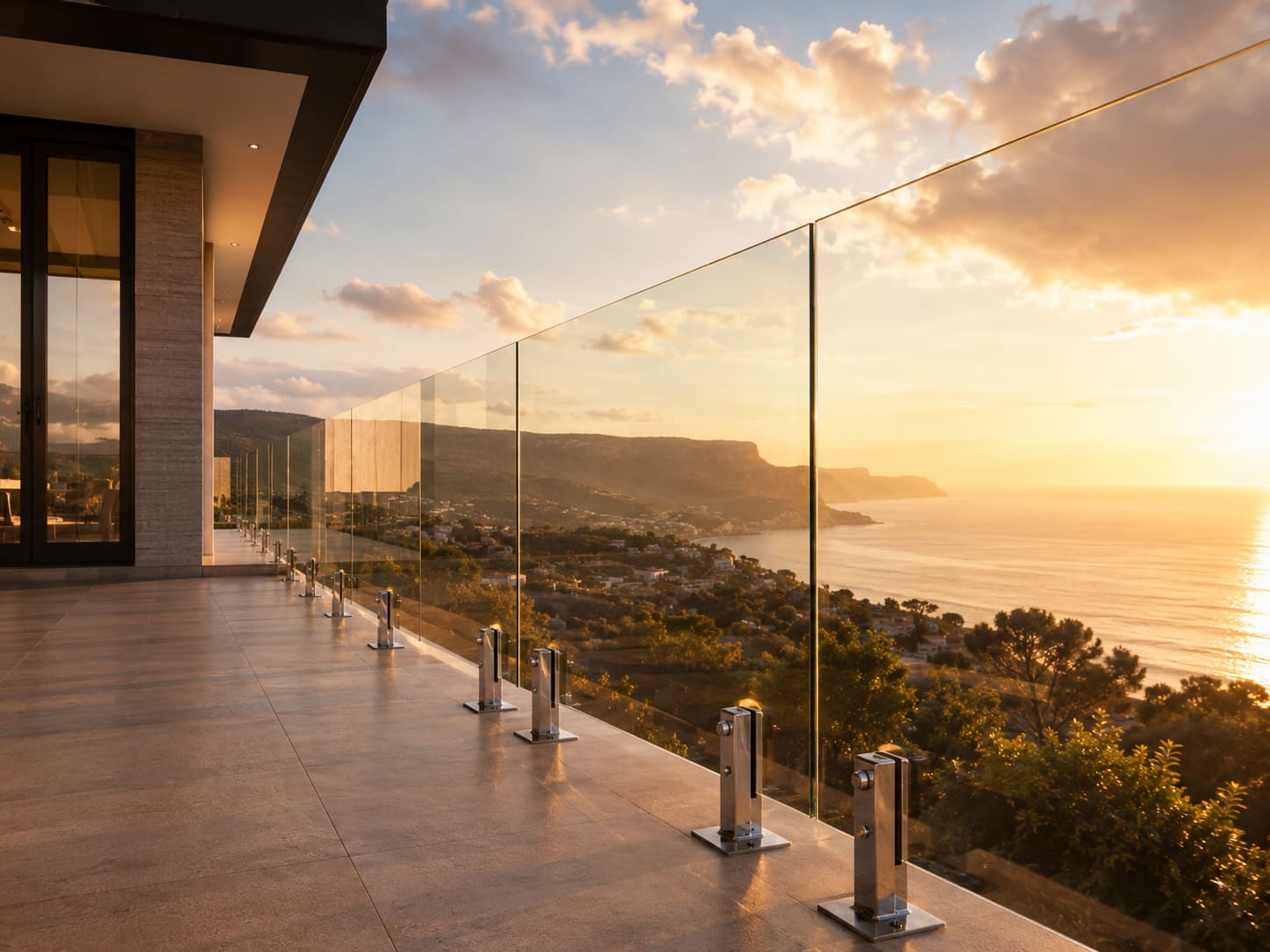
Acoustic laminated glass doubles as a safety glazing because the interlayer bonds the fragments together if the glass breaks, meeting the requirements of IS 2553 for safety glass in India. This dual role makes it popular in schools, malls and balcony glass railings where both quiet and safety matter.
- IS 2553 (Safety Glass): covers laminated and toughened safety glass performance.
- National Building Code of India (NBC) 2016: guides glazing selection, safety and human-impact zones in buildings.
- IS 875 Part 3: specifies wind load design, relevant to large facade glazing.
- ISO 10140 / ISO 717: international methods for measuring and rating sound insulation (Rw).
- ECBC and BEE ratings: relevant where acoustic units also include low-E coatings for energy performance.
Acoustic performance should always be stated with the test standard, because lab and site values can differ by 5 to 8 dB due to framing, sealing and installation quality. A datasheet number means little if the window leaks air around the frame.
Where Is Acoustic Glass Used?
Acoustic glass earns its cost anywhere unwanted noise reaches occupied rooms, which in a fast-growing city like Hyderabad is almost everywhere near main roads, metro lines and construction zones.
- Homes and apartments: bedrooms and living rooms facing the Outer Ring Road, PVNR Expressway or busy junctions in Kondapur and Kokapet.
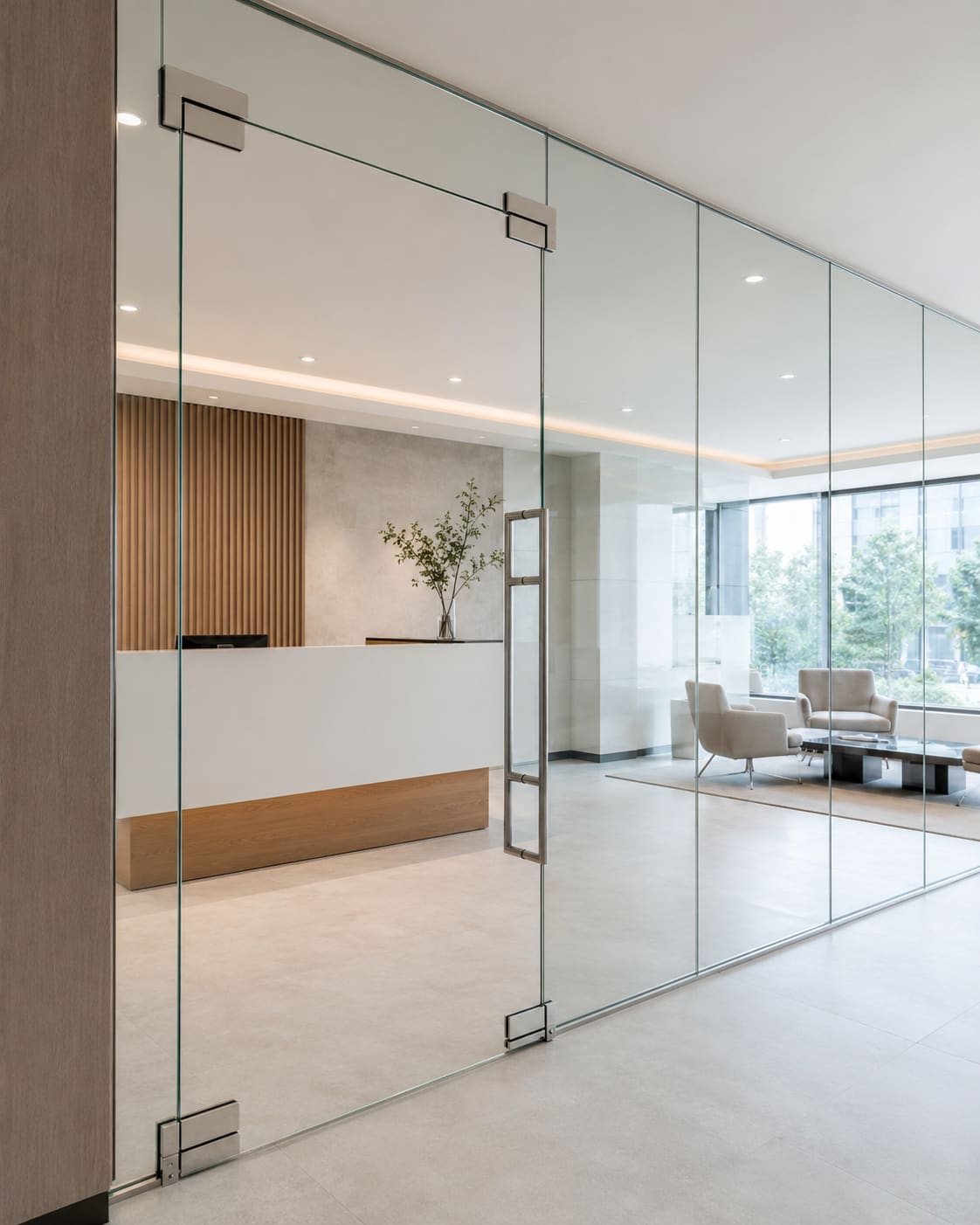
- Corporate offices: boardrooms and MD cabins needing speech privacy, often delivered as acoustic glass partitions or an acoustic glass partition system.
- Hospitals and clinics: patient wards and consulting rooms where rest and confidentiality are essential.
- Hotels, studios and auditoriums: rooms where a low noise floor is a paid-for feature.
- Financial District and Hitec City towers: high-floor curtain walling where acoustic laminates integrate into facade and structural glazing.
You can see examples of installed acoustic and facade glazing across our completed projects in and around the city.
Acoustic Glass and the Right Window Frame
The frame and airtight installation matter as much as the glass itself; even a 45 dB pane underperforms badly in a leaky or single-seal frame, because sound leaks through gaps just like water does. This is the single most common reason a customer says their expensive glass 'did not work'.
For this reason acoustic laminates are usually paired with sealed, multi-chamber frames:
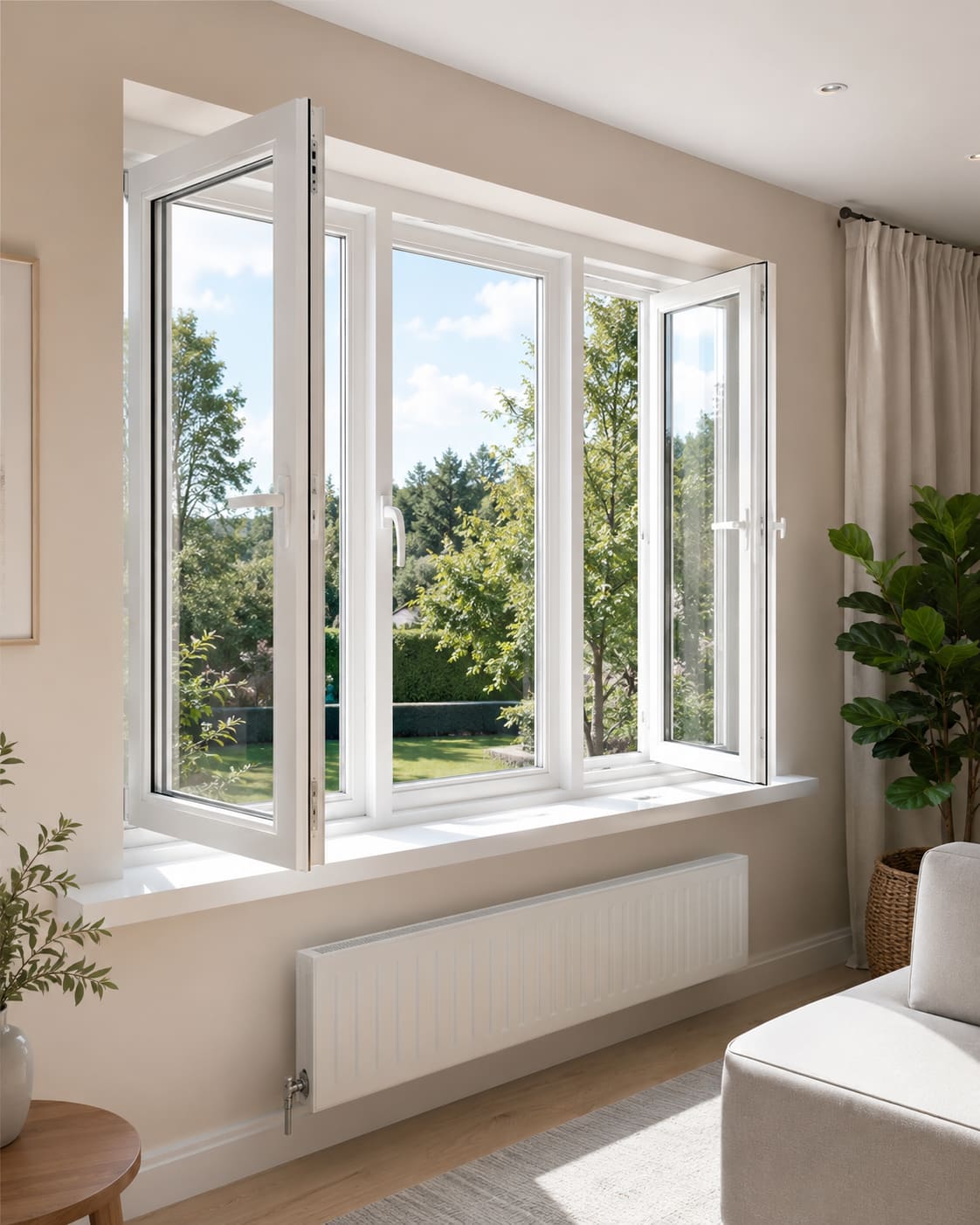
- uPVC windows with twin gaskets and multi-point locking are the most cost-effective route to a quiet, weather-tight opening.
- uPVC sliding windows suit large balcony and living-room openings where a casement is impractical.
- Thermal break aluminium windows combine acoustic glass with a slim, strong profile for premium facades and high floors.
Whichever system you choose, insist on continuous perimeter sealing, correct glass packers and a frame drainage path that survives the Telangana monsoon without letting the seals fail.
How Much Does Acoustic Glass Cost in India?
Acoustic glass in India typically costs between INR 450 and INR 1,200 per square foot for the glass, with acoustic IGUs and premium interlayers reaching INR 1,500 or more per square foot installed. Costs vary with total thickness, interlayer grade (standard versus high-performance acoustic PVB), toughening, low-E coatings and the window frame system.
Indicative build costs for planning:
- 8.8 mm acoustic laminate in uPVC casement: roughly INR 650 to INR 950 per sq ft installed.
- 12.8 mm acoustic laminate in thermal-break aluminium: roughly INR 1,000 to INR 1,400 per sq ft installed.
- Acoustic IGU with argon and low-E: INR 1,300 to INR 1,800+ per sq ft installed.
- Interior acoustic partition for a cabin or conference room: priced per running foot including framing and hardware.
For a mid-size Hyderabad bedroom with two windows, a realistic budget is often INR 30,000 to INR 60,000 depending on frame and glass grade. Because every site's noise source, orientation and opening sizes differ, the most reliable figure comes from a measured survey, so get a free quote and we will specify the exact build for your rooms.
Common Mistakes to Avoid
Buyers often waste money by upgrading the glass while ignoring the weakest link in the wall, so it helps to know the usual traps before you order.
- Chasing thickness alone: an asymmetric 4 mm + 6 mm build often beats a symmetric 6 mm + 6 mm one at the same weight because it blocks a wider frequency range.
- Forgetting the frame: fitting 12.8 mm acoustic glass into a loose, single-gasket sliding window throws away most of the benefit.
- Ignoring ventilation and doors: a quiet window next to a hollow-core door or an open exhaust vent still lets noise flood in.
- Over-specifying for the problem: low-frequency bass from clubs or generators needs mass and IGU cavities, while general traffic hiss is handled well by a mid-range laminate, so match the glass to the actual noise.
- Skipping the site survey: ordering by phone without measuring the noise, gaps and orientation is the fastest way to be disappointed.