Annealed glass is standard float glass that has been cooled slowly and in a controlled manner to relieve internal stresses, producing a flat, clear, stable pane that serves as the base material for almost all processed architectural glass. It is the ordinary, untreated glass that comes directly off the float line, and every toughened, heat-strengthened, laminated or coated product begins its life as an annealed sheet before further processing. If you understand annealed glass, you understand the raw ingredient behind nearly every window, partition and facade panel in the market.
The word "annealed" refers to the annealing stage of manufacture, not to a separate glass chemistry. All flat glass is float glass; whether it is called annealed depends only on whether it has undergone the slow, stress-relieving cooling step and no additional strengthening. Because it has not been thermally or chemically toughened, annealed glass is comparatively weak, breaks into large sharp fragments, and can be cut, drilled and edge-worked on site, which is precisely why it is the versatile raw stock of the glass industry.
For a project in Hyderabad, Secunderabad or anywhere across Telangana and Andhra Pradesh, knowing where annealed glass is appropriate and where safety codes forbid it can save money on interior work and prevent a dangerous mistake on doors, railings and elevations. This guide explains how annealed glass is made, how it compares with toughened and laminated glass, realistic local pricing, and where our team at Hakimi Aluminium and Glass recommends using it. When in doubt on a specific design, you can always get a free quote and we will spec the correct glass for each opening.
How Is Annealed Glass Made?
Annealed glass is produced by floating molten glass on a bath of liquid tin and then cooling it slowly through a controlled oven called a lehr. This slow, even cooling is the defining step that separates annealed glass from stressed or toughened glass, and it is where the name comes from.
- Raw materials such as silica sand, soda ash, limestone and dolomite are melted together at around 1,500C to 1,600C in a furnace.
- The molten glass is poured onto a bath of liquid tin, where it spreads and floats to form a perfectly flat ribbon of uniform thickness.
- The ribbon then passes into the lehr, a long temperature-graded oven, where it is cooled gradually from roughly 600C down to near room temperature.
- Slow cooling lets the interior and surface contract at the same rate, preventing the locked-in thermal stress that would otherwise make the sheet crack or explode later.
- The finished product is a stable, low-stress sheet that can be safely cut, drilled, ground and polished without shattering.
If that same glass were cooled quickly instead of slowly, it would either fracture immediately or carry enormous internal stress. Rapid, deliberate cooling is exactly what toughening does, but only after the glass has already been annealed, cut and shaped to final size. In other words, annealing makes glass workable; toughening later makes a finished piece strong.
Key Properties and Specifications
Annealed glass offers good optical clarity and full workability but low mechanical and thermal strength compared with processed glass. Its single most important characteristic is that it can be cut and shaped after manufacture, which no toughened pane allows.
- Standard thicknesses available in the Indian market: 2, 3, 4, 5, 6, 8, 10, 12, 15 and 19 mm.
- Surface compression is low, so bending and breaking strength is roughly 4 to 5 times lower than equivalent toughened glass.
- Thermal shock resistance is limited to about a 40C temperature differential, versus around 200C for toughened glass.
- On breakage it produces large, sharp, dagger-like shards, which is why it is unsafe wherever human impact is possible.
- It can be cut, edge-ground, drilled, bevelled and hole-cut on site, whereas toughened glass cannot be re-worked at all.
- Light transmission for clear 6 mm float glass is approximately 88 to 90 percent, giving it excellent transparency.
These numbers explain the trade-off at the heart of every glass decision. Annealed glass is easy to fabricate and cheap, but its low strength and dangerous break pattern rule it out of any opening where a person could fall against it. That is precisely why processed products such as toughened glass and laminated glass exist, and why they cost more.
Annealed vs Toughened vs Laminated Glass: What Is the Difference?
Annealed glass is the untreated base glass, while toughened and laminated glass are processed products made from annealed glass to improve strength or safety. The distinction is about what happens after the float line, not about a different underlying material.
- Annealed: base float glass, low strength, breaks into large sharp pieces, fully re-workable, and the lowest cost of all flat glass.
- Toughened (tempered): annealed glass reheated to about 620C and then rapidly quenched with air; it becomes 4 to 5 times stronger and shatters into small blunt granules, so it is classed as safety glass under IS 2553.
- Heat-strengthened: partially tempered glass, about twice as strong as annealed, resistant to thermal stress, but not a safety glass because it breaks into large pieces.
- Laminated: two or more glass panes bonded with a PVB interlayer so that fragments are held together on breakage, providing both safety and security.
- Critical rule: annealed glass cannot be cut or drilled once it has been toughened, so every hole, notch and edge finish must be completed at the annealed stage.
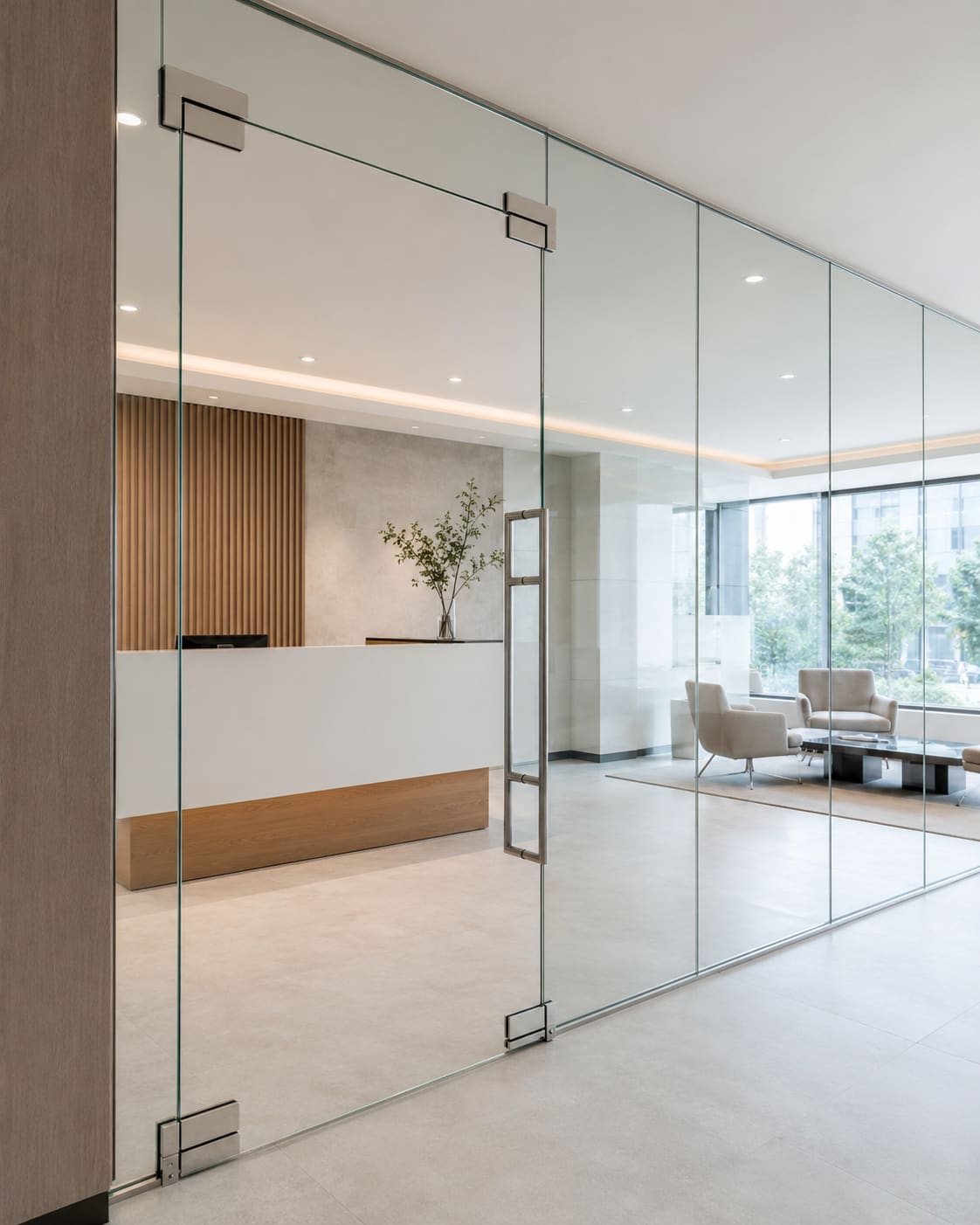
In practice this means the annealed sheet is where all the customisation happens. When our fabrication team sizes glass for aluminium doors and windows or a frameless glass partition, we cut and machine the annealed blank first, then send it to the toughening furnace. Get the sizing wrong at this stage and the whole panel is scrap, which is why measurement discipline matters so much. If you are weighing options, our companion guide on annealed vs toughened glass goes deeper on the strength maths.
Where Is Annealed Glass Used?
Annealed glass is used where strength and human-impact safety are not primary concerns, or as intermediate stock for further processing. It remains common in interior and protected applications where cost matters more than resilience.
- Interior partitions in low-traffic zones, cabinet fronts, shelving and picture framing.
- Mirrors of every kind, since a mirror is simply silvered annealed float glass; our mirror works start from annealed stock.
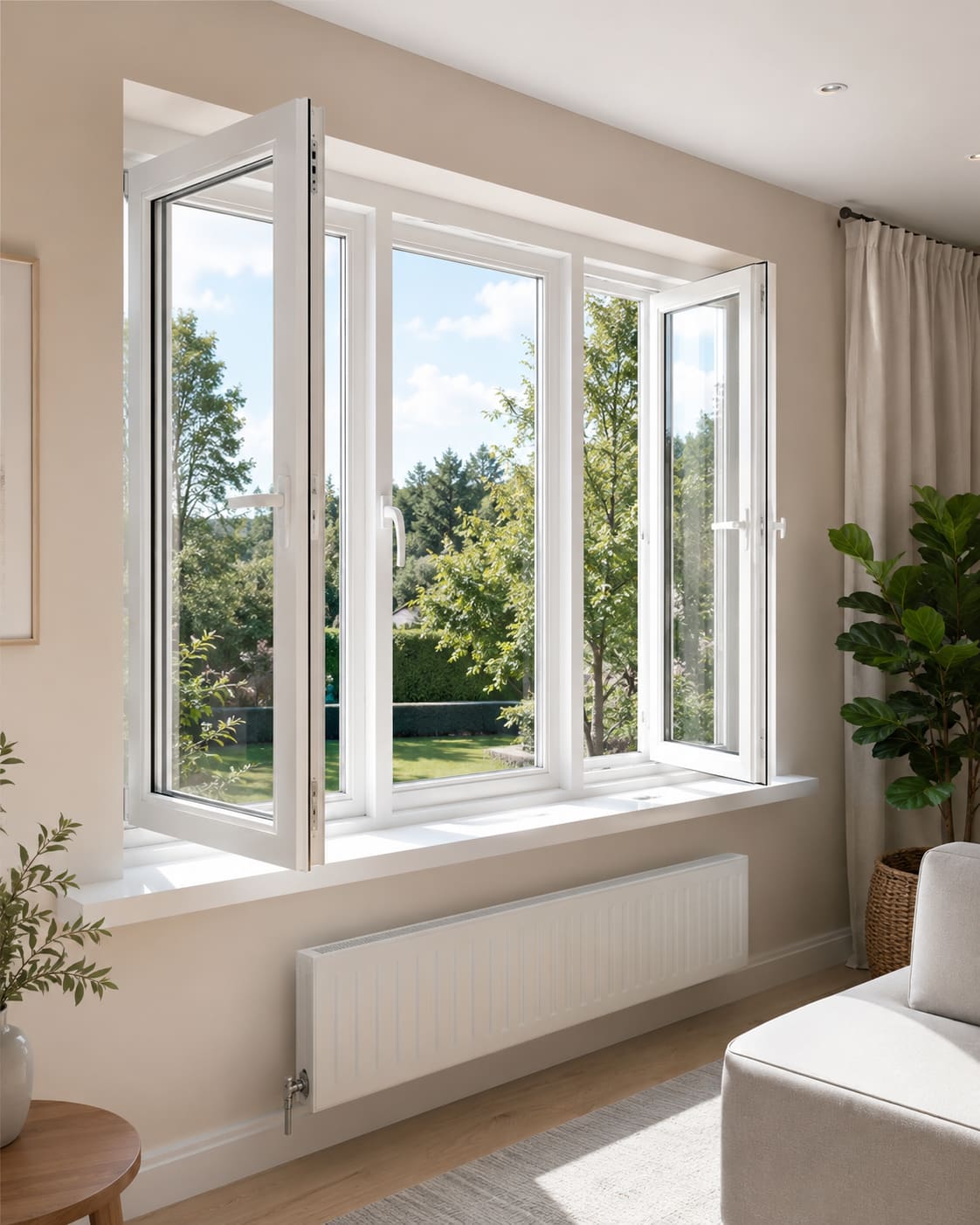
- Traditional fixed windows in low-risk locations away from doors, floors and wet areas.
- As the base substrate for toughened, laminated, insulated glass units (IGUs) and low-E coated glass.
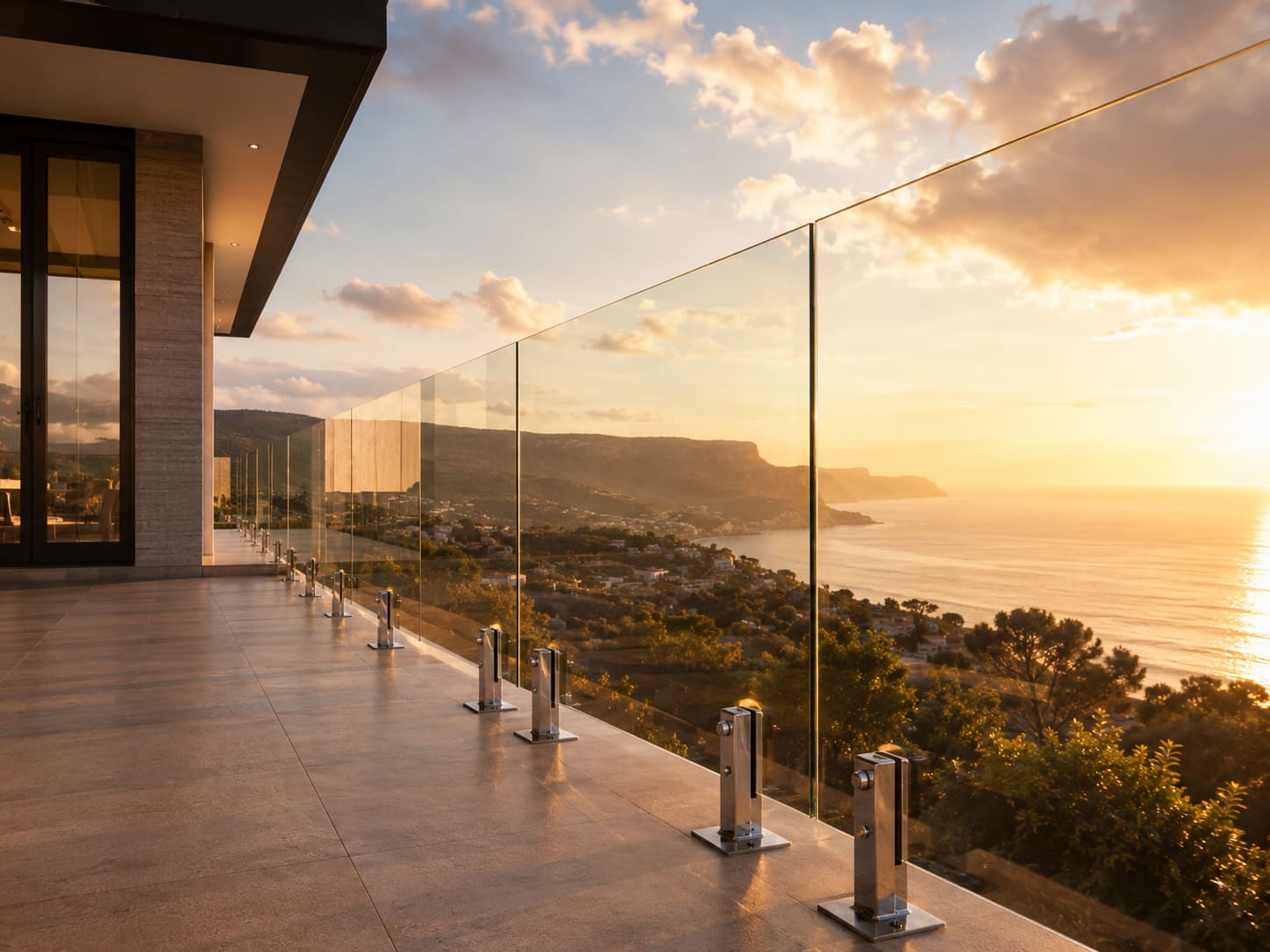
- Not permitted for doors, glass railings, shower enclosures, facades and other safety-critical uses, where the National Building Code of India (NBC) 2016 requires safety glass.
The clearest way to think about it: if a person, pet or falling object could strike the glass, you almost certainly need a processed safety product instead. A wardrobe shutter or a framed mirror is fine in annealed. A glass railing on a Kokapet apartment balcony, a frameless shower enclosure in a Gachibowli bathroom, or a shopfront on a Madhapur high street is not. You can see the difference in application across our completed projects.
Why Is Annealed Glass Not a Safety Glass?
Annealed glass is not a safety glass because it breaks into large, sharp, blade-like shards that can cause deep lacerations, unlike toughened glass which crumbles into small blunt granules. This break behaviour, not merely its strength, is what disqualifies it under Indian safety codes.
- IS 2553 (Safety Glass specification) and the NBC 2016 both mandate safety glazing in specific impact-prone locations.
- Safety glass is required in and around doors, at low sill heights, in balustrades and railings, in bathrooms and shower screens, and in overhead glazing.
- Toughened glass qualifies because rapid quenching puts its surface into compression, so it fails into pebble-like fragments.
- Laminated glass qualifies because the PVB interlayer holds broken fragments in place, keeping the opening covered.
- Using annealed glass in a code-restricted location is both a liability and, in the event of injury, potentially a legal exposure for the builder or owner.
For any impact-critical opening we specify the correct grade upfront. On facades and elevations, for example, our structural glazing and glass facade work always use toughened or laminated glass, never bare annealed, no matter how much it might save on paper.
Annealed Glass and the Hyderabad Climate
Hyderabad's climate is a strong argument against using annealed glass on any sun-exposed or externally loaded surface. Summer heat, thermal gradients, monsoon wind and airborne dust all magnify the weaknesses of untreated float glass.
- Summer surface temperatures on glazing across the Financial District, Hitec City and Kondapur can climb high enough to create steep thermal gradients between sunlit and shaded areas of the same pane.
- Annealed glass tolerates only about a 40C differential, so partial shading from a mullion, sticker or internal blind can be enough to crack a thin pane in direct sun.
- Monsoon wind loading on tall elevations in Gachibowli and Kokapet is governed by IS 875 Part 3, and the resulting design pressures generally rule out annealed glass in favour of toughened or laminated.
- Fine construction dust common to fast-developing corridors abrades exposed edges and can concentrate stress at micro-flaws, where annealed glass is most vulnerable.
- For these reasons, exterior applications such as cladding and elevation work and aluminium windows on the outer skin are always specified in processed glass, with annealed reserved for protected interior use.
This is why, in local practice, annealed glass is an interior and workshop material. It earns its keep as the raw sheet that gets cut and machined, and as the pane behind a framed mirror or inside a cabinet, but it rarely belongs on the weather-facing side of a Telangana building.
How Much Does Annealed Glass Cost in Hyderabad?
Annealed glass is the most economical flat glass in the Hyderabad market, priced well below toughened or laminated equivalents, but its low strength limits it to protected interior work. Understanding the price gap helps you budget correctly rather than over- or under-specifying.
- Indicative price: roughly INR 50 to INR 120 per sq ft depending on thickness, clarity and brand.
- Toughened glass typically costs 30 to 60 percent more, because of the extra reheating and quenching, and is mandatory for safety-critical uses.
- Laminated glass costs more still, owing to the second pane and the PVB interlayer, and is chosen where retention on breakage or acoustic performance matters.
- Thicker panes (10 mm and above) cost proportionally more and are heavier to handle and install, adding to labour.
- The cheapest option is rarely the correct one: choosing annealed to save money on a door or balustrade risks failure, injury and full replacement cost.
Our advice is to spend where safety and exposure demand it and save where they do not. Use annealed for the cabinet fronts, framed mirrors and protected internal partitions; invest in toughened or laminated for anything exposed, load-bearing or within reach of impact. If you would like a line-item comparison for your own drawings, request a free quote and we will price both the annealed and the code-compliant options side by side.
Does Annealed Glass Suffer From Spontaneous Breakage?
Annealed glass does not suffer from the spontaneous breakage caused by nickel sulphide inclusions that affects toughened glass, which is one genuine advantage it retains. Its failures are almost always traceable to an external cause rather than a hidden internal defect.
- Because annealed glass is not under high internal compression, it lacks the stored energy that drives nickel sulphide (NiS) spontaneous fracture in toughened panes.
- Its typical failure modes are edge damage, impact, over-tightened fixings, and thermal stress from uneven heating, all of which are foreseeable and manageable.
- Clean-cut, ground or polished edges dramatically reduce the risk of edge-initiated cracks, which is why edge finishing matters even on interior glass.
- Where retention on breakage is important but toughening is not desired, laminated annealed glass is a valid middle path used in some overhead and security applications.
- For any structural or overhead use, though, we still recommend heat-soaked toughened or laminated glass rather than plain annealed.
So the honest summary is that annealed glass is predictable and defect-free in a way toughened glass is not, but that predictability does not compensate for its low strength and hazardous break pattern in exposed locations. It is a reliable base material and a poor finished safety product.