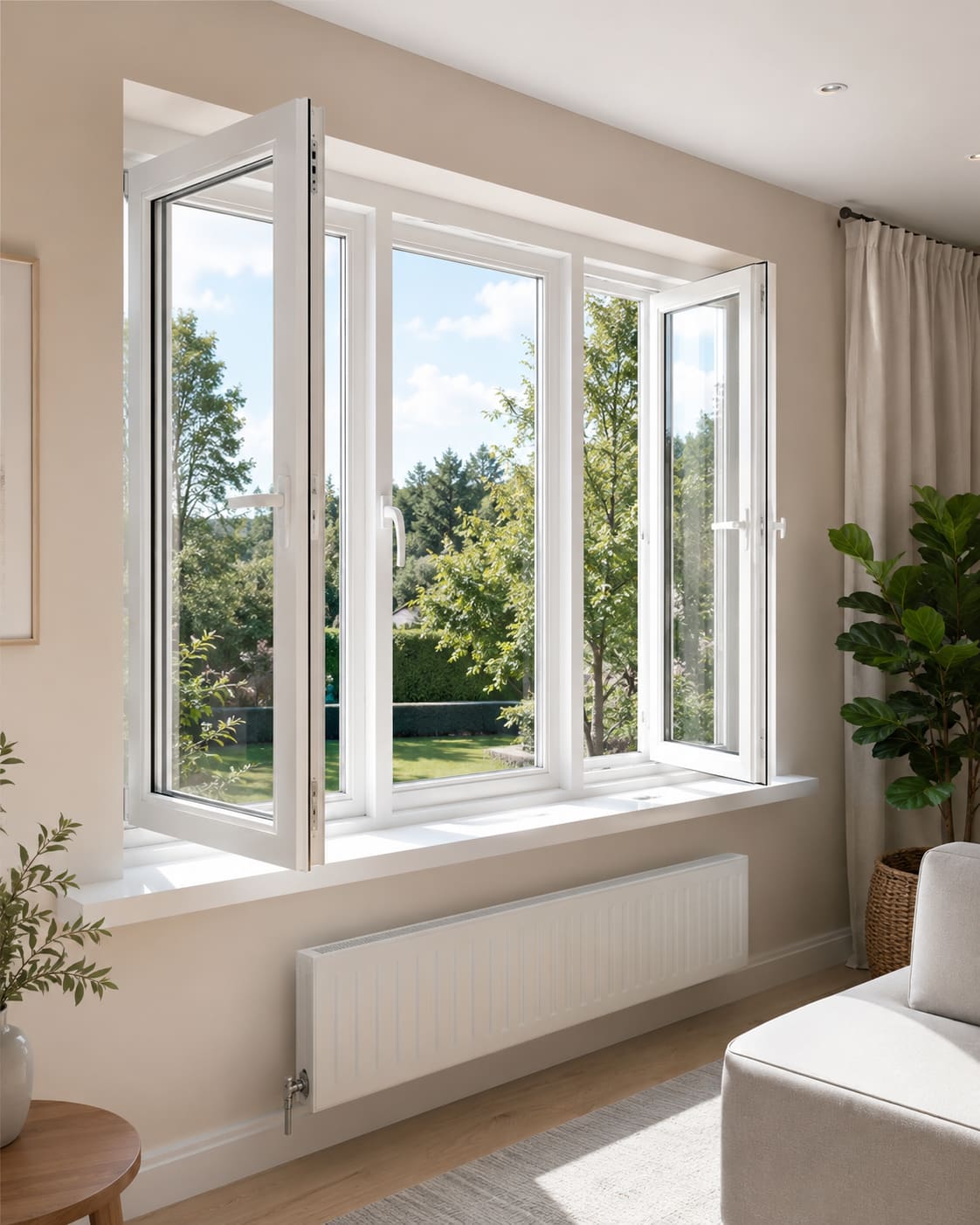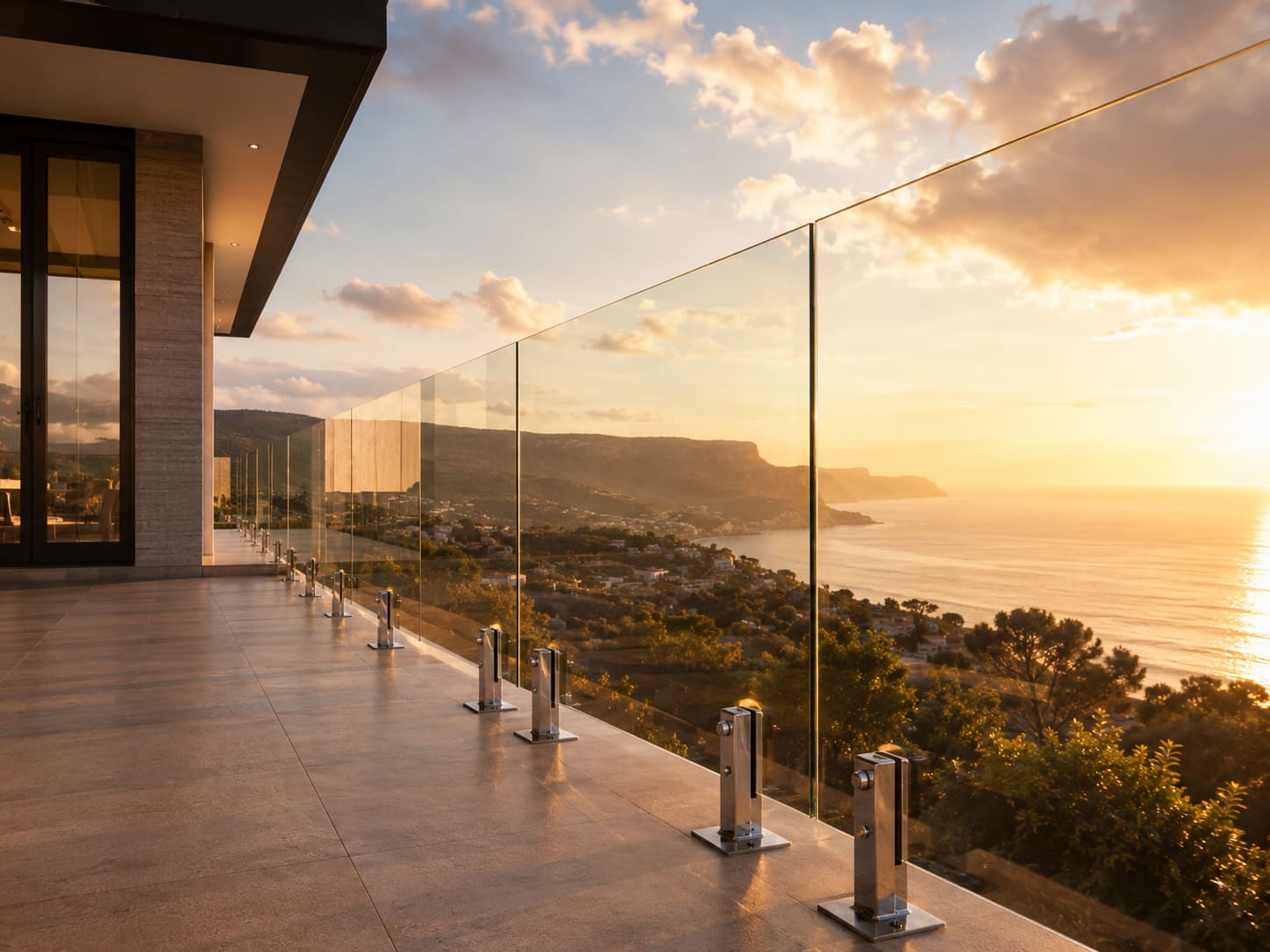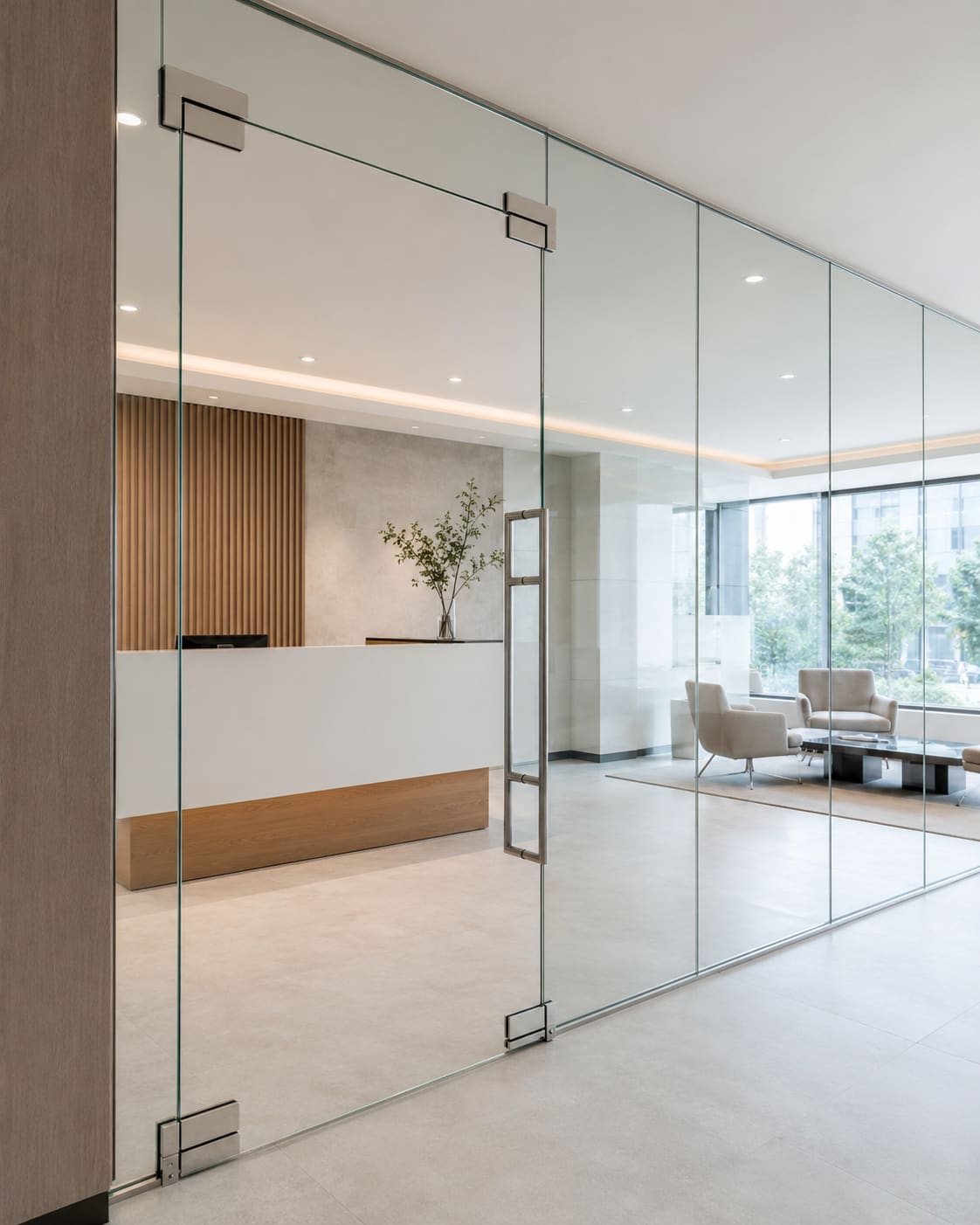

DGU glass is two panes of glass sealed together around an insulating air or argon-filled gap, and that trapped cavity is what blocks heat, glare and outside noise far better than a single sheet of glass. DGU stands for Double Glazed Unit - you will also see it called an Insulated Glass Unit (IGU). If you have been comparing window or facade quotes in Hyderabad, this is the term that decides how comfortable and how cool your rooms actually feel.
For Telangana and Andhra Pradesh, where summer temperatures regularly cross 42 C and afternoon AC bills climb fast, DGU glass has shifted from a premium luxury to a practical energy-saving upgrade. Homes in Kokapet, offices in the Financial District and apartment towers along the Outer Ring Road are all specifying it as standard because the maths simply works over a few Hyderabad summers.
Below we break down exactly how a double glazed unit is built, what it does for your home or office, realistic INR pricing so you can budget with confidence, and where DGU is worth the money versus where a simpler glass will do. Everything here reflects how units are actually specified and fitted across Hyderabad and Secunderabad.
How Is a Double Glazed Unit Actually Built?
A DGU is an engineered sandwich, not just two loose panes stuck together. Each unit is built as a sealed system with four core components, and every one of them affects performance:
- Two glass panes: typically 4mm to 8mm each. One or both panes are often toughened or laminated for safety and strength, especially in doors, low-level glazing and tall facade panels.
- A spacer bar: an aluminium or warm-edge spacer running around the perimeter that sets the cavity width - usually 6mm, 9mm, 12mm or 16mm.
- A desiccant: moisture-absorbing beads packed inside the hollow spacer that keep the cavity bone-dry, so the unit never fogs internally.
- A dual sealant: a primary butyl seal plus a secondary structural seal that lock the unit airtight and hold the gas gap stable for 10-15 years or more.
The wider the cavity and the better the glass coating, the higher the insulation. On premium units the trapped air is replaced with argon gas, and one internal surface gets a Low-E (low-emissivity) coating - a microscopic metallic layer that reflects radiant heat back outside while still letting daylight through. This is the same building-physics principle used across professional DGU facade and reflective glass facade systems, just scaled down to a window.
What Does DGU Glass Actually Do For You?
The whole point of double glazing is comfort plus efficiency, and in the Hyderabad climate a well-specified DGU delivers on several fronts at once:
- Heat control: the air or argon gap cuts solar heat gain sharply, keeping interiors cooler and reducing AC load by roughly 20-30% in many homes and offices.
- Noise reduction: ideal for properties near the airport corridor, the ORR or busy junctions like Gachibowli, Madhapur and Ameerpet, where DGU noticeably lowers perceived traffic noise. Asymmetric pane thicknesses (say 6mm + 4mm) and laminated glass reduce it further.
- No internal condensation: the sealed dry cavity stops the interior fogging you get on single glass during humid monsoon mornings.
- Reduced glare and fading: Low-E and tinted variants soften harsh afternoon light and cut the UV that fades sofas, curtains and wooden flooring.
- Safety and security: toughened or laminated DGU combinations resist breakage and hold together on impact, which matters for ground-floor and balcony glazing.
In short, you pay more upfront but recover it through lower electricity bills and a quieter, more comfortable space. That return-on-investment story is exactly why DGU now appears in most premium residential and commercial aluminium doors and windows specifications across the city.
DGU vs Single Glazing vs Laminated Glass
It helps to see where DGU sits against the alternatives people usually compare it with:
- Single glazing: one pane, cheapest, but offers almost no thermal insulation and poor sound control. Fine for internal or shaded windows, weak for west-facing rooms.
- Laminated glass: two panes bonded with a PVB interlayer, mainly for safety and moderate acoustic gains - but it is one solid sheet with no insulating air gap, so it does far less for heat.
- DGU: the insulating air/gas gap is the differentiator, giving genuine thermal performance that single and laminated glass cannot match.
The best of both worlds is a DGU that uses a laminated glass or toughened glass pane on the inner or outer face - you get the insulating cavity plus the safety and acoustic benefits in one unit. For a busy road frontage in Kondapur or Hitec City, this laminated-DGU combination is often the sweet spot between comfort and cost.
How Much Does DGU Glass Cost in Hyderabad?
Indicative DGU glass pricing in Hyderabad and across Telangana typically runs between INR 350 and INR 750 per square foot for the glass unit alone, depending on specification. Here is roughly how it breaks down:
- Standard clear DGU (5mm + 9mm air + 5mm): around INR 350-450 per sq ft.
- Toughened DGU: about INR 450-600 per sq ft, adding safety and strength.
- Low-E or argon-filled high-performance DGU: around INR 600-750+ per sq ft for the best heat and glare control.
Remember these are glass-only rates. Once you add a uPVC or aluminium frame, hardware and installation, a complete DGU window generally lands in the INR 650-1,200 per sq ft range for a finished, fitted product. Large facade jobs are quoted separately based on the glazing system and structural loads - if that is your project, it is worth reviewing our facade and structural glazing work before finalising a budget. For an accurate figure for your exact sizes and orientation, get a free quote and we will spec the unit to your rooms.
Which DGU Configuration Is Right For Your Project?
There is no single best DGU - the right build depends on which problem you are solving. A quick guide to matching spec to need:
- Beating heat (west/south rooms): choose a Low-E coated, argon-filled DGU. This is the highest-impact upgrade for Hyderabad's afternoon sun.
- Cutting traffic noise: use asymmetric pane thicknesses plus a laminated pane and a wider 12-16mm cavity.
- Balcony, staircase and low-level glazing: insist on a toughened outer pane for safety compliance.
- Budget-led bedrooms on shaded sides: a standard clear air-filled DGU is often enough.
- Tinted or reflective privacy: add a tinted or reflective outer pane to reduce glare and outside visibility.
The frame carries half the performance, so pair the glass wisely. High-performance DGU belongs in a uPVC window or thermal-break aluminium frame - putting a premium unit into a cheap, conductive frame wastes much of what you paid for.
Where Should You Use DGU in a Building?
DGU makes the most sense on the sun-facing and road-facing sides of a building - typically the west and south elevations in Hyderabad that take the worst afternoon heat. Spending your budget there first delivers the biggest comfort and energy return.
For a full-home retrofit, prioritise bedrooms, living rooms and any glazing facing a noisy street; shaded north-facing windows can often use simpler glass to save money. For offices, showrooms and apartment towers, DGU curtain walls and windows reduce cooling costs at scale and are now expected in premium developments across Gachibowli, Madhapur and the Financial District.
DGU also pairs naturally with larger architectural glass elements - from glass partitions that need acoustic separation in offices to full curtain wall glazing on commercial towers. You can see how these systems come together on real Hyderabad buildings in our completed projects.
Maintenance, Lifespan and What Can Go Wrong
A properly manufactured DGU is close to maintenance-free - there is no accessible surface inside the sealed cavity, so cleaning is just the two exposed faces like any window. The failure mode to understand is seal failure: if the edge seal degrades, moisture creeps in and the unit fogs permanently between the panes. When that happens the glass unit must be replaced; it cannot be cleaned from inside.
Good units from a reputable fabricator typically hold their seal for 10-15 years or longer. To protect that lifespan:
- Insist on a proper dual-seal edge, not a single-seal shortcut, especially for units exposed to direct Telangana sun.
- Ensure drainage and weep holes in the frame are clear so water never sits against the DGU edge during monsoon.
- Avoid abrasive scrubbers and harsh solvents on Low-E or coated surfaces.
Because seal quality is invisible from the outside, the fabricator matters more than the brochure. This is one product where buying from an experienced installer such as Hakimi Aluminium and Glass genuinely pays off over the life of the window.
Is DGU Glass Worth It in Hyderabad?
For most Hyderabad homes and offices with meaningful west or south glazing, yes - the payback in lower cooling bills, better sleep and a quieter interior usually justifies the premium within a few summers. The case is strongest where AC runs long hours and where the property faces heat, dust or road noise, which describes a large share of properties across the city.
Where it is less essential: small, shaded or rarely-used windows, or tight-budget projects where the money is better spent on a good frame and proper sealing first. A balanced approach - DGU where it counts, simpler glass where it does not - almost always beats blanket-specifying the most expensive unit everywhere.
Hakimi Aluminium and Glass supplies and installs DGU units matched to your orientation, budget and noise requirements across Hyderabad, Secunderabad, Telangana and Andhra Pradesh. If you are weighing frame options alongside the glass, our guide to choosing between systems and a quick conversation about your site will get you a spec that fits both your rooms and your budget.