Fenestration is the design, placement and construction of all openings in a building's envelope, including windows, doors, skylights, ventilators, curtain walls and louvres. The term covers not only the openings themselves but also the frames, glazing, hardware and the way these elements are arranged across a facade to control daylight, ventilation, views, security and thermal performance. In short, if it is an engineered hole in the building skin that lets in light or air, it is fenestration.
Derived from the Latin word 'fenestra' (window), fenestration is both an architectural and an engineering discipline. It decides how much daylight and heat enter a space, how a building looks from the street, and how much you spend cooling it. In a hot, dusty, monsoon-prone city like Hyderabad, well-engineered fenestration using the right glass and framing can cut solar heat gain sharply and reduce air-conditioning loads across an entire building.
This guide defines fenestration in plain terms, breaks down its three components, walks through frame materials and glazing options, explains the Indian codes that govern it, and gives realistic INR pricing so you can plan a project in Gachibowli, Kokapet, Madhapur or anywhere in Telangana and Andhra Pradesh.
What Counts as Fenestration?
Fenestration includes every glazed or operable opening in the building envelope, plus the framing and hardware that support them. Architects and facade engineers group them into a few families:
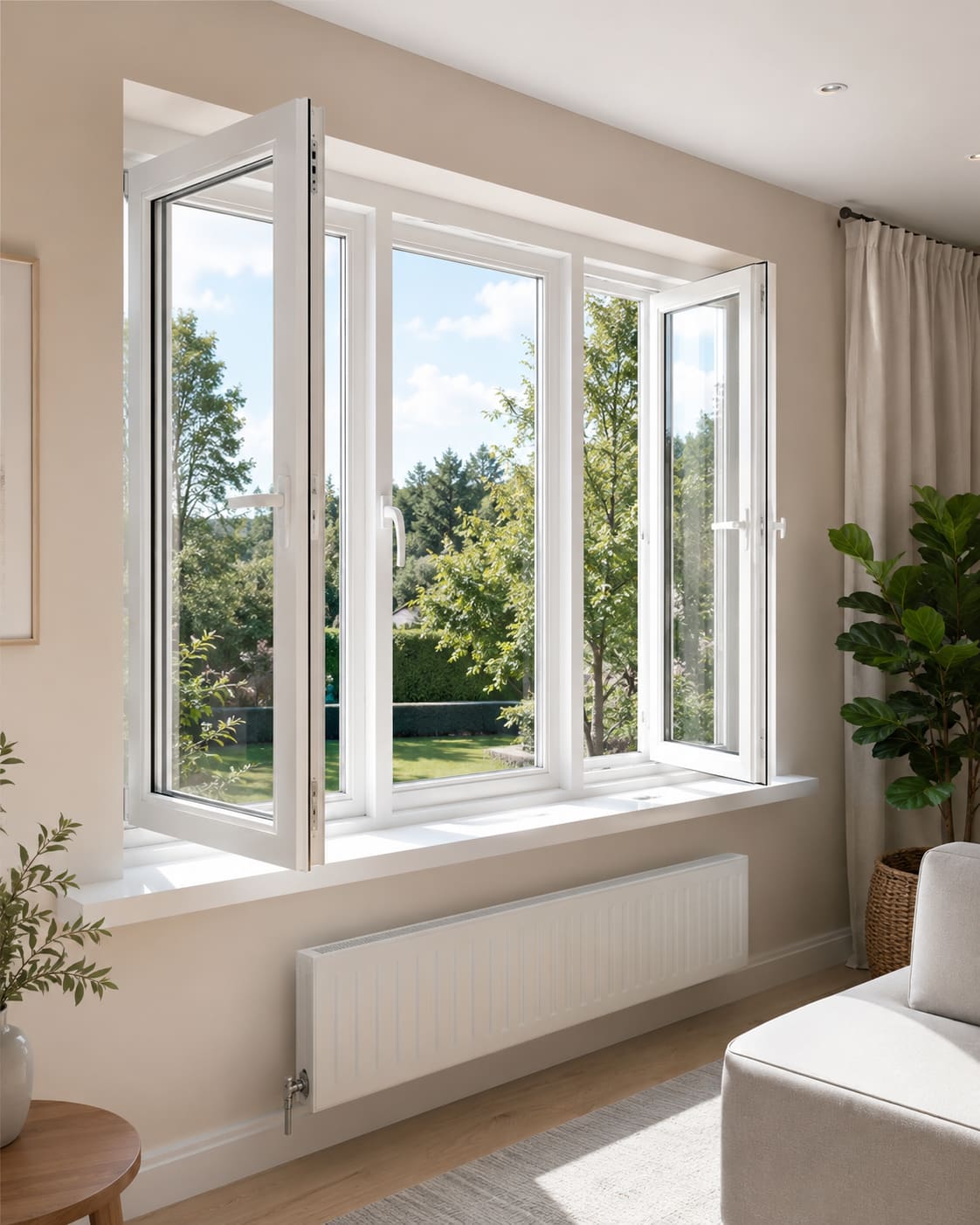
- Windows: fixed, sliding, casement, awning, tilt-and-turn and top-hung units. See our range of aluminium windows and uPVC windows for residential and commercial use.
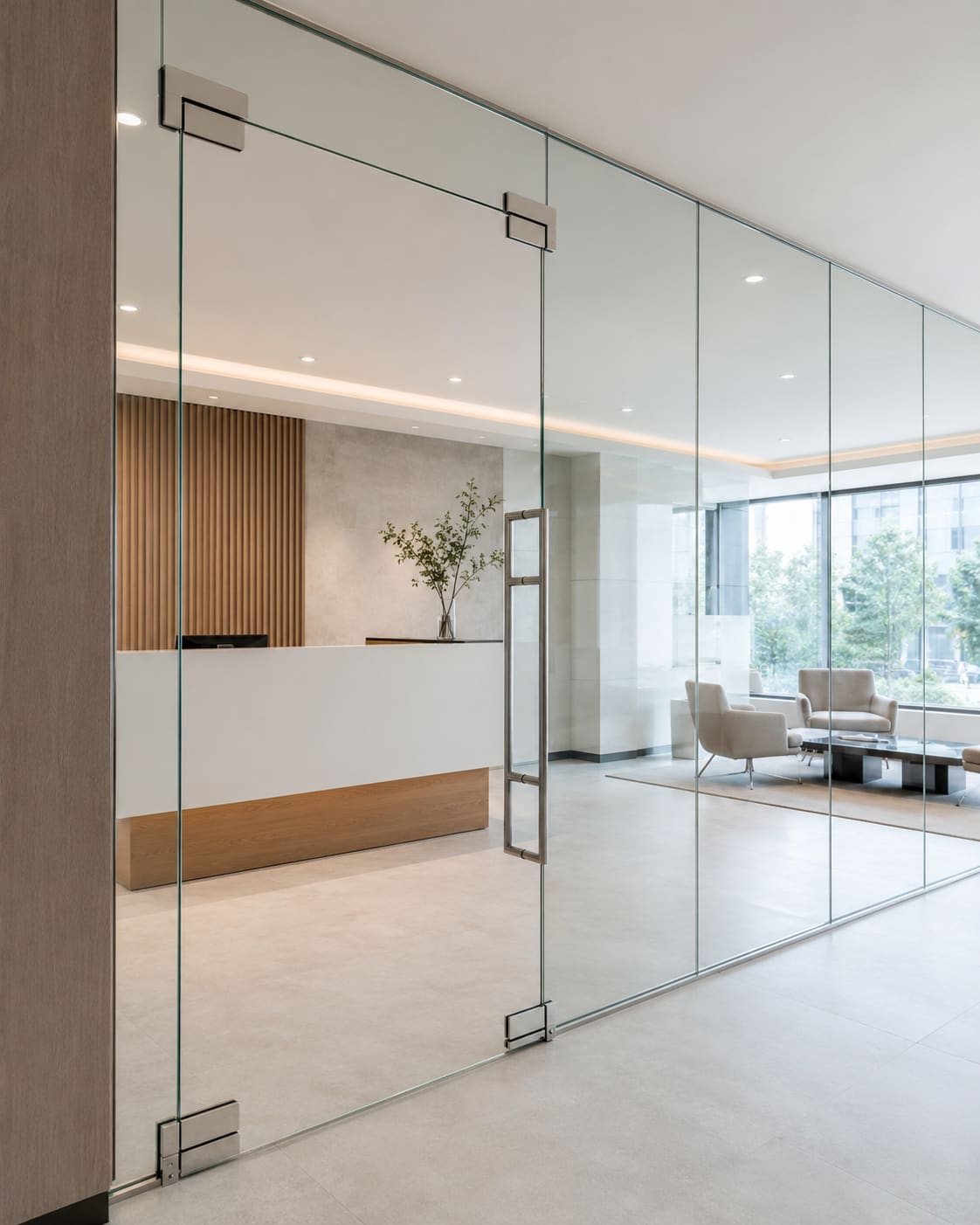
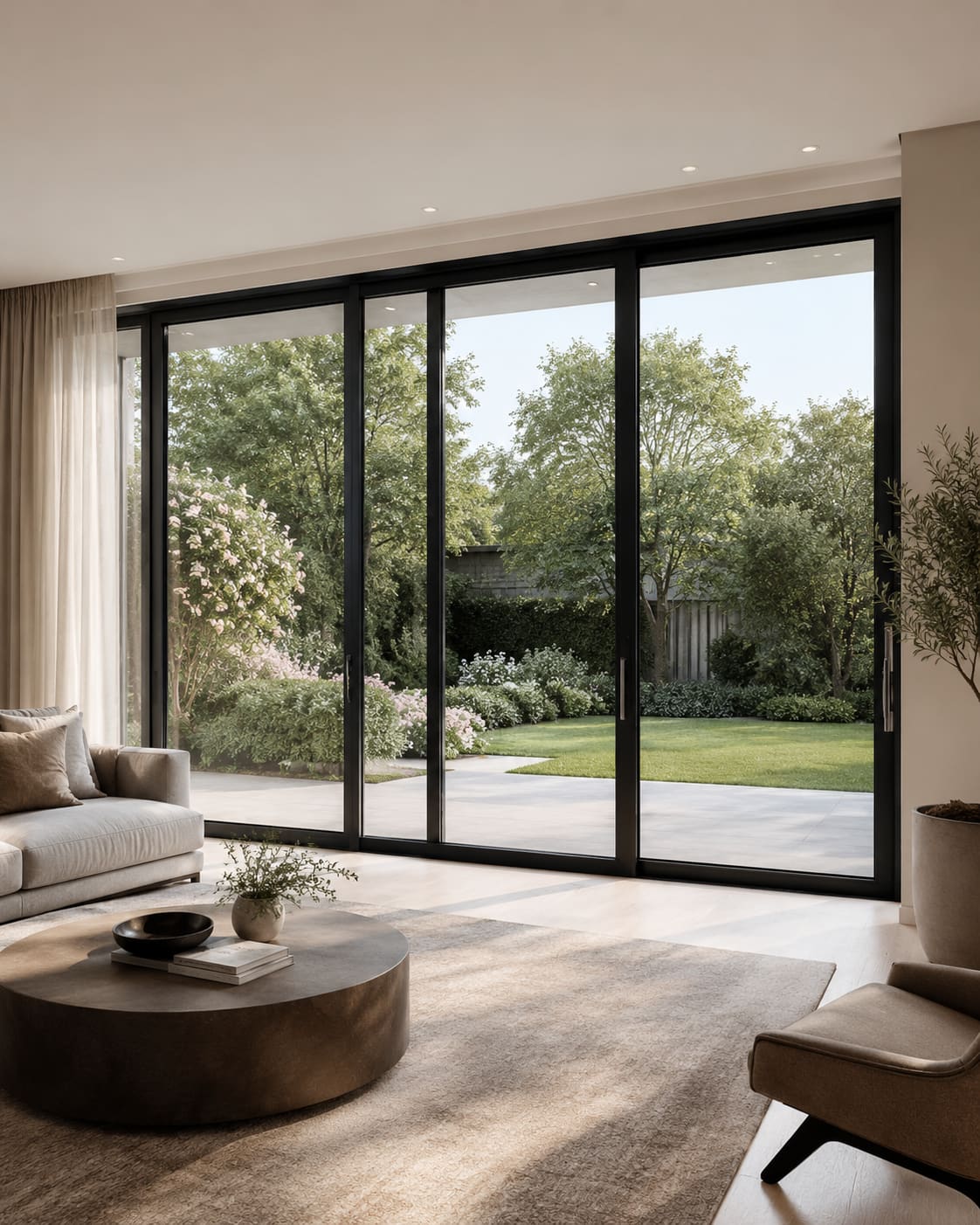
- Doors: hinged, sliding, folding (bi-fold) and automatic entrance doors.
- Skylights and roof lights: overhead glazing that brings daylight down through the roof, such as a pyramid or flat-roof skylight.
- Curtain walls and structural glazing: non-load-bearing glass facades hung off the structure, delivered as facade and structural glazing or a full curtain wall system.
- Ventilators and louvres: openings dedicated to air movement, including aluminium louvers for plant rooms and car parks.
The frame, the glazing and the hardware together form a single fenestration unit. Leave any one out and it stops being fenestration and becomes just a hole in the wall.
The Three Parts of Every Fenestration Unit
Whether it is a modest bedroom window or a ten-storey glass tower, every fenestration unit is built from the same three ingredients:
- Frame: the structural surround that transfers wind and dead loads to the building and holds everything in place. It can be aluminium, uPVC, timber or steel.
- Glazing: the glass infill that admits light and view while controlling heat, glare, noise and safety. This is the performance core of the unit.
- Hardware: hinges, rollers, handles, multi-point locks, gaskets and weather seals that let the unit open, close, lock and stay airtight.
Understanding this three-part anatomy is the fastest way to compare quotes. A cheap window is usually cheap because it skimps on hardware or glazing, not because the frame looks different. When you weigh two proposals, ask what glass and which locking system each one includes before you compare the price.
Frame Materials and Their Properties
The frame is the structural backbone of any fenestration unit and is chosen for strength, thermal behaviour, durability and cost. The four common materials in India are:
- Aluminium: strong, slim, corrosion-resistant and ideal for large spans and facades, with a lifespan of 30-45 years. Thermal-break aluminium profiles add a polyamide barrier that cuts heat transfer through the frame, which matters in Hyderabad's summer.
- uPVC: excellent thermal and acoustic insulation with very low maintenance, a typical lifespan of 25-40 years, and a natural fit for uPVC doors and windows in homes and apartments.
- Timber: high aesthetic warmth and good natural insulation, but it needs periodic sealing and is vulnerable to termites and monsoon moisture if neglected.
- Steel: very high strength for slim heritage-style profiles, but heavier and prone to corrosion without a proper coating.
Frame wall thickness for structural aluminium windows is typically 1.2-2.0 mm, verified against wind load under IS 875 Part 3. For high-rise towers in the Financial District or Kokapet, engineers often specify thicker sections and thermally broken profiles to meet both structural and energy targets. If you need bespoke sections, our custom aluminium fabrication team can extrude and finish to project spec.
Glazing: The Performance Core
Glazing is the glass infill that controls light, heat, sound and safety, and it does more to determine comfort and running cost than any other part of the unit. Key glazing options include:
- Single glazing: one 4-12 mm pane; low insulation with a U-value around 5.7 W/m2K, suitable only for internal or budget applications.
- Double glazing (IGU): two panes separated by a 6-20 mm air or argon gap, cutting the U-value to roughly 1.8-3.0 W/m2K. Explore DGU facade systems for commercial elevations.
- Low-E coated glass: a microscopically thin metallic coating that reflects infrared heat while letting visible light through, ideal for Hyderabad's intense solar radiation. A reflective glass facade uses the same principle at building scale.
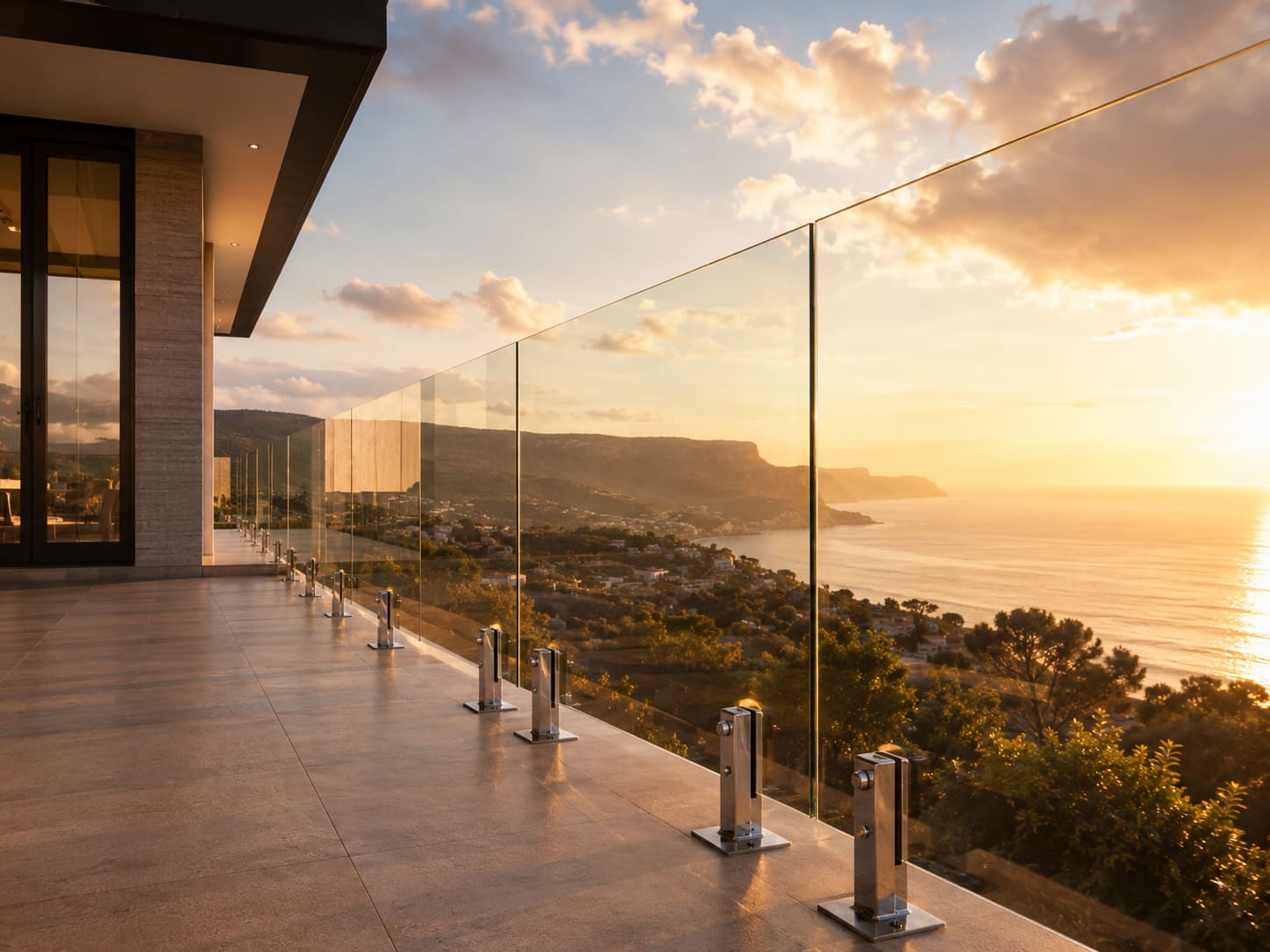
- Toughened (tempered) glass: 4-5 times stronger than annealed glass and safe when broken, conforming to IS 2553. See our toughened glass work.
- Laminated glass: two panes bonded with a PVB interlayer for safety, security and acoustic control, delivered as laminated glass work.
A Solar Heat Gain Coefficient (SHGC) below 0.25 is preferred for hot Indian climates to limit how much of the sun's heat crosses the glass. Pairing a low SHGC with a Low-E coating is the single most effective glazing decision for Telangana's climate.
How Does Fenestration Handle Hyderabad's Climate?
Hyderabad sits in a composite-to-hot climate zone: long, harsh summers touching 42 C, a heavy south-west monsoon, and a persistent load of construction and road dust. Good fenestration is designed for all three at once.
- Heat: Low-E, low-SHGC glass and thermally broken frames keep interiors cooler and cut air-conditioning bills in glass-heavy offices around Hitec City and Madhapur.
- Monsoon: correctly sloped sills, EPDM gaskets and drainage weep holes stop water ingress during driving rain. This is where cheap, poorly sealed windows fail first.
- Dust: tight gaskets and quality tracks keep fine Deccan dust out of sliding channels, so windows keep running smoothly for years.
- Glare and views: on premium projects in Kokapet and the Financial District, tuned Visible Light Transmission keeps daylight useful without turning workstations into a glare trap.
Facade orientation matters too. West and south-west elevations take the worst afternoon heat, so many Hyderabad buildings use aluminium louvers or spandrel zones there to shade the glass. A short facade consultancy review early in design usually pays for itself in reduced running costs.
Standards and Codes That Govern Fenestration in India
Fenestration in India is regulated by national building, energy and material standards that ensure safety and efficiency. The most relevant are:
- National Building Code of India (NBC) 2016: overall design, ventilation, natural light and opening requirements.
- Energy Conservation Building Code (ECBC): mandatory U-value and SHGC limits for commercial buildings above a set connected load.
- IS 2553: toughened and laminated safety glass specifications.
- IS 875 Part 3: wind load calculation, essential for facade and high-rise window design.
- ASTM C1401: standard guide for structural sealant (silicone) glazing used in bonded glass facades.
BEE star ratings increasingly influence glazing and window energy labelling in India, and green-building schemes like IGBC and GRIHA award points for high-performance fenestration. For a large elevation, a compliant design is not optional; getting it wrong can stall an occupancy certificate.
Why Fenestration Matters for Energy and Comfort
Fenestration is one of the largest sources of heat gain and energy loss in a building, often accounting for 25-40% of the cooling load. Good design balances daylight, ventilation and heat control instead of chasing any one of them.
- In Hyderabad's climate, high-SHGC glass pushes up air-conditioning bills, while low-SHGC and Low-E glazing bring them down.
- Airtight gaskets and multi-point locking improve thermal performance and security at the same time.
- A sensible Window-to-Wall Ratio (WWR), usually kept at 20-40%, limits excess heat gain while keeping interiors bright.
- Acoustic laminated glazing can cut external noise by 35-45 dB, valuable near busy roads in Secunderabad and along the ORR.
- Daylight from well-placed openings reduces artificial lighting during the day, compounding the energy saving.
Fenestration is not only about performance numbers, though. It is the face of the building, which is why front elevations and glass facade work get so much design attention on commercial projects.
How Much Does Fenestration Cost in Hyderabad?
Cost depends on the frame material, the glass specification and the hardware grade, so treat these as planning ranges rather than fixed quotes:
- Aluminium sliding windows: roughly INR 450-750 per sq ft with standard glass; more with Low-E or DGU units.
- uPVC casement windows: around INR 500-850 per sq ft depending on profile and glazing.
- Thermally broken aluminium systems: INR 900-1,600 per sq ft, chosen for high-rise and energy-rated projects.
- Structural glazing / curtain wall facades: INR 1,100-2,500+ per sq ft based on system type and glass.
- Skylights and canopies: priced per project by span, glass and structure.
The cheapest option is rarely the best value once you factor in decades of cooling bills, dust ingress and reglazing. To compare real numbers for your site, get a free quote and browse completed work in our projects gallery to see how different systems look and perform in practice. Hakimi Aluminium and Glass designs, fabricates and installs engineered fenestration across Hyderabad, Secunderabad and the wider Telangana and Andhra Pradesh region.