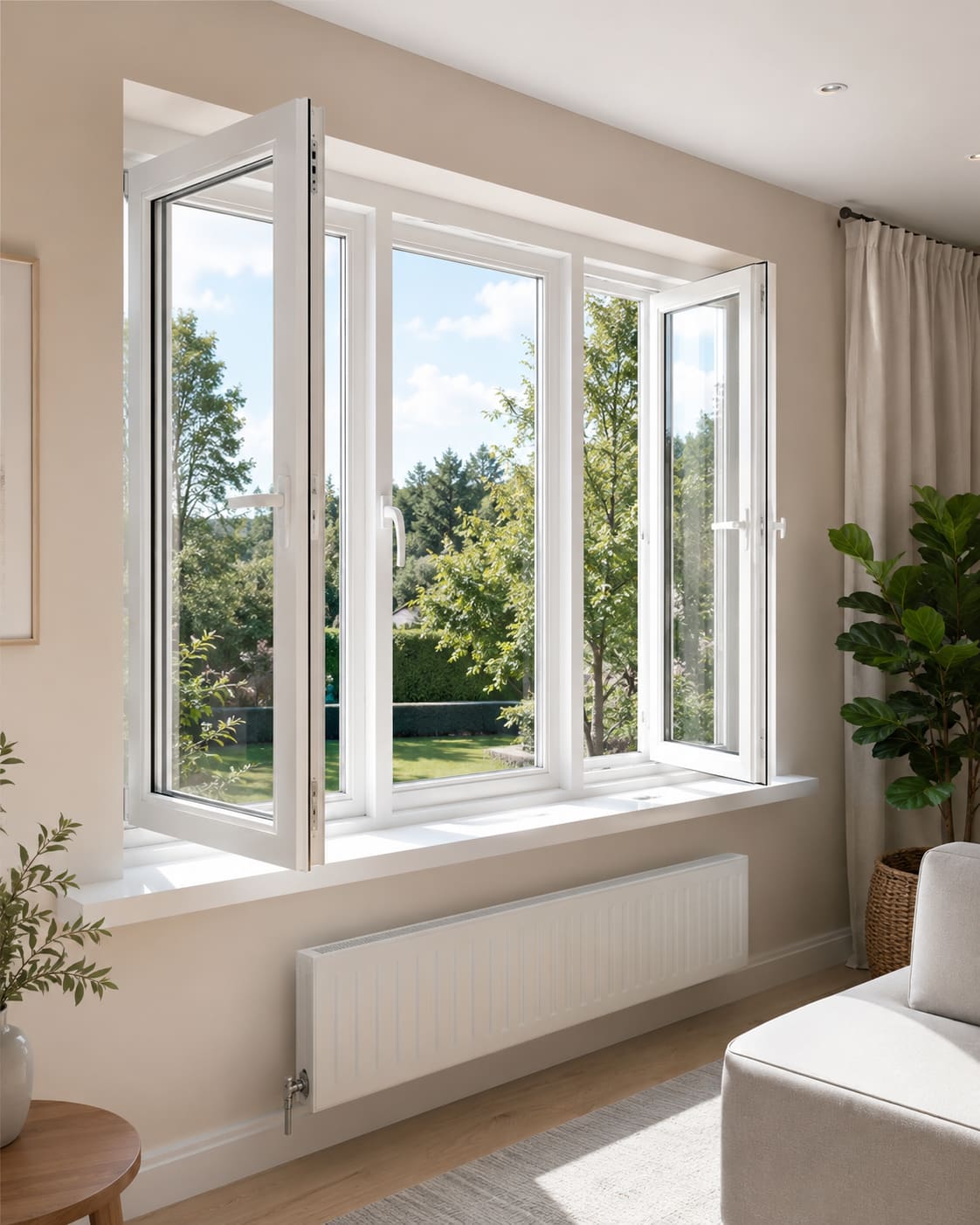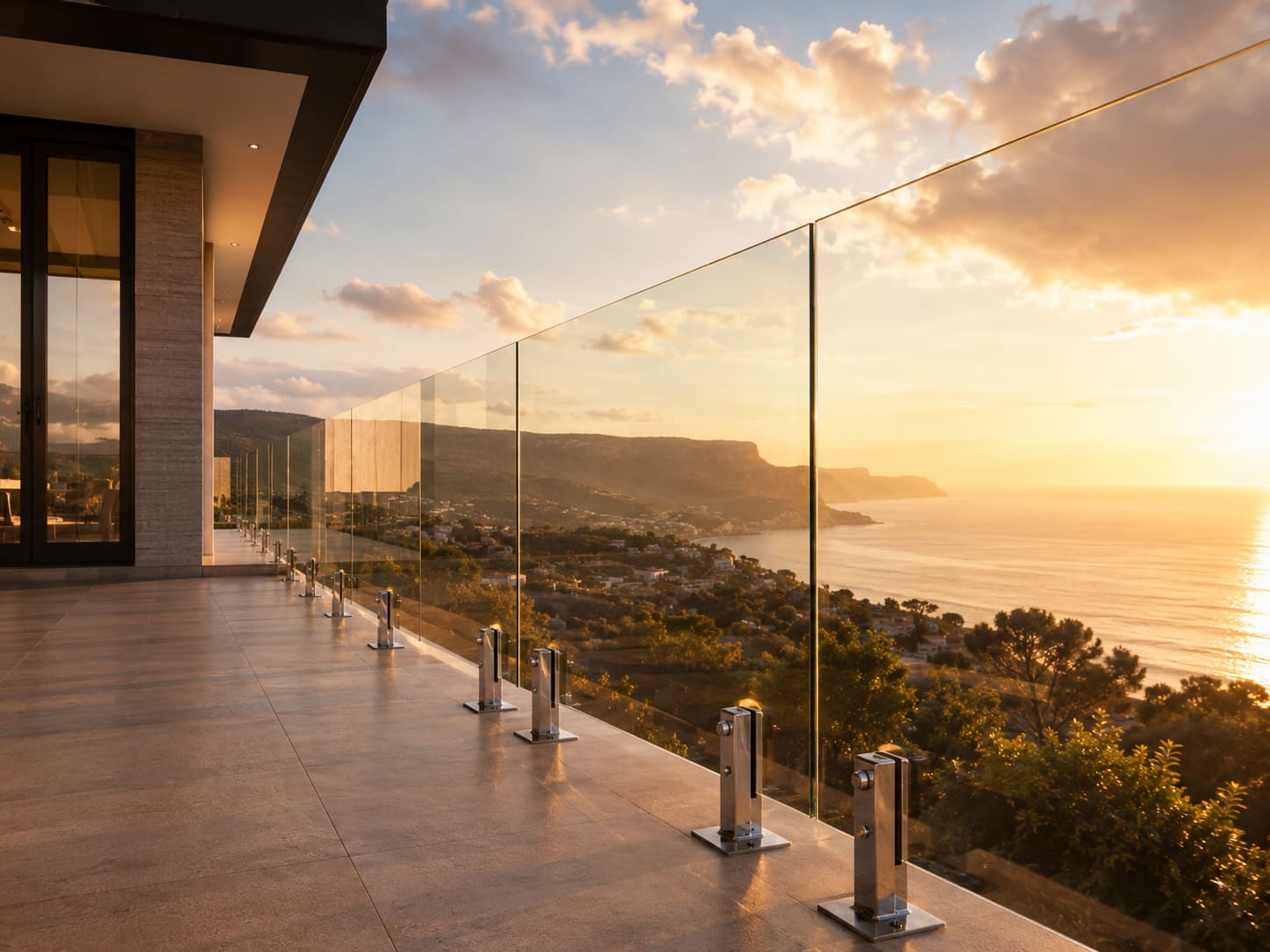
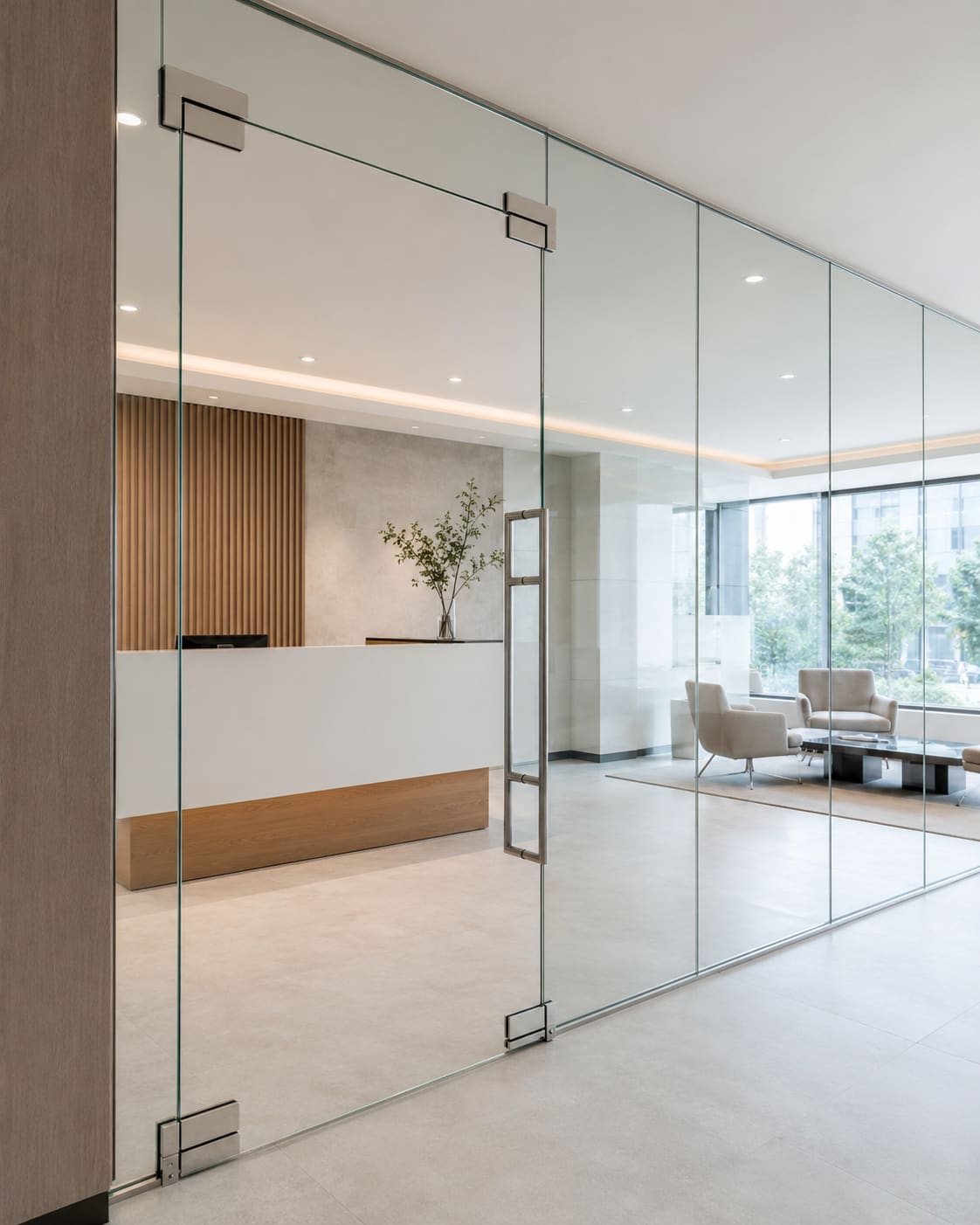
Float glass is flat, clear soda-lime-silica glass manufactured by floating a continuous ribbon of molten glass on a bath of molten tin, which gives it two perfectly flat, parallel and distortion-free surfaces. It is the standard base glass for almost all modern windows, doors, facades, mirrors and glass furniture, and it is the raw substrate from which toughened, laminated, coated and insulated glass are made. If you have looked through a shopfront in Gachibowli or a curtain wall in the Financial District, you were almost certainly looking through processed float glass.
The name comes from the manufacturing method: molten glass literally floats and spreads across liquid tin, so both faces set flat under gravity without any grinding or polishing. In its as-made state, float glass is annealed (slowly cooled) glass, which is optically excellent but breaks into sharp shards, so it is usually processed further before use in toughened glass doors, shopfronts and facades. In India, clear float glass is specified under IS 14900, and it is the workhorse material behind most of the glazing seen across Hyderabad and Secunderabad.
This guide walks through how float glass is made, its composition and thicknesses, where it is used, how it differs from toughened and laminated glass, and how to select the right grade for Telangana's hot, dusty, monsoon-heavy climate. Whether you are specifying glass for a home in Kondapur or a commercial elevation in Hitec City, understanding the base material helps you avoid costly mistakes.
How Is Float Glass Made? (The Float Process)
Float glass is made by melting raw materials at around 1,500-1,600 degrees Celsius and floating the molten glass on a bath of molten tin, where it spreads into a flat ribbon of uniform thickness before being cooled and cut. The perfectly level surface of the liquid tin is what gives float glass its signature flatness, without a single grinding or polishing step.
The float process was invented by Sir Alastair Pilkington in 1952 and commercialised in 1959. It replaced older plate-glass grinding methods, dramatically cut cost and waste, and now accounts for over 90% of all flat glass produced worldwide. Every large glass line in India, from Saint-Gobain to Asahi to Gold Plus, uses a variation of this same process.
- Batching: silica sand, soda ash, limestone, dolomite and recycled cullet are precisely weighed and mixed in controlled proportions.
- Melting: the batch is fused in a furnace at about 1,500-1,600 degrees Celsius into homogeneous, bubble-free molten glass.
- Float bath: the melt flows onto molten tin held at roughly 600-1,100 degrees Celsius; tin is chosen because it is dense, stays liquid across this wide range and does not react with glass.
- Thickness control: ribbon speed and top rollers (called top rolls) set the thickness, from a delicate 2 mm up to a heavy 19 mm.
- Annealing: the ribbon passes through a long oven called a lehr, where it is cooled gradually to relieve internal stress and prevent spontaneous cracking.
- Inspection and cutting: automated scanners check for bubbles, stones and inclusions before the ribbon is cut into stock sizes such as the 3210 x 6000 mm jumbo sheet that fabricators buy.
Understanding this process matters practically: the flatness and clarity you get from a good float line is why frameless assemblies like a frameless glass partition look seamless, with no waviness distorting the view.
What Is Float Glass Made Of? Composition and Properties
Float glass is a soda-lime-silica glass that is transparent, chemically stable, hard and rigid, with a typical composition of about 70-74% silica, 12-16% sodium oxide and 5-11% calcium oxide, plus minor magnesia and alumina. The silica is the glass former, soda lowers the melting temperature, and lime stabilises the glass against water attack.
- Visible light transmission: approximately 87-90% for clear 4-6 mm glass.
- Density: about 2,500 kg per cubic metre (2.5 g/cc), so a 6 mm sheet weighs roughly 15 kg per square metre.
- Softening point: roughly 720-730 degrees Celsius.
- Standard thicknesses: 2, 3, 4, 5, 6, 8, 10, 12, 15 and 19 mm.
- Common tints: clear, and body-tinted bronze, grey, green and blue for solar control.
- Strength: annealed float glass has low bending strength (about 40 MPa) and breaks into large sharp pieces, which is why it is toughened or laminated for any safety-critical use.
One face of every float sheet touches the tin bath and carries a microscopic 'tin side', detectable under ultraviolet light. Fabricators track it carefully because it affects mirror silvering, low-E coating adhesion and some laminating steps, so identifying the tin side is a routine quality check before processing mirror works or coated units.
What Thicknesses Does Float Glass Come In?
Float glass is commonly produced in 2, 3, 4, 5, 6, 8, 10, 12, 15 and 19 mm thicknesses, and the correct thickness depends on the pane size, the span and the wind load calculated under IS 875 Part 3. Undersizing the thickness is one of the most common and dangerous specification errors, especially on the upper floors of high-rises in Kokapet and the Financial District where wind pressures are higher.
- 2-3 mm: picture frames, small cabinet fronts and lightweight interior uses.
- 4-5 mm: residential windows, mirrors and small glazed panels.
- 6 mm: the general-purpose workhorse for windows, doors and most interior partitions.
- 8-10 mm: frameless doors, larger partitions, shower enclosures and railings (usually toughened).
- 12 mm: large frameless assemblies, spider-fitting facades and structural applications.
- 15-19 mm: heavy structural glazing, glass fins, canopies and walkable glass floors.
For frameless work such as an 8-10 mm toughened glass partition or a frameless spigot railing, the thickness is driven by both structural load and handle-slam durability, not just clarity, so it is worth confirming the grade with your fabricator before ordering.
Where Is Float Glass Used?
Float glass is used wherever flat, optically clear glazing is needed, including windows, doors, facades, partitions, shopfronts, mirrors, furniture tops and as the base for every processed architectural glass product. In practice, almost no raw annealed float goes onto a building unprocessed today because of safety codes.
- Windows and doors: the default glazing for residential and commercial buildings, whether in aluminium or uPVC frames.
- Mirrors: silvered float glass gives distortion-free reflections for bathrooms, salons and gym walls.
- Facades and curtain walls: after toughening and coating, float glass forms the glazed envelopes seen across Hitec City and Madhapur.
- Furniture and interiors: table tops, shelves, glass railings and office cabins.
- Automotive and appliances: further processed into windshields, oven doors and display screens.
For commercial elevations, float glass becomes the substrate for structural glazing systems and full curtain wall glazing, while for retail it forms the base of a toughened glass shopfront. You can see how these finished systems come together across our completed projects. Because raw annealed float is not a safety glass, Indian practice under the National Building Code (NBC) 2016 requires safety glazing in doors, low-level glazing, and large or overhead panels.
Float Glass vs Toughened, Laminated and Coated Glass
Float glass is the untreated base product, while toughened, laminated, coated and insulated glass are all value-added products made by processing float glass further. Knowing the difference prevents you from paying for the wrong grade or, worse, installing unsafe glass in a doorway.
- Annealed float glass: the base sheet; economical and optically clear, but breaks into large sharp shards, so it is unsuitable near people at floor level.
- Toughened (tempered) glass: float glass heat-treated to roughly 4-5 times the strength of annealed glass; it shatters into small blunt granules and is governed by IS 2553 Part 1. See our detailed guide on toughened glass work.
- Laminated glass: two or more float sheets bonded with a PVB or SGP interlayer; it holds together when broken and cuts noise and UV, making it ideal for overhead and security glazing.
- Low-E and reflective coated glass: float glass with a microscopic metallic coating to reduce heat gain, directly relevant to the Energy Conservation Building Code (ECBC).
- Insulated glass units (IGU / DGU): two float panes separated by a spacer with a sealed air or argon gap for thermal and acoustic insulation, used in premium DGU facades.
In short, you cannot make toughened or laminated glass without starting from good-quality float glass, so float quality quietly determines the quality of every downstream product on your building.
Which Float Glass Suits Hyderabad's Climate?
For Hyderabad and the wider Telangana and Andhra Pradesh region, body-tinted, reflective or low-E float glass is usually the smart choice because it cuts solar heat gain during long, hot summers when temperatures cross 40 degrees Celsius. Plain clear float glass transmits almost all the sun's heat, which pushes up air-conditioning bills in west- and south-facing rooms in areas like Gachibowli and Kondapur.
- Heat: choose reflective or low-e coated float glass, or a DGU, to keep interiors cooler and comply with the ECBC on commercial buildings.
- Monsoon: laminated float glass resists water ingress and stays intact if hit by wind-blown debris, useful for large exposed panes and skylights.
- Dust: Hyderabad's dust and construction grit make smooth, easy-clean glass surfaces and good edge seals important; textured or heavily framed glazing traps more grime.
- Glare: body-tinted grey or bronze float reduces harsh afternoon glare on office fronts and showrooms.
For homes, pairing the right glass with well-sealed aluminium sliding windows or thermally efficient uPVC windows makes a noticeable difference to comfort and running cost. A good facade consultant will run the numbers on solar heat gain coefficient (SHGC) rather than guessing.
Standards, Selection and India Context
In India, clear float glass is specified under IS 14900, toughened safety glass under IS 2553 Part 1, and laminated safety glass under IS 2553 Part 2, while glazing design against wind load follows IS 875 Part 3. Insisting on standard-compliant glass is your best protection against thin, under-strength or optically poor sheets.
- Choose thickness by span and wind load: larger panes and higher floors need thicker or toughened glass under IS 875 Part 3.
- For hot climates, prefer body-tinted, reflective or low-e float glass to reduce cooling loads under the ECBC.
- Specify toughened or laminated glass for doors, balustrades and overhead glazing to meet NBC 2016 safety requirements.
- For structural glazed facades, the structural silicone sealant should comply with a recognised standard such as ASTM C1401.
- Always confirm the glass is genuine branded float (Saint-Gobain, Asahi, Gold Plus, Modiguard) rather than unbranded imports of variable quality.
Hakimi Aluminium and Glass supplies, processes and installs clear, toughened, laminated and coated float glass across Hyderabad and Secunderabad for windows, doors and facades. If you are planning a project, you can get a free quote and site measurement and we will recommend the right grade, thickness and coating for your budget and orientation.
How Much Does Float Glass Cost in Hyderabad?
In Hyderabad, plain clear float glass typically costs around Rs 55-90 per square foot for 4 mm and Rs 90-140 per square foot for 6 mm at the sheet level, before any processing, edging, toughening or installation. Prices vary with brand, tint, thickness and market rates, so treat these as indicative starting points rather than fixed quotes.
- Clear float 4 mm: roughly Rs 55-90 per sq ft.
- Clear float 6 mm: roughly Rs 90-140 per sq ft.
- Toughening adds: about Rs 35-70 per sq ft depending on thickness and size.
- Body-tinted, reflective or low-e float: a 20-60% premium over clear.
- Laminated and DGU units: priced per finished unit and considerably higher.
The base float price is only part of the story; cutting, edge polishing, holes, hardware, transport across the city and installation all add to the final figure. For an accurate, itemised estimate on windows, partitions or a facade, it is best to talk to our team with your sizes and drawings, and we will break down glass, fabrication and fitting separately so you can see exactly where your money goes.