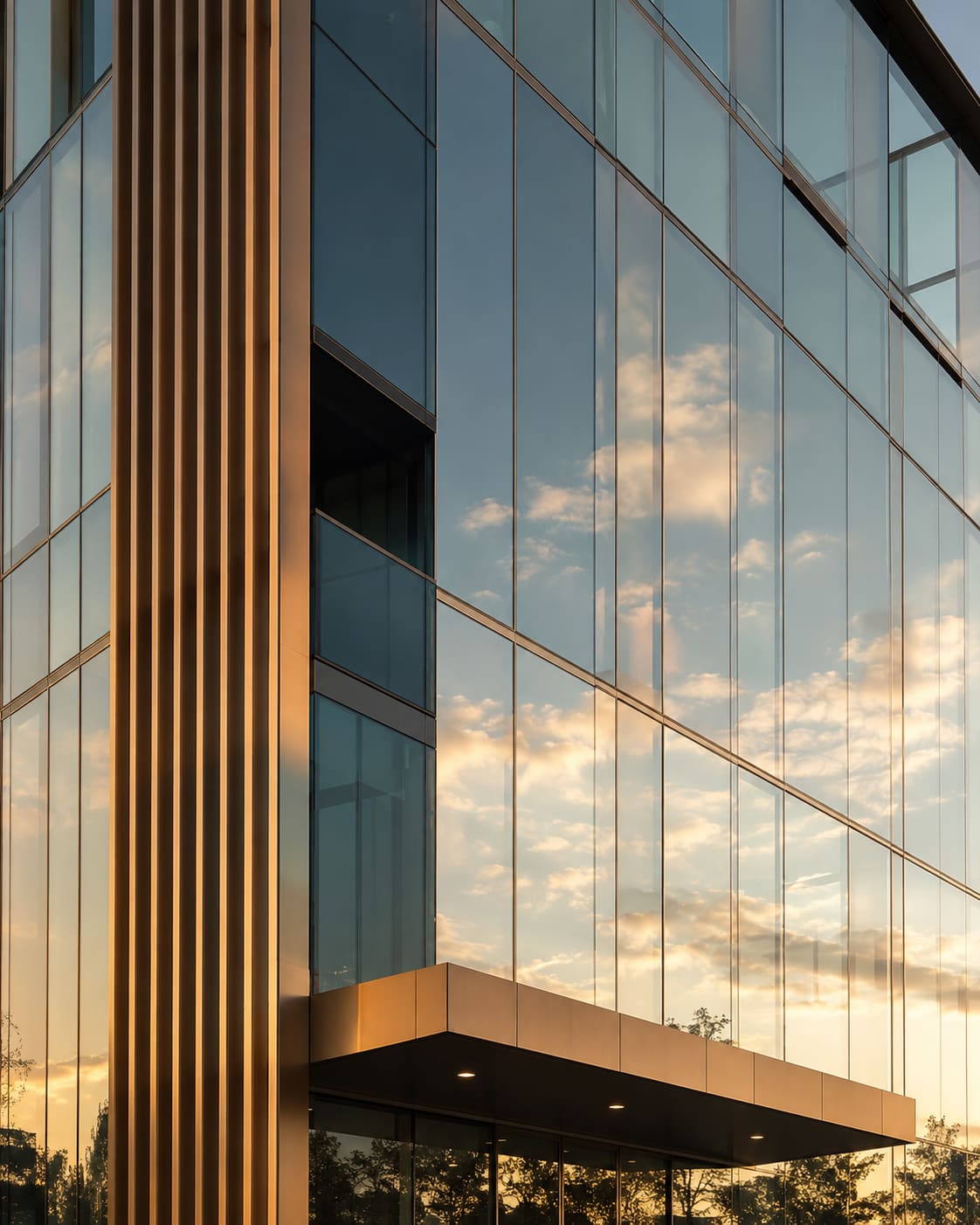
Low-E glass is ordinary float glass coated with an ultra-thin, near-invisible layer of metallic oxide that reflects radiant heat back toward its source while still letting visible daylight pass through. In plain terms: it blocks the heat you feel from a sunlit window without turning your room dark. That is the whole idea behind low-emissivity glass, and it is why it has become the default specification for serious glass facade work and premium homes across Hyderabad.
If you have ever stood next to a west-facing window in Gachibowli or Kokapet at 2 PM in May and felt heat radiating off the pane, you already understand the problem this coating solves. For homes, offices and facades across Telangana and Andhra Pradesh, where cooling loads dominate for roughly nine months of the year, this single upgrade quietly reduces heat gain, glare and air-conditioning bills.
This guide explains exactly how the coating works, the two main types, the performance numbers that actually matter, realistic INR pricing for 2026, and how to choose the right specification for our climate. If you would rather skip to specifics for your project, you can get a free quote at any point.
How Does Low-E Glass Actually Work?
Low-E stands for low emissivity. Emissivity is a surface's tendency to radiate absorbed heat; a standard glass pane has high emissivity and happily re-radiates that heat straight into your room. The microscopic Low-E coating, usually based on silver or tin oxide, lowers that emissivity so the glass reflects long-wave infrared, the radiant heat, instead of transmitting it inward.
The clever part is spectral selectivity. The coating is tuned to reject infrared and ultraviolet while allowing most of the visible spectrum through. You get daylight without the accompanying heat and without the fabric-fading UV. That is the fundamental difference between Low-E glass and old-fashioned dark tint, which simply cuts everything, including the light you actually want.
- Blocks up to 70-80% of solar heat (infrared) depending on the coating generation
- Reflects interior warmth back inside during the handful of cold Deccan-plateau nights
- Cuts UV transmission by up to 99%, protecting furniture, wooden flooring and artwork from fading
- Keeps visible light transmission high, so interiors stay naturally bright and you rely less on daytime lighting
Hard-Coat vs Soft-Coat: What Are the Two Types?
There are two manufacturing routes, and the difference decides where you can install the glass and how it should be assembled.
- Hard-coat (pyrolytic) Low-E: the coating is fused onto the glass while it is still hot during production. This makes it tough, scratch-tolerant and usable as a single glazed pane. It is slightly less efficient at rejecting heat but far more forgiving to handle, cut and transport.
- Soft-coat (sputtered) Low-E: multiple silver layers are deposited under vacuum for superior solar control and a more neutral colour. Because those silver layers are delicate when exposed to air and moisture, soft-coat must be sealed inside a double-glazed unit (DGU), with the coating facing the sealed cavity.
For Hyderabad's heat, a soft-coat Low-E inside a DGU delivers the best solar control and the clearest view. Hard-coat single glazing is a budget-friendly option for shaded, north-facing or less critical elevations. Any reputable fabricator, including our team on reflective and DGU facade projects, will match the coating type to each facade orientation rather than using one product everywhere.
If you want to compare the coating against other high-performance options, our explainer on toughened, laminated and other specialty glass puts Low-E in context alongside safety and acoustic grades.
Why Does Low-E Matter So Much in Hyderabad and Telangana?
Our climate is overwhelmingly cooling-dominated. Summer surface temperatures on west and south facades are punishing, pre-monsoon dust bakes onto glazing, and glare off tiled floors is a daily nuisance in glass-heavy apartments in Kondapur, Manikonda and Banjara Hills. Heating is almost never the issue here; keeping heat out is.
Low-E glass tackles the exact radiant heat you feel indoors, so air conditioners cycle less and rooms stay comfortable even a few metres from the AC vent. In a typical 3BHK with large sun-facing windows, occupants often report a 15-25% drop in cooling energy after switching to a Low-E DGU, along with a noticeable end to the hot-spot near the glass.
During the monsoon, the sealed double-glazed construction that soft-coat Low-E requires also reduces condensation and muffles the drumming of heavy Telangana rain, so the comfort benefit is not purely thermal. For west-facing bedrooms and glass-fronted living rooms, that combination is exactly why so many Financial District and Hitec City apartments now specify it as standard.
For commercial buildings, Low-E is close to mandatory. Meeting comfort and energy expectations on a large structural glazing or curtain wall elevation without it would force heavy tinting that darkens interiors and pushes up lighting costs.
The Performance Numbers That Actually Matter
When you compare Low-E options, three figures on the spec sheet tell you most of what you need to know. Ask your supplier for these rather than trusting marketing names.
- Solar Heat Gain Coefficient (SHGC): the fraction of solar heat that gets through, from 0 to 1. Lower is better for Hyderabad. Aim for 0.25-0.35 on sun-facing glazing.
- Visible Light Transmission (VLT): how much daylight passes through, as a percentage. A good Low-E balances a low SHGC with a healthy VLT of 40-70%, which is precisely the trade-off dark tint cannot achieve.
- U-value: how readily heat conducts through the assembly. Lower means a better insulator; a soft-coat DGU dramatically beats single glazing here.
The best single indicator of a coating's quality is its light-to-solar-gain ratio, essentially how much daylight you keep per unit of heat you block. A modern double-silver or triple-silver soft-coat wins on this metric, which is why it commands a premium. On a real project we will model the orientation of each opening and pick a coating that hits the target SHGC without making the interior gloomy.
Where Should You Use Low-E in a Home or Office?
Low-E delivers the strongest payback where sun exposure is heaviest, so prioritise by orientation rather than glazing every opening to the same spec.
- West and south-west facades: the hottest afternoon exposure in Hyderabad; use your best soft-coat DGU here.
- Large living-room and bedroom windows facing the sun: comfort gains are immediately felt by occupants.
- Glass shopfronts and showroom fronts: Low-E protects displayed stock and keeps the AC bill sane, which is why we specify it on most toughened glass shopfront jobs.
- Skylights and glass roofs: overhead glazing gains enormous heat, so Low-E is essential on any skylight or outdoor canopy.
- Office curtain walls and cabins: pairs naturally with aluminium doors and windows and glazed office cabins to keep workspaces cool and daylit.
North-facing and well-shaded openings gain little sun, so a lower-cost hard-coat pane, or even plain toughened glass, is often the sensible economical choice there. You can see how we mix specifications across a building in our completed projects.
How Much Does Low-E Glass Cost in Hyderabad?
Prices vary with coating brand and generation, glass thickness, cavity fill, and whether the unit is single or double glazed. As of early 2026, indicative supply-and-install ranges in Hyderabad are:
- Single glazed hard-coat Low-E (6mm): roughly INR 250-400 per sq ft
- Double glazed unit with soft-coat Low-E (6-12-6): roughly INR 550-900 per sq ft
- High-performance double- or triple-silver Low-E DGU for facades: INR 900-1,400 per sq ft
Framing, hardware and structural glazing are costed separately, so the delivered price depends heavily on the system around the glass. While Low-E carries a clear premium over plain float glass, the air-conditioning savings typically recover the difference within 3-5 years in our climate, and the comfort improvement is there from day one. For a firm figure on your exact openings and orientation, request a free measured quote and we will size the coating to the job rather than upselling a single premium product everywhere.
Common Mistakes to Avoid
Low-E only performs when it is specified and installed correctly. A few recurring errors in the Hyderabad market undo most of the benefit.
- Wrong coating face: in a DGU the soft-coat must face the sealed cavity. Reversed orientation cripples performance and is invisible until you measure it.
- Chasing the lowest VLT: over-dark glass to feel premium leaves you running lights all day and negates the daylight advantage that makes Low-E worth buying.
- Single glazing a soft-coat: exposed silver coatings degrade, so soft-coat belongs only inside a sealed unit.
- Ignoring the frame: a great Low-E DGU in a cheap, non-thermally-broken aluminium frame leaks heat around the edges; consider thermal break aluminium windows to match the glass.
- Poor edge seals: a DGU with a weak secondary seal fogs internally within a few Telangana monsoons, so insist on a proven sealant system and a genuine warranty.
Low-E vs Tinted vs Reflective Glass
Homeowners often weigh Low-E against the tinted and reflective glass they already know, so it helps to see the trade-offs side by side.
- Tinted glass absorbs heat within the pane and re-radiates part of it inward, and it darkens the room to cut heat. It is cheap but crude.
- Reflective glass bounces heat and light off a mirror-like surface. It controls heat well but gives a dark interior and a heavily mirrored exterior, and it can cause glare for neighbours.
- Low-E glass selectively reflects only infrared and UV, so you keep daylight and a near-natural view while still rejecting most of the heat. It is the only one of the three that lets you have brightness and coolness together.
For most Hyderabad homes the honest recommendation is Low-E where sun exposure and comfort matter, with reflective glass reserved for facades where a specific mirrored aesthetic is the goal. Our team is happy to walk you through samples so you can compare colour, clarity and view before committing.