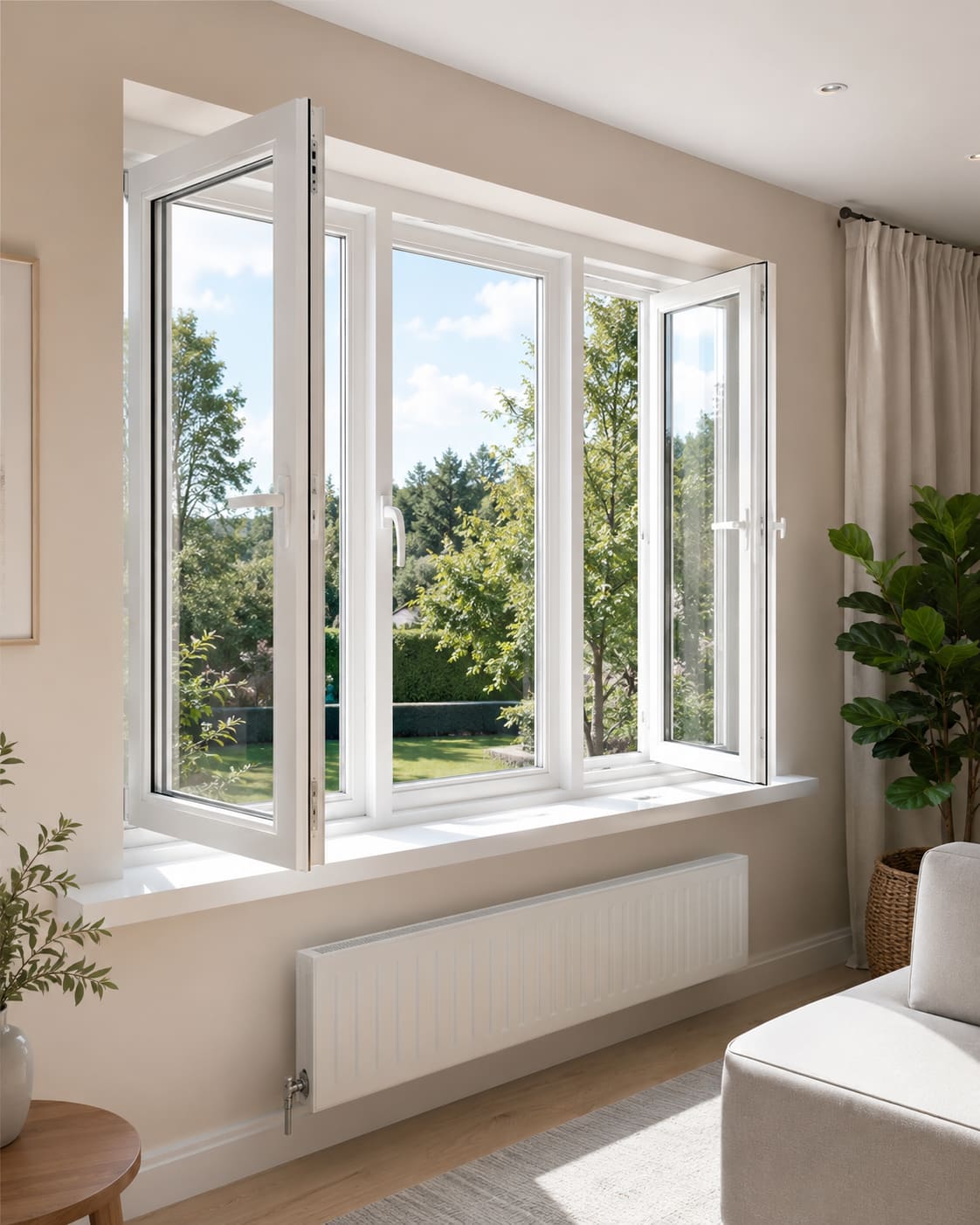
The BEE star rating for windows in India is a 1-to-5 star energy label issued under the Bureau of Energy Efficiency's Star Labelling Programme, rating a window's efficiency on how well it blocks heat transfer (U-value), solar heat gain (SHGC) and air leakage. A higher star count means the window loses and gains less heat, directly lowering the air-conditioning load and electricity bill of the building it is fitted to. For a homeowner or builder, the practical takeaway is simple: more stars equals a cooler room and a smaller power bill, without you having to decode every technical spec.
Introduced under the Energy Conservation Act, 2001, and reinforced by the Energy Conservation Building Code (ECBC), the scheme lets buyers compare windows on measured performance rather than marketing claims. In a hot-dry climate like Hyderabad and Secunderabad, where cooling dominates annual energy use, the star rating is one of the most practical guides to choosing glass, frame and glazing combinations that stay comfortable and economical.
This guide breaks down exactly what each number on the label means, how a window earns four or five stars, what the standards require, and how to translate all of it into a sensible choice for a flat in Gachibowli or a villa in Kokapet. If you are weighing up uPVC windows against thermal-break aluminium, the ratings below are the fairest way to compare them side by side.
What does the BEE star rating actually measure?
A window's BEE star rating is calculated from three measured properties, each of which affects how much heat crosses the window assembly. The label combines them into a single star count so a buyer does not have to interpret raw physics to make a good decision.
- U-value (W/m2K): the rate of conductive heat flow through the whole window; lower is better, and a 5-star window is generally 3.0 W/m2K or below.
- Solar Heat Gain Coefficient (SHGC): the fraction of solar radiation admitted, from 0 to 1; a low SHGC of 0.25-0.40 suits hot Indian cities where blocking the sun matters more than trapping warmth.
- Air leakage (infiltration): uncontrolled air passing around sashes and seals, which adds to cooling load; tighter seals earn higher ratings.
- Visible Light Transmittance (VLT): how much daylight passes through, balanced against SHGC so glare and heat stay low while daylight stays useful.
Crucially, the rating applies to the whole window as a fabricated unit, glass plus frame plus seals, not just the glass. A premium Low-E glass pane fitted into a leaky, heat-conducting frame will underperform its own glass spec, which is why the assembly is tested and labelled together.
How does the 1 to 5 star scale work?
The label ranks windows from 1 star (least efficient) to 5 stars (most efficient) so that a single glance communicates relative performance, the same way it does on an air-conditioner or refrigerator.
- 1-2 stars: basic single-glazed windows with higher U-values and SHGC, offering minimal thermal protection. Common in older buildings and budget construction.
- 3 stars: mid-range assemblies, often single Low-E glass or improved framing, giving moderate heat control at a moderate price.
- 4-5 stars: double-glazed or low-emissivity (Low-E) glass in thermally broken aluminium or uPVC frames, with the lowest U-values and SHGC.
- Each additional star reflects a meaningful drop in heat gain, and 5-star windows can reduce cooling energy demand by 10-25% versus a 1-star unit.
For most Hyderabad homes, a 4-star window is the sweet spot on cost-versus-performance, with 5-star reserved for large west-facing openings, glass facades, or fully air-conditioned commercial spaces where every unit of heat kept out pays back quickly.
How do windows achieve a high rating?
High star ratings come from combining efficient glazing with a low-conductivity frame rather than from any single component. Upgrading only the glass or only the frame leaves an obvious weak link, so fabricators specify them as a matched system.
- Double glazing (typically two 4-6 mm panes with a 12-16 mm air or argon gap) sharply lowers U-value compared with single 4-5 mm glass; the trapped gas layer is the real insulator.
- Low-E coatings reflect infrared heat, cutting SHGC while keeping visible daylight high, so rooms stay bright without turning into greenhouses.
- uPVC frames are inherently low-conductivity, and thermal-break aluminium inserts an insulating polyamide barrier inside the metal profile to stop heat bridging.
- Multi-chamber sashes, quality EPDM gaskets and multi-point locking reduce air leakage and improve the sealed performance of the whole window.
The same logic scales up to bigger openings. A structural glazing facade or a stretch of aluminium sliding windows uses double-glazed units (DGUs) with Low-E coatings for exactly this reason, keeping large glass areas from becoming a thermal liability. You can see how we combine these systems on real buildings across our completed projects.
Which standards and codes apply to window energy ratings?
Window energy performance in India sits within a framework of national codes and glass standards that govern both efficiency and safety. Understanding which document controls what helps you push back on vague supplier claims.
- Energy Conservation Building Code (ECBC): sets maximum U-value and SHGC limits for fenestration in commercial buildings by climate zone; Hyderabad falls in the hot-dry zone, which favours low SHGC.
- National Building Code of India (NBC) 2016: covers overall building design, fenestration and safety provisions.
- IS 2553 (safety/toughened glass) and IS 875 Part 3 (wind load): govern glass strength and structural loading, important for large glazed openings and high-rise apartments in the Financial District.
- BEE Star Labelling Programme: the label under the Energy Conservation Act, 2001, that certifies the star rating itself.
For commercial towers and large elevations, these codes are not optional, and matching the glazing spec to the code is part of any serious facade consultancy exercise before a single panel is ordered.
Why does the rating matter so much in Hyderabad's climate?
In Hyderabad and Secunderabad, where summer temperatures regularly exceed 40 degrees C and cooling drives most of the year's energy use, a high SHGC window can force air-conditioners to work far harder for far longer. The window is often the single biggest thermal weak point in an otherwise well-built wall.
- Choosing windows with SHGC around 0.25-0.35 keeps solar heat out while still admitting daylight, which is ideal for west and south-facing rooms in Gachibowli, Kondapur and Madhapur.
- A low U-value slows heat conduction through the frame and glass during peak afternoon heat, when Hitec City and Financial District offices run their AC hardest.
- Tight seals and good gaskets also block the fine summer dust and pre-monsoon grit that Telangana is known for, keeping interiors cleaner.
- Over a 20-30 year window lifespan, the cooling-cost savings from a 4-5 star window typically outweigh its higher upfront price.
The monsoon adds a second reason to care: well-sealed 4-5 star windows resist wind-driven rain and the humidity swings that warp poorly made frames, a common failure in cheap single-glazed units around the city.
What do energy-rated windows cost in Hyderabad?
Pricing depends on frame material, glass specification, size and hardware, but realistic 2026 ballpark rates for supplied-and-installed windows in Hyderabad help set expectations before you request a detailed quote.
- Basic single-glazed aluminium (1-2 star equivalent): roughly INR 350-550 per sq ft, cheapest upfront but weakest on cooling savings.
- Good uPVC single-glazed (around 3 star): roughly INR 550-800 per sq ft, a strong value pick for bedrooms and mid-range flats.
- Double-glazed uPVC or thermal-break aluminium with Low-E (4-5 star): roughly INR 900-1,600 per sq ft depending on glass and hardware.
- The premium over a basic window is usually recovered through lower electricity bills within about 4-8 years in a fully air-conditioned home, after which the savings are effectively free.
For a large glass frontage such as a showroom or office front, the per-square-foot logic is the same but the total impact is larger, so specifying the right rating early avoids expensive retrofits later. The best way to size a real budget is to get a free site measurement and quote for your exact openings.
uPVC or thermal-break aluminium: which wins on rating?
Both frame materials can reach 4-5 stars, so the choice comes down to aesthetics, opening size, structural need and budget rather than efficiency alone.
- uPVC frames are inherently low-conductivity, low-maintenance and excellent value; they suit residential uPVC casement and sliding windows in flats and villas.
- Thermal-break aluminium is stronger and slimmer, carries larger glass areas, and gives the crisp modern lines architects favour for facades and big picture windows; the polyamide break makes it nearly as efficient as uPVC.
- For very large sliding or slide-fold openings, thermal-break aluminium windows are usually the better structural choice because the frame can span wider without sagging.
- For standard-sized bedroom and kitchen windows on a tighter budget, quality uPVC often delivers the best stars-per-rupee.
In short, do not treat this as efficiency versus efficiency; both can hit a 5-star U-value. Treat it as the right tool for the opening, and let the glass specification carry most of the heat-blocking work through a properly matched DGU and Low-E coating.
How to read a window label and avoid common mistakes
Buyers get caught out when they judge a window on one number or on the glass alone. A few habits keep you from overpaying or under-specifying.
- Check the whole-window U-value and SHGC, not just the centre-of-glass figure, which always looks better than reality.
- Match SHGC to orientation: low SHGC (0.25-0.35) for west and south exposures that catch harsh afternoon sun, slightly higher is acceptable for shaded north-facing rooms.
- Do not chase maximum daylight and minimum heat at once; a sensible VLT-to-SHGC balance avoids both glare and a gloomy interior.
- Confirm the frame has a genuine thermal break (for aluminium) or multi-chamber profile (for uPVC), not just a coloured foam strip.
- Insist on quality EPDM gaskets and multi-point locks; air leakage quietly erodes the rating of an otherwise good window.
If you are unsure how a rated window ties into a larger elevation or a full glass front, our team can walk you through options for aluminium doors and windows and glazed facades, and you can compare related guidance in our other material and technology articles.