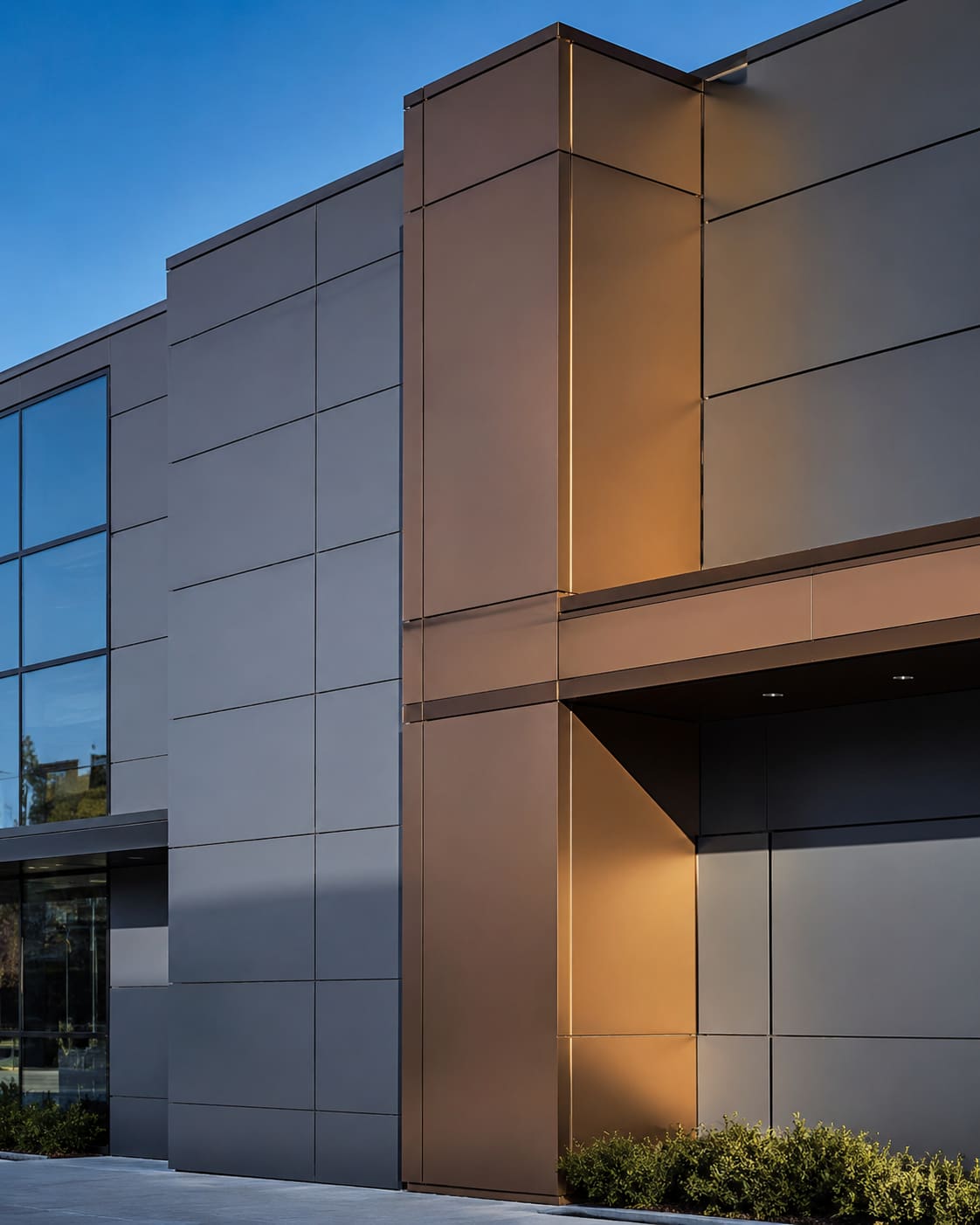
For most Hyderabad buildings, ACP cladding is the more economical, lower-maintenance elevation while a glass facade delivers the premium, daylight-filled corporate image at roughly double the cost - so the ACP vs glass facade decision comes down to your budget, the wall's sun exposure, fire class and the image you want to project. ACP cladding runs about INR 220 to 450 per sq ft installed, whereas a structural glass facade runs about INR 550 to 1,100 per sq ft, which is why the choice shapes both your capital outlay and how the building performs for the next 20 years.
Both systems create a modern, premium look, but they behave very differently in Telangana's hot summers, in upfront cost, in fire safety and in day-to-day upkeep. ACP is an opaque aluminium sandwich panel you can wrap around almost any structure, hide imperfect brickwork behind and carry bold brand colours on; glass is a transparent skin that needs engineered support such as structural glazing or spider fittings to stay safe, watertight and stable in wind.
At Hakimi Aluminium and Glass we install both systems across Hyderabad, Secunderabad and Andhra Pradesh, from small commercial showrooms to multi-storey office towers. This guide breaks down the real differences, indicative INR pricing, fire and maintenance realities, the installation timeline and which elevation suits which kind of project - so you can decide with clarity instead of guesswork. When your drawings are ready you can get a free quote for either system, or a cost-smart hybrid of both.
What ACP Cladding and Glass Facades Actually Are
ACP (Aluminium Composite Panel) cladding is a lightweight sandwich panel: two thin aluminium sheets (typically 0.25mm to 0.5mm each) bonded to a mineral or polyethylene core, giving an overall 3mm or 4mm panel. It is fixed to an aluminium sub-frame over your structure and comes in solid colours, metallic, wood, mirror, brushed and stone finishes. Because it is opaque and rigid, it is ideal for covering uneven surfaces, hiding old plaster or brickwork and carrying bold brand colours and signage.
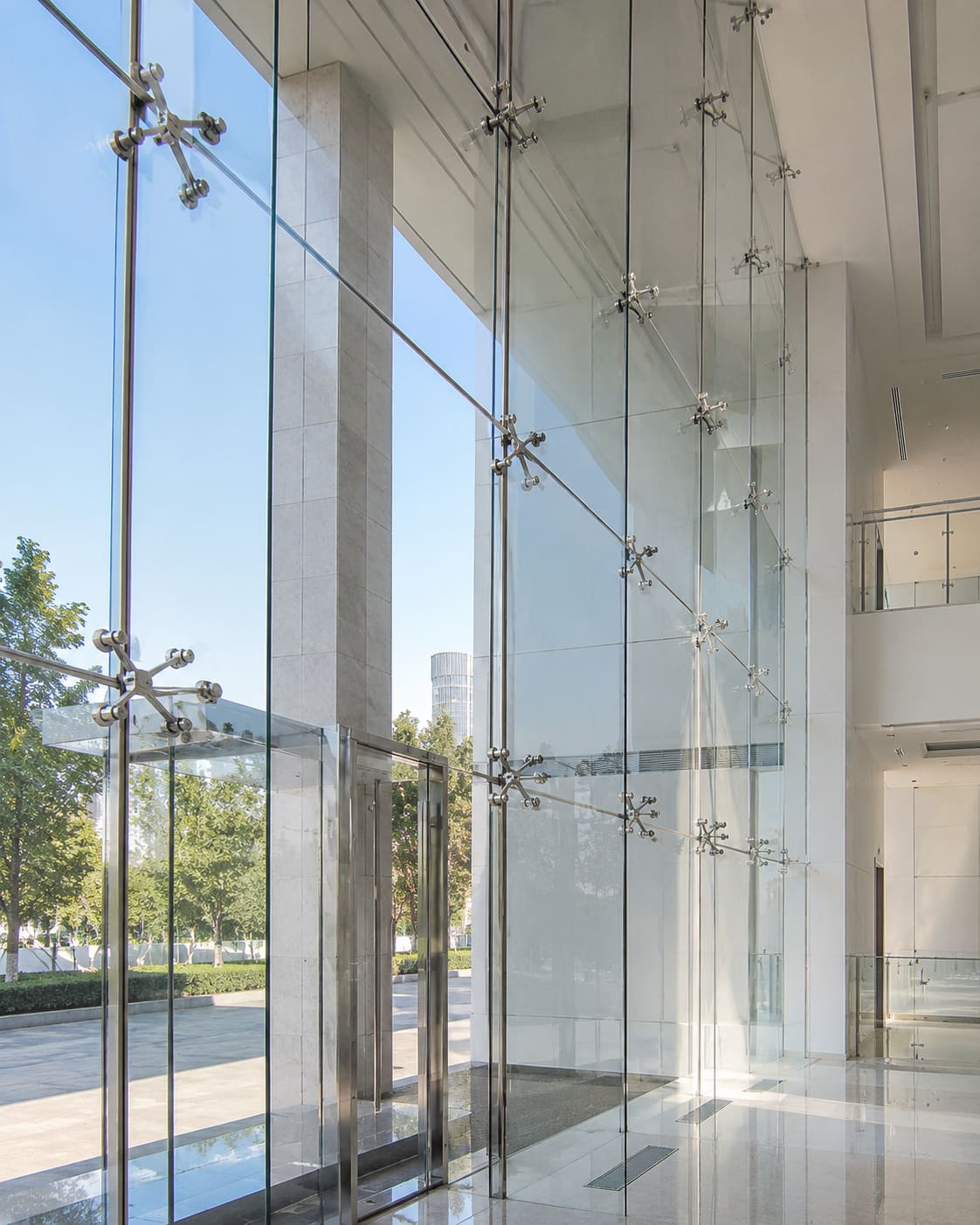
A glass facade uses large glazed panels held by either an aluminium framing system, a semi-unitised structural glazing grid, or a spider fitting that clamps the glass at its corners. The result is a smooth, reflective, transparent skin. Common glass choices in Telangana are DGU (double glazed units) and high-performance reflective glass, both of which cut heat while keeping views.
The core difference is transparency versus opacity, and that single property drives everything else - cost, heat behaviour, fire rating and the look on the street:
- ACP: opaque, colour-flexible, great for branding, signage and covering imperfect walls
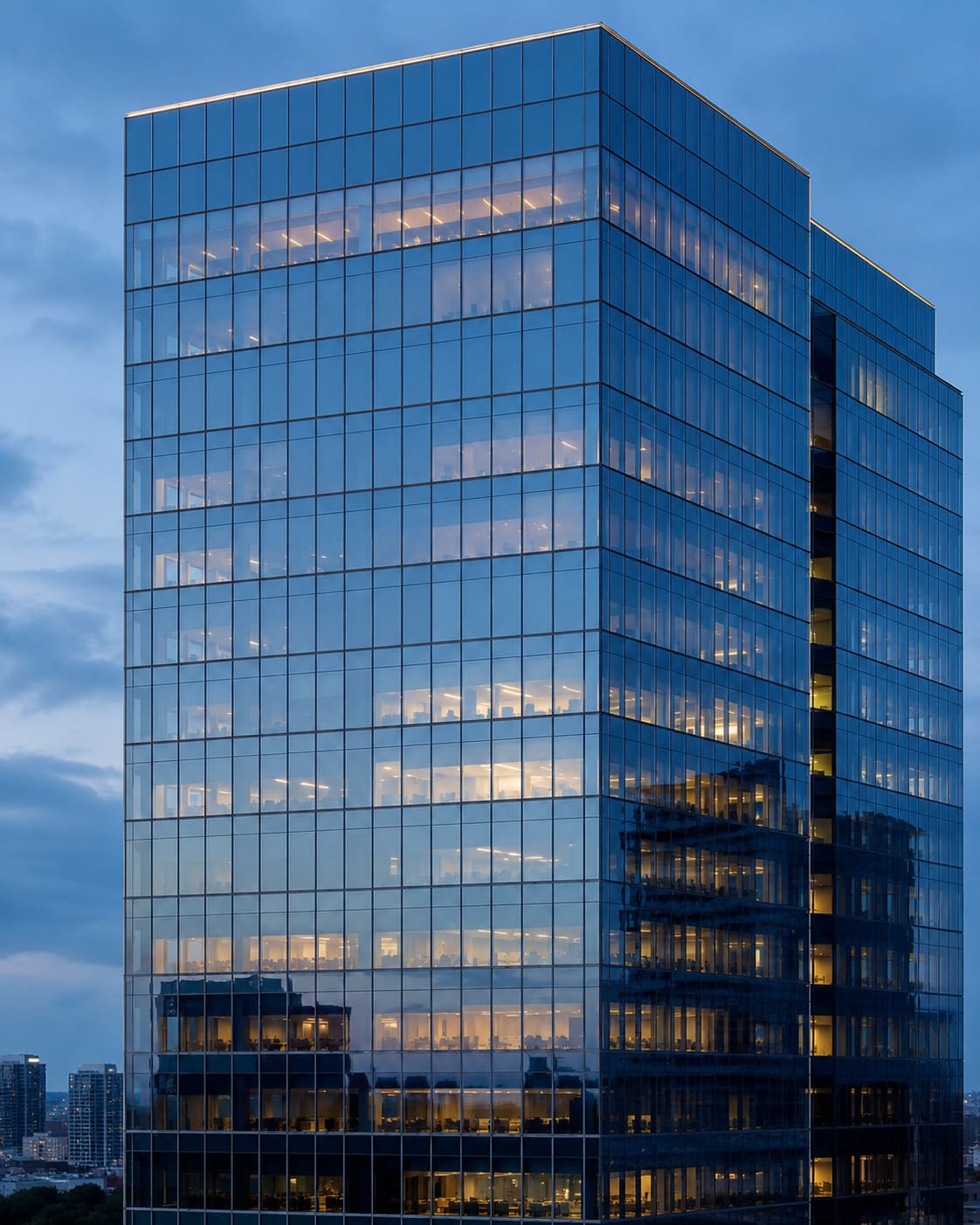
- Glass: transparent or reflective, brings in daylight, gives a high-end corporate look
- Both mount on aluminium framing, so the quality of profiles, brackets and fasteners matters as much as the panel or glass itself
In practice, most owners do not choose one material in isolation - they weigh it against the specific wall, its orientation and the message the frontage needs to send. That is why understanding each system's strengths, rather than chasing a single verdict, leads to a better elevation.
Cost Comparison: Indicative Hyderabad and Telangana Rates
Pricing varies with brand, thickness, glass specification and site conditions, but these are realistic indicative ranges for Hyderabad, Secunderabad and surrounding Telangana and Andhra Pradesh projects (installed, including framework):
- ACP cladding: roughly INR 220 to 450 per sq ft, depending on 4mm panel brand and FR grade
- Aluminium-framed / structural glazing (DGU or reflective glass): roughly INR 550 to 1,100 per sq ft
- Spider / frameless glazing: INR 1,200 per sq ft and above for premium showroom and lobby jobs
In short, ACP is usually the more economical elevation, often costing half or less of a comparable glass facade. Glass carries a higher material and installation cost because of dead load, safety-glass grades (toughened or laminated), precision framing, sealants and specialised entrance hardware such as floor springs and patch fittings.
A worked example: a 3,000 sq ft office elevation in ACP cladding might land around INR 9 to 12 lakh, while the same area in DGU structural glazing could run INR 18 to 30 lakh. That gap is why many owners phase the two systems or blend them into one frontage.
Remember that the headline rate is not the whole story. Scaffolding or a suspended cradle for tall elevations, structural steel to carry glass dead load, GST, and any custom colour or CNC routing on ACP all move the final figure. Always compare quotes on the same specification - panel grade, glass makeup, framing gauge and warranty - rather than on rate alone, because the cheapest per-sq-ft number often hides a thinner panel or a weaker sub-frame.
Performance in Telangana's Hot Climate
Hyderabad and Secunderabad summers regularly push past 40 degrees Celsius, so solar heat gain directly affects comfort and running cost. A plain single-glazed glass facade without the right coating can turn interiors into a greenhouse, sharply raising your air-conditioning load and monthly electricity bill for the life of the building.
ACP panels are opaque and, when installed with a ventilated rear cavity, reflect a large share of solar heat and let hot air escape behind the panel, keeping the wall and interior cooler. Glass performs well thermally only when you specify high-performance reflective glass or DGU - which is exactly where the cost climbs toward the upper end of the range above. A good DGU or reflective unit can cut solar heat gain by 50 to 70 percent versus plain float glass.
- Choose ACP for west and south walls that take the harshest afternoon sun
- Choose high-performance DGU or reflective glass where daylight, views and prestige justify the spend
- A ventilated ACP cavity can lower surface heat transfer noticeably versus a solid plastered wall
- Combining both - glass on the entrance and feature bays, ACP elsewhere - is common and cost-smart in Telangana
There is also a comfort and productivity angle for offices: well-specified glass floods interiors with daylight and cuts lighting bills, while ACP-heavy elevations rely more on artificial light. The right balance depends on the depth of your floor plate and how much of the day each wall faces the sun.
Fire Safety: The Deciding Factor Many Owners Miss
Fire safety is not optional for commercial and high-rise elevations, and it is where ACP quality varies the most. Cheap panels with a plain polyethylene (PE) core are combustible and have been implicated in fast-spreading facade fires worldwide; they should never be used on occupied multi-storey buildings, whatever the saving.
Specify fire-retardant (FR) grade or A2 non-combustible mineral-core ACP for any commercial project in Hyderabad. It costs more per sq ft but is essential for code compliance, insurance and life safety, and the premium over PE-core is small next to the risk it removes.
- PE-core ACP: cheapest, suitable only for low-rise, low-risk signage and boundary work
- FR-grade ACP: mineral-filled core, strong fire resistance, standard for offices, showrooms and malls
- A2-grade ACP: near non-combustible, preferred for high-rises, hospitals and hotels
Glass is inherently non-combustible, which is a genuine safety advantage, though the aluminium framing, sealants and any spandrel infill behind the glass still need proper fire-rated detailing at floor slabs. Whichever route you take, insist on certified panels and matching fixings, and ask your contractor for the fire-rating certificate in writing before work starts.
Maintenance, Durability and Long-Term Cost
ACP is genuinely low-maintenance: an occasional wash with mild detergent and water keeps it looking new, and quality PVDF-coated panels resist fading and chalking for 10 to 15 years. A dented or damaged panel can usually be swapped individually without disturbing the rest of the elevation, which keeps repair costs and downtime low.
Glass facades demand regular professional cleaning to stay pristine, especially at height where you need cradles or rope access, and repairs to a cracked or fogged DGU panel are costlier and slower to source since units are often made to order. However, nothing matches the transparent, prestige appearance of a well-executed glass tower, and toughened glass is highly scratch-resistant and holds its finish for decades.
- ACP: low cleaning cost, easy spot repairs, watch for edge delamination on poor-quality panels
- Glass: higher cleaning cost, pricier panel replacement, but excellent scratch and weather resistance
- Both depend on good sealants and drainage - poor workmanship, not the material, causes most facade leaks
Over a 20-year horizon, ACP typically wins on total cost of ownership, while glass wins on perceived value and resale image for premium addresses. You can see how both wear in the field across our recent projects, which spans retail frontages, offices and mixed-use blocks around Hyderabad.
Design Flexibility, Branding and Building Type
ACP is the more flexible canvas for branding and geometry. It can be routed, folded and CNC-cut into curves, fins, louvres and sharp corners, and it carries corporate colours and logo bands cleanly and consistently across a whole chain of outlets. That makes it the default for retail chains, showrooms, hospitals and mixed-use blocks where identity and cost control matter equally.
Glass signals openness and prestige. For corporate headquarters, banks, IT parks and flagship showrooms along Hyderabad's growth corridors like HITEC City, Gachibowli and the ORR belt, a glass skin communicates transparency and scale that ACP cannot. Many owners pair a full-height glass facade with frameless glass entrances for a seamless, high-end arrival experience.
- Retail, showrooms, hospitals, warehouses: ACP-led elevation with glass accents
- Corporate HQ, IT offices, banks, hotels: glass-led facade with ACP for solid cores and parapets
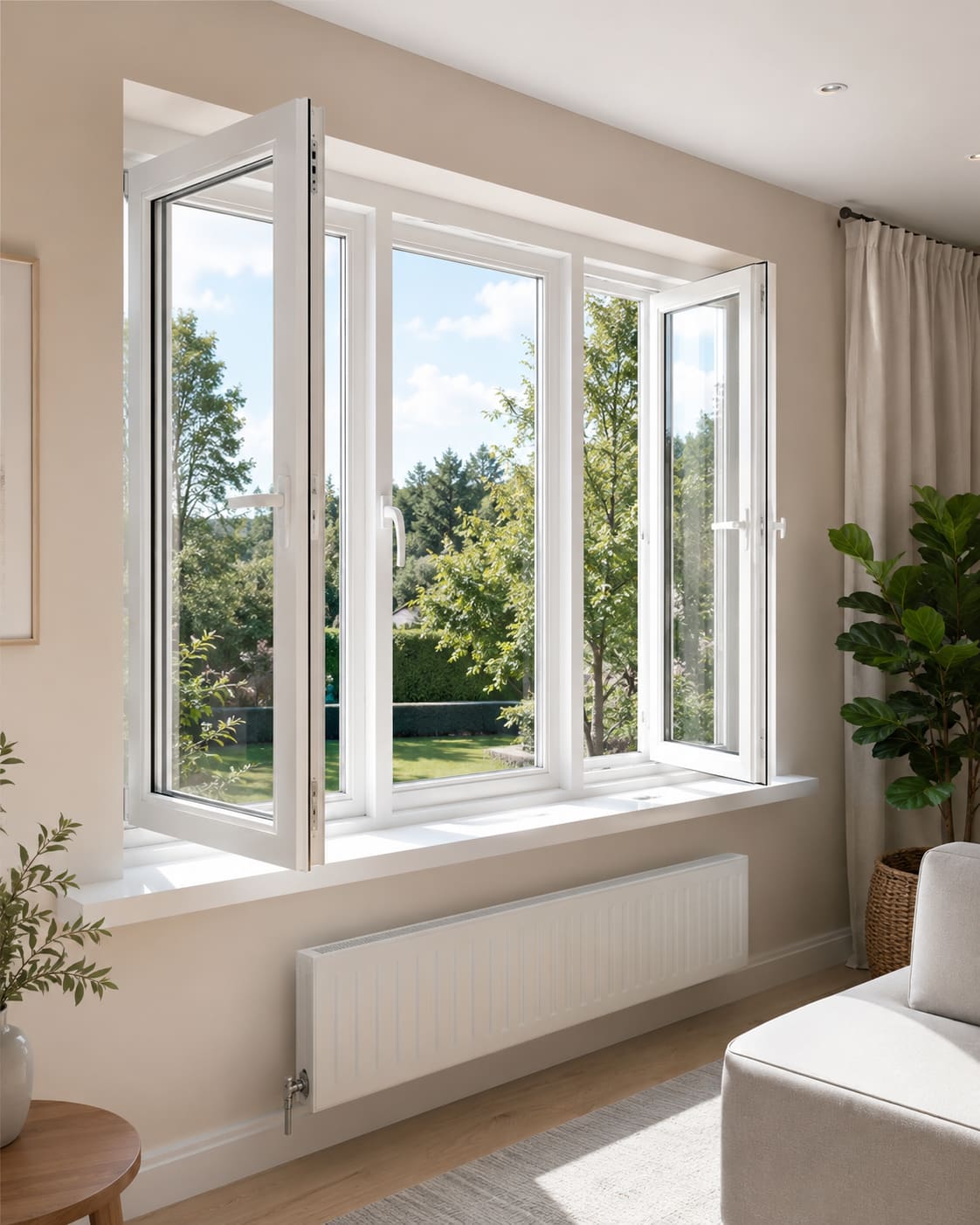
- Residential apartments and villas: hybrid - glass railings and windows, ACP feature bands and cladding
The right material also depends on how close the building sits to the street and how much people see it up close. At eye level, glass rewards the viewer with depth and reflection; higher up, ACP reads just as crisp for a fraction of the cost, which is why blended elevations are so popular.
Installation Process and Typical Timeline
Both systems follow a similar sequence but glass demands more engineering discipline. A typical facade job runs through survey, design, fabrication and installation, and the biggest delays come from procurement - made-to-order DGU glass and custom-colour ACP both have lead times you must plan around.
- Site survey and measurement: 1 to 2 days to capture exact dimensions and structural condition
- Design, shop drawings and material approval: 3 to 7 days, including colour and glass sample sign-off
- Fabrication and procurement: 1 to 3 weeks; imported or custom glass sits at the longer end
- Sub-frame and installation: ACP progresses faster because it is lighter; glass needs precise, level framing and safe lifting
- Sealing, cleaning and handover: final silicone sealing, drainage checks and a snag list
As a rough guide, a mid-size ACP elevation of a few thousand square feet can be installed in two to four weeks once material is on site, while an equivalent structural glazing job usually takes longer because of dead load, safety handling at height and more exacting tolerances. Weather, scaffolding access and floor-slab readiness all affect the programme, so build a buffer into any handover date you commit to a tenant or client.
Common Mistakes to Avoid
Most facade problems trace back to a handful of avoidable decisions made at the quoting stage. Knowing them in advance protects both your budget and the building.
- Buying on rate alone: a low per-sq-ft price often hides a thinner panel, a PE core or an under-gauge sub-frame that fails within a few years
- Skipping FR-grade ACP: using combustible PE-core panels on a commercial or high-rise building is a life-safety and legal risk, never a saving
- Wrong glass for the orientation: plain glass on a west wall overheats interiors and inflates AC bills for the life of the building
- Ignoring the sub-frame: a weak or poorly anchored aluminium frame causes waviness, rattling and leaks no matter how good the panel is
- Under-budgeting sealing and drainage: most facade leaks come from poor silicone work and blocked weep paths, not the material itself
- No written specification or warranty: without panel grade, glass makeup, framing gauge and warranty on paper, quotes are not comparable
The common thread is workmanship and specification. A mid-priced panel installed by a careful, experienced team on a properly engineered frame will outperform a premium panel installed badly, every single time.
How to Choose: A Quick Decision Framework
Decide by ranking four things in order - budget, sun exposure, fire class and image - and the answer usually becomes obvious. If budget and heat control lead, ACP wins; if image and daylight lead and budget allows, glass wins.
- Tight budget, hot exposed walls, branding-heavy: go ACP (FR grade)
- Ample budget, prestige address, daylight and views prized: go glass (DGU or reflective)
- Want both benefits: a hybrid facade - glass front with ACP flanks and parapets - is almost always the smart middle path
Also weigh timeline and structure: glass adds dead load and needs precise framing, so the base structure and fittings must be engineered for it from the start. ACP is lighter and faster to install, which can shorten the programme on tight schedules and phased fit-outs.
Whichever you lean toward, get a site measurement and a written spec before comparing quotes, and look at completed work rather than brochures. You can explore both options and related work under our services, and when you are ready with drawings or even a rough idea, get a free quote for the full elevation - ACP, glass or a tailored hybrid built for Hyderabad's climate and your budget.