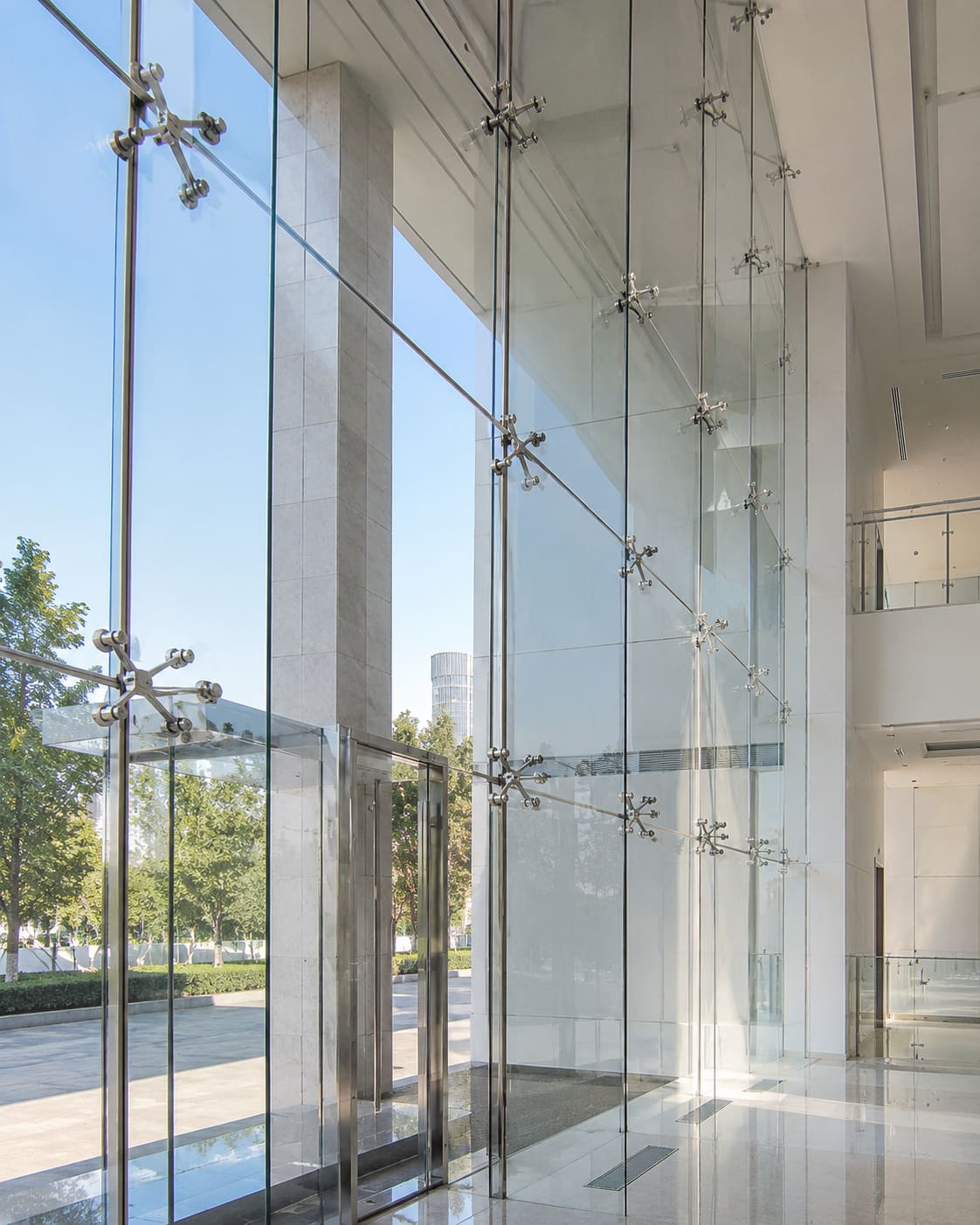
Spider glazing and structural glazing both create sleek, frameless-looking glass facades, but the short answer is this: choose **spider glazing** when you want maximum transparency for a double-height lobby, atrium or entrance feature, and choose **structural glazing** when you need a continuous, weathertight envelope across a full building or tower. Spider glazing holds toughened glass at its corners with stainless-steel 'spider' fittings, so almost nothing interrupts the view. Structural glazing bonds glass to a hidden aluminium frame with silicone, giving a flush all-glass skin at a lower cost per square foot.
For most Hyderabad projects - whether it's an office front in Gachibowli, a showroom in Kokapet, or an IT tower in the Financial District - the two systems are often combined: a dramatic spider-glazed entrance set into a structurally glazed facade above. Getting the split right controls both the visual impact and the budget.
This guide breaks down how each system works, where each performs best in Telangana's heat-and-monsoon climate, realistic INR pricing, and a simple decision framework so you can brief your fabricator with confidence. If you want a specialist to spec it for your building, our team offers facade consultancy across Hyderabad and Secunderabad.
How do spider glazing and structural glazing actually differ?
The core difference is how the glass is held. Spider glazing is a **point-fixed** system: individual toughened glass panels are drilled and bolted at their corners using stainless-steel articulated fittings called spiders (typically two-arm or four-arm). The load travels from the glass, through the spider bolts, into a support structure behind - often steel mullions, glass fins, or a tension cable network. Because there's no frame around each pane, the result is the most transparent facade you can build.
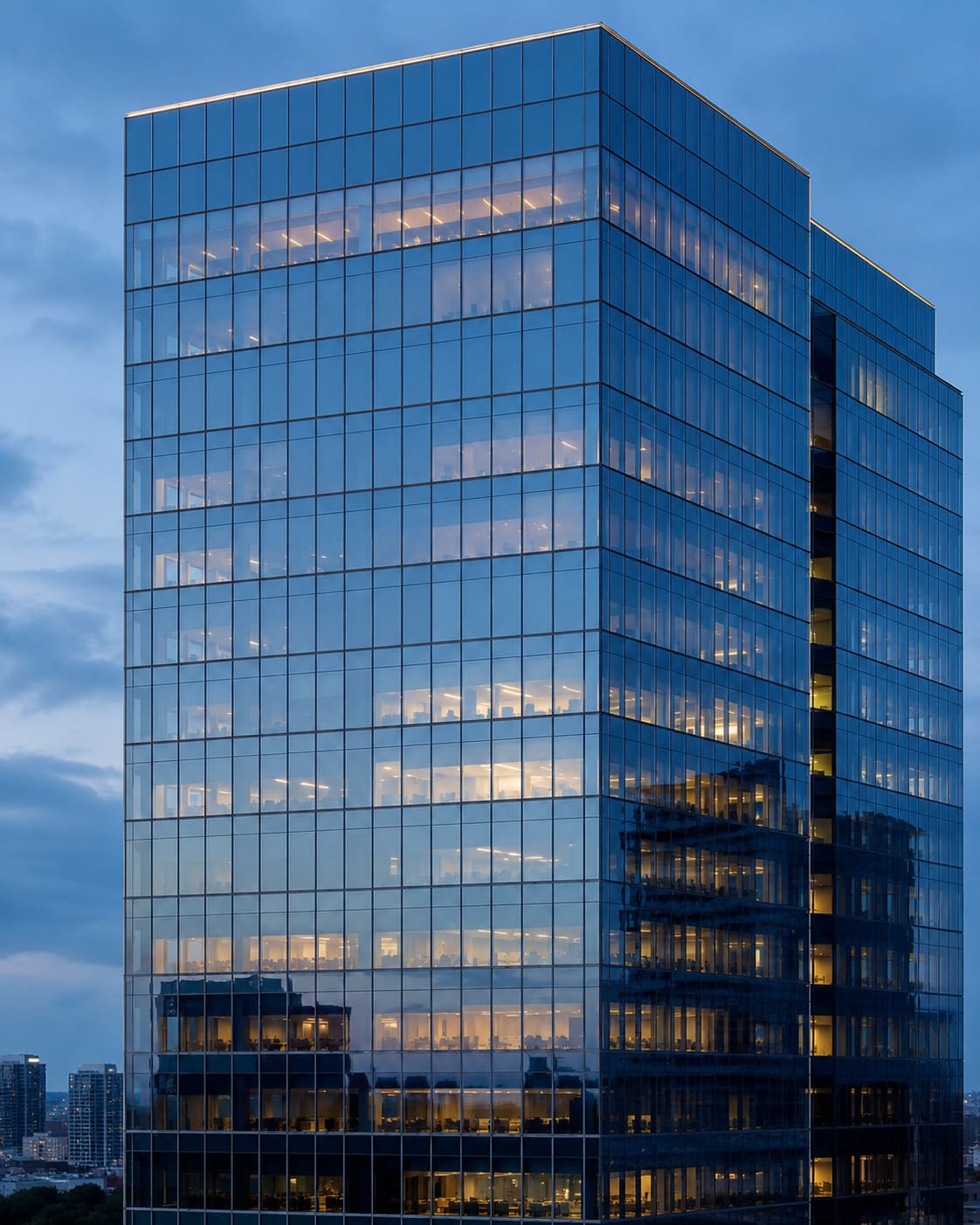
Structural glazing works the opposite way. Each glass unit is **bonded with structural silicone** to a concealed aluminium frame, so from outside you see an uninterrupted glass surface with only slim silicone joints between panes. The aluminium carries the wind and dead loads, and the silicone transfers those loads from glass to frame. It's a complete, repeatable facade system rather than a one-off feature - which is why it dominates full-building elevations.
Put simply: spider glazing is about showcasing a signature transparent volume, while structural glazing is about wrapping an entire building in a clean, engineered glass skin.
- Spider glazing: glass bolted at points, minimal support, maximum see-through.
- Structural glazing: glass bonded to hidden frame, flush skin, built for scale.
Where is each system used?
Spider glazing shines wherever transparency is the whole point. In Hyderabad we see it most in:
- Double-height corporate **lobbies and atriums** in Hitec City and Madhapur, where a glass wall needs to feel weightless.
- **Showroom and retail fronts** in Kokapet and Banjara Hills - car showrooms and premium brands use it so the product is visible from the road. Pair it with a structural glass storefront for the ground floor.
- **Feature entrances and canopies** where the glass reads as a design statement rather than a wall.
Structural glazing is the workhorse for the rest of the building:
- **Full IT-park and office towers** in Gachibowli and the Financial District, where you need dozens of identical floors wrapped efficiently.
- **Reflective and DGU facades** that cut solar heat gain - see our reflective glass facade and DGU facade systems.
- **Office fronts and elevations** where a clean, uniform look matters more than a single dramatic void. Explore our office front glazing options.
In practice the smart move is combining them: a spider-glazed atrium punched into a structurally glazed tower gives you both drama and efficiency.
What does each cost in Hyderabad? (Realistic INR pricing)
Spider glazing is almost always the more expensive system per square foot because of the hardware and glass involved. As a working guide for the Hyderabad market in 2026:
- **Spider glazing: ₹550–1,100 per sq ft**, driven by stainless-steel spider fittings (SS 316 for durability), thicker 12mm+ toughened glass, drilling and edge-work, plus specialist support like fins or cables.
- **Structural glazing: ₹350–700 per sq ft**, depending on glass spec (single toughened vs DGU), aluminium system and coating.
Several factors push these numbers around: glass make-up (a high-performance DGU with a low-E coating costs far more than plain toughened), the support structure behind spider glazing, floor height, and site access. Bolt-fixed spider systems with a full cable-net facade sit at the top of the range because the engineering and stainless content are highest.
A useful rule of thumb: if you spider-glaze only the lobby and structurally glaze the rest, you get the wow factor where visitors actually stand, while keeping the bulk of the facade on the more economical system. Want a line-item breakdown for your building? Get a free quote and we'll price both options side by side.
How does Hyderabad's climate affect the choice?
Telangana's climate is demanding on any glass facade: summer surface temperatures can push past 45°C, the June–September monsoon drives wind and water at the joints, and near-constant dust from construction and traffic settles on every surface. Both systems must be engineered for this, but in different ways.
For **spider glazing**, thermal movement matters most. Large frameless panes expand and contract, so the spider fittings must allow articulation, and only toughened (or heat-soaked toughened) glass should be used to resist thermal stress and impact. Because panes are individually supported, water management relies on well-designed silicone weather seals between panes.
For **structural glazing**, the silicone bond is doing structural work in the heat, so the sealant grade and joint design are critical - a poorly cured or under-sized joint is the classic cause of monsoon leaks. Specifying a DGU facade with a low-E coating dramatically cuts solar heat gain, lowering AC loads in west-facing Gachibowli and Kokapet towers.
- Heat: use toughened/heat-soaked glass; specify DGU + low-E for AC savings.
- Monsoon: get the silicone weather seals and drainage detailing right - this is where cheap jobs fail.
- Dust: choose coatings and access design that make cleaning practical over the building's life.
Which glass and hardware does each system need?
Glass selection is non-negotiable for safety and performance. Spider glazing **must** use toughened glass because the drilled bolt holes create stress concentrations - annealed glass would shatter. Many specifiers go a step further with heat-soaked toughened or laminated glass for overhead and high-traffic areas, so a rare breakage stays safely bonded.
The hardware is where spider glazing earns its premium. Look for **SS 316 stainless spiders and bolts**, not SS 304, especially in humid or coastal-influenced conditions - 316 resists corrosion far better over a 20-year life. The routing bolts must be countersunk correctly and torqued to spec so the glass isn't over-stressed.
Structural glazing depends on two things: the **aluminium system** (a good thermal-break profile improves insulation) and the **structural silicone** itself. The silicone must be a certified structural-grade product with a documented bite width sized to the wind load. Cutting corners on either is what turns a facade into a maintenance headache. Our glass facade work always uses spec-matched sealants with test certificates.
See real installations of both systems in our project gallery to compare finishes and detailing.
How long does each take to install?
Structural glazing is generally faster to install per square metre once the system is set up, because it's a repetitive, modular process - frames go up floor by floor and glass is bonded or captured in a predictable rhythm. A unitized glazing approach, where panels are assembled in the workshop and craned into place, speeds this up further and is ideal for tall towers with limited site access.
Spider glazing is slower and more craft-intensive. Each pane is individually aligned, drilled positions must match the support structure exactly, and the supporting fins or cables need precise tensioning. That precision is why spider glazing is usually reserved for feature areas rather than entire buildings - the labour per pane simply doesn't scale the same way.
For a typical Hyderabad office project, expect the structurally glazed elevation to progress steadily while the spider-glazed lobby is treated as a separate, carefully sequenced package near the end of the programme.
What are the maintenance and safety differences?
Both systems are low-maintenance if installed correctly, but the failure modes differ. With spider glazing, the things to watch are **bolt torque, gasket condition and silicone weather seals** at the point fittings - an annual inspection catches issues early. Because panes are individually held, a single damaged pane can be swapped without disturbing neighbours, which is a genuine advantage.
With structural glazing, the whole system hangs on the **integrity of the silicone bond**. This is why using certified structural sealant and correct joint sizing isn't optional - it's a life-safety requirement. A reputable fabricator provides test certificates and a warranty covering the bond.
On safety, always insist on toughened or laminated glass at pedestrian levels and overhead, guard against thermal breakage with proper glass selection, and ensure the design accounts for Hyderabad's wind loads. For sensitive frontages, security glazing can be integrated into either system. The single biggest risk on any facade is a **split-vendor job** where the glazing sub and the structure sub blame each other for interface leaks - a Design-Build-Warranty package from one accountable fabricator removes that gap.
A simple decision framework: which should you choose?
Cut through the options with these questions:
- **Is this a feature area (lobby, atrium, entrance) or a whole building?** Feature → spider glazing. Whole building → structural glazing.
- **Is maximum transparency the priority, or a clean uniform skin?** Transparency → spider. Uniform skin → structural.
- **What's the budget per sq ft?** Tighter budget favours structural glazing; a signature space can justify spider glazing's premium.
- **How many identical floors?** Many repetitive floors → structural (especially unitized curtain wall). One-off void → spider.
- **Do you need solar control?** Both can use DGU + low-E, but structural glazing makes it easiest to roll out across a full elevation.
For many Hyderabad commercial buildings, the answer is 'both': a spider-glazed showpiece entrance within a structurally glazed envelope. If you'd like this planned properly for your site in Gachibowli, Kondapur, Madhapur or the Financial District, talk to our facade team - request a free consultation and we'll recommend the right split for your design and budget. You can also compare related systems in our guide to curtain wall vs structural glazing.